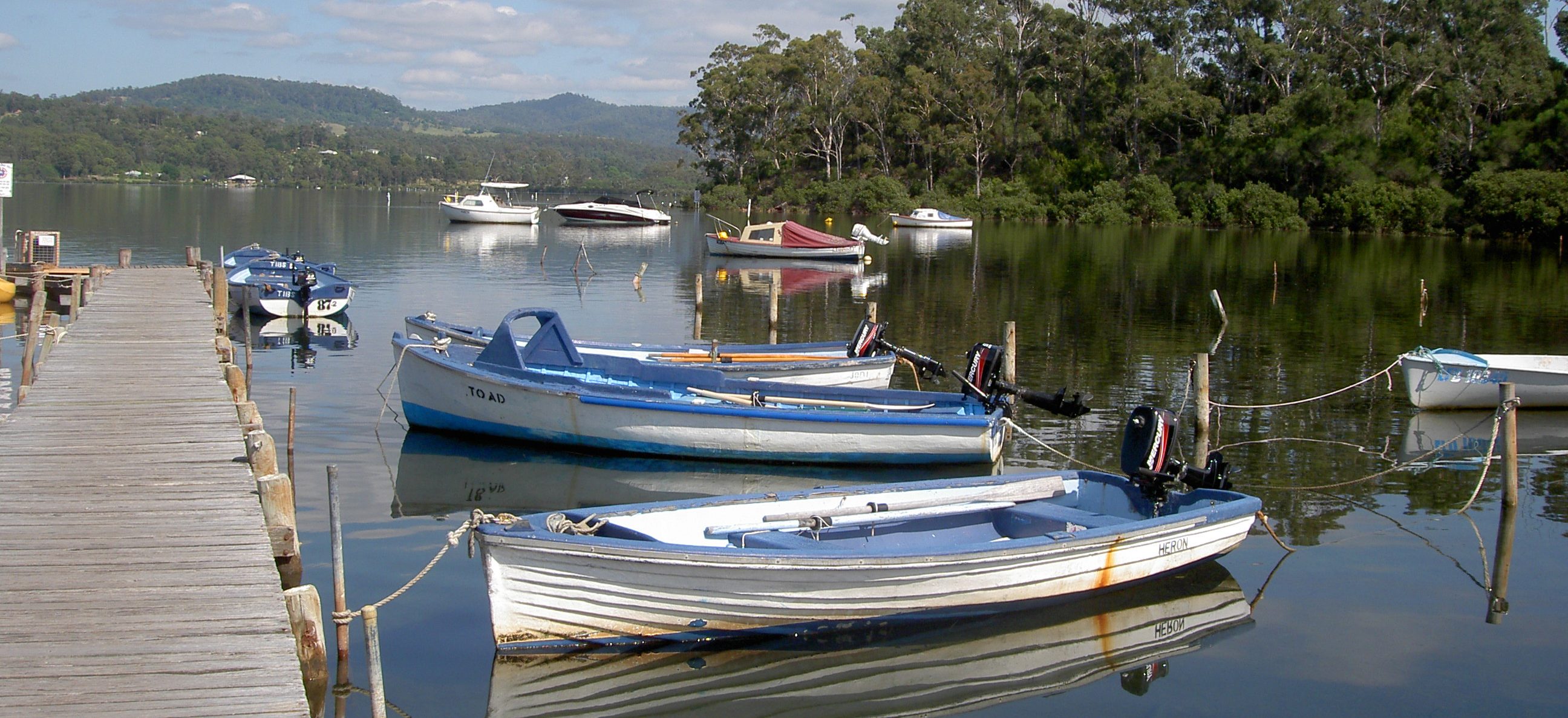
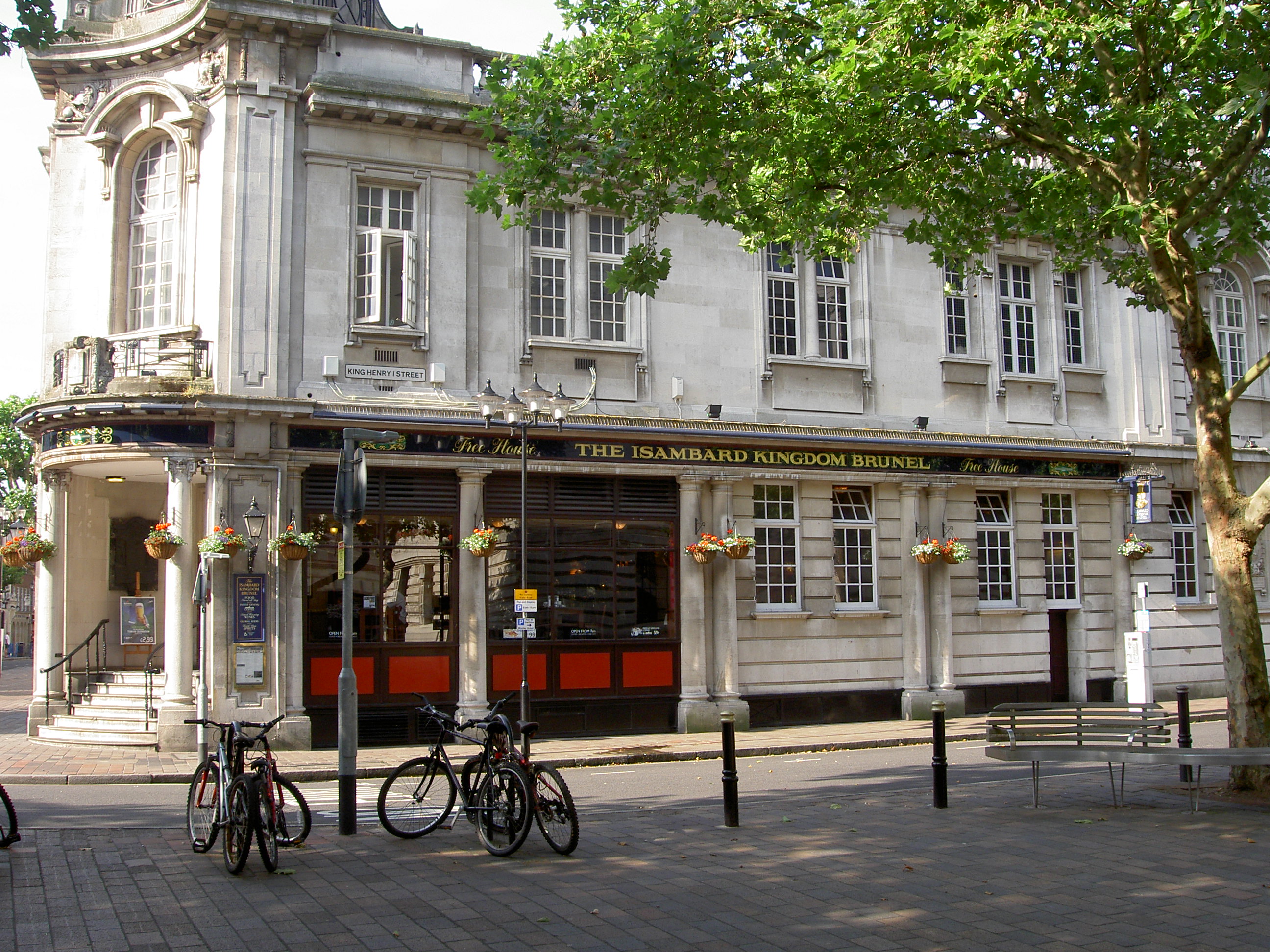
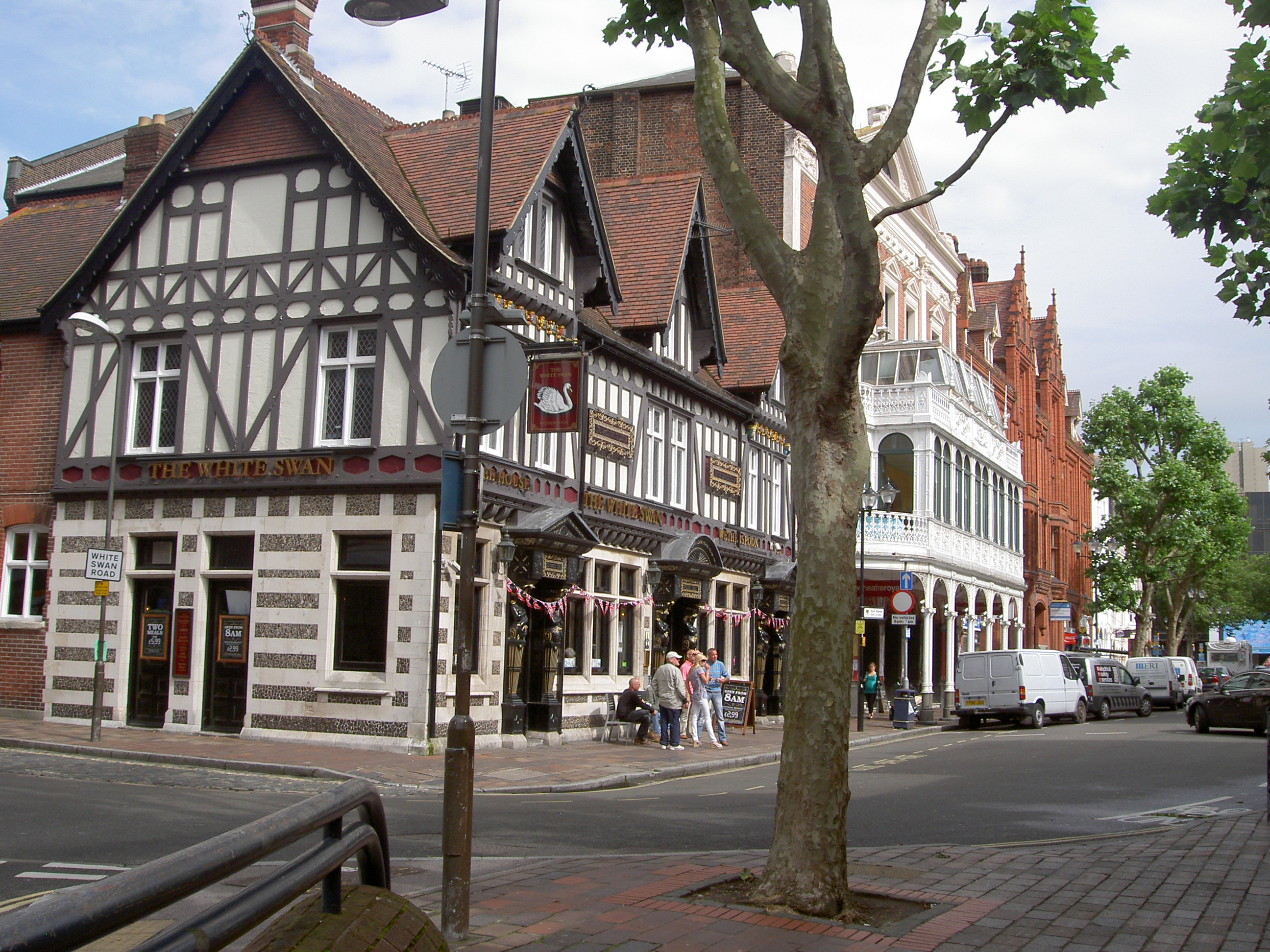
I think I may have been a bit harsh on Portsmouth when I said in an earlier Blog that it had not a lot to recommend it. That opinion was formed early in the stay, and was based on what we saw as we entered the town and drove through some pretty ordinary residential and light industrial areas on our way to the wrong campus. That campus comprised a ‘student village’ of large shoeboxes, about 5 floors in height, built of glass and concrete. The first couple of days did little to change my mind, based on the pretty ordinary walk between Rees Hall where we were staying, and the Guildhall area where the lectures were held. However, you will know that I have already paid glowing compliments to the docklands development, the maritime museum and the old fishing port, and I now admit I was a bit wrong on the rest of the town. Trying to find a post office this morning, I wandered,(not exactly like a flanneur, as I was not strictly aimless), through many side streets and by-ways. Whilst some were still pretty ordinary, I did discover some truly delightful nooks and crannies. In one street, I stopped to ask a resident if she knew the age of the buildings, and she advised that her house had been built in 1780. Just along the street was a pub of similar vintage, but between them were some very ordinary modern buildings! So, it appears that the acquisition of some local knowledge would go a long way in finding the ‘real’ Portsmouth.
We left Portsmouth later that day, crossing the Channel by the Brittany Ferry “Normandie Express”—a fast catamaran, which took only about three hours to reach Cherbourg. A short taxi ride, shared with a well-known author of spy novels that we had never heard of, and we were in the Hotel Beausejour. We had a very nice room on the second floor—up a very winding narrow staircase with no lift, but we managed OK. As it happened, it was practice for our gite at Mesnil le Sauvage, which has two very steep stair cases to reach our bedroom. When we thought about it, the only place we have stayed without stairs has been the B and B in St Andrews. Everywhere else we have had stairs, and even Rees Hall which had a lift, had a set of very steep stairs to the front door. Enough of stairs, more now of Cherbourg. What we saw of it we liked, and spent a nice time in the open-air market, stocking upon provisions for the first couple of days of this part of the holiday. The provisions included, but were not limited to, goat cheese, bread, ham, unsalted butter, wine and beer. We shall get to see more of Cherbourg on Monday when we return the very tiny car we have now, for a more sensible one. Here I admit it was entirely my fault (there’s an admission I never thought I would make!!). When I booked the French car, I had put July 18 as the start date, not August 18. We did not realise this until today, with the result that the booking had been cancelled due to non-appearance. Europcar did not have any available, and neither did Avis, but a smaller French company came to the rescue with a Toyota IQ, about the size of a Smart Car. We managed to squeeze all our luggage and food shopping in, and had a rather squashy drive to Mesnil. We shall drive back to Cherbourg on Monday and swap it for a more sensible car for the rest of the trip, but we shall have to return it to Cherbourg at the end, rather than dropping it off in Bordeaux as planned. But that makes little difference, as we can go back to England via Cherbourg and Portsmouth, and then continue as planned. So, as they say, the best laid plans of mice and men etc. So, at least it gives us a further opportunity to have a look around Cherbourg.
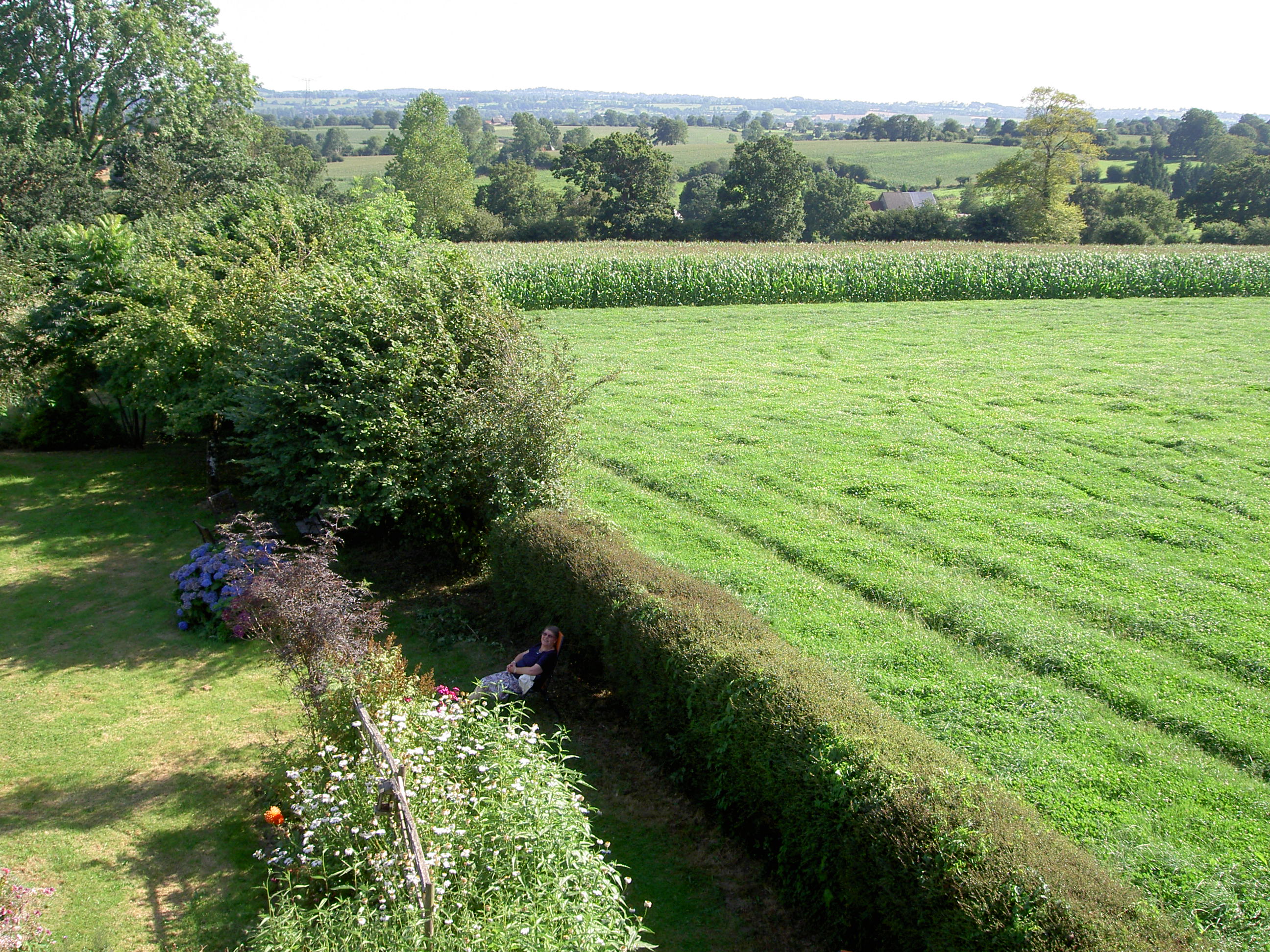
Mesnil le Sauvage is more a domain than a village, in that it is a scattered collection of farms. The nearest village, Percy, is about 10 minutes by car—a bit too far to walk—and there is supposed to be a small supermarché and a couple of good boulangeries there. Our Gite is part of a restored 400 year-old building, in lovely grounds, surrounded by corn fields, a few sheep, a few cows and spectacular views. We ‘veged’ in the garden for the remains of the afternoon, drinking the beer and wine aforementioned, before devouring some of the cheese and ham for dinner.
The weather was very warm—verging on hot—which was a bit draining after the more pleasant days thus far. The forecast for Sunday was for even hotter, so we decided to get up early and drive into Percy to get more provisions for the week. However, when we woke, not quite so early as planned, we were greeted by a thick fog obscuring the views. Anyway, we went into Percy and found a couple of excellent charcuteries, an excellent boulangerie/patisserie, and an excellent, if very small epicerie—all lovely to shop in with really nice staff. So we bought more cheese (Compte), some cold pork, two slices of salmon pancake stack (like your lemon cake, Peej, but with salmon, salad, tomato etc between the pancakes), some more beer and wine, and two small pear tarts. Percy is not a large town, but like most French villages, it has an enormous church, which quite dwarfed our little car.
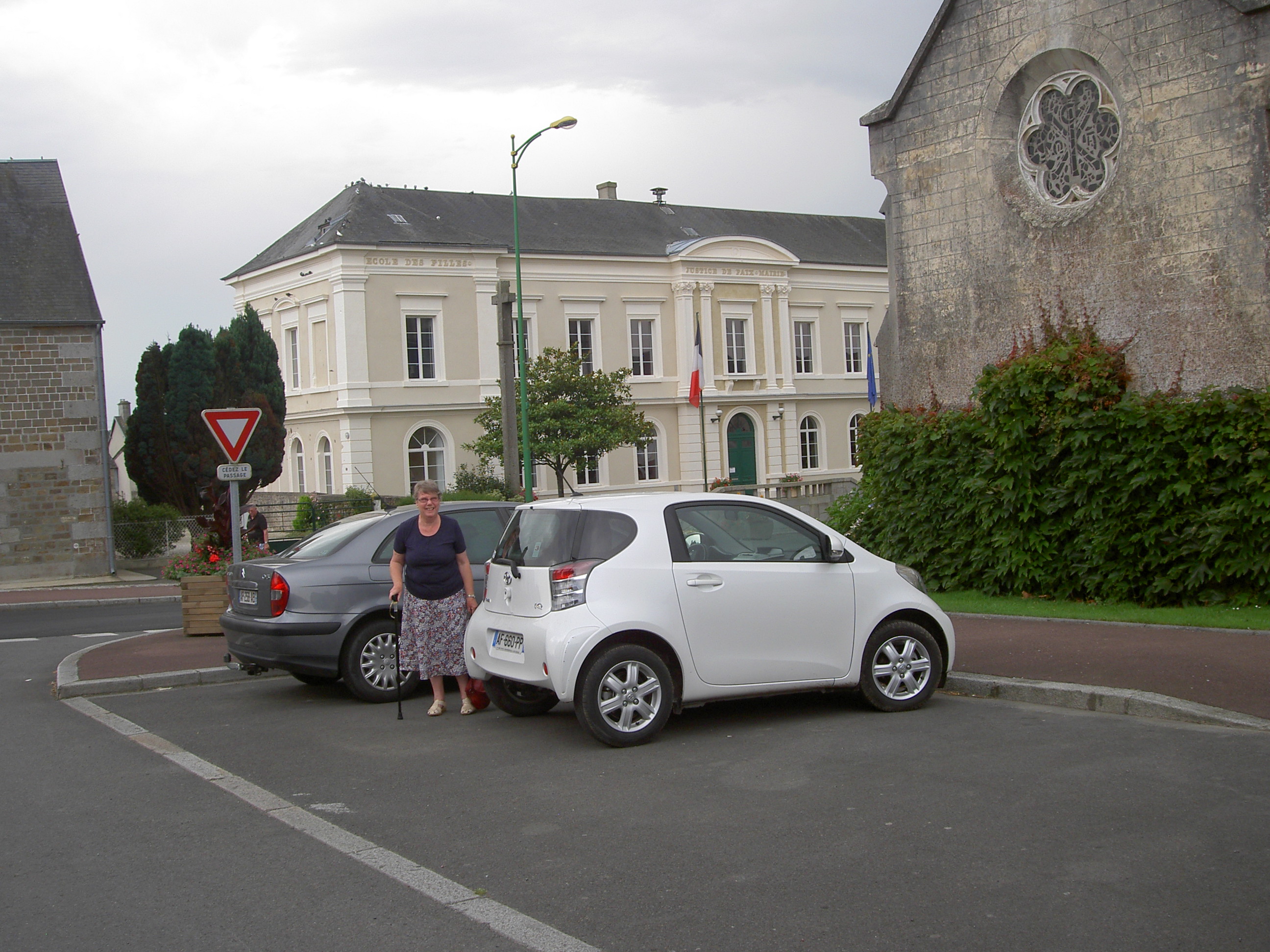
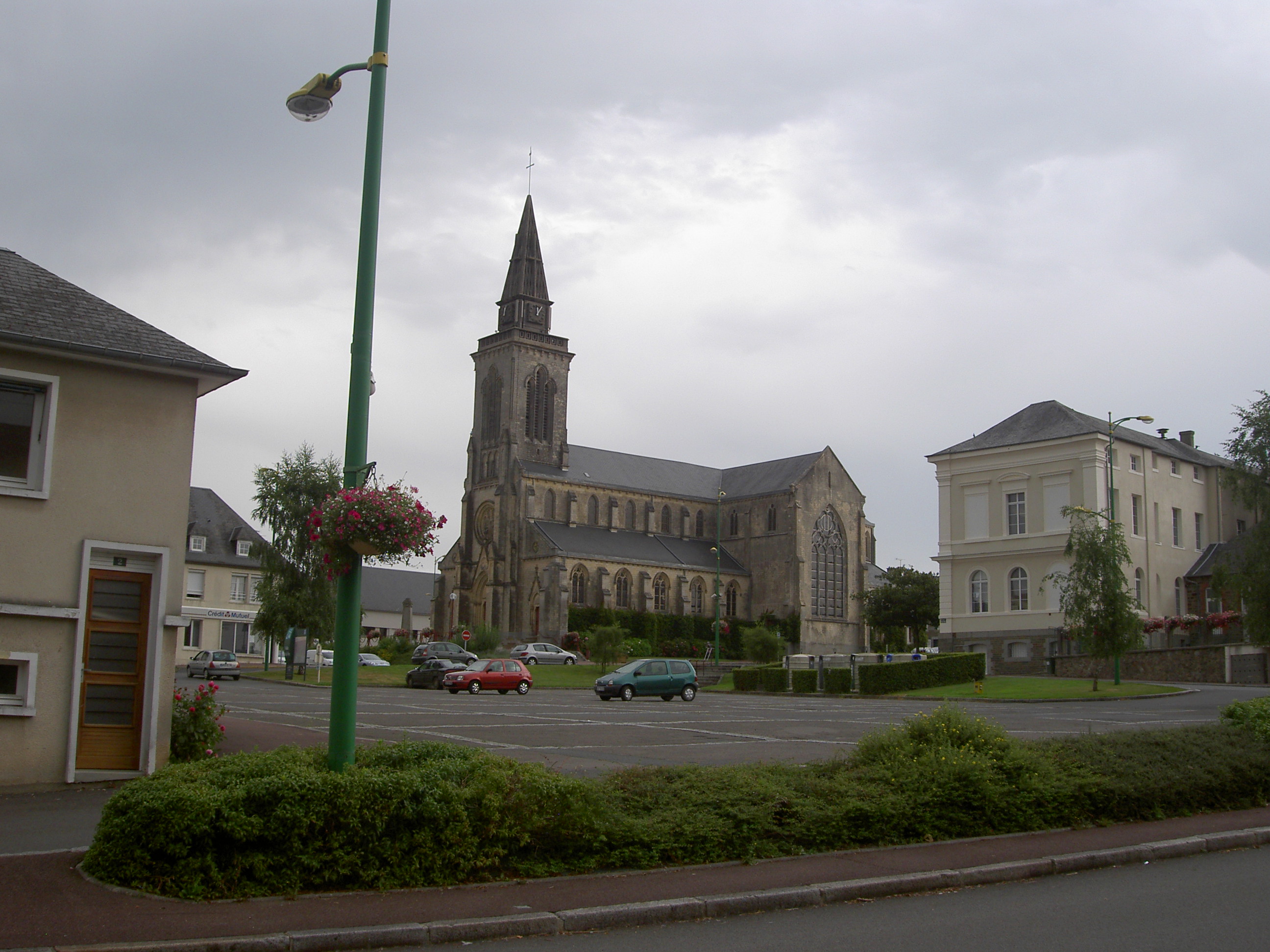
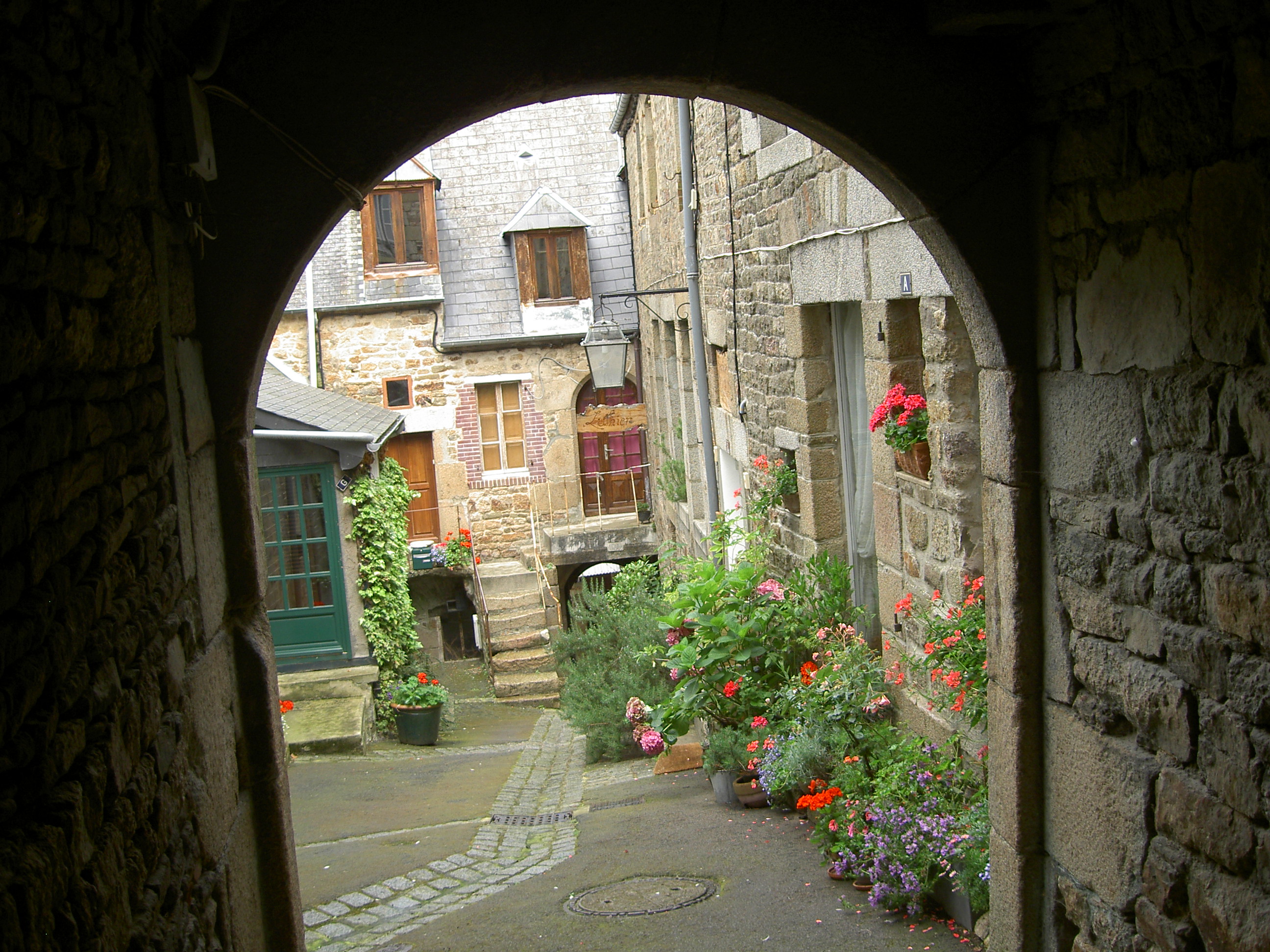
Then we drove on to Ville Dieu les Poille, an ancient town specialising in metal craft over many centuries. This is now reflected in the tourist shops selling copper, pewter and brass souvenirs. It came on to rain very heavily, but not cold, so we strolled around the town, peering down mysterious alleyways, and looking in the charcuteries etc.
On the way back to the gite, we made a detour to the ruins of an 1145 Monastery, which was quite spectacular. Unfortunately photos never do justice to such places, and it is difficult to capture the magnitude of them.
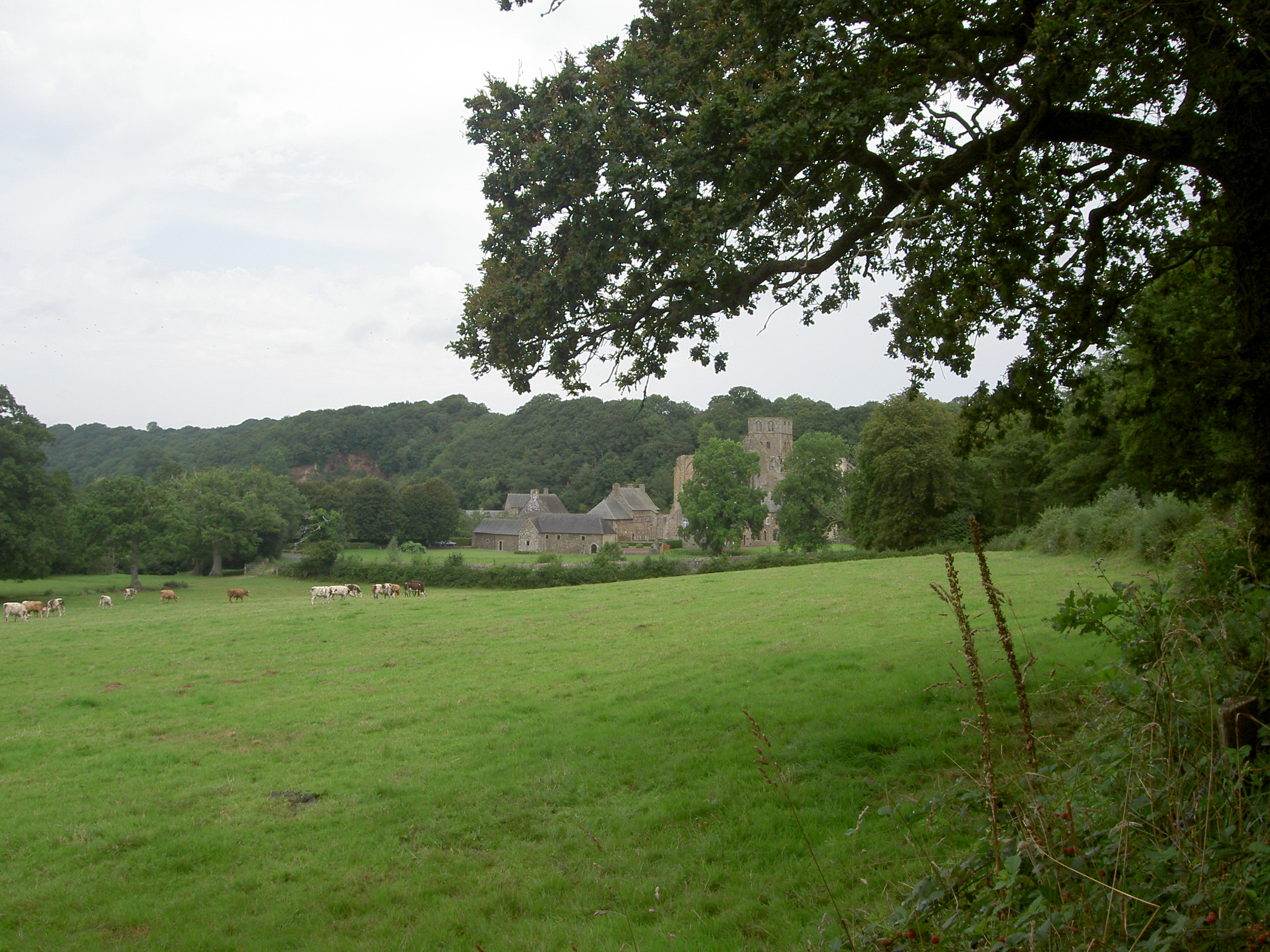
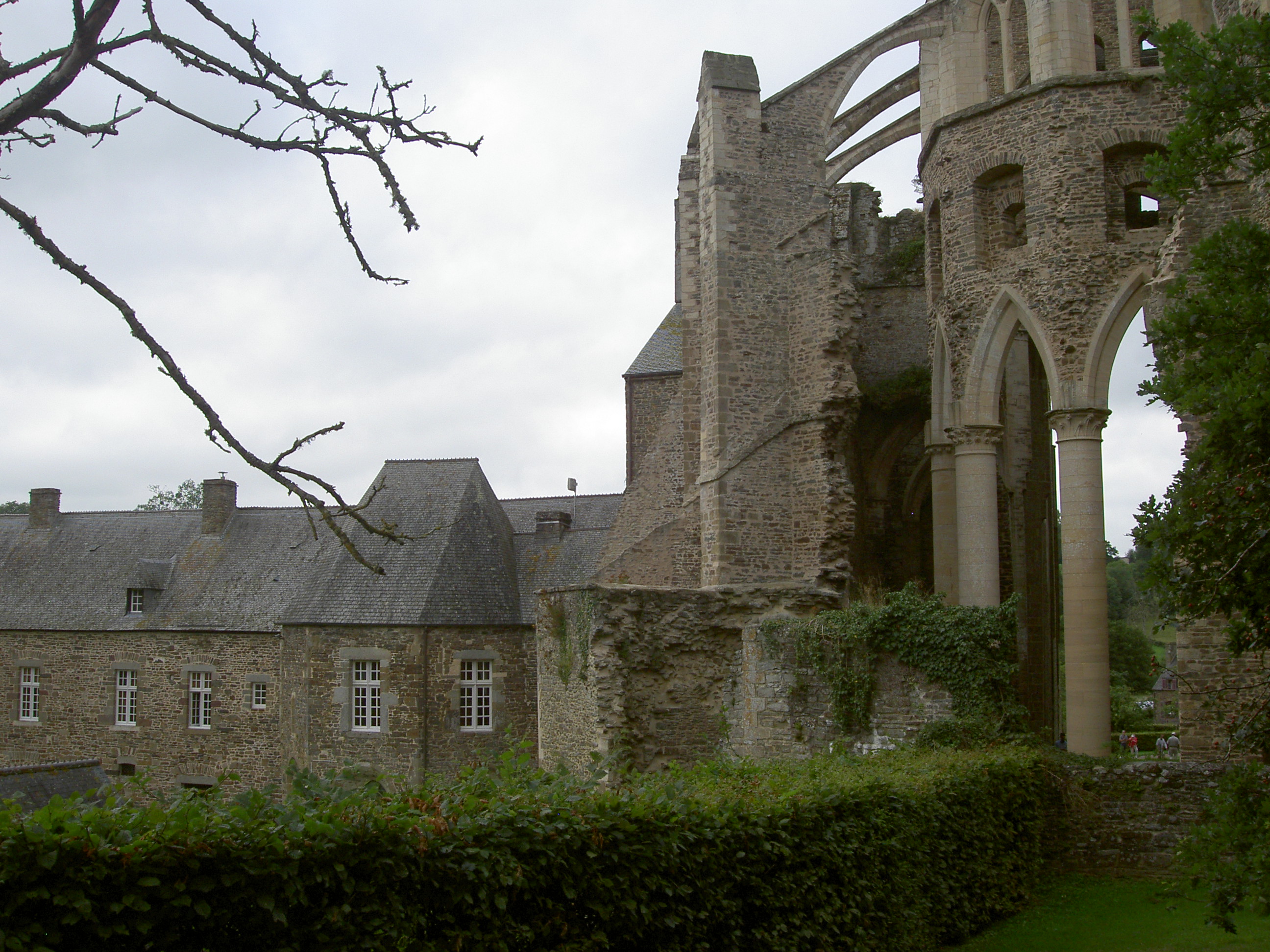
Now, in England all such ruined monasteries are due to Henry the 8th and the Reformation. But in France, there are any number of reasons. Quite what did for this particular monastery I am not sure—but if I find out, I will let you know in another blog.
 Slingsby's Miscellany