Today was a long day, occasioned by my mistake in booking the car for the wrong date, as explained in my last blog. We had to return the very small car to Cherbourg, and swap it for a larger one, which was, as beggars can’t be choosers and we had to take the only one available—a Mercedes!. Comfortable enough, but a bit more expensive than originally budgeted. But never mind—it will probably be the only time we drive a Merc!
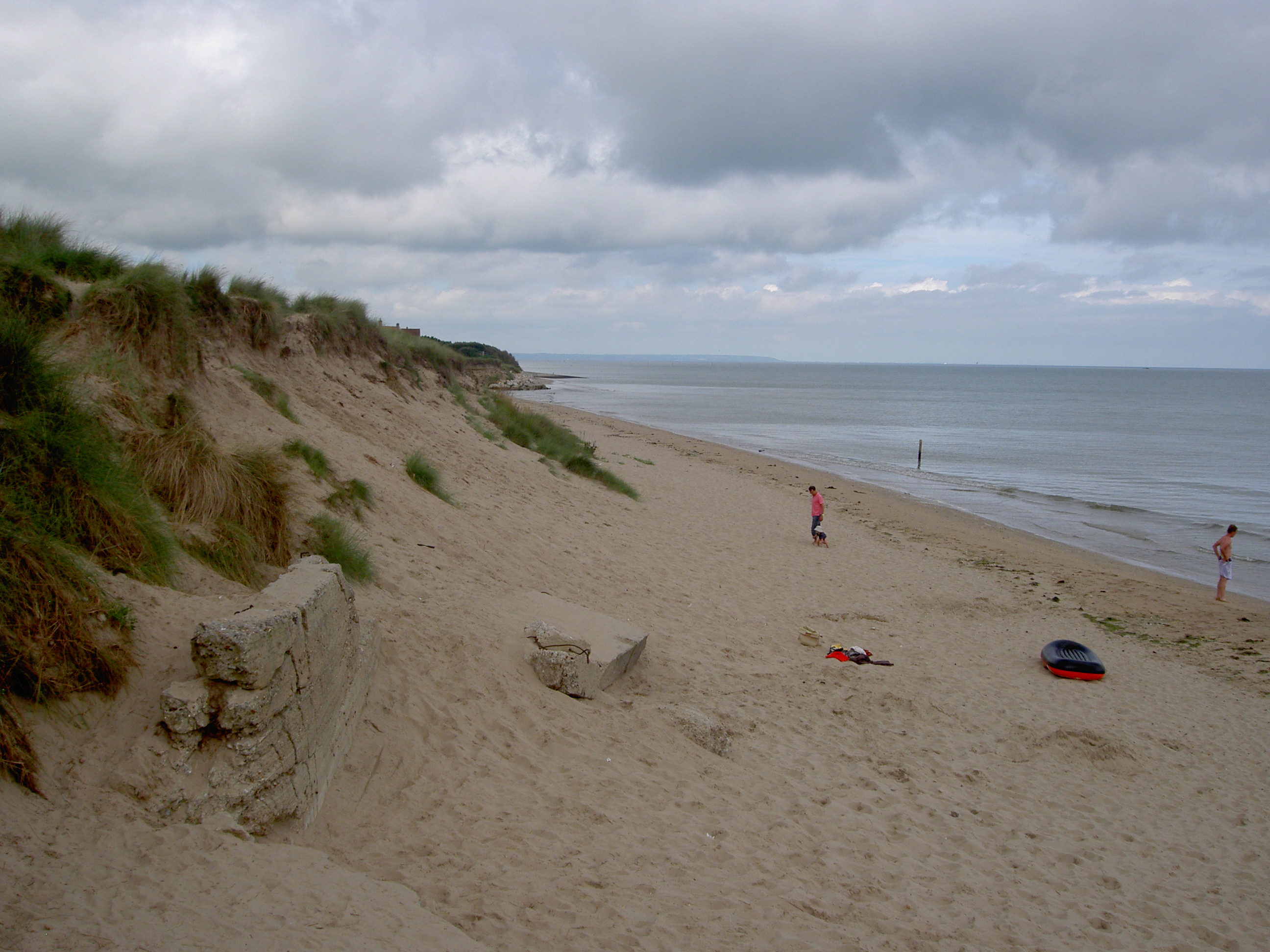
On the way back to Cherbourg, we decided to call in at Utah Beach, where, between June and November 1944, some 836,000 US forces landed, with tanks, ammunition and all sorts of provisions, as part of the Allied Invasion.
They landed on this beach:-
And took this road through the tiny village of St. Marie du Mont:-
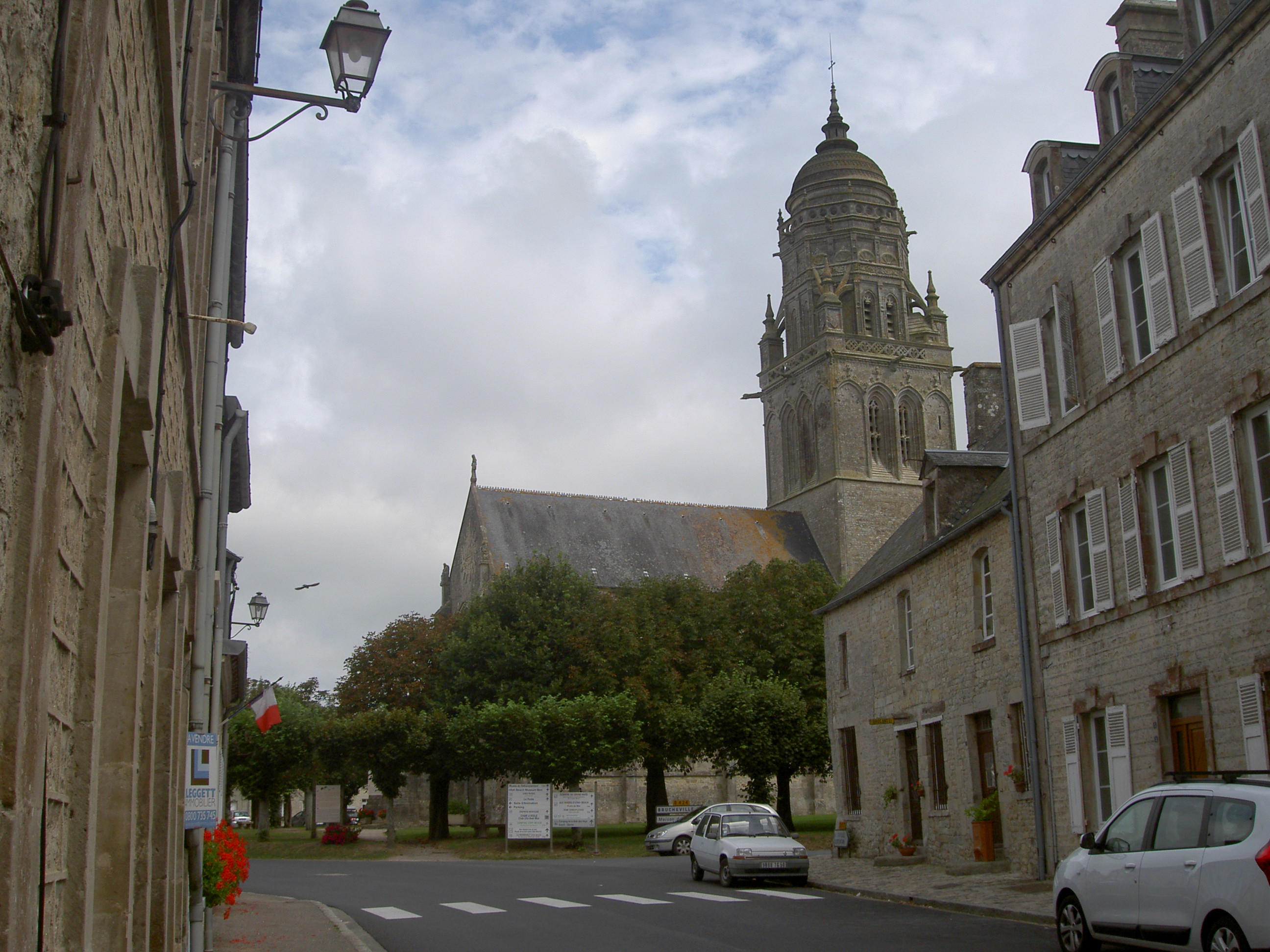
There were a lot of tourists there today, obviously making a ‘pilgrimage’ for their own reasons. Apart from the Museum of the Occupation in the photo above, there is also a small Museum of the Liberation in the village, and a very extensive museum and monument actually at Utah Beach. It was all very moving, and the Church had a number of display boards in the grounds describing various facets of the occupation and liberation.
We then moved on up the coast to Quinéville, where we picnicked before moving inland to Cherbourg. We were nearly there when I made a wrong turn, and got myself into a one-way street system, which took nearly half an hour to find our way out of—very frustrating to say the least. We had hoped to spend a bit of time in Cherbourg having a look around—but not driving around one-way streets! Anyway, we swapped the car, and found our way out with no trouble, and headed for the west coast of the peninsula for a look at the Atlantic coast—which was very pretty and spectacular. Toward evening we made our way to Granville, hoping it would be a nice sea-side town with beaches. It is in fact a very busy fishing port, which would be interesting were it not so very difficult to find your way around in, and were we not quite so exhausted—so we simply went back to the gite!
Tuesday is market day in Villedieu-les-Poêles, and what a market it was!
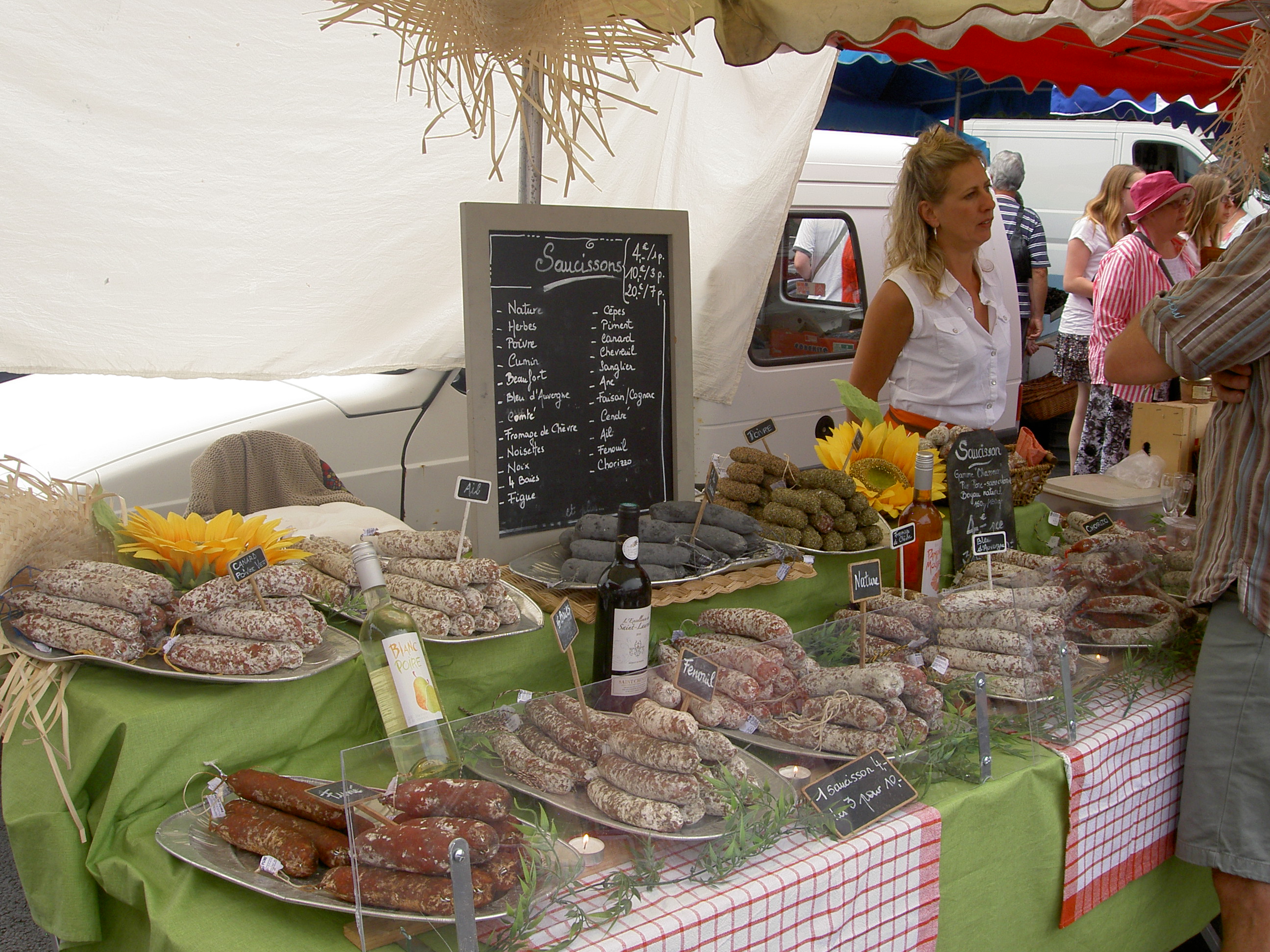
Our gite owner gave us some advice on where to park, and for that we were very thankful as the town was literally heaving with people—both locals and tourists. The market covered many streets, and I doubt that we actually saw more than half of it, despite being there for a couple of hours. We bought fruit, vegies, charcuterie, cheeses, saucisson, terrines and bread—all of which are French life’s little necessities! It was a memorable experience.
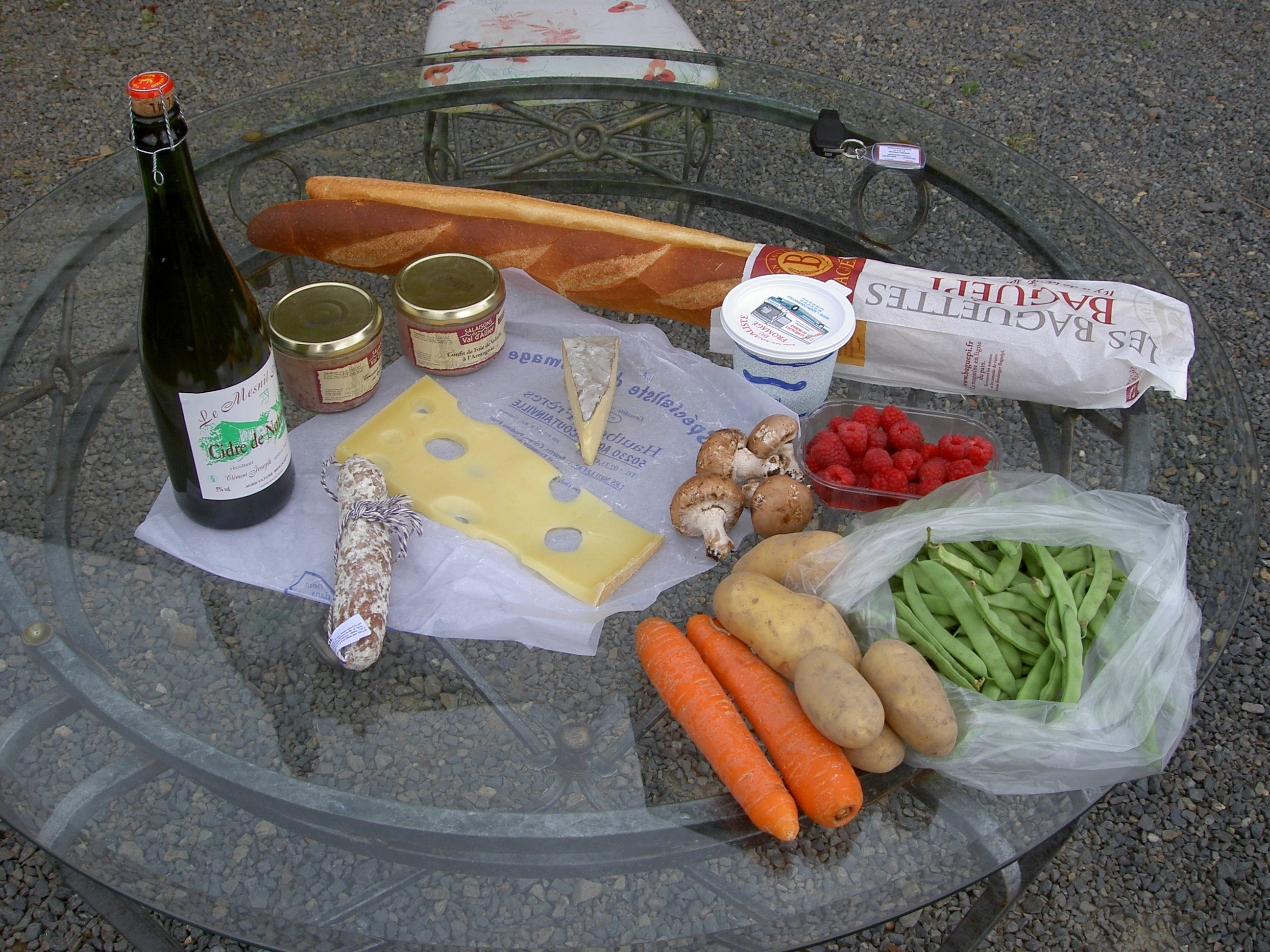
To recover before driving ‘home’, we stopped for a drink in a small bar, where I had a couple of glasses of the most wonderful local ‘pression’ (ie draft) beer. Fortunately Ann volunteered to do the driving!
Later in the evening we took a leisurely drive around some of the local country-side, visiting Montbray, a very small village which appeared to be completely deserted, like a ghost town. Then on to St.Sever-Calvados, which was a bit more lively in that we managed to buy a bottle of wine (something we had forgotten to buy at the market, believe it or not!), and saw at least three people. From there, by way of a monastery/hermitage (still in use), on to the hill-top town of Vire. This was once a fortified walled town, but now very little of the wall exists, just the old ‘Clock Gate’ and the ruins of a castle tower. A quick look around, and then back to the gite to cook dinner.
Having mentioned Calvados reminds me that this part of France is famous for its apples and apple products such as cider, recipes of all sorts containing apples, and of course the famous apple brandy known as Calvados. We have tried some cider—not bad— and a couple of local apple tarts, but have not yet had any Calvados. The interesting thing is that we have seen hardly any apple trees—so where all the juice comes from I don’t know! Most of the agriculture seems to be pasture with cows grazing, or corn fields. Certainly not many apple trees.
Wednesday we went to Bayeux to see the famous tapestry, which is in fact not a tapestry at all, but an embroidery. Still, at about a metre in height, and some70 metres in length telling the whole story (from the Norman’s perspective of course) of the treachery of Harold, and his defeat at the Battle of Hastings by William the Conqueror, it is very impressive. It is over 1000 years old, is now housed in a custom-built facility, and viewers are given an audioguide to listen to as they walk very slowly past it. Despite the queue, it was an interesting experience and well worth the trip. Also, Bayeux has a magnificent Cathedral, which is worth going to see in its own right. There are also many mediaeval buildings which have survived wars and revolutions. It is a lovely city, and well worth the visit. Even parking was good!
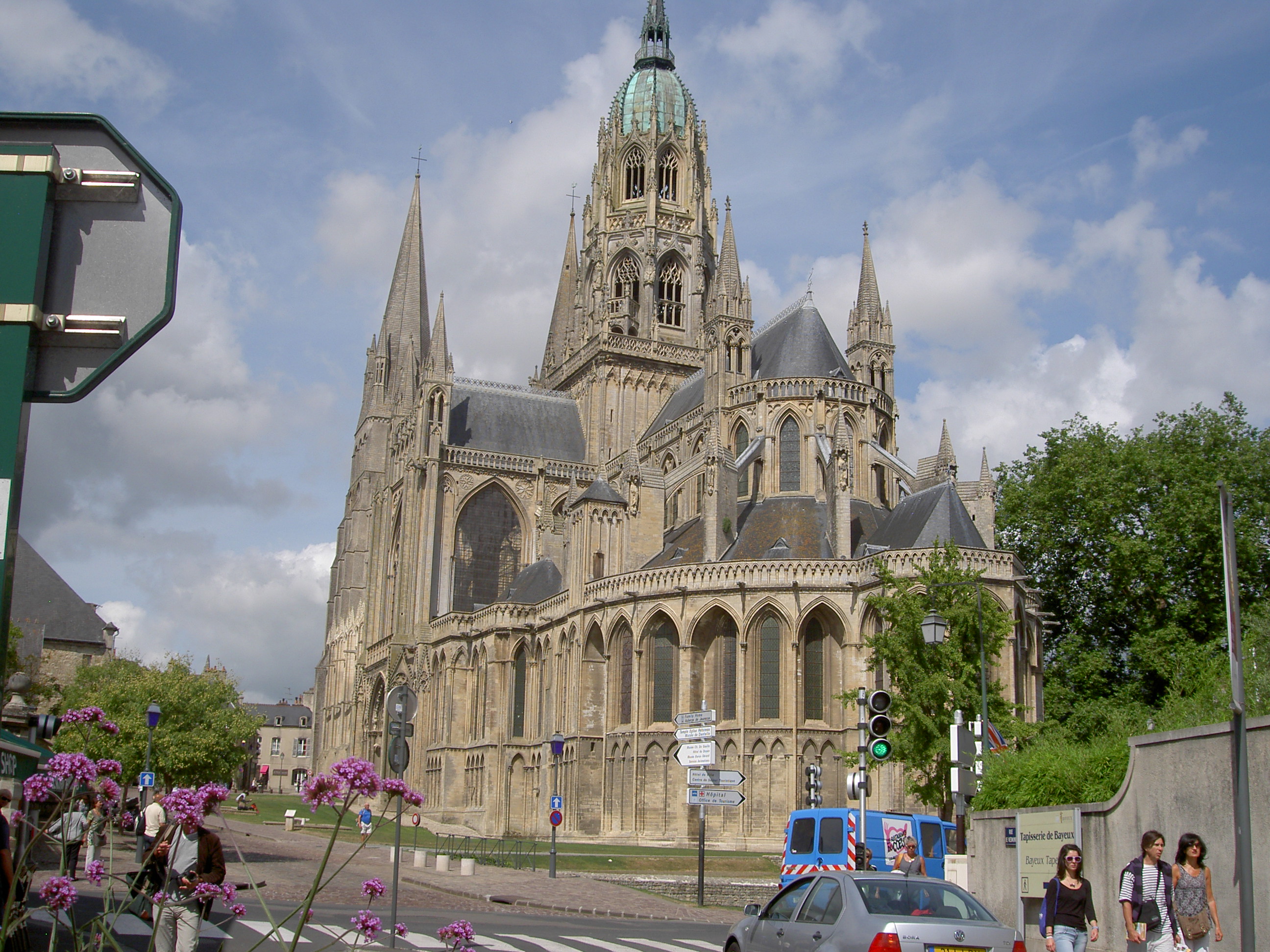
Not far from Bayeux is the tiny town of Port-en-Bessin-Huppain, which has a lovely harbour and an ancient tower, built by Vauban in the reign of one of the Louis. And not far from there is Omaha beach, another of the very significant beaches in the June 1944 landings—so we made a detour there. But of course, on the way out of town we took a wrong turn, and made a very long detour to find our way back onto the right road.
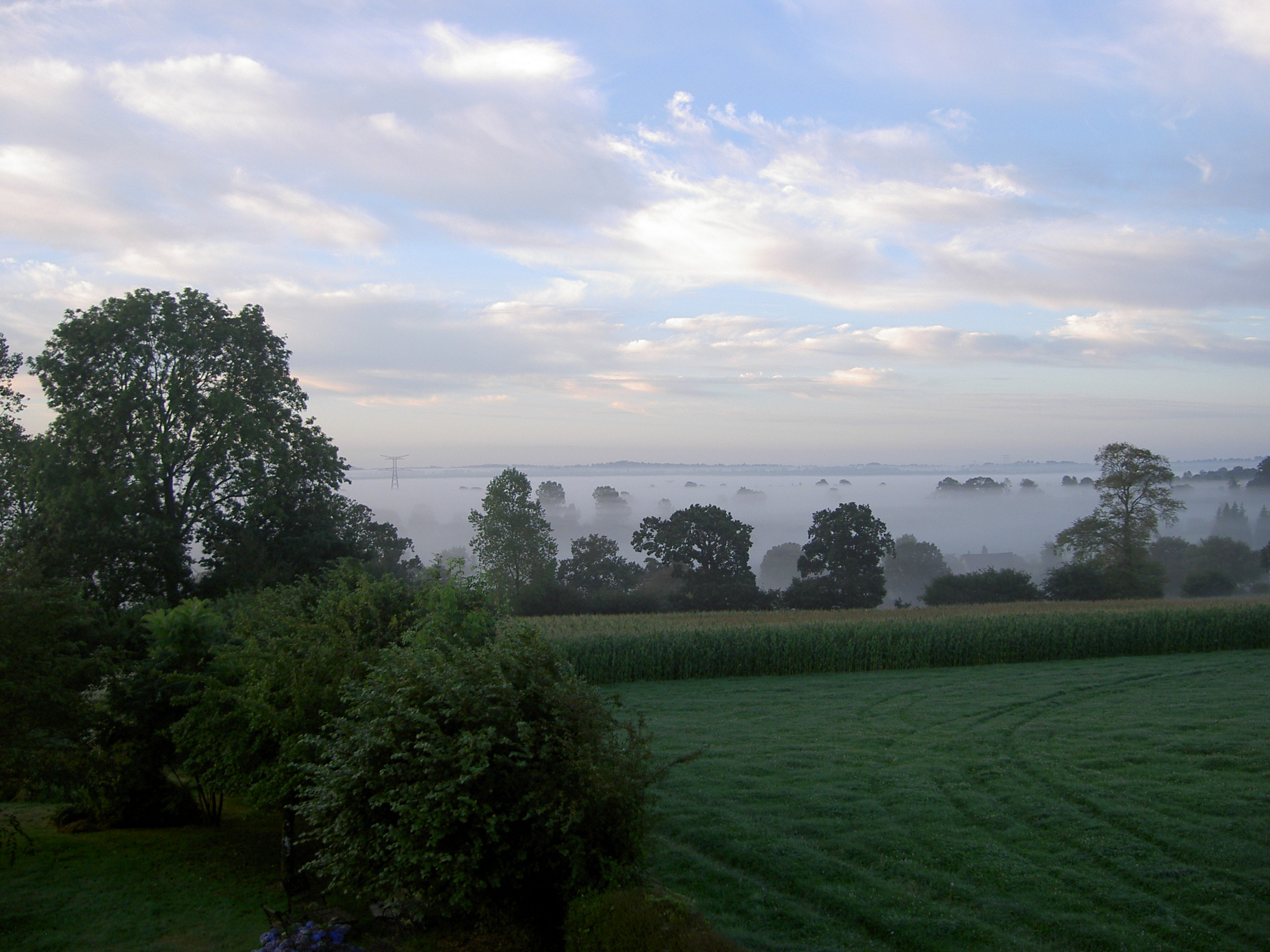
We have nearly completed our first week in France, and 7 weeks since we left Australia; and now, some six weeks past the summer solstice, it is very noticeably less light early in the mornings than when we first arrived in the UK. We are also well into the season of mists and mellow fruitfulness, and this morning, the view from our bedroom window was amazing! The entire valley below us was filled with mist, with only the tops of trees visible like so many islands, and a pylon sticking up like the mast of some long-lost sailing ship. But above the mist, the sun is shining.
More in a few days!
 Slingsby's Miscellany