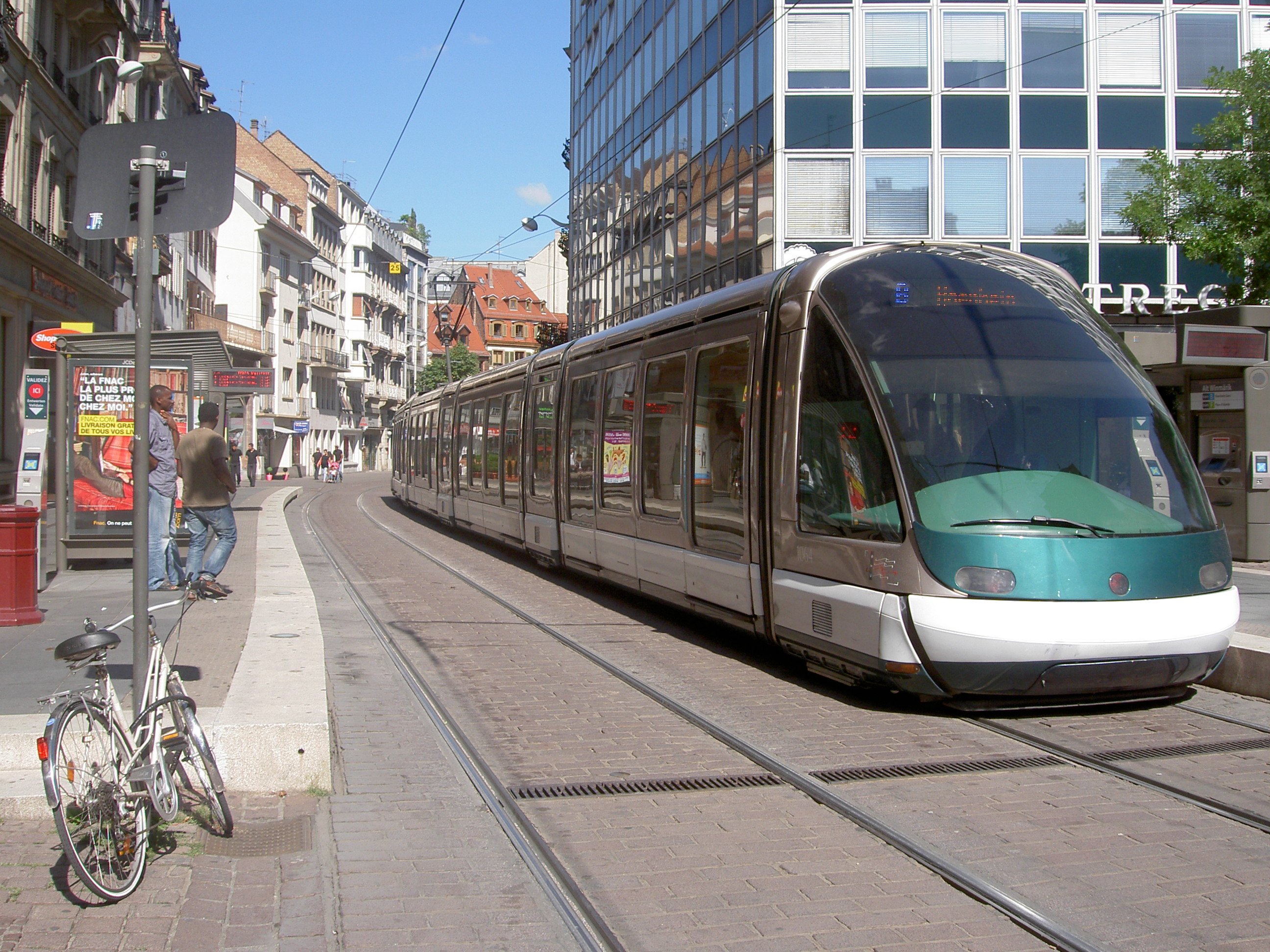
August 27, and it is my birthday. It was great to get phone calls from Helen, Peej and Amy-Ann, and it did seem strange not celebrating with them. For a birthday treat, it was decided that we would not actually drive anywhere—for the first time since arriving in France,—so we took a tram into the centre of Strasbourg. The trams here are about the same length as three Melbourne trams tied together, but much shorter units so they can snake their way around the corners. They are very clean, have well upholstered seats, and seems to be well patronised.
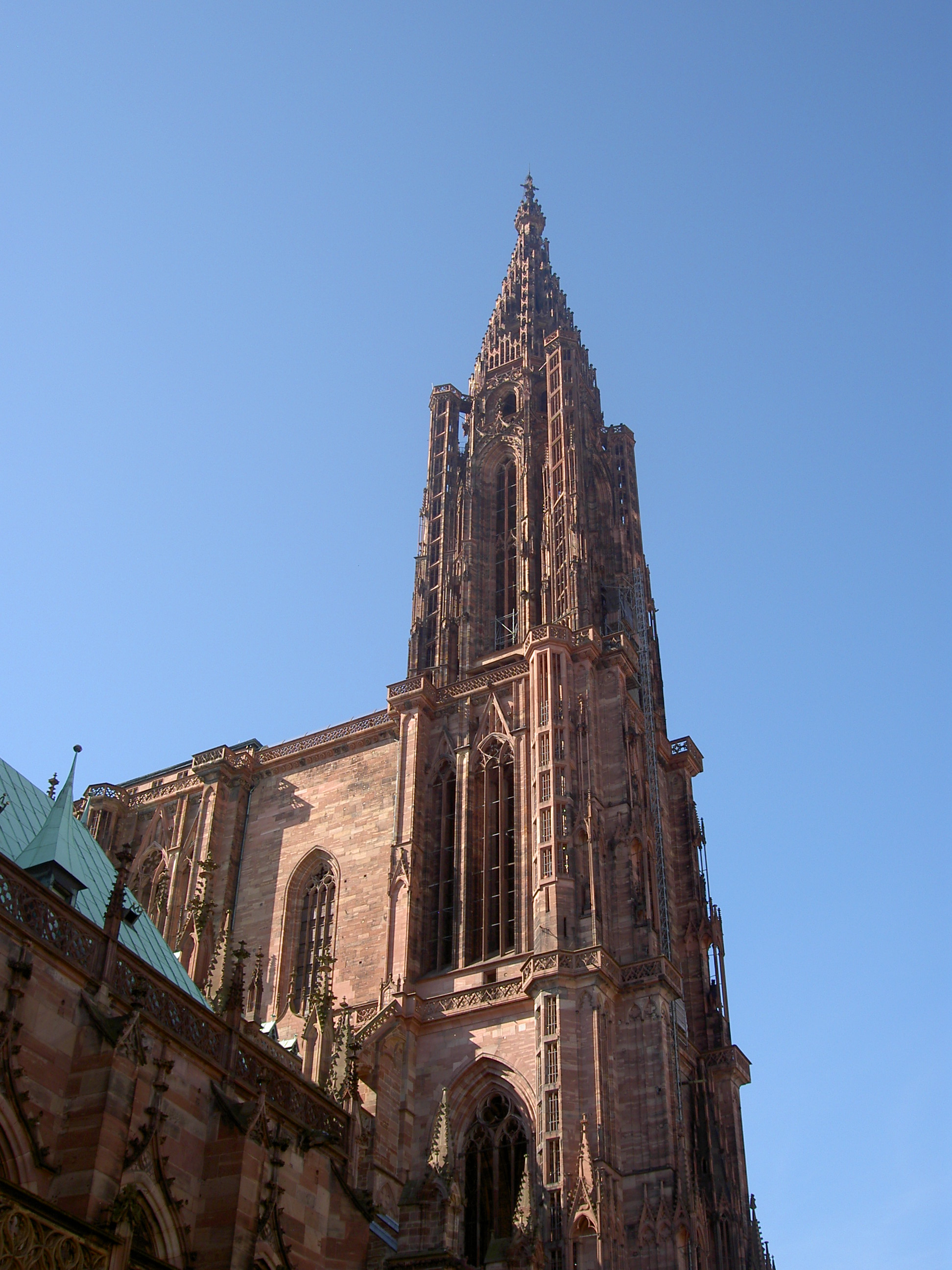
We strolled around the Cathedral, which we had seen last night illuminated by a very impressive sound and light show. It is perhaps not quite so vast as Chartres, but much more ornate on the outside. The front wall, with the towers and spire, is perhaps the most impressive, as it is very tall, and looks fragile due to the many layers of thin columns, rather like organ pipes, that decorate the entire edifice. In the light show, illuminated from every possible angle, (including from behind the ‘organ pipes”) it was possible to see the intricacies of the structure. But in the daylight, whilst the ornate structure was just as impressive, it looked rather drab and dirty!
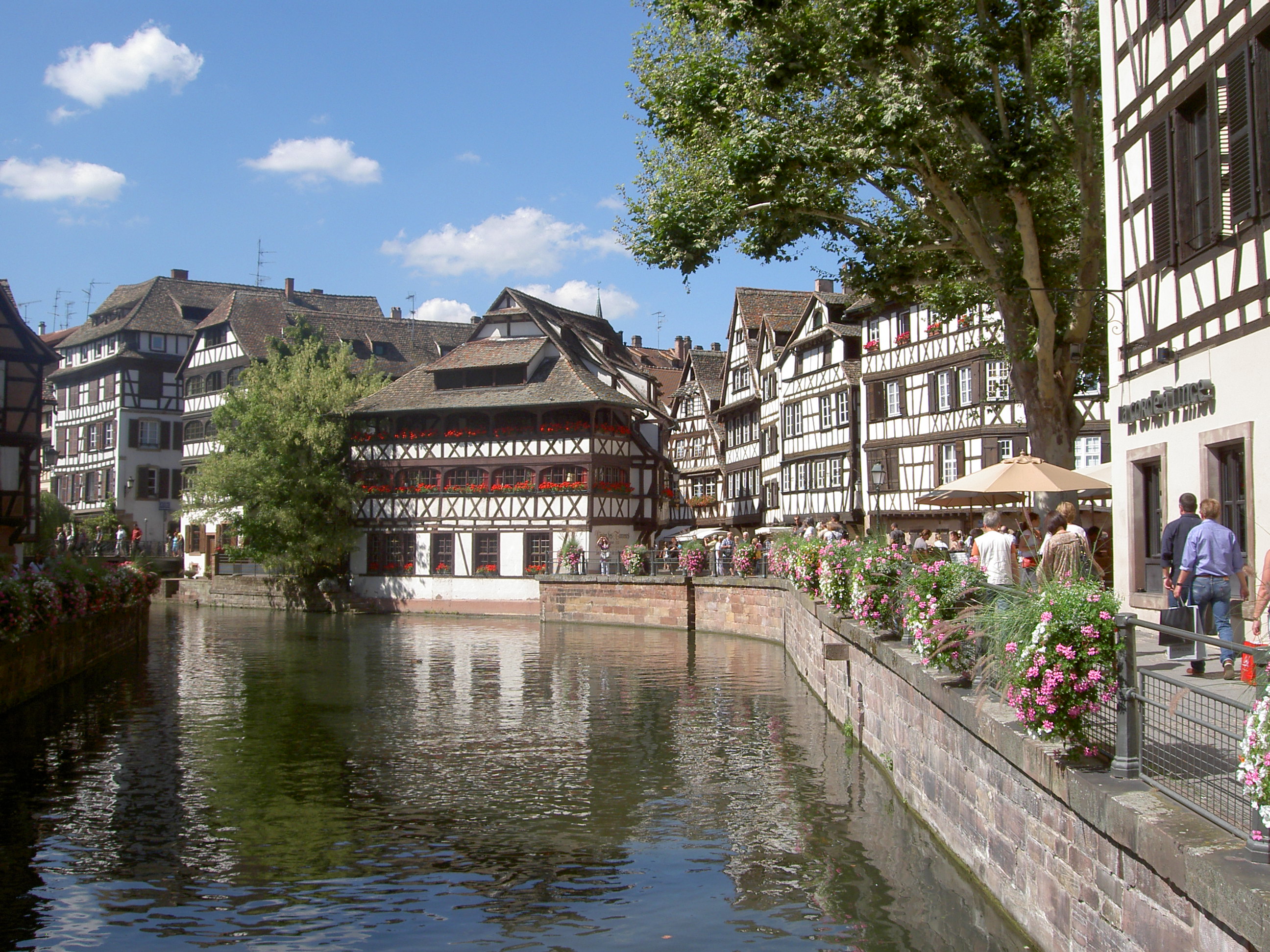
We then strolled to the quay, where we boarded a river boat for a very leisurely trip around some of the many canals and anabranches of the Rhine which flow through the older parts of Strasbourg. There was an excellent commentary on the boat, which described the very complicated history of Strasbourg, having alternated between being French and German over the centuries, not to mention the Gallic-Roman period, and times of (I think) Danish occupation. Many of the older buildings have been very well preserved/restored, and are now thriving cafes catering for the booming tourist industry.
The boat ride also took us past the new European Parliament buildings and their related administrative offices, and the Court of International Justice for the Rights of Man. Whilst very impressive now—all huge, glass, steel and concrete—I can’t imagine them surviving the many centuries that the old building have already withstood!
It would not be a birthday without a drink or two, so we did what other tourists were doing, and sat under the umbrellas of a café in Place du Marché des Cochons du Lait (originally a market square specialising in the trade of suckling pigs), where we treated ourselves to local Tarte Flambée and, for me, a couple of local beers. Ann and Nicole contented themselves with a shandy each.
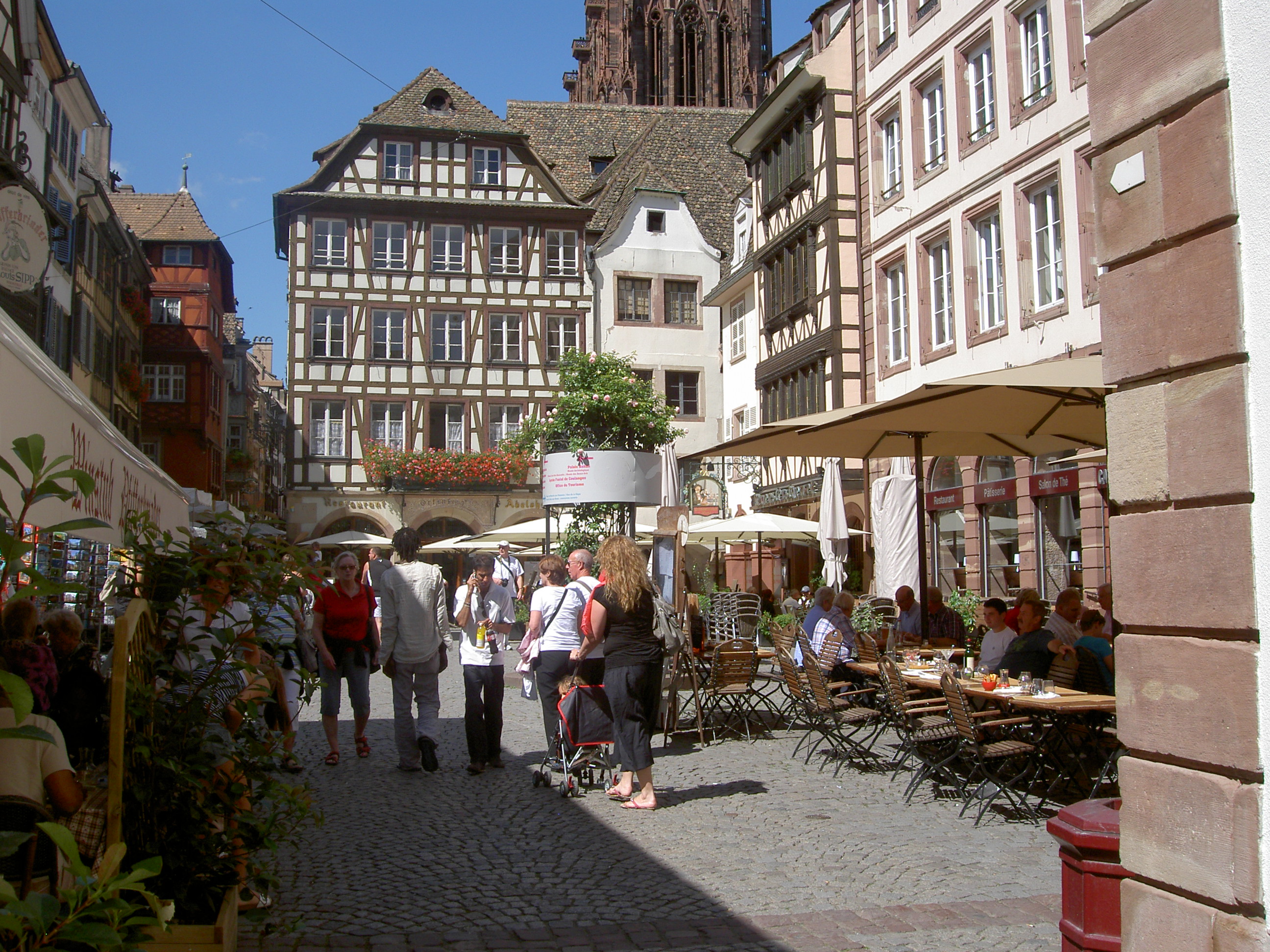
It was very pleasant to sit there for an hour or so, until the inevitable smoker turned up, and it was better to leave. It was very noticeable, and unfortunate, that of all the cafes in the square, with collectively loads of people, we copped the only smoker! Still, it was probably time to move on anyway. So we wended our way slowly through the old Tanneries and market places to the ‘covered bridges’, probably designed by Vauban, (you may recall I have mentioned him before as a fortifier of old towns), and, of course on to another café for another birthday beer. It is of course very important to maintain body fluids during these warm, lazy, European summer days! A stop at a patisserie to purchase a local (birthday) cake for tea, and we caught the tram back to Schiltigheim.
Tuesday 28, and we went for a drive in the country, to Obernai, some 50 k away on the very edge of the Voges mountains. Ann drove, and as Nicole navigated, it was the first time we got to a destination without getting lost! Obernai is an ancient town, with the typical Alsacien architecture as shown in the photo here and of Strasbourg..
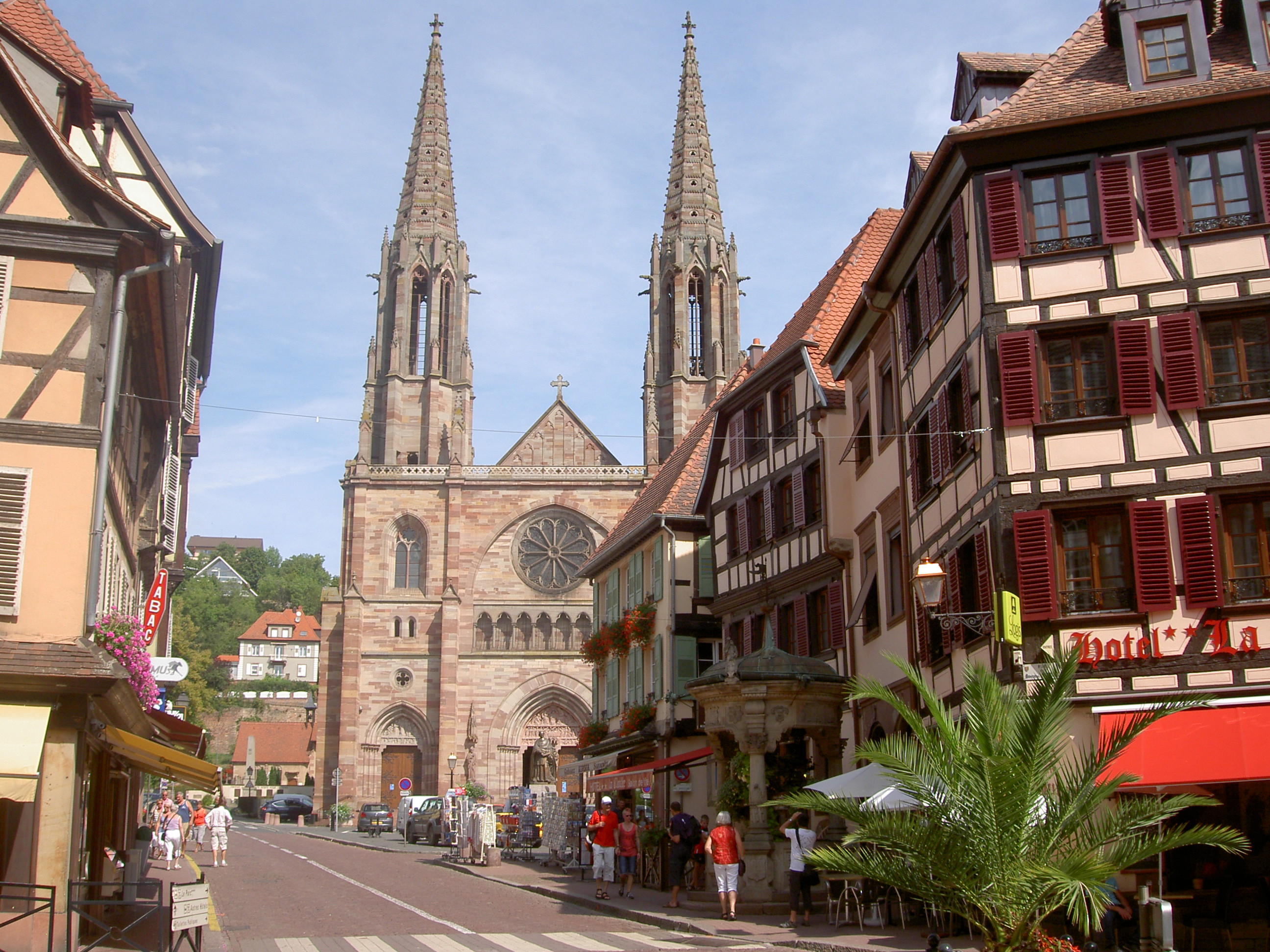
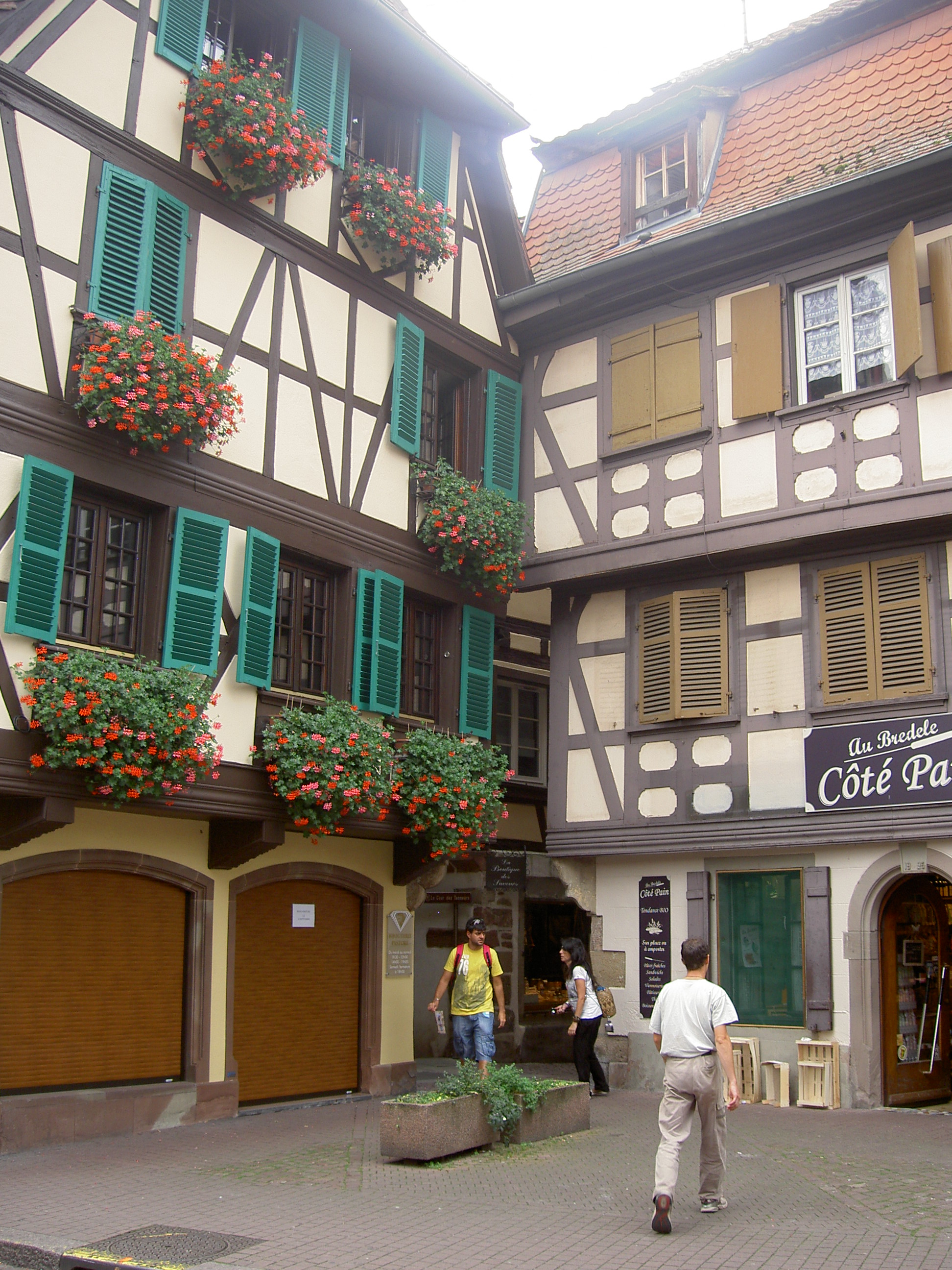
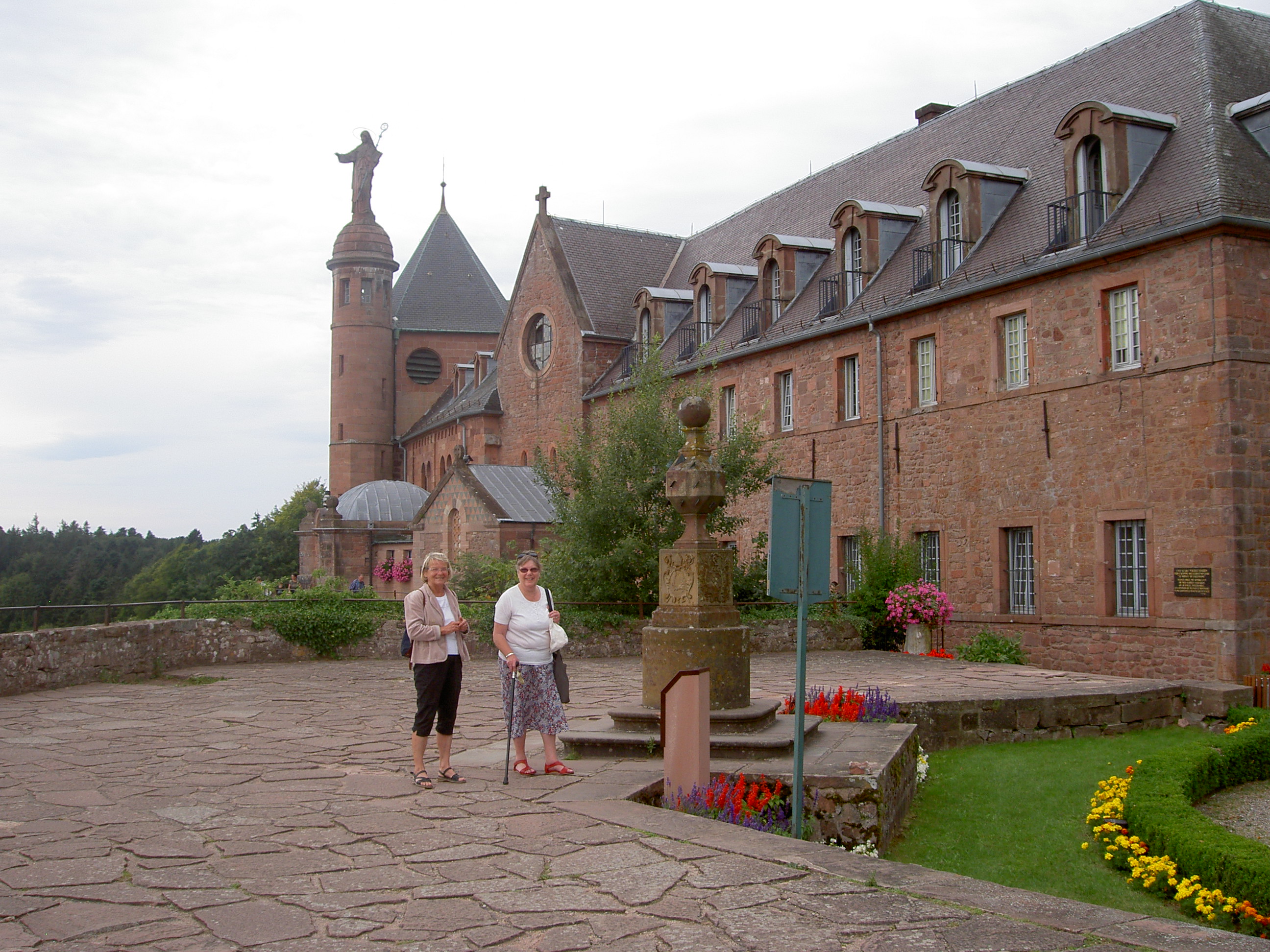
Believe it or not, there are two small streets leading away from behind the guy in the yellow shirt! Clearly it now depends on tourism, and just about every well-preserved building was a café or tourist-type shop. But it was very attractive. After a coffee and a good stroll round, we took our leave of Obernai and drove to the top of Mont St. Odile, to the convent there. St Odile was a 10th century saint, who was born blind, but who was cured by the waters of a spring near the top of the mount, and she established the convent there. Today its claim to fame is that there are prayers said 24 hours a day, seven days a week by relays of sisters who overlap at the change of shift so that the continuous string of prayer is never broken. It relies almost entirely on tourism to maintain its fabric and expenses, and there was no shortage of tourists there today.
After returning home, I decided I needed a bit of a ‘power-walk’, as all my walking over the past few days had been at snail’s pace. So I walked into Bishhiem, about a k or so from Nicole’s place. Where Nicole lives, the apartments are quite luxurious, and there are many very nice single dwellings. Indeed, one I passed had red carpet on the black marble staircase that swept up to a huge front door under a portico of Doric columns, probably built no more than 10 years ago—-more money than taste, I would say. By contrast, nearer to Bishhiem, the shoe-box blocks of flats, of some 7 stories each, were clearly occupied by those at the lower end of the socio-economic spectrum. The few shops and commercial streets I saw were rather drab, and stood in stark contrast to the bustling, bright, thriving areas of central Strasbourg. After leaving there, I walked along the banks of the Rhine-Rhone canal, which, not surprisingly from its name, connects the Rhine river with the Rhone!.
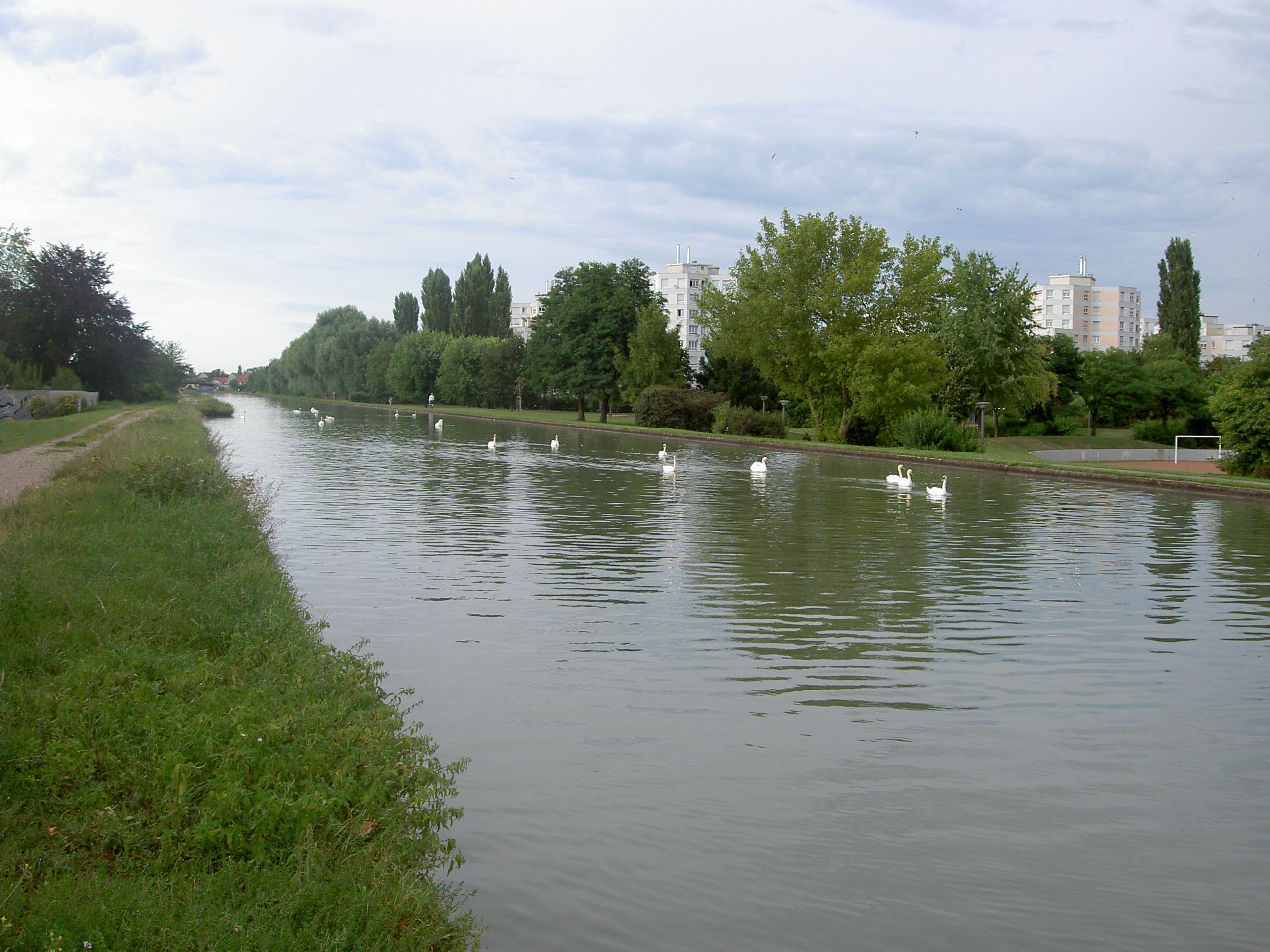
At the part I walked along, it was some three metres above the surrounding suburbs, and must have provided quite a few engineering and surveying challenges in its construction.
Tonight is our last night at Strasbourg, and Ann and Nicole have gone out to see, amongst other things, a fireworks display. I thought I could use my time better by completing the blog. Tomorrow we head about 100K south, and a few Ks east, crossing the Rhine, entering Germany and visiting a couple of Dickensians in the Black Forest at Freiburg.
 Slingsby's Miscellany