The sea-side township of Argelés Plage, at the northern end of which is where we are staying, is about 3km long, and in places the built-up area is about 500m wide. In other places it is no more than 100m, and it lies between the old town of Argelés-Sur-Mer, and the sea. The beach itself is separated from the building line by a grassy strip some 50 m wide, which is dotted with a local variety of pine tree, and where several games of pétanque can be seen most evenings. In places, there is a path through the trees, and at the ‘central’ beach, the grass is replaced by a wide, paved promenade. It is all perfectly flat, and one can walk or ride a bike the whole length without any cars interfering. Beyond the grassy/paved strip, there is about a 50m wide beach of fairly coarse sand, which is so level, I suspect it is regularly raked even though I have seen no machinery.
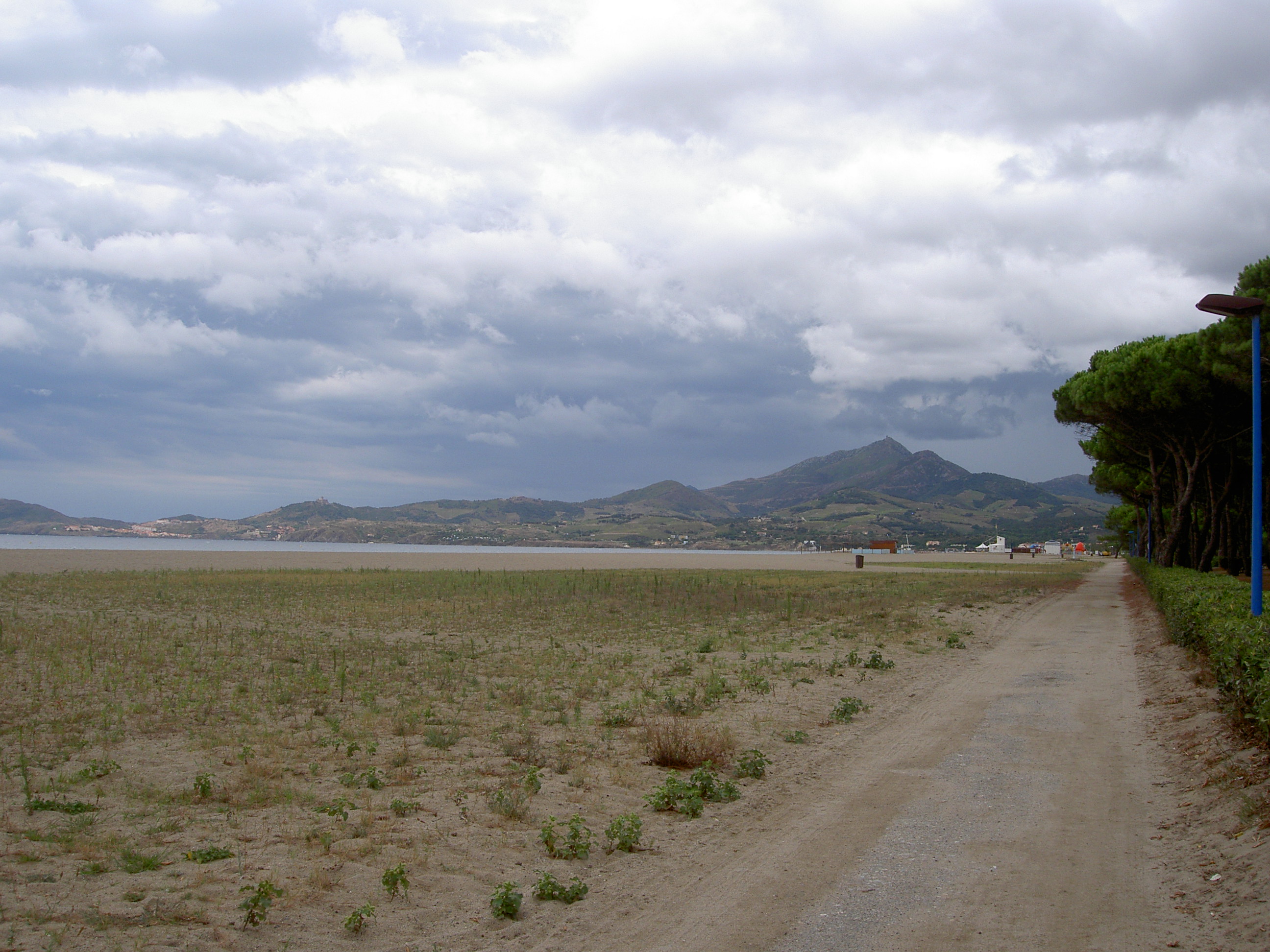
Toward the water’s edge, the beach drops a metre or so very sharply, and there is a ‘plateau’ of level sand some 2-3m wide before the actual sea. It is on this plateau that most of the beach-goers sit, so from the grassy and paved areas, the beach actually looks deserted, and it is not until you cross most of the way on the sand that you can see anyone! At this time of year, the beach-goers are mostly elderly—all the young families having returned home as school has just started again after the summer holidays. In fact, on the day we arrived, the town was jam-packed with cars, and it was impossible to find a place to park. But these were mostly the departing holiday-makers, and by the evening, it had sorted itself out and the town has been relatively quiet since.
Argelés Plage itself has no buildings of historic interest whatsoever, even though it does have an interesting, if rather short, history. The first sea-side settlement began just at the end of the 19th century, as a place of retreat for the more wealthy residents of Perpignan and the more inland towns such as Toulouse, and there are a few substantial buildings remaining from that time.
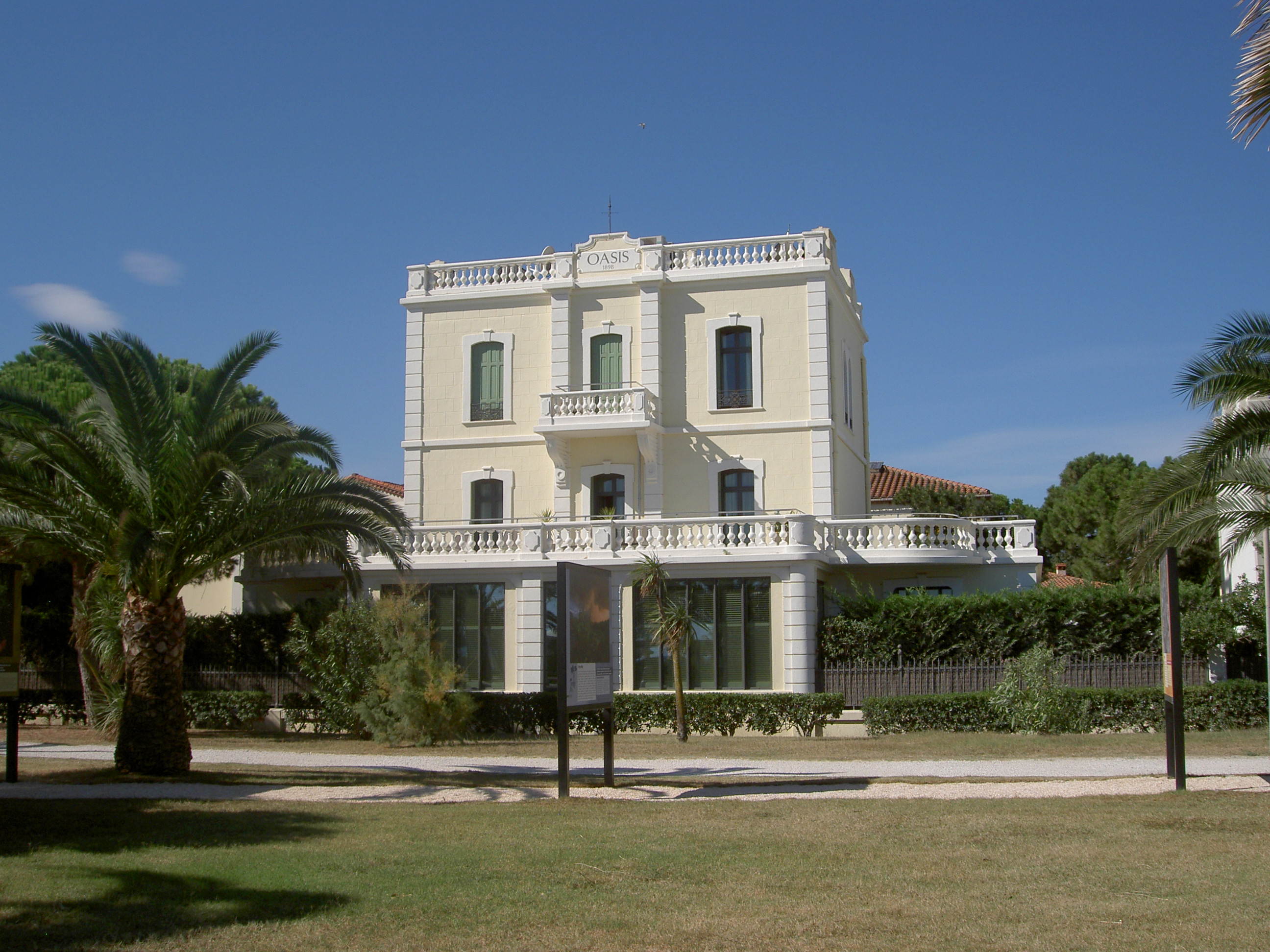
A few hotels and restaurants followed, but development of the town was interrupted by the 1914-1918 war. Then, in 1938/9, the Spanish Civil War resulted in over 100,000 refugees fleeing the violence there and being accommodated in makeshift camps along the strip which is now where most of the hotels and apartments blocks are found. Nothing remains of that episode of the town’s history, and it is marked only by a stone monument near the beach. Following the second world war, and the improvement in post-war family finances, there was increased demand for family holiday accommodation, and that is when the real growth of Argeles Plage started. So now, the vast majority of buildings are holiday apartments, hotels and the like, which have been built in the last 50 years or so, and quite cheaply. Further, much of the un-developed land between the Plage and the old town, is given over to camping grounds, which are heaving with people in summer, but virtually deserted now that the season has ended. In addition to the accommodations, there are a number of small retail developments, almost shanty-like in construction, being very light-weight, impermanent, and single-storey. However, they do have a lot of character, and are very influenced by Catalan culture. The one nearest to us includes a small ramshackle supermarket, a fruit and vegie stall, a couple of restaurants with most of the seating outside, a small bar with all of the seating outside, a take-away pizza place, a butcher/charcuterie, and a couple of ‘beach-ware’ shops selling beach umbrellas, beach toys etc. However, since we arrived a week ago, most of it has closed up for the winter, with only the supermarket remaining open.
Most buildings display their Catalan influences. Their walls are generally painted light apricot, or perhaps pale yellow or even pink, and the roofs are, almost without exception, made of orange terracotta tiles with a semicircular profile. The following photo of nearby Port Vendres shows this quite well.
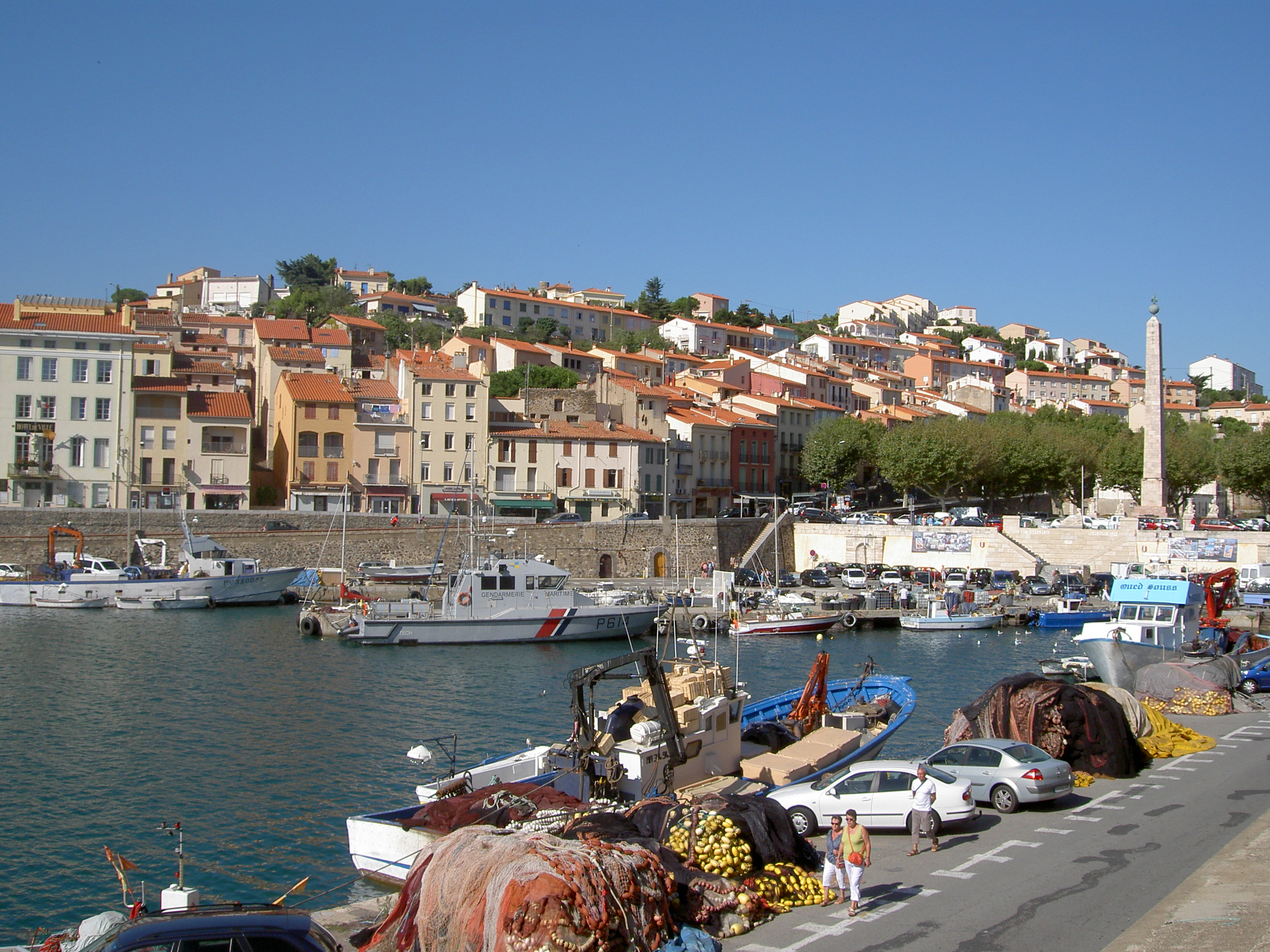
Every dwelling and shop has robust shutters on all doors and windows, even those on the upper levels. These are invariably closed tight when the occupants are out! Smaller windows, such as the bathroom, are fitted with traditional irons grills, with an outward bulge in the lower half.
The old town of Argelés-sur-Mer is a more solid-looking town, and in parts appears to be very ancient indeed. There is the usual huge ancient church, and this one has by far the most colourful, almost kitsch, alter-piece that we have seen thus far on our travels. It is huge, carved from very attractive marble, and the statues have been painted quite gaudy colours.
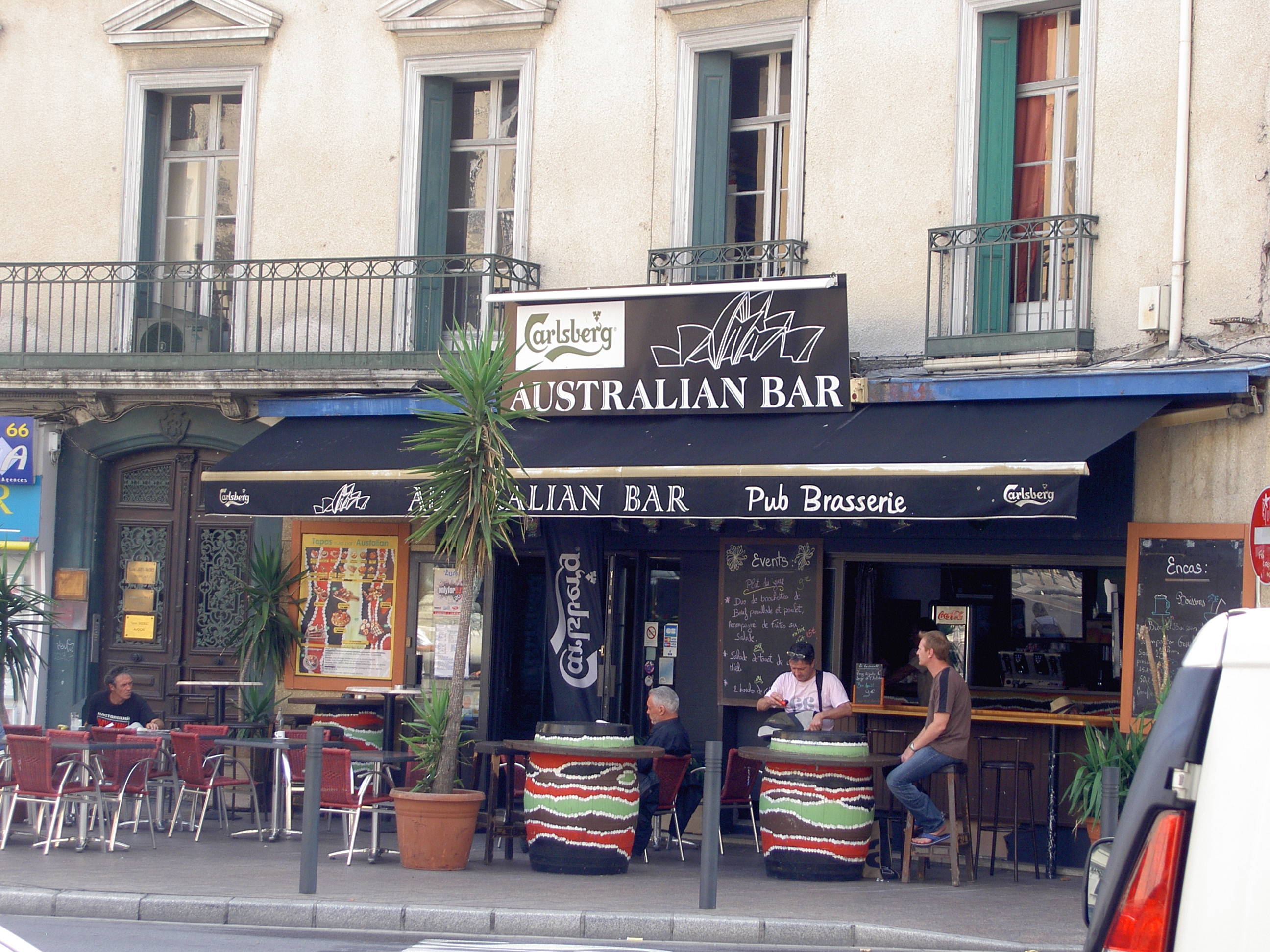
We have done very little since being here, but we have had a couple of swims in the sea, and I have had a brisk walk most mornings. We discovered there is network of busses called ‘the one euro bus’, on which you can travel, in one direction, for one euro a journey. The one through Argelès Plage starts at Collioure, and goes all the way to Perpignan—so that is where we went. We had been there before, and to be honest, the town is simply a large provincial town with not a lot for the tourist. It has good shopping in the centre, and many of the smaller streets have the familiar bars and cafes, which are very inviting on a hot day at about beer-o-clock! (but not this one!)
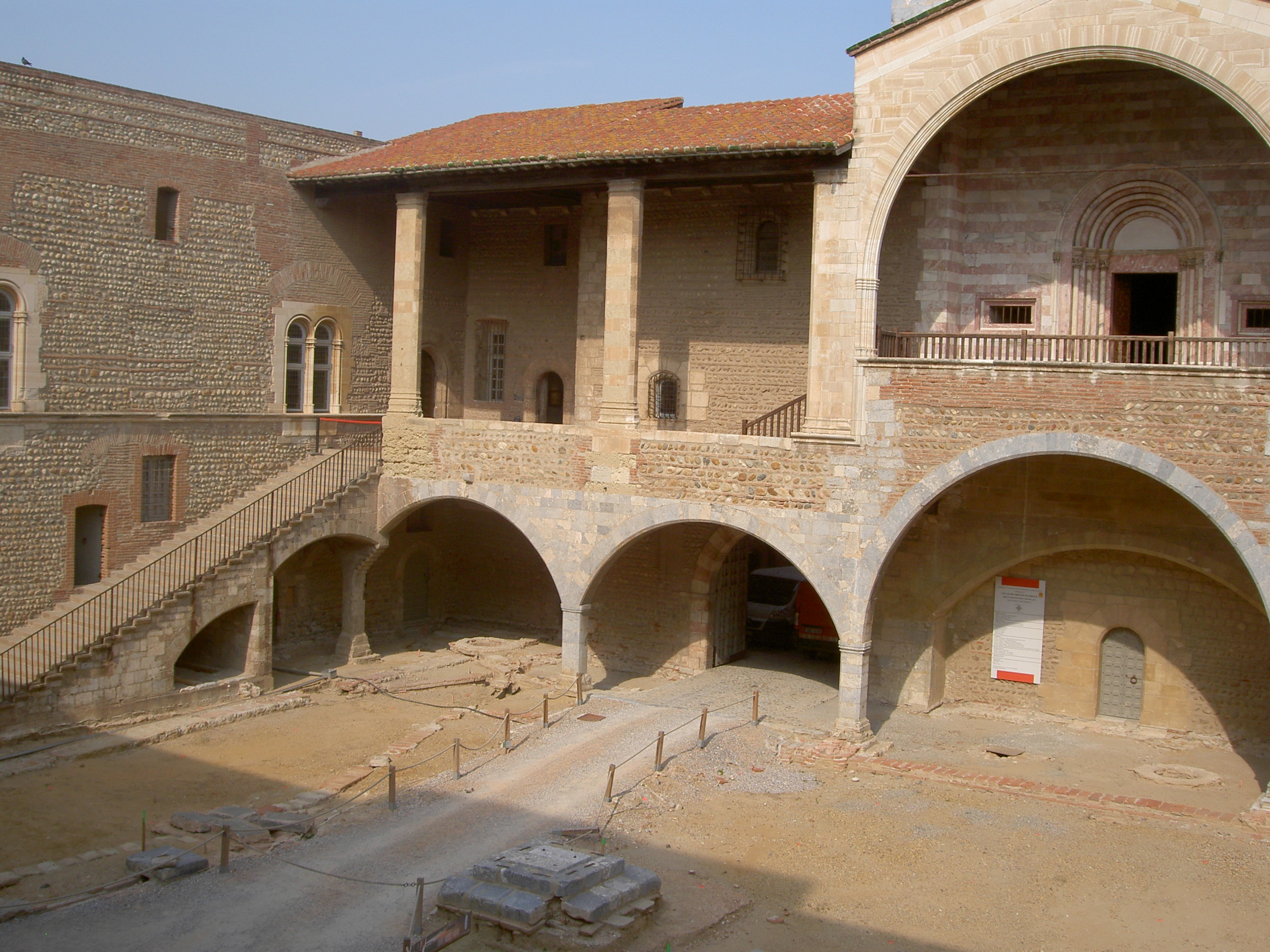
And, there is a remarkably well preserved chateau, taking up almost a quarter of the total area of the town centre, which is very well worth a visit. It was built in about the 11th century as the headquarters of the Kings of Majourque, who were important war-lords in this part of France for a few hundred years in those days. It is very solid,( almost Vauban-ish!), and is undergoing a considerable restoration just now. The more usable parts are already available for hire for conferences, banquets and the like.
We also visited, by car, the nearby medieval village of Castelnou, some 30k from here. The castle, like that at Severac-le-Chateau where we stayed a couple of nights on our way here, is on the top of the hill, with the village clustered up against its ramparts. It is not as large as Severac, but it is more advanced in its recent restoration programme, and again rooms may be hired for functions. And unlike Severac, there has been no expansion or recent additions to the village—it is still just the medieval stone village, perfectly preserved.. It was built by a family opposed to the Kings of Majourque, and the two families fought many times over the centuries. In the end, the Majourquans triumphed, not because of winning the war, but because eventually the Castelnouvians simply died out through lack of breeding! The countryside around Castelnou is quite stunningly beautiful, but very harsh, rocky, and inhospitable.
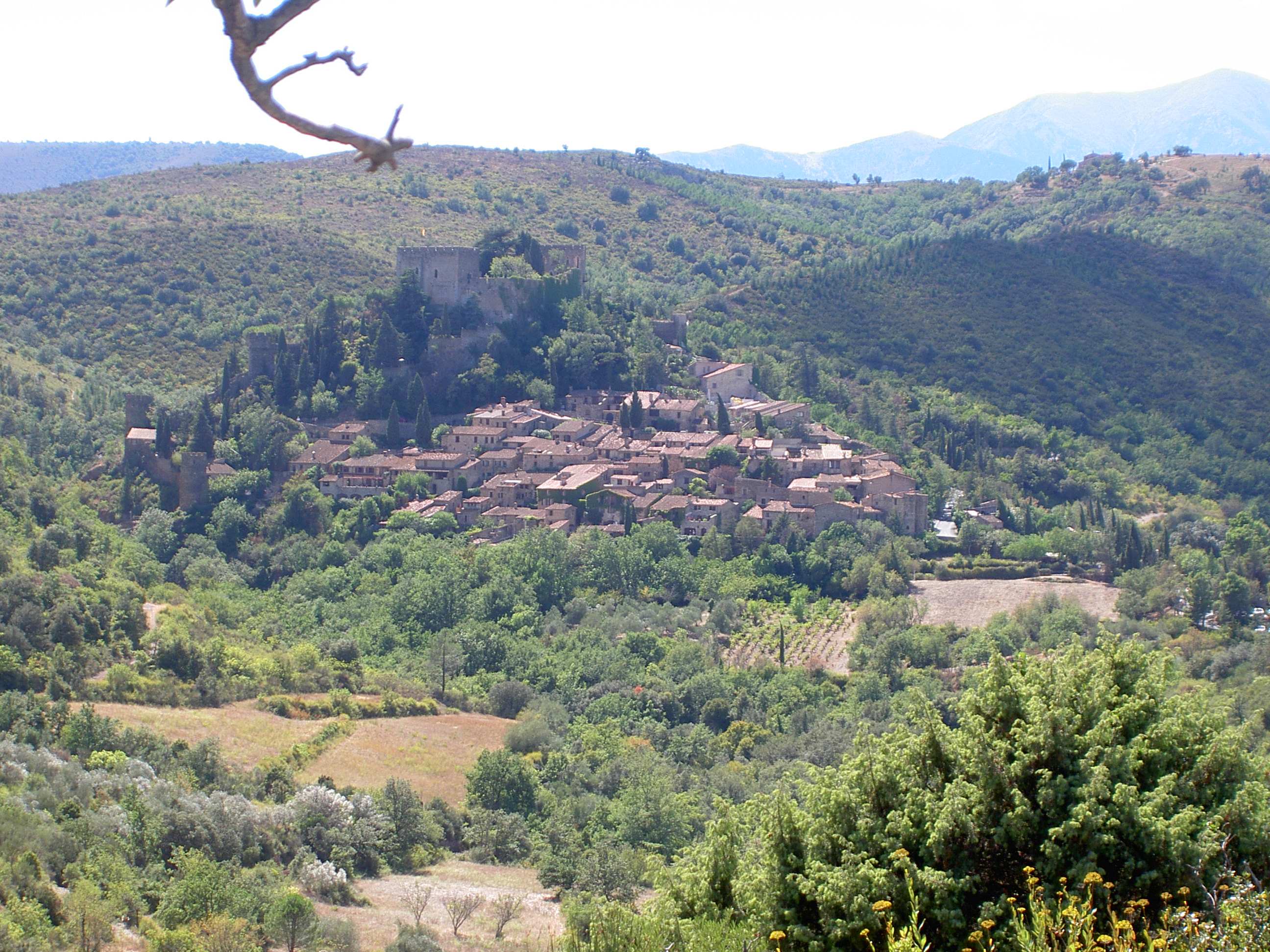
The hills are covered with small coarse-looking bushes and a few pine trees of some sort. Quite why they used to fight over it is not clear to me at all, other than for the megalomanic desire to simply control more land, useless though it may be. But is does support the growth of good vineyards, and some of the local wines are very good indeed. In fact we bought a couple of bottles direct from the chateau vineyard. The lady insisted that they would keep for at least ten years, and did not seem to understand me when I said they would be lucky to last ten hours now that I have got them. There are also some very good cheeses available from this area, but thus far I have seen neither cow, nor goat, nor sheep, so quite where the milk comes from I don’t know.
Where we are is not far from the Alberes mountains, which themselves are foothills of the Pyrenees. They have an interesting, if somewhat negative, impact on the weather here, in that they produce a wind, known locally as the Tremontane, which, once it starts, blows non-stop for days. After the first few days of our stay here in perfect early autumn weather, the wind started and we are now in our fifth day of continuous gale-force NW wind. It is not cold, just very unpleasant! Local knowledge thinks it may blow itself out by tonight—we shall have to wait and see.
Well, that completes our first week here—a week and a half to go before we head north once more for Paris, and then to England again. So more blog in a week or so, I guess!
 Slingsby's Miscellany