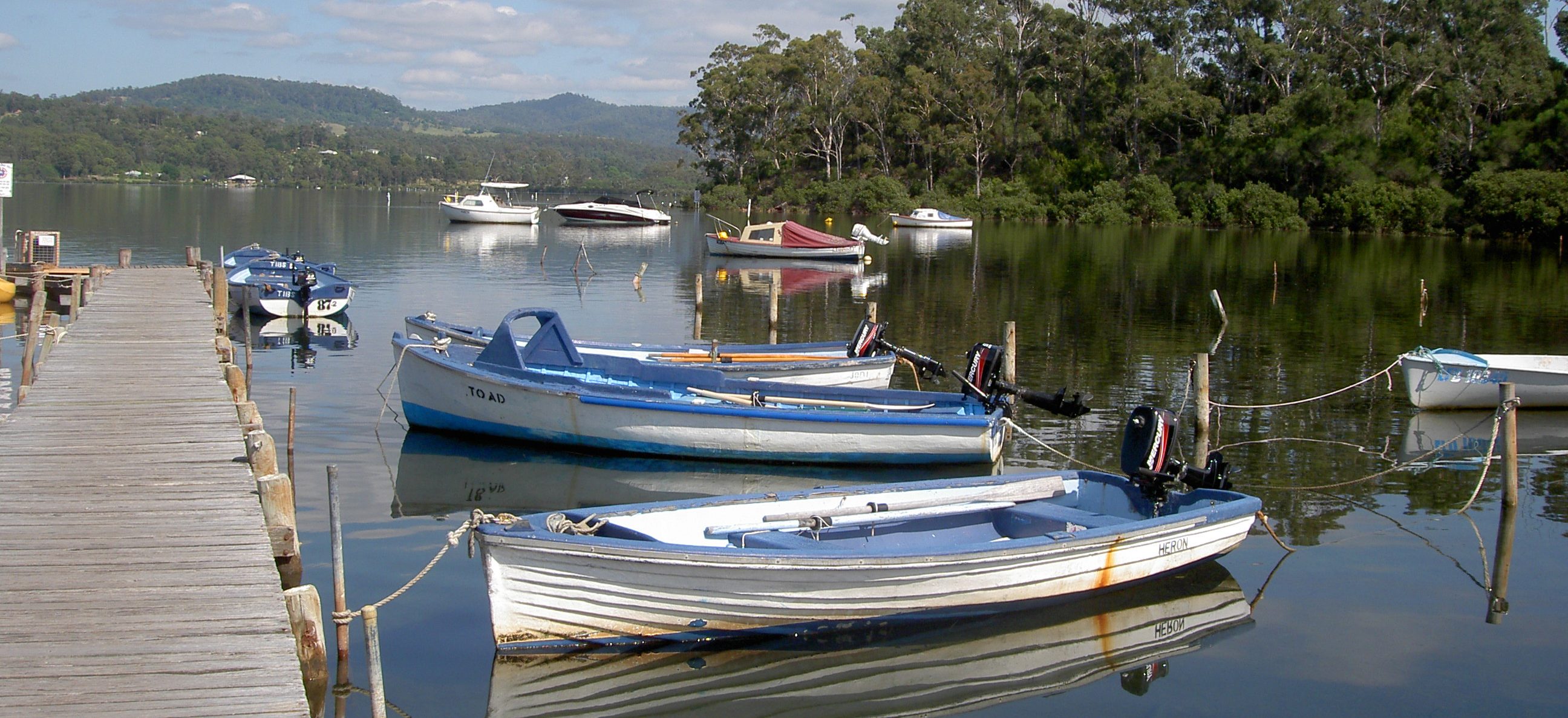
The area surrounding this part of France is steeped in history. Many of the small villages have churches, abbeys and the like which date from the 12 century and earlier, and there are lots of Roman sites. Being near the border with Spain, it has seen more than its share of invasions and strife over the centuries, but today all is peace and quiet, and the only invaders are the hoards of tourists who flock to the seaside, and to visit the old buildings. We made a second trip inland, but a bit further south than the route to Castelnou, and travelled through Le Boulou, and on to Céret. Céret is a bit of a sprawling town and its claim to fame is the Pont Du Diable (The Devil’s Bridge) which dates from the 13th century. Legend has it that it appeared overnight, and therefore must have been built by the Devil himself, as no-one else could have built it in such short time. The stone bridge spans the Tech river, and is now just a pedestrian path, having been made redundant with the increasing traffic requiring a more modern bridge.
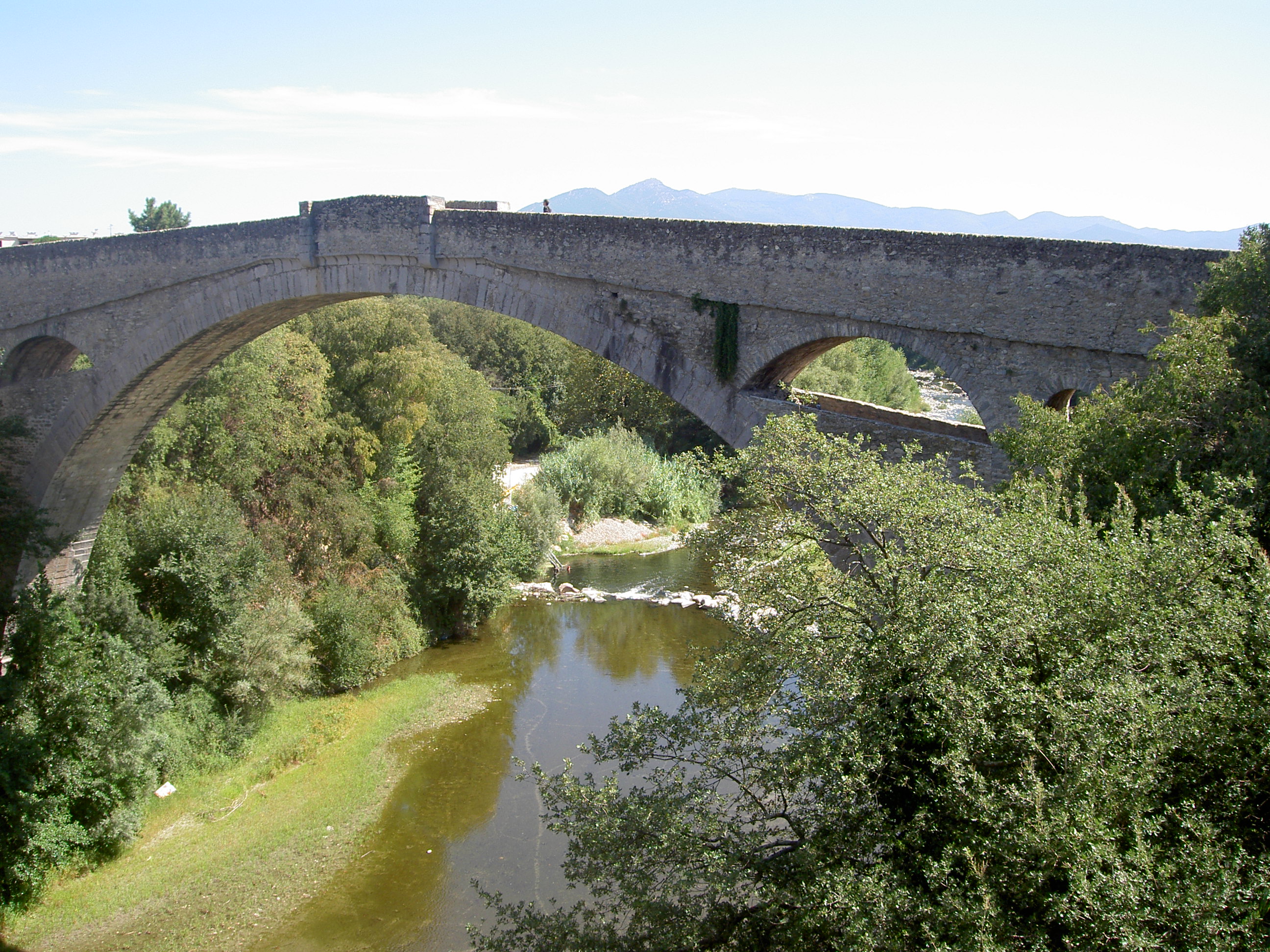
The next town is Amélie-les-Bains, a long skinny town with a one-way road in one direction, which misses the town centre, and another for coming back which takes you right through the middle. There are supposed to be thermal baths, but with the one-way road system, we failed to find the necessary road (nothing unusual about that, of course!). And then to Arles-Sur- Tech. Arles-sur-Tech has an ancient Benedictine cloistered abbey dating from the 12th century, which is stunning. The cloisters are beautifully restored, and incredibly peaceful– so much so, that Ann sat down to peruse a brochure, and promptly nodded off!
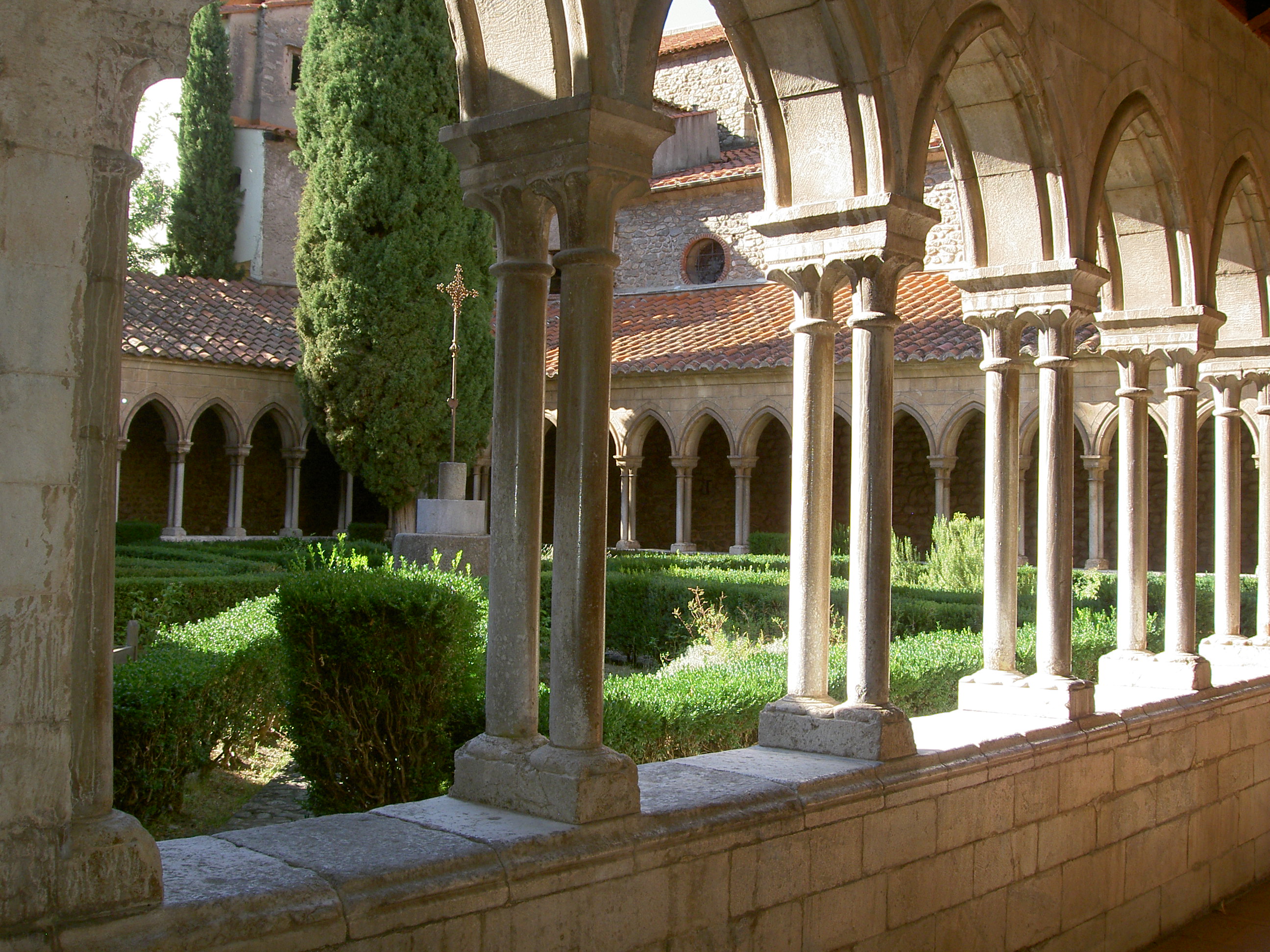
The abbey itself is not that large, but incredibly ‘massive’, simple, and very solid. Like inside most of these ancient buildings, it is not possible to get photos which would do justice to the building. The two rows of five columns supporting the roof, which are generally round, are square, well over a metre thick, but only about four metres tall, giving the ‘massive’ feel to the building.
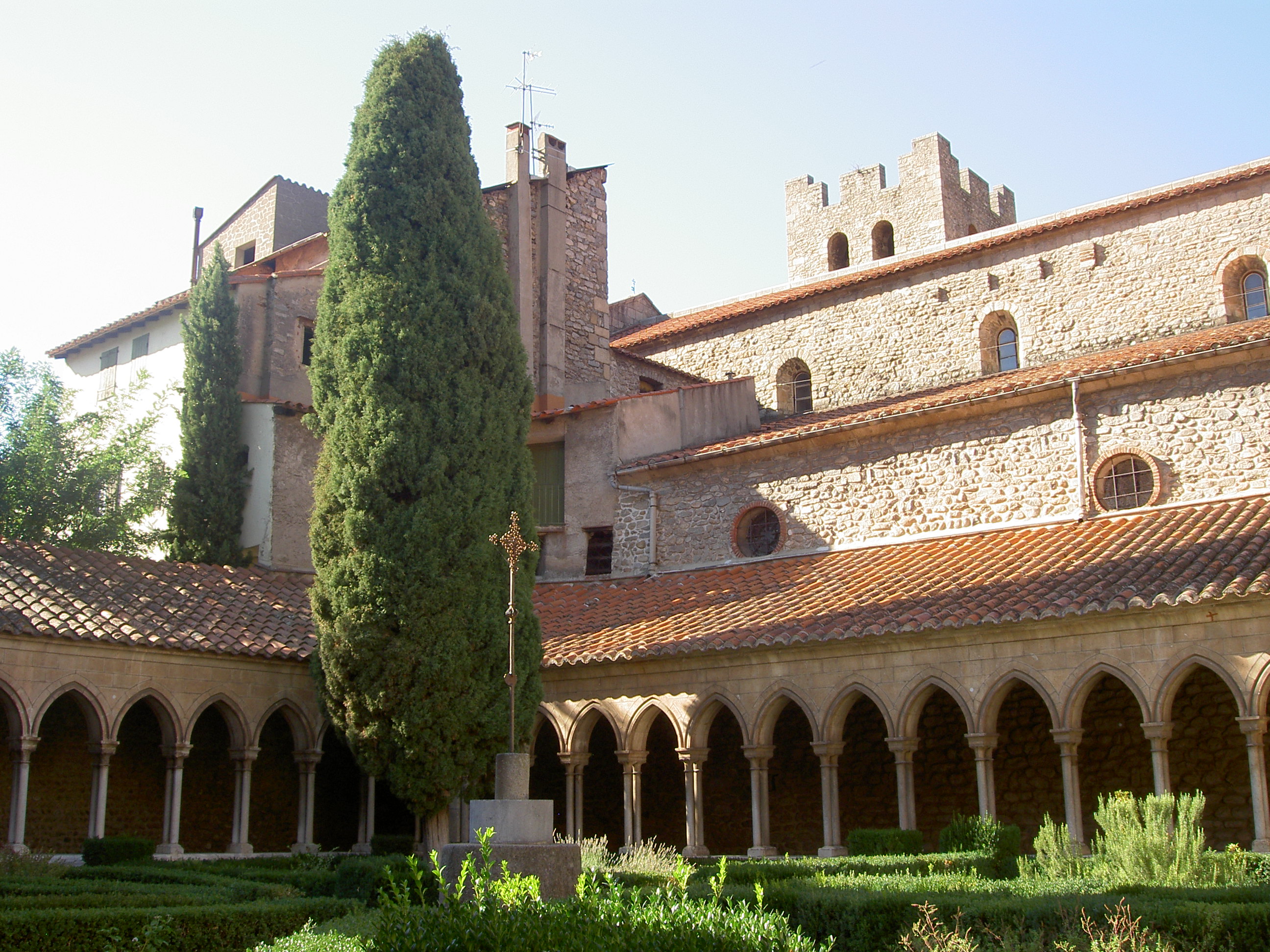
In the courtyard just outside the main door, is a stone sarcophagus dating from the 5thcentury, and said to have once contained the relics of St Marie.
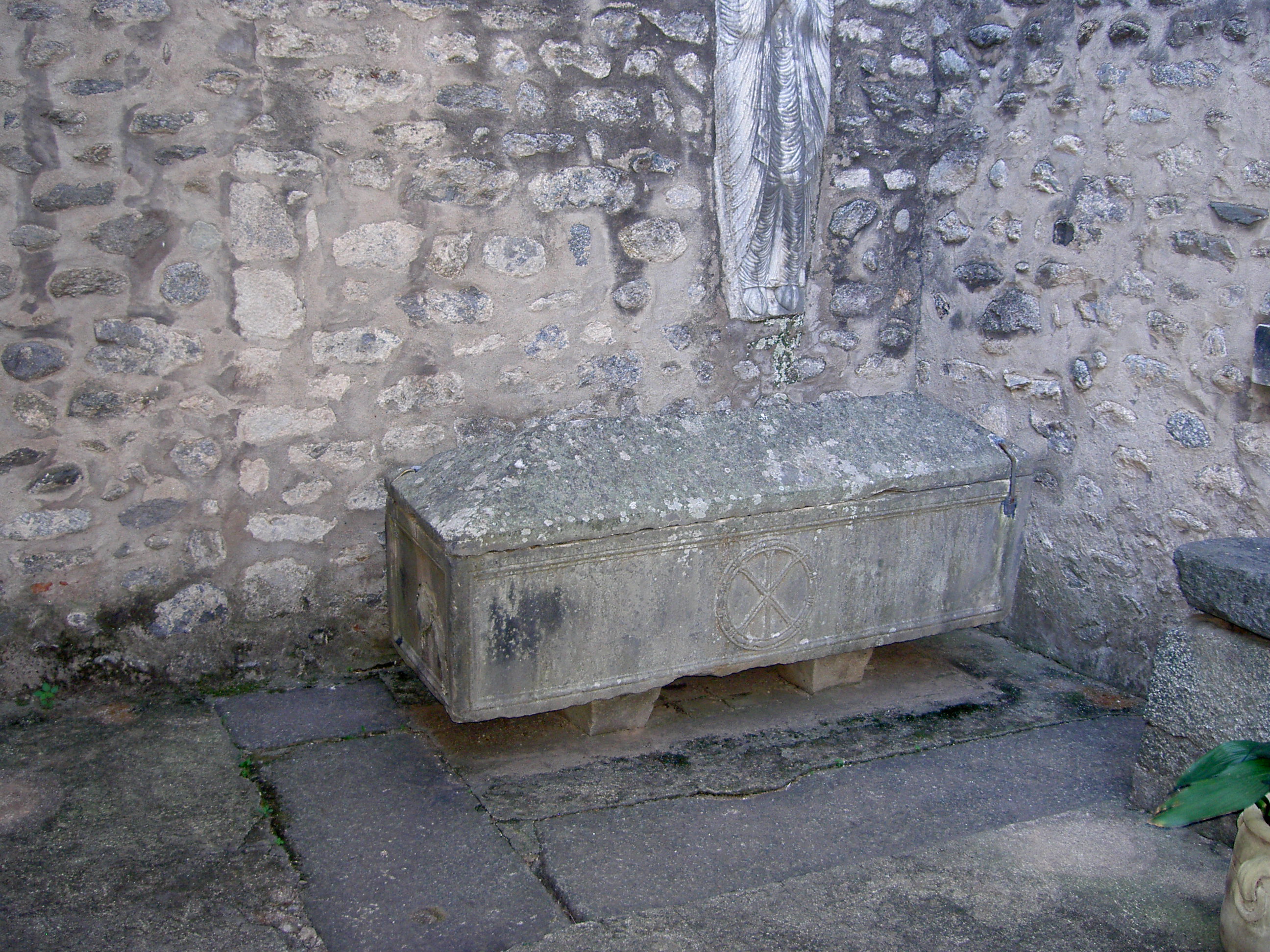
Of particular interest, is that the stone sarcophagus, completely sealed apart from a small hole near the top at the foot end, fills with water every couple of weeks, and no-one has yet been able to explain it! Apparently it has been happening for centuries, and every couple of weeks, the priest syphons the water out, and gives small bottles of it to those who think it might cure them of some malady. Books and scientific papers have been written about the phenomenon, but it remains a complete mystery! However, I did see a rather suspicious yellow hose pipe on the ground outside the abbey walls, just below the part where the sarcophagus is………..
Passing further inland beyond Arles-sur-Tech, one comes to the Gorges de la Fou. A couple of weeks ago we drove though the gorges on the river Tarn. These are huge, and the Tarn is a very large river. The Gorges de la Fou is spectacular for being so narrow—-for most of the 1.5 K length, it is no more than two metres wide, but a staggering 200 metres deep! No driving through this gorge! One dons a compulsory hard hat and walks on a steel grid board-walk about 3 metres above the water, which is about 10cm deep, and 50cm wide. Just a trickle! For most of the 1.5 K, it is possible to touch both sides of the gorge simultaneously without even stretching, and at one part it is a bit of a squeeze to get through at all. Of course, it is impossible to get decent photos, so you will have to make do with this one!.
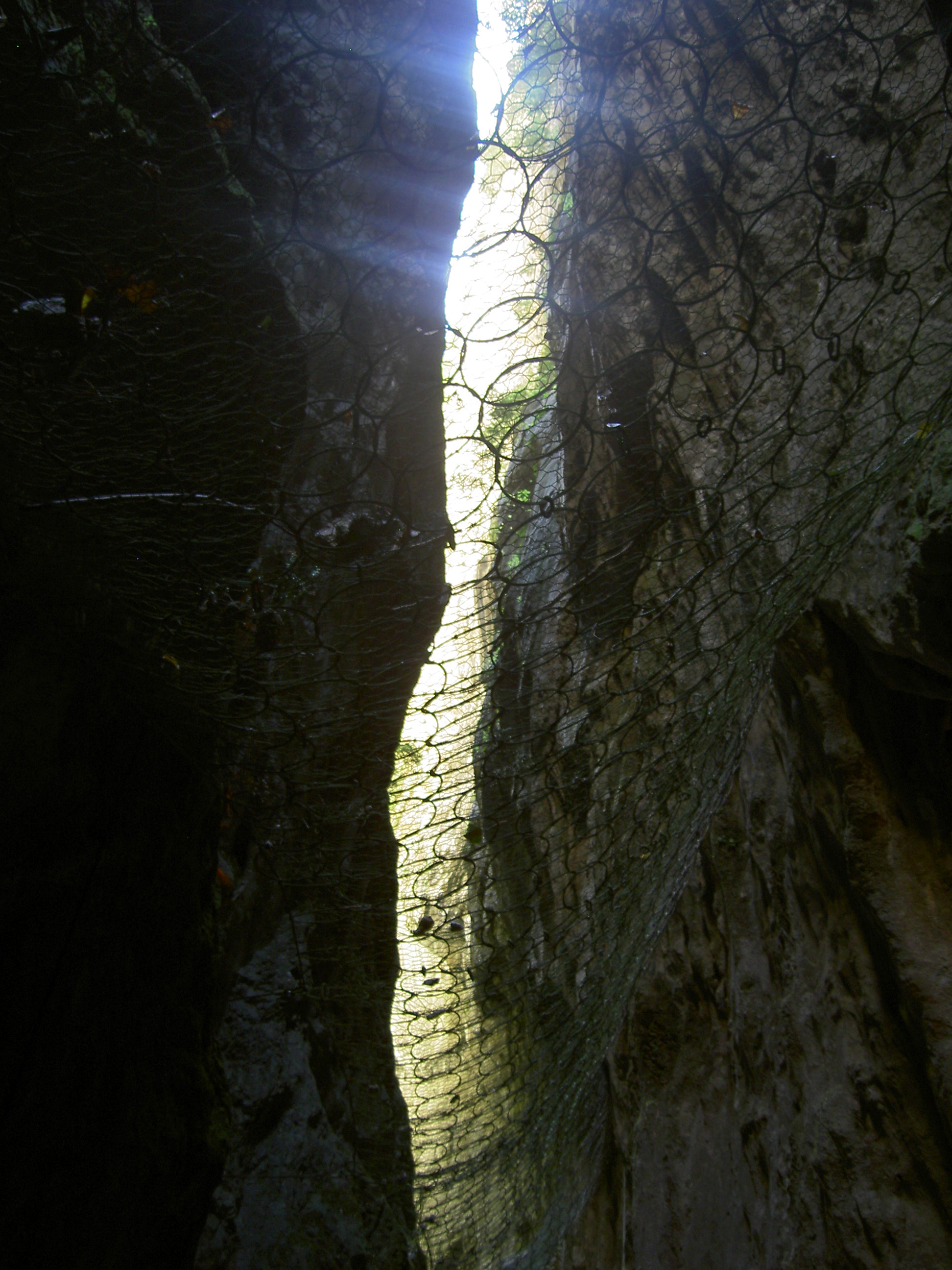
At its widest, it is no more than 10m. But the walls go up above you, completely vertical for between 150 and 200m for most of the way. The spectacle is diminished a bit due to the mesh about 5 metres above your head, but judging from the number of rocks resting on the mesh, it is a very necessary precaution!. There are a few huge rocks which have tumbled from the walls high in the gorge, and which have become wedged above your head. One of these, known as the Roche du Soldat, has a plaque telling of how, about 50 years ago, this huge rock crashed into the gorge from the top, complete with a sheep standing on it. But the shepherd managed to rescue the sheep, and it lived on happily none the worse for its adventure!
Car parking was not a problem on the day we went, but at times it probably would be. There are a couple of cafes right near the entrance, and as it was exactly beer o’clock when we were there, of course we had to have one—and at only 2 Euros a pot, was very good value indeed.
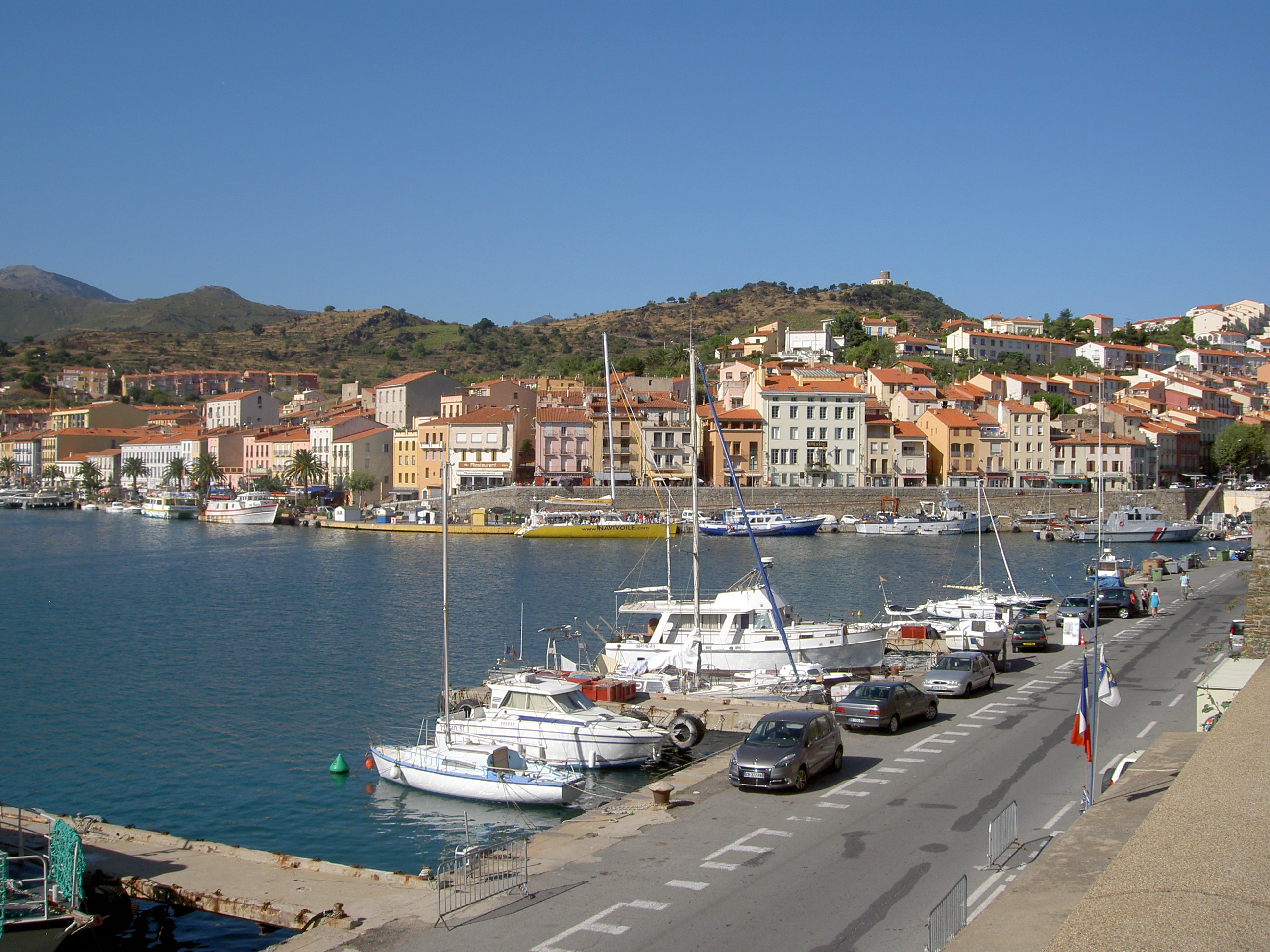
So that was our Saturday. On Sunday, a perfect autumnal day, we decided to have a drive south along the coast, to Collioure. But so had thousands of others, and when we got there, there was no parking available, even for ready money. So we just continued south to Port Vendres. Here there was plenty of parking, so we stopped for a look around. We had been here before, five years ago, and nothing seemed to have changed. Along this coast, just north of Argelès is St-Cyprien, which is nothing but a huge marina for people with huge boats. (one might wonder where they get their money from!) The port at Argelès itself is quite small, and accommodates the smaller boats of the less wealthy. Then comes Collioure, which is by far the most stunning and picturesque harbour—and more of that in a later blog. Port Vendres is very much a working port for fishing vessels, and, judging by the size of the now redundant railway siding area, was once an important port for coastal trading boats. There were a number of stalls on the quay selling all sorts of fresh fish, most of which I did not recognise. I was tempted to buy some, but being a very warm day, and with no way to keep them cold, I decided against it. But we did have our customary drink at a bar overlooking the port.
We saw notices advertising an aquarium at the next town, Banyuls-sur-Mer, so we wended our way there. Now I should mention that this part of the world (the Roussillon) grows excellent wines in very ancient vineyards, and as well as being a popular sea-side coastal route, it is also a very important ‘Route des Vins’, which means that, particularly at this time of year, there are loads of people driving round doing the wine-tasting thing. So, the drive to Banyuls was very slow indeed. But we got there just on 12.00, and of course the aquarium was closed for lunch. So we had no option other than to do the same—-a bowl of moules et frites for me, and confit de canard for Ann, at a restaurant right on the beach. The main part of the restaurant, including the kitchen and bar, was across the road, so the waiters for this, and for the several other cafes in the same strip, had to dodge between the cars whilst carrying plates of food and trays of drinks, an entertainment in itself. After lunch we went back to the aquarium, but found it very disappointing, despite it being part of the University of Paris, and despite its rather pretentious second name, ‘The Biodiversarium’! Not a patch on the Melbourne Aquarium. Then it was time to once more join the traffic and get back to Argelès.
 Slingsby's Miscellany
Brian and Ann,Really enjoying your comments and glad that you are having such a good time.Brian C gave a really good concert at Flinders about 10 days ago-caught up with many people you would know.We have been struck with poor health the last week-Marie neck and lower back + cold coming on and I had one of the severest gastro-enteritis episodes I have experienced and still feel wash-out(literally). Cheers,Colin.