Ten kilometres or so south of Argelès, along the coast toward Spain, is the tiny town of Collioure.
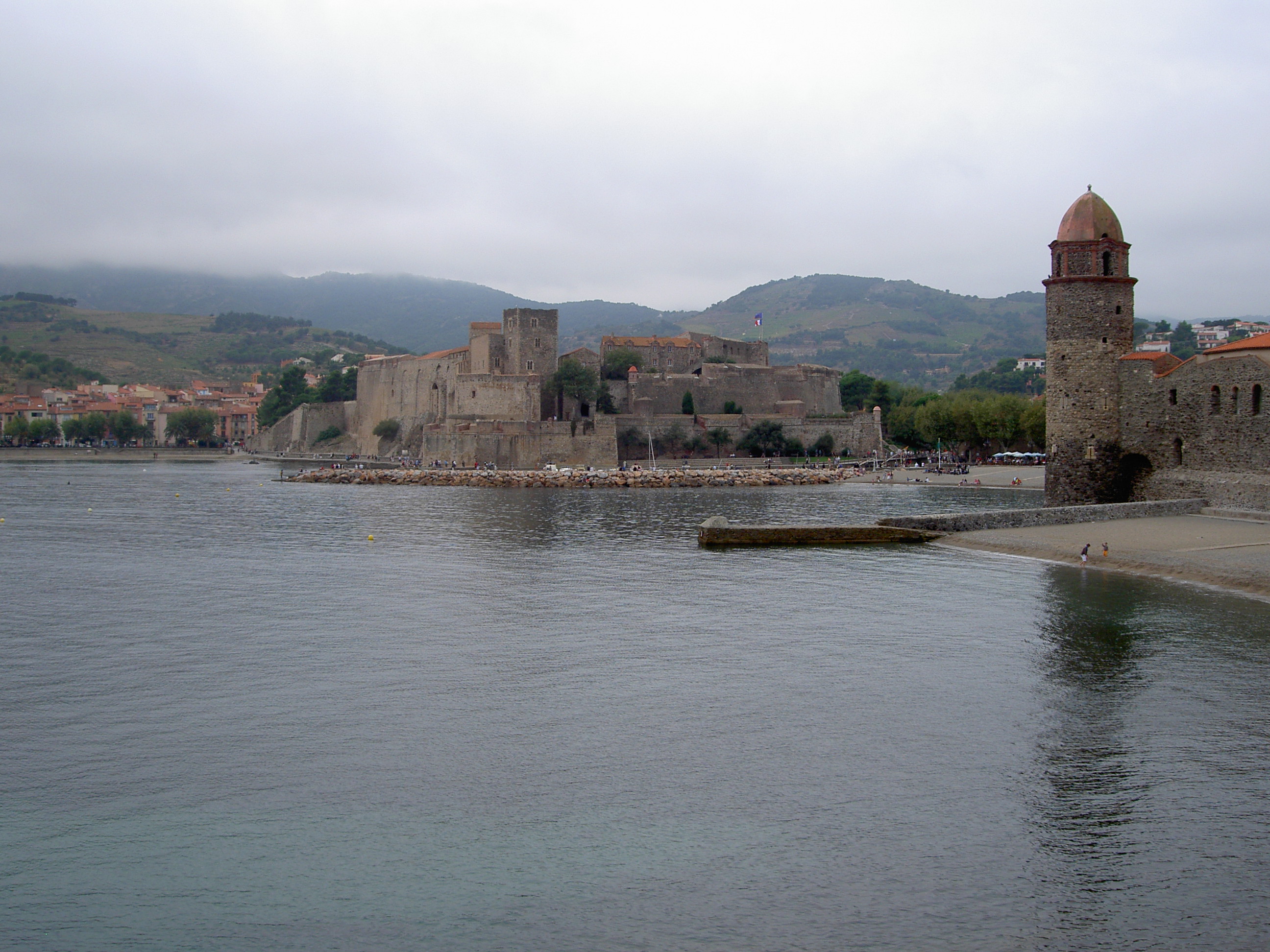
Today it is a town that relies almost entirely on tourism and the wine industry, but it has existed for a very long time, and has played its part in the history of the area. There is evidence that Collioure was a trading port for Greek merchants as long ago as 500BC; and the area was conquered by the Romans in about 120BC. From about 400AD, the Visigoths held the area, and from the 6th century AD, it became the seat of the Bishop of Elne (where there is now a splendid 12th century cloistered Cathedral). The first mention of any fortification appears in about the 7th century, and in the 12th century, Girard 11, the last independent Count of the Roussillons, bequeathed his land to Alphonse 11, (King of Aragon and the Count of Barcelona). From the 13th century, wine, cloth, oil, honey, wax, soap, tuna and sardines were among the principal exports and the merchants had to pay taxes to use the port, which made it a very wealthy place. There were also naval workshops, and it was this combination of factors which gave it its importance, and brought it to the attention of successive powers including the powerful King of Majorque. You may recall from an earlier blog, that the Kings of Majorque also had a palace in Perpignan. They were an itinerant lot, who travelled around the place, frequently moving between Perpignan, Montpellierr, and Collioure. In the16th century, after a brief occupation by Louis X1 of France, the Spanish Habsbourgs, starting with Charles Quint, again occupied Collioure. In the 17th century, Collioure was at stake in the wars between the Spanish Habsbourgs, and the French Bourbons. In 1642, Louis X111’s troops lay siege to the Royal Palace and Collioure. 10,000 men occupied the hills overlooking the town, and French ships blockaded the port. The French destroyed the wells that supplied water to the town, and so the Spanish had no option other than to surrender. In 1659, the French, now under Louis X1V, annexed the Roussillon, formalised the arrangement with the Treaty of the Pyrenees, and it has been French ever since.
As each successive power occupied Collioure, so they added their own fortifications to the palace, the most recent being good old Vauban, who fortified it for Louis X1V, enabling the French to hang on to it since finally capturing it in 1659. What I find surprising, is that despite its importance over the centuries, with several ‘kings’ living there, it never grew into anything more substantial. It is true that it is a very small valley, surrounded by fairly steep hills, but that of itself would not have prevented growth. The hills were, and still are, important for the production of wine, so maybe it was determined that the vines, which are grown on terraces on the very steep hills, were more important than houses. Whatever the reasons, the result today is a very nice compact town, which is a delight to visit. It caters for its many visitors not with Kiss-me-quick hats, fairy-floss and hot-dogs, but by simply providing adequate cafes, restaurants and bars of a high quality. In one of these, overlooking the beach end of the harbour, we had a very nice lunch. In another, overlooking the boaty end, we had a very nice drink whilst waiting for our boat to arrive.
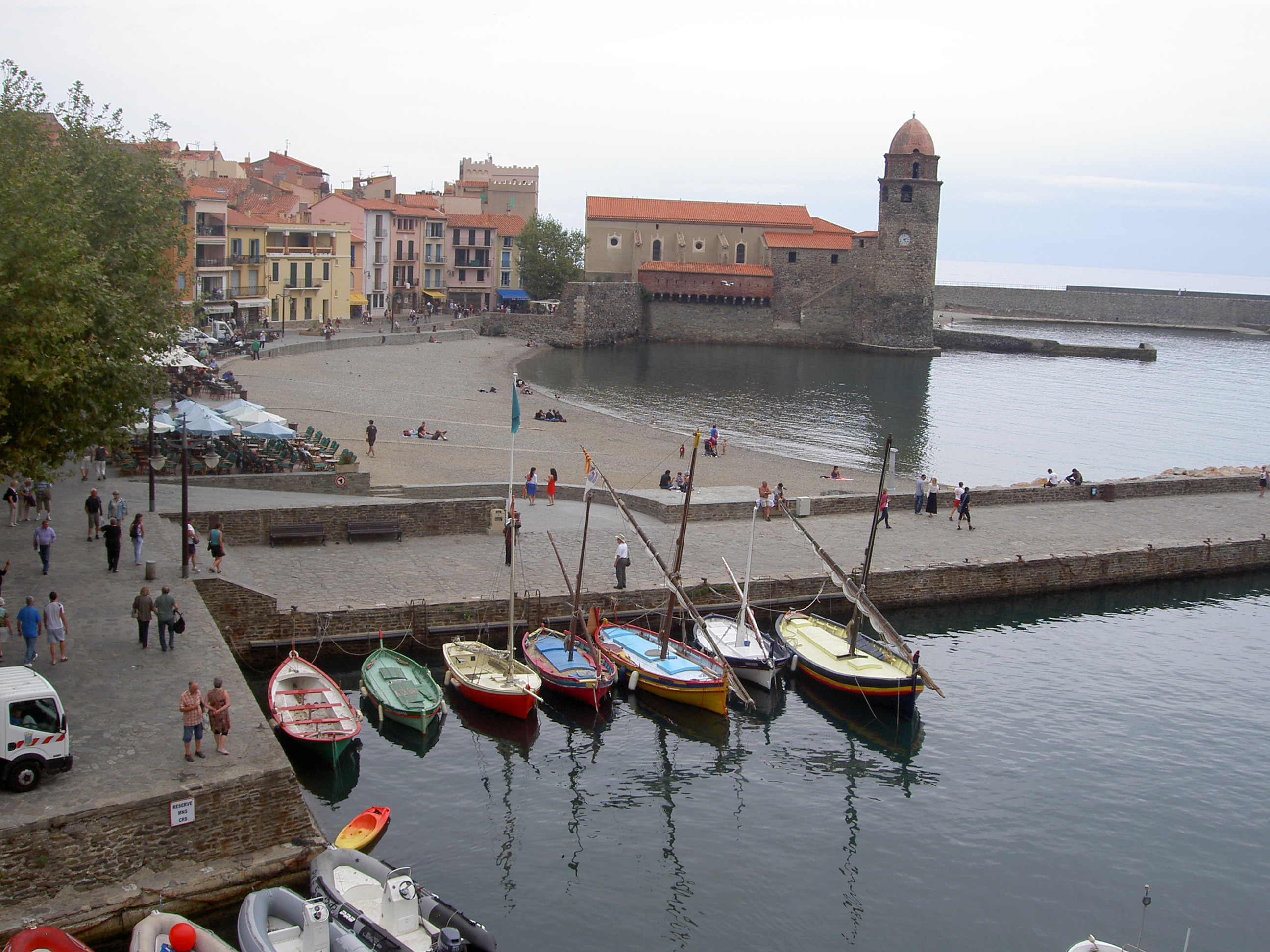
There are a few ‘souvenir’ shops, but these are tucked away up the many very narrow alleys which wend their way between the houses. The harbour provides very safe swimming, with reasonably good beaches. The ‘sand’ is not at all like the 90 mile beach, but is a rather greyish, coarse mixture of flattish pebbles and grit. The town is dominated by the fortified Royal Palace, built right along, and towering over, the harbour.
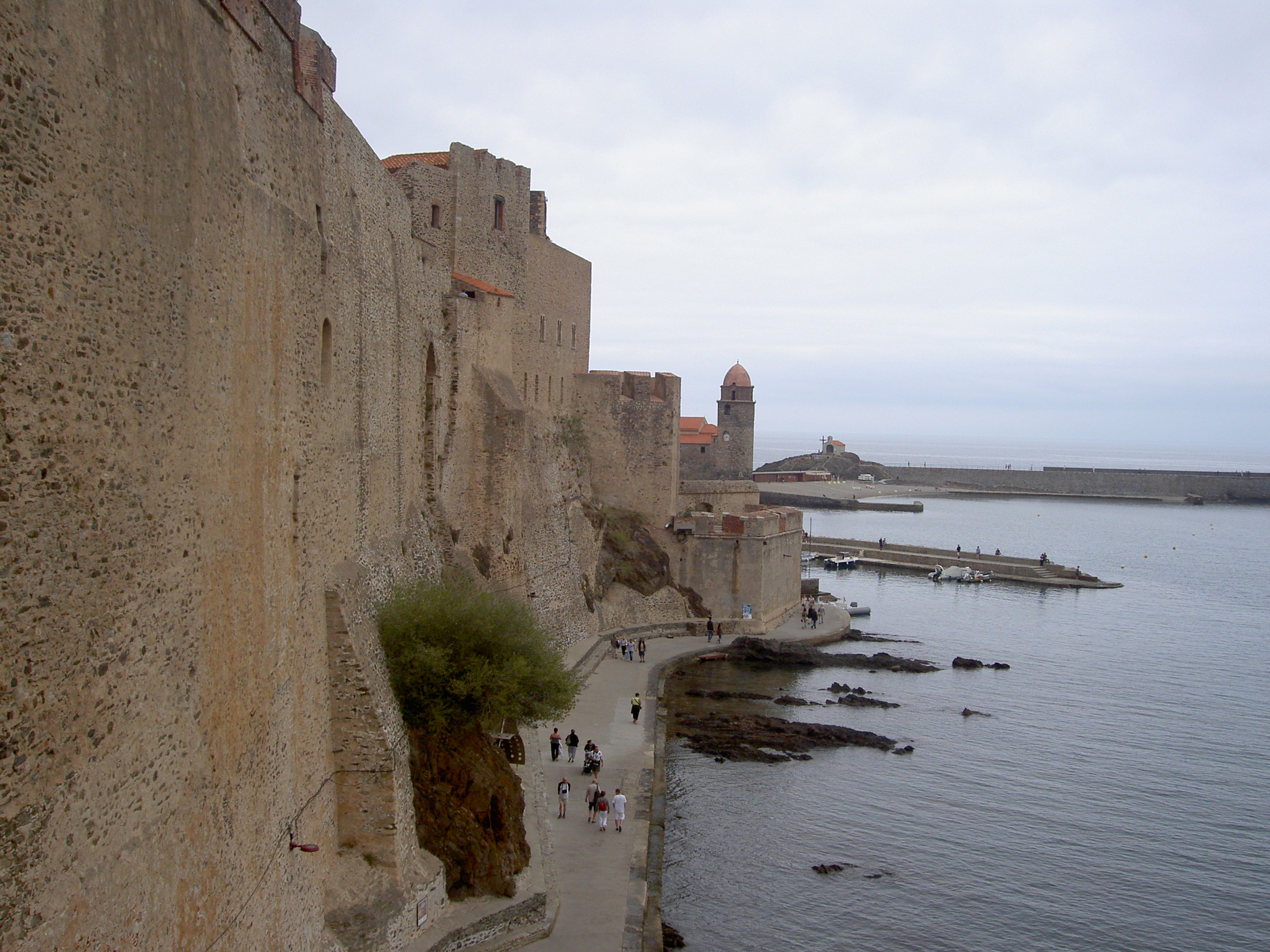
The entry fee for oldies is 2 Euros, and represents excellent value. The Palace is huge. There is a labyrinth of underground tunnels, some of which have been made safe for visitors to wander through, and there are about 4 levels of above ground rooms, all open to the public, and the whole thing encloses a large Place D’Armes or parade ground.
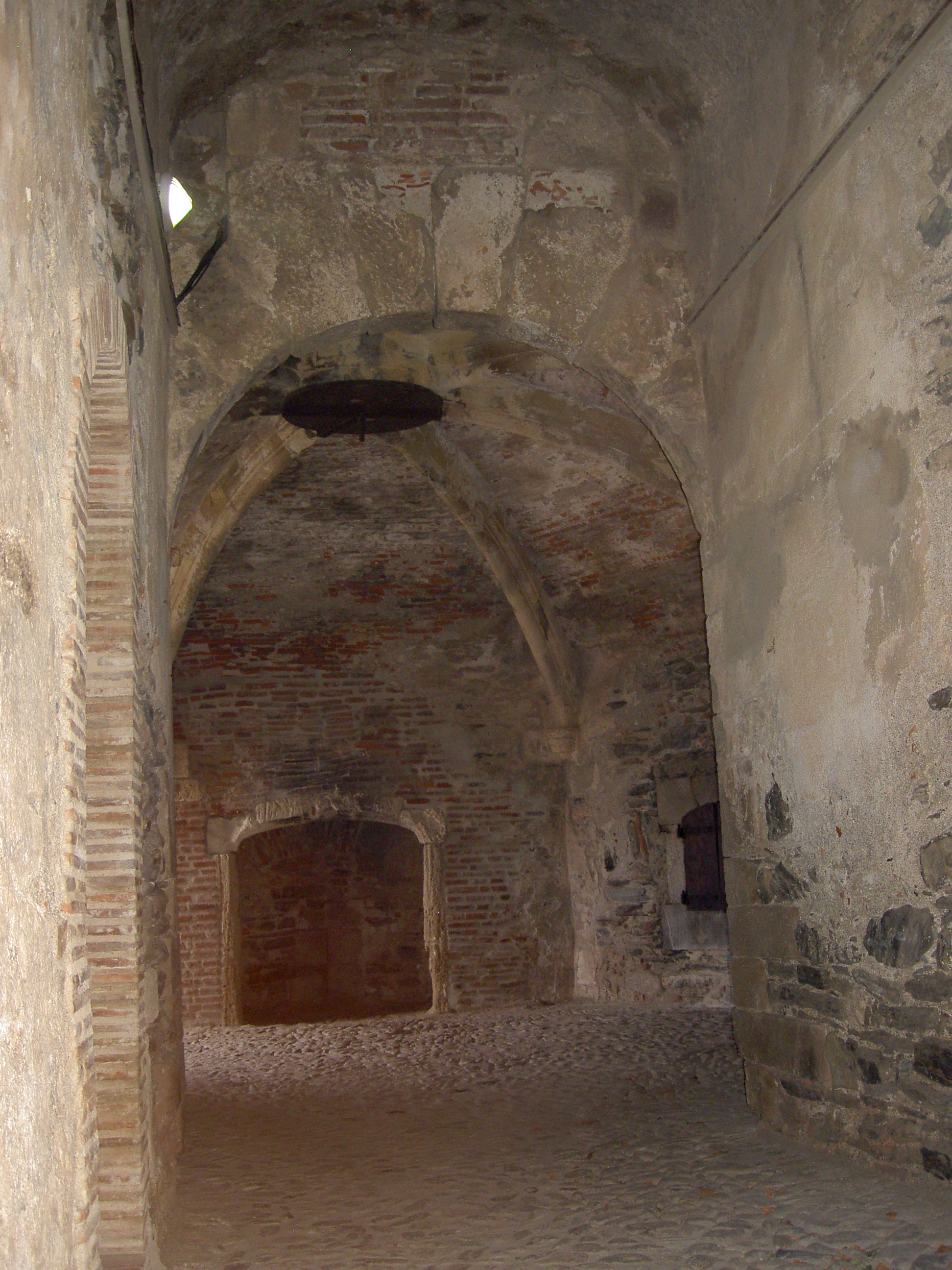
Many of the rooms open to the public currently have exhibitions of art works (not, I’m afraid, to my taste!), and others are simply empty. It may be improved a bit by including some period furniture to give more a sense of a lived-in Palace, but I guess one of the difficulties, if one wished to be authentic, would be which period to choose, given that its history spans many centuries and nationalities.
In addition to the main Palace, there are ruined fortifications all around the town, which we did not have time to visit. There is also a 13th century windmill, originally used to mill flour, and then to crush olives for oil, and is now being restored. What appears to be an old church below the mill, has been taken over for a winery, and one can smell the fermenting grapes as one walks past.
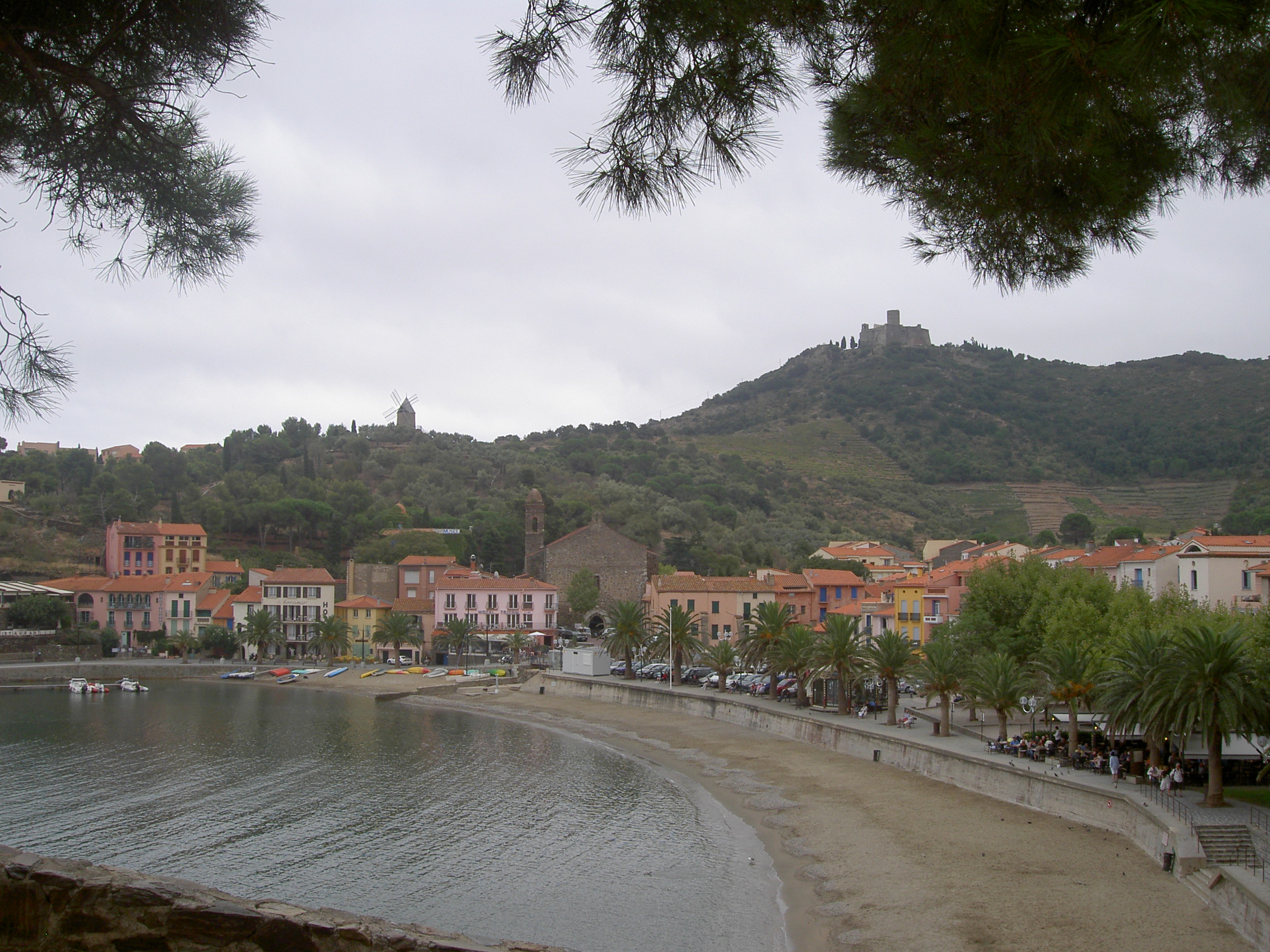
Truck-loads of grapes were being delivered as we were there. The Roussillon wines are really very good, despite the very sad-looking appearance of the vines on the parched hillsides!
All in all, a visit to Collioure is very worthwhile if you are in the Roussillon area. One can get there on the one-Euro bus, or by boat—car parking is a bit of a problem! We took the bus there, and returned to Argelès by boat, which made for a very pleasant day.
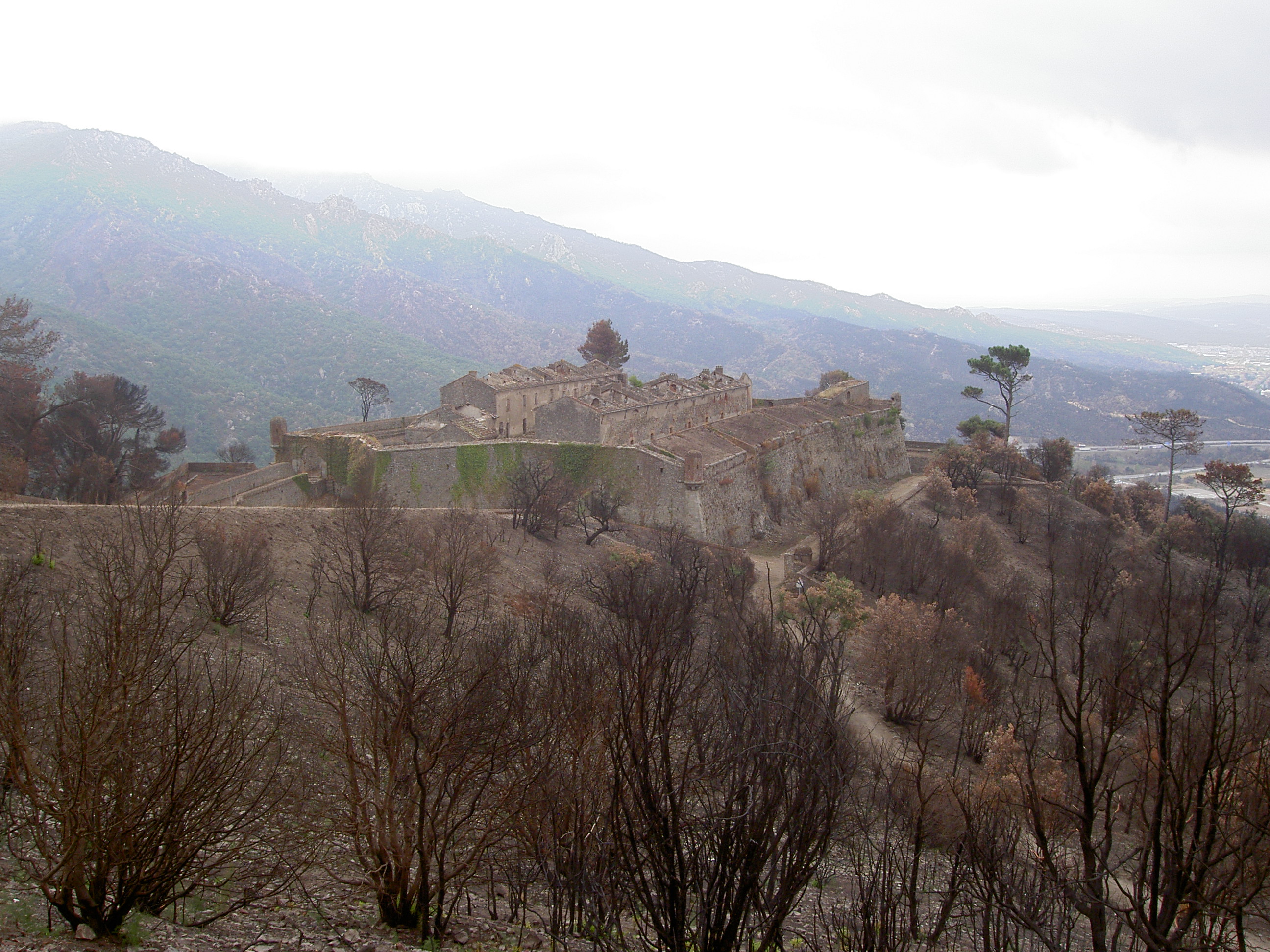
Not far away from Collioure, inland on the Spanish border, is the town of Le Perthus. Not surprisingly, given its geographical proximity, it has a similar history to Collioure. But whereas Collioure is a very pleasant sea-side village, Le Perthus town has nothing to recommend it at all. Nothing, that is, unless you like fighting your way through a kilometre or so of small shops spilling their cheap wares (clothing, watches, other jewellery, perfumes and the like mostly made, I suspect, in China) onto the footpath. It is right on the border with Spain, and the actual border post, probably now redundant because of the establishment of the EEC, is just at the very end of the main shopping street. Accordingly, I guess many of the shopkeepers are actually Spanish. But what interested us far more, was the fact that on the top of the hill towering above the town, is the fort of Bellegarde.
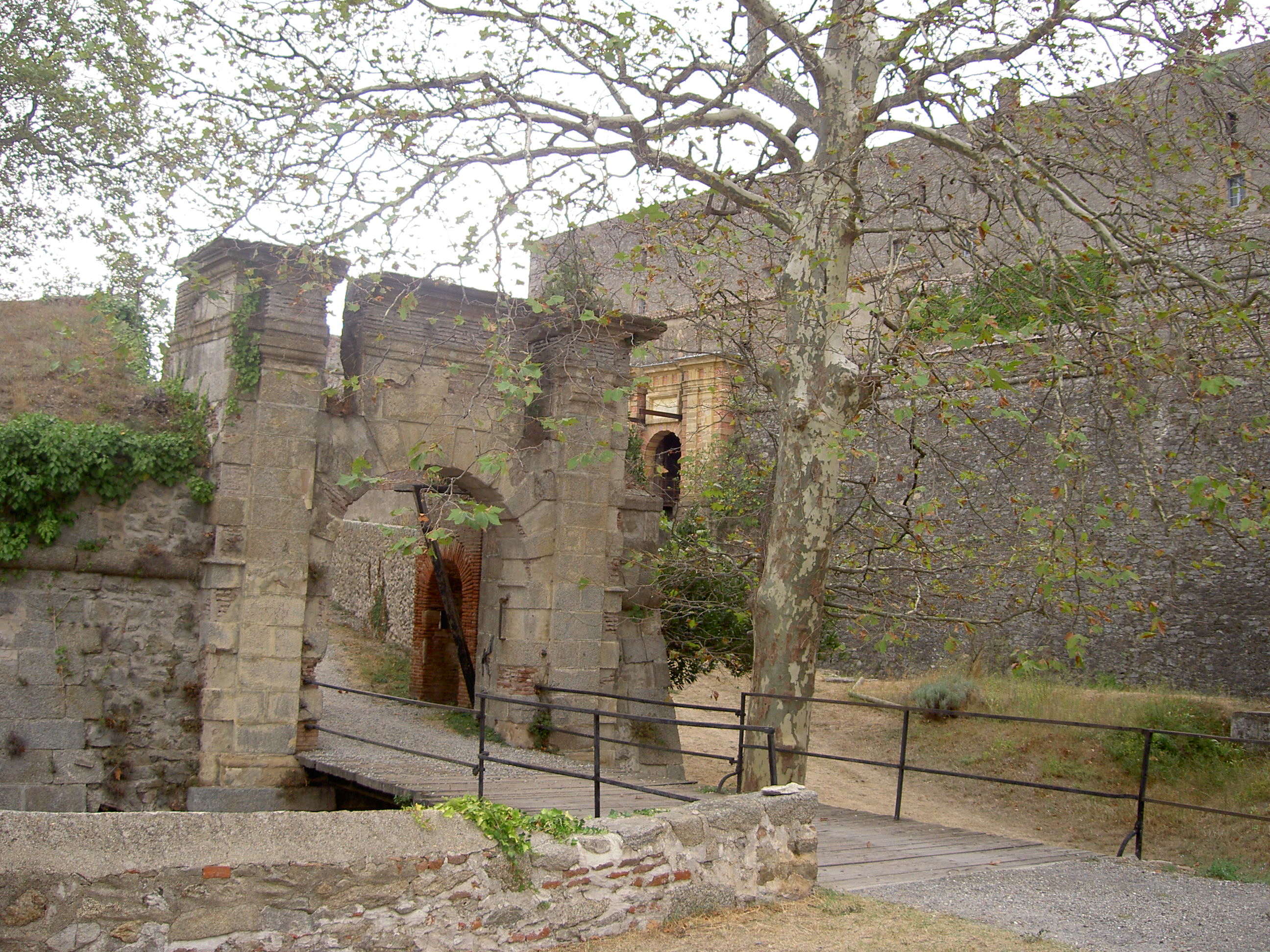
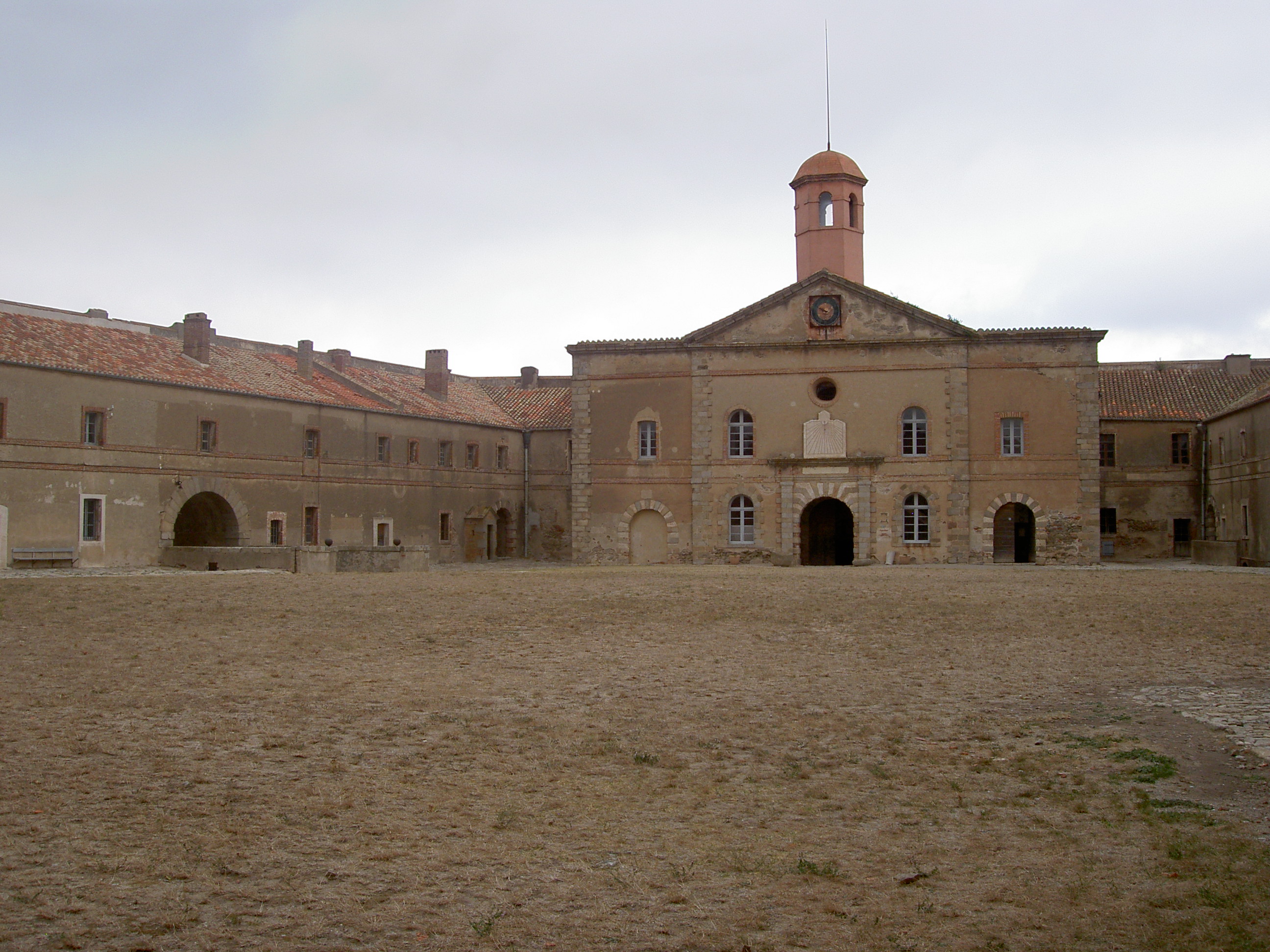
Originally a Roman fort, it had undergone many transformations as different powers occupied it. Then, following the annexation of the Roussillon in 1659, Vauban went to work, razed the whole thing to the ground leaving only a very small vestige of the Roman fort, and built an entirely new fort in his inimical way.
4534, 4536
And there it still sits, an enormous pentagon of barracks and other rooms (similar to those in Brisach) enclosing a huge Place D’Armes, and the whole thing surrounded by his typical triangular fortifications, like the points of a star, with three or four levels of ramparts. Some of the barrack rooms and the original chapel have been turned into art galleries, but a lot are in need of restoration. The old bread ovens are still there, and a well, some 100m deep, is still used as the fort water supply. Vauban’s original machine for hauling up the water buckets still works, but has been replaced by electric pumps for day to day use.
The ruins of the old Roman fort are visible from the ramparts, but the path down was too steep for us to manage, so we did not visit that part.
But of even greater interest, just below the Roman fort, is an archaeological site known as the Pannisars. Here, are even older Roman ruins, and the wheel tracks worn into the rocks by the chariot wheels are clearly visible.
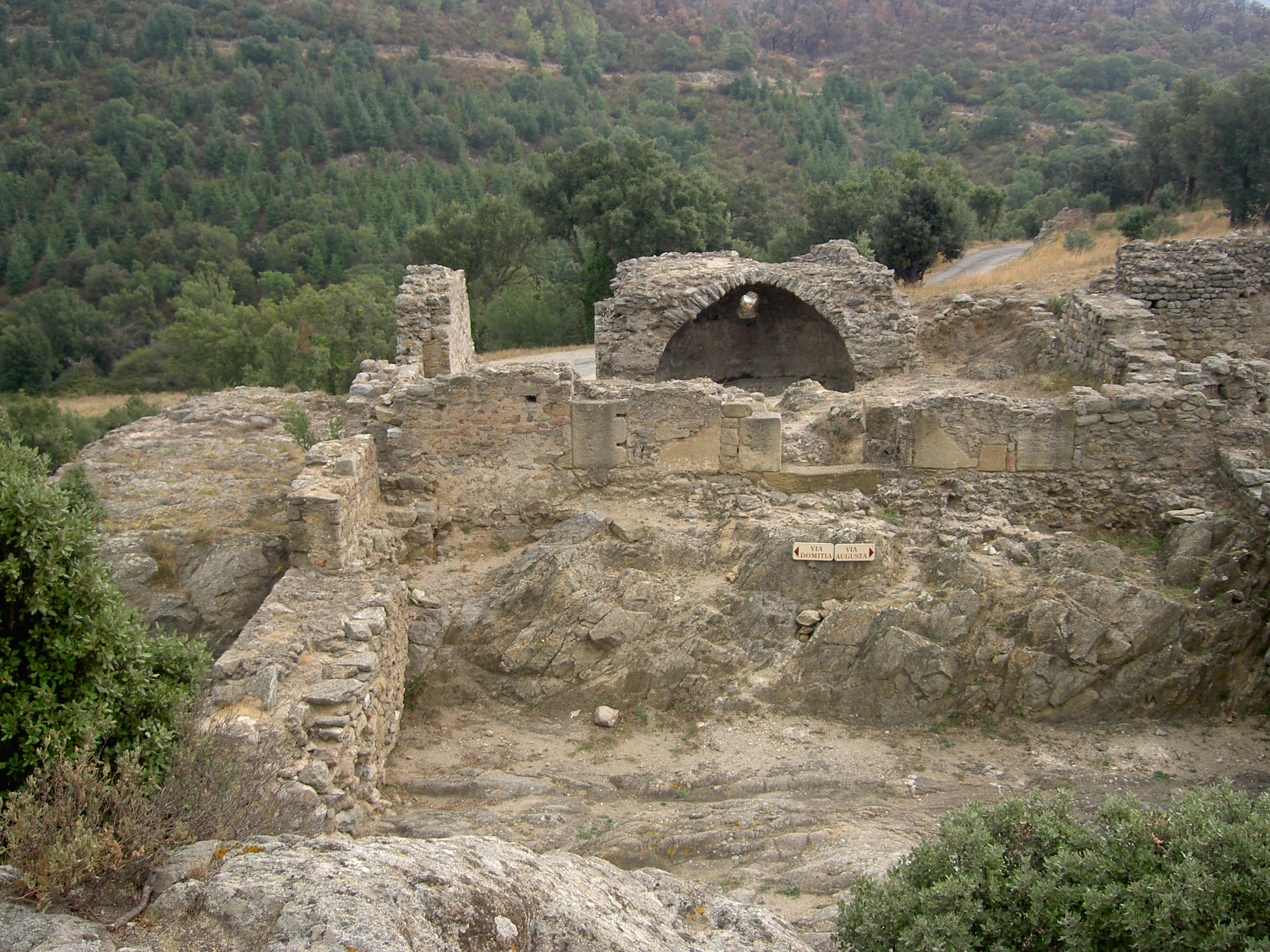
This was a check-point on the original road linking Rome and Spain, and became part of the Camino to St Jacque di Compostella, the famous pilgrim route still walked by thousands each year today. From this site can be seen only a few hundred metres away, the Péage autoroute, and the TGV train line. One wonders what those old Romans might think if they could see the hundreds of cars and trucks passing each hour at speeds up to 130k per hour, and the trains going at nearly 300k per hour, and compare those with the bone-breaking jolts they must have endured in their chariots!
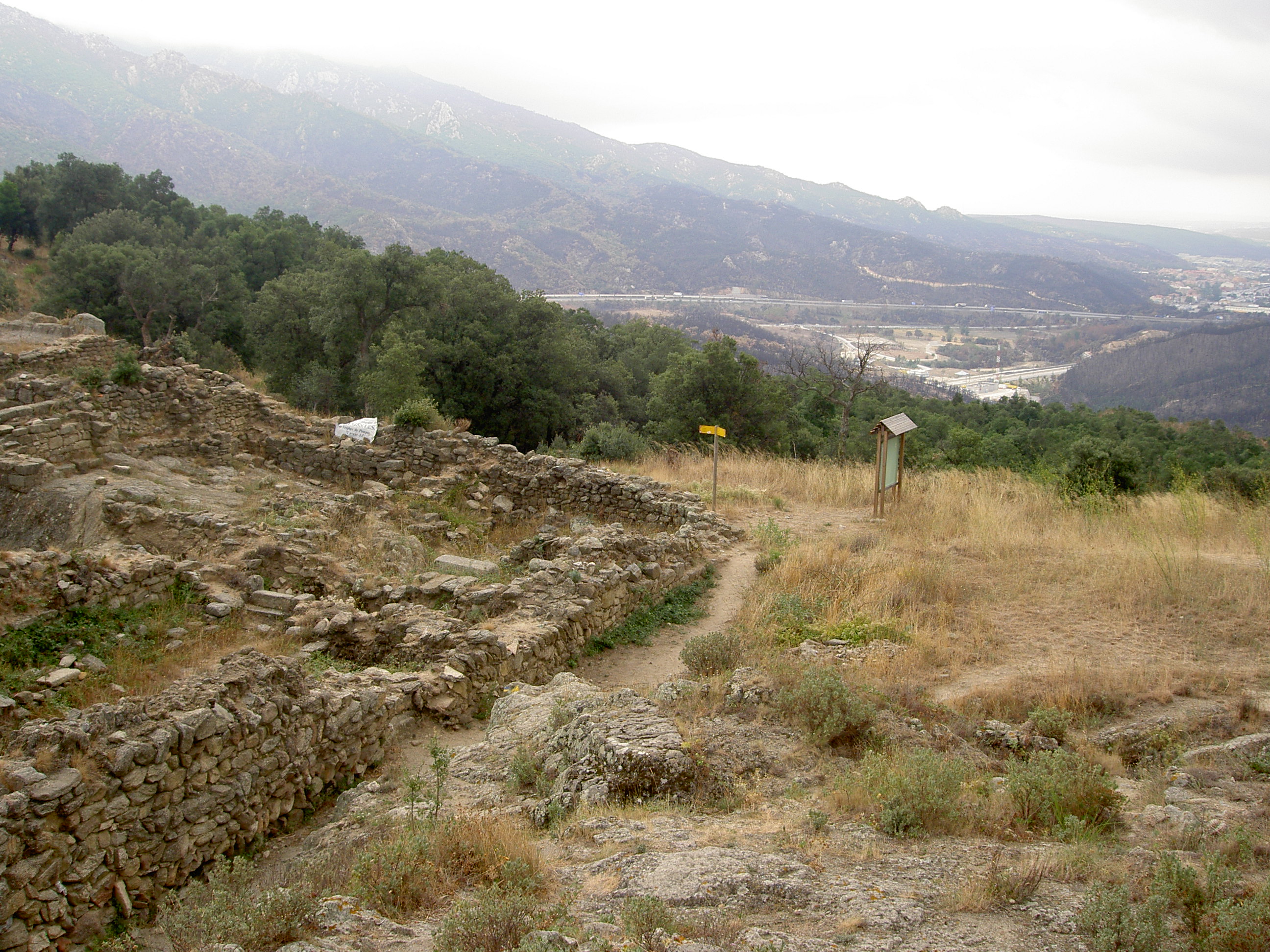
Not far from here, on the road back to Le Boulou, is the tiny hamlet of St. Marin de Fenollar, which was once on the old Roman Road, and which now exists only because of its Roman Church with well-preserved frescoes. Unfortunately, it was closed when we passed, so we did not see the inside. Other places on the old road include St Génis-des-Fontaines, with its cloistered Roman Church the inside of which we did see. It is a remarkably solid church, with huge stone columns supporting the roof, making it seem almost cave-like inside.
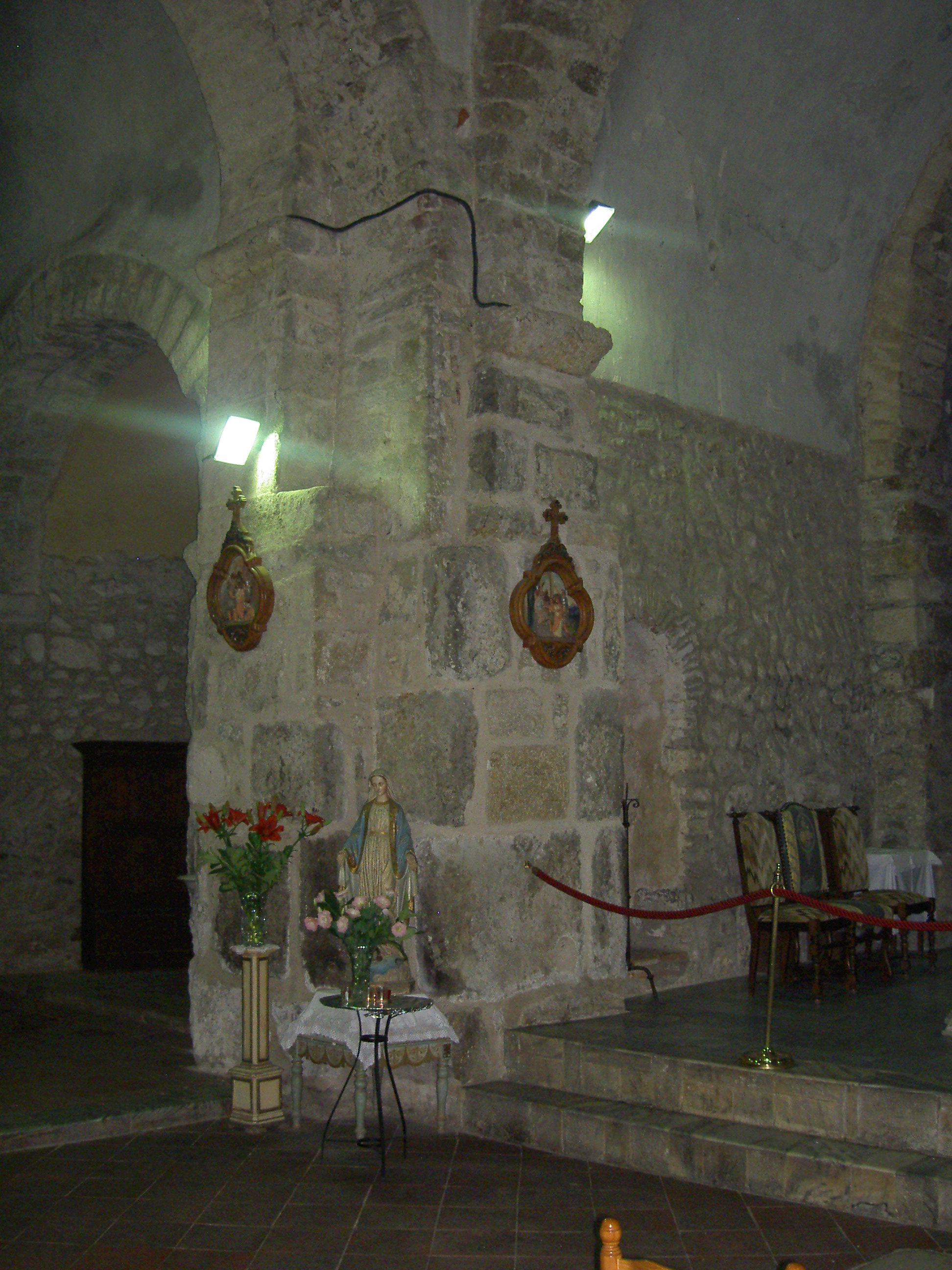
In what I assume has become a Mediterranean custom, it has been fitted with an incredibly elaborate altar-piece of rather gaudy painted and gold-leaf encrusted statues. Incidentally the cloisters here had had a very chequered history of their own. Following the French Revolution, they, along with the church, were sold. Then, 1923 some of the marble columns were sold to a Parisian antique dealer, some were given to the Louvre Museum, and some were removed to a private collection in the United States. But, in 1973, thanks to a lot of diplomatic bargaining, most of the columns were recovered and restored to their original positions. For those unable to be recovered, faithful copies were made. Now it did strike us that these cloisters were not as spiritually peaceful or as calm as those at Arles-sur-Tech, and maybe this had something to do with the violence the cloisters had experience over the past hundred and fifty years or so.
Nearby, is the village of St André, which also has a Roman church similar to that at St Génis, but which has (in my view) escaped the colourful elaboration of the altar-piece.
In this blog I have mentioned some half dozen incredibly interesting historical buildings and towns. But they are just the tip of the iceberg! There are countless forts, churches, abbeys, priories and cathedrals, with and without cloisters, with and without fortifications, intact or ruined, that are scattered across this part of the world, and each has its own history. The histories I have recounted here, I have gleaned from the information hand-outs and from display boards at each place. To discover it all would take a life-time of study, and one would have needed a much earlier start than we have made!
 Slingsby's Miscellany