Sketches of Lorne, Two
June 27, 2017
Our walk to the main centre of Lorne starts as we join a walking track that passes the Lorne Pier. Where the path actually starts, I have no idea, but it is somewhere off to the west, maybe even as far west as Portland. But we join it at the pier.
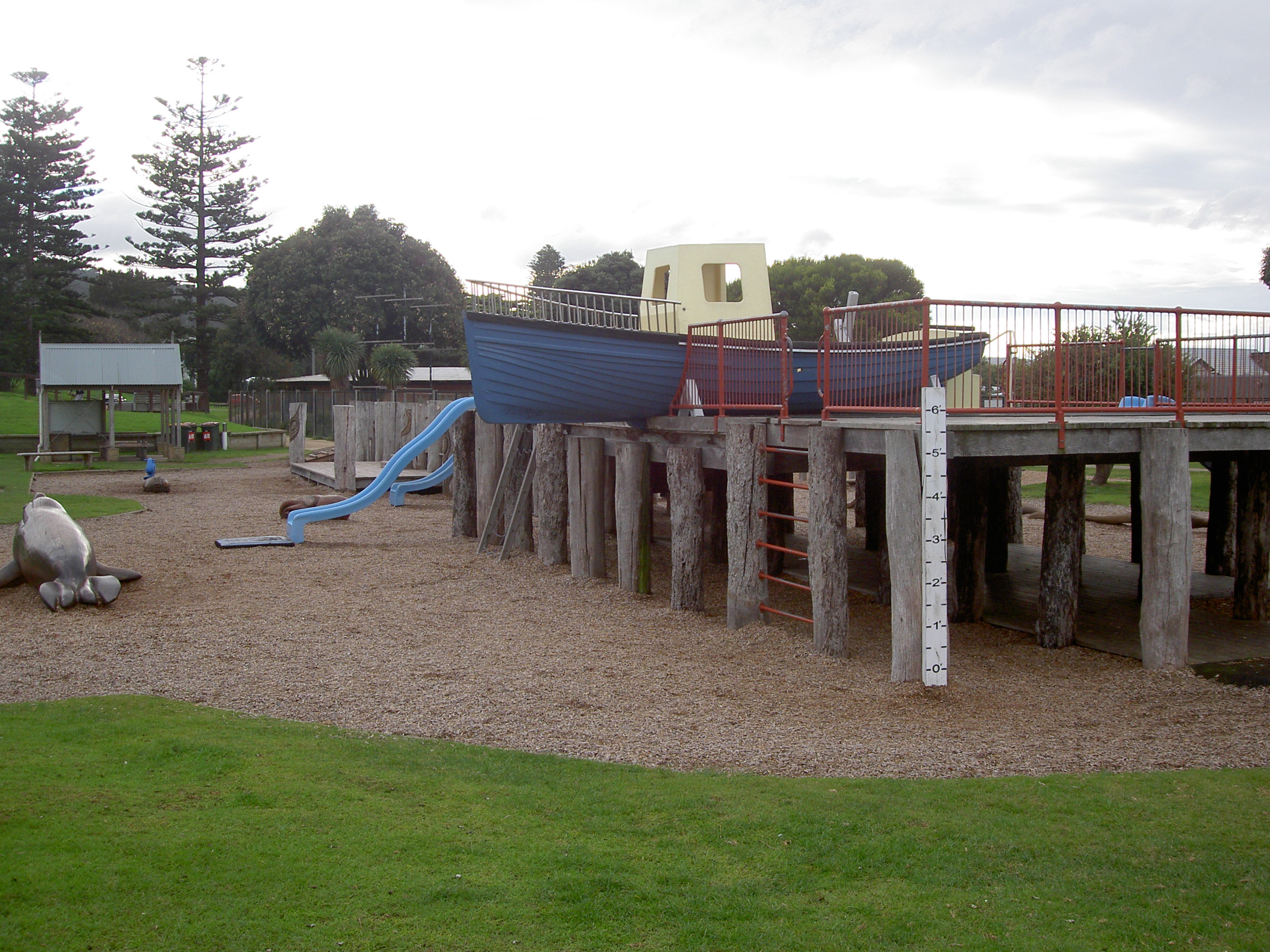
Lorne now has a new pier completed in April 2007, following some 127 years of construction, strengthening, and partial rebuilds of the old pier, now straight, now L-shaped and at one time triangular. Of the old pier, there is very little remaining, and it scarcely reaches the water today. Many of its old piles were relocated and used in the construction of the adventure playground on the foreshore in town; and all of the old cranes that were used to lift the fishing boats out of the water (as it was not safe to leave them simply moored to the pier overnight), have gone along with the fishing fleet which no longer exists.
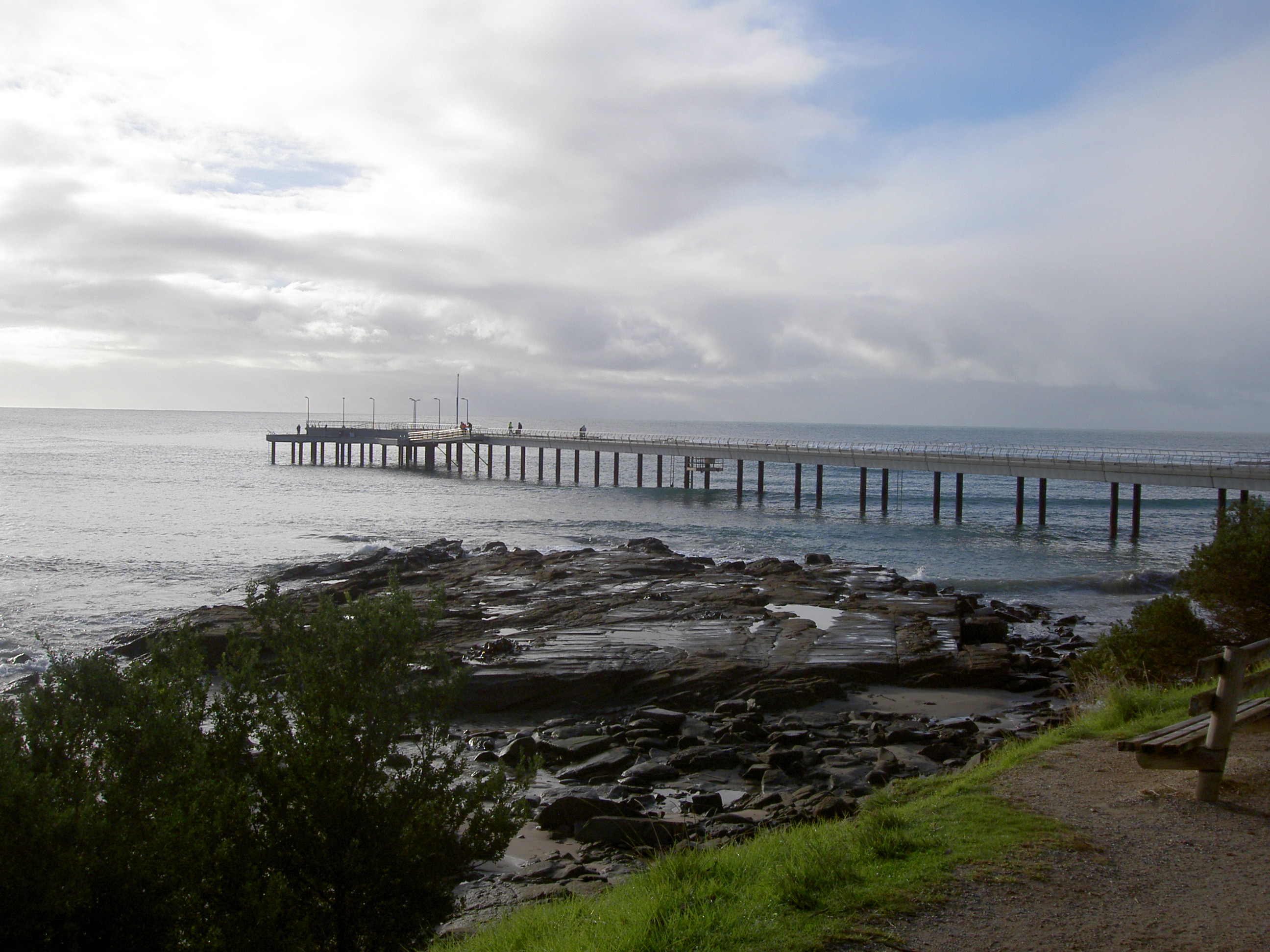
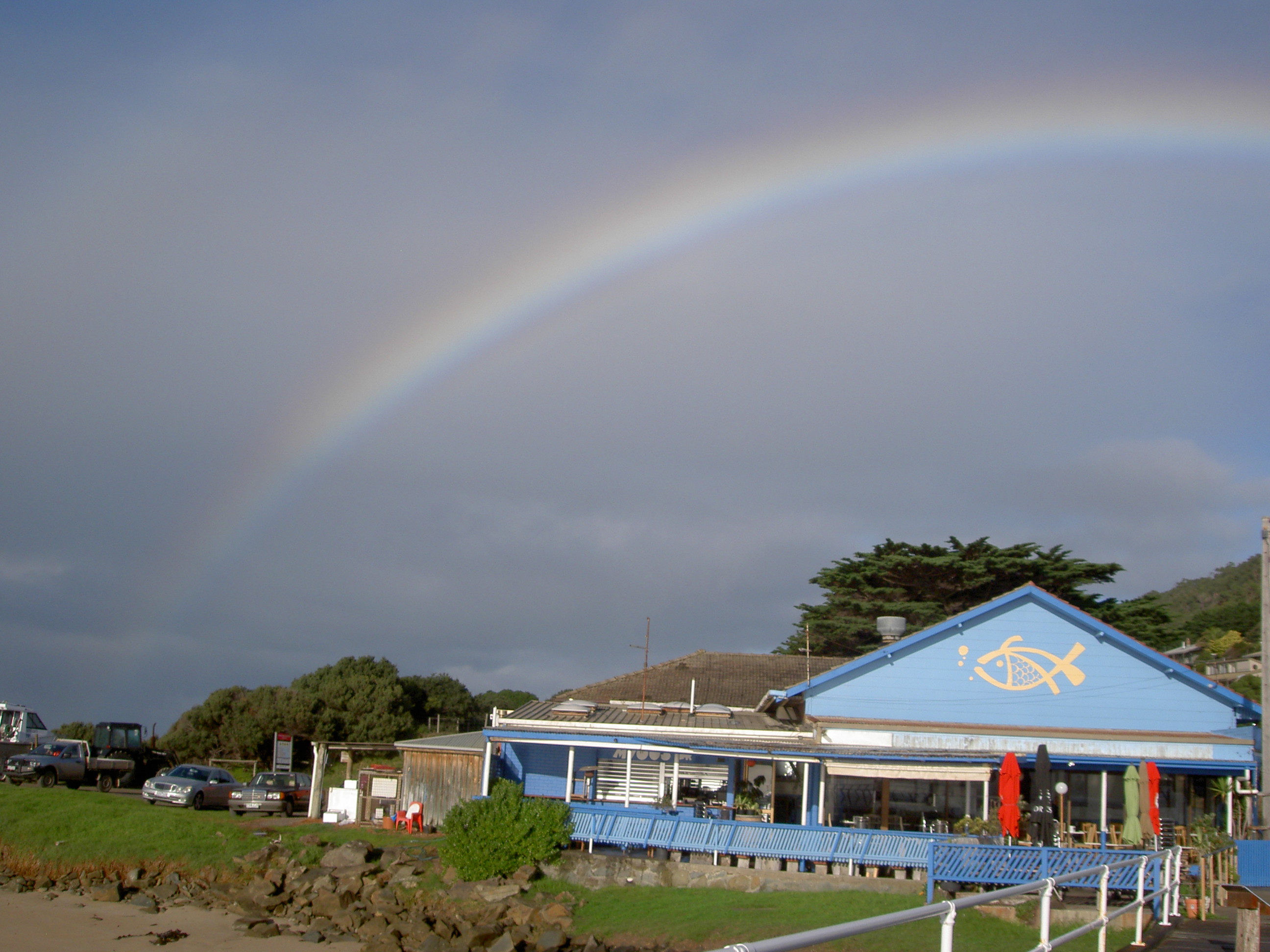
Now the new pier is used mostly for recreational fishing, and as the jumping off point for the annual ‘Pier to Pub’ swimming race. There were about six or seven weather-beaten locals fishing from the pier as we arrived, and as usual, the number of people trying to catch fish was greater than the number of fish actually caught. Whether this lack of success has anything to do with the huge seal, Sammy, who lives under the pier, is debatable, but quite possible. It was pretty cold, but the sun was shining, and as proof, I offer the attached photograph of a rainbow over the seafood restaurant at the pier.
The pier is also one of 16 spots around the coast of Australia providing data on sea level, temperature, salinity etc. to an international database of oceanic conditions. Since Lorne has been involved, records indicate that the sea level at this recording station has risen by a steady 1.7mm per year. If this continues, it will not be long before some very prime real estate on the foreshore of Lorne becomes not so prime. Already there is very little beach left dry at high tide, and there are obvious signs of sea water moving more than perhaps is necessary up some of the walkways leading from carparks to the beach.
It is said of the sea that it is always changing but always the same, and as we walked along the pier, and then along the path toward the town, the sea changed from silver to bright blue depending on our point of view.
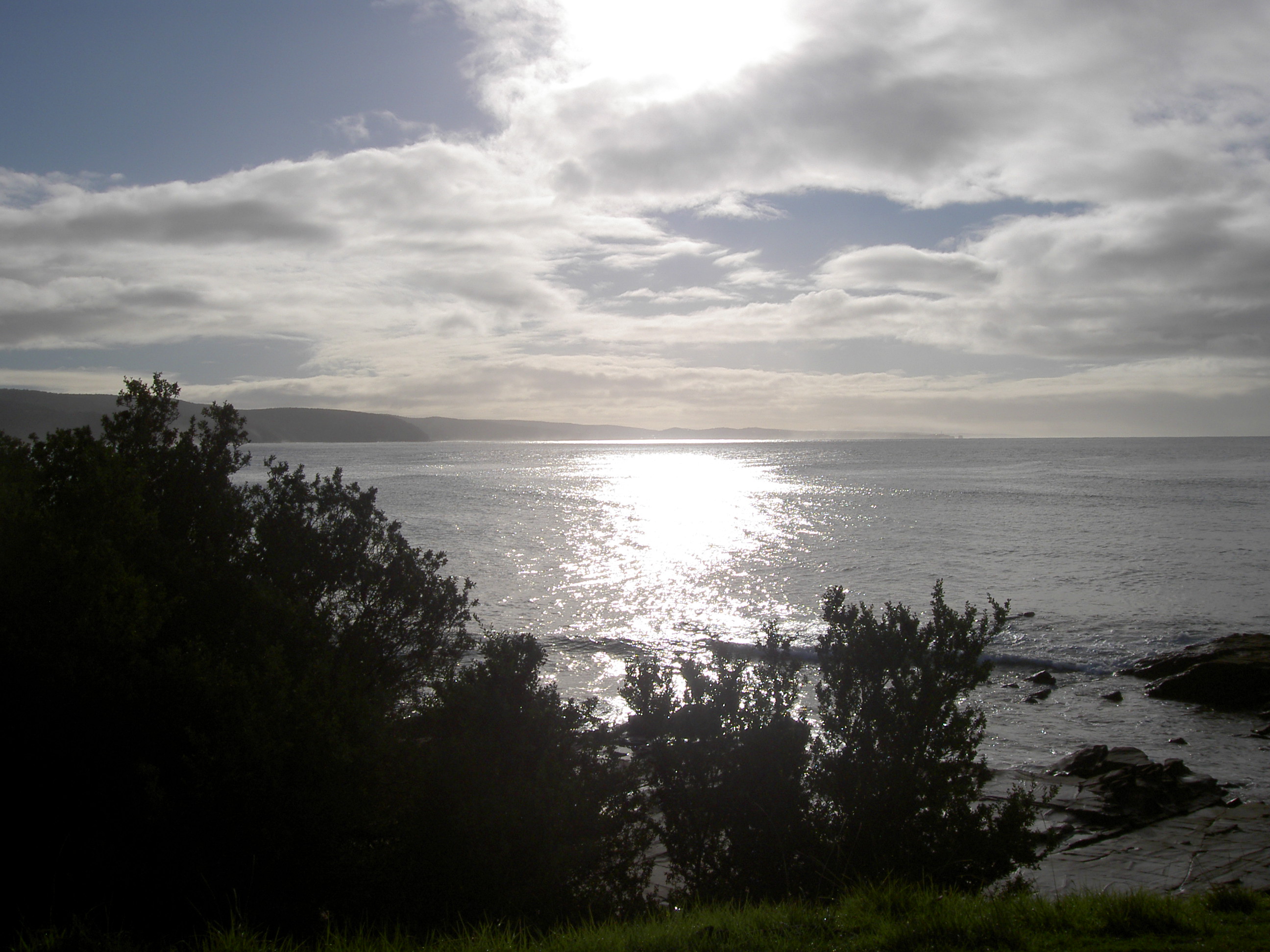
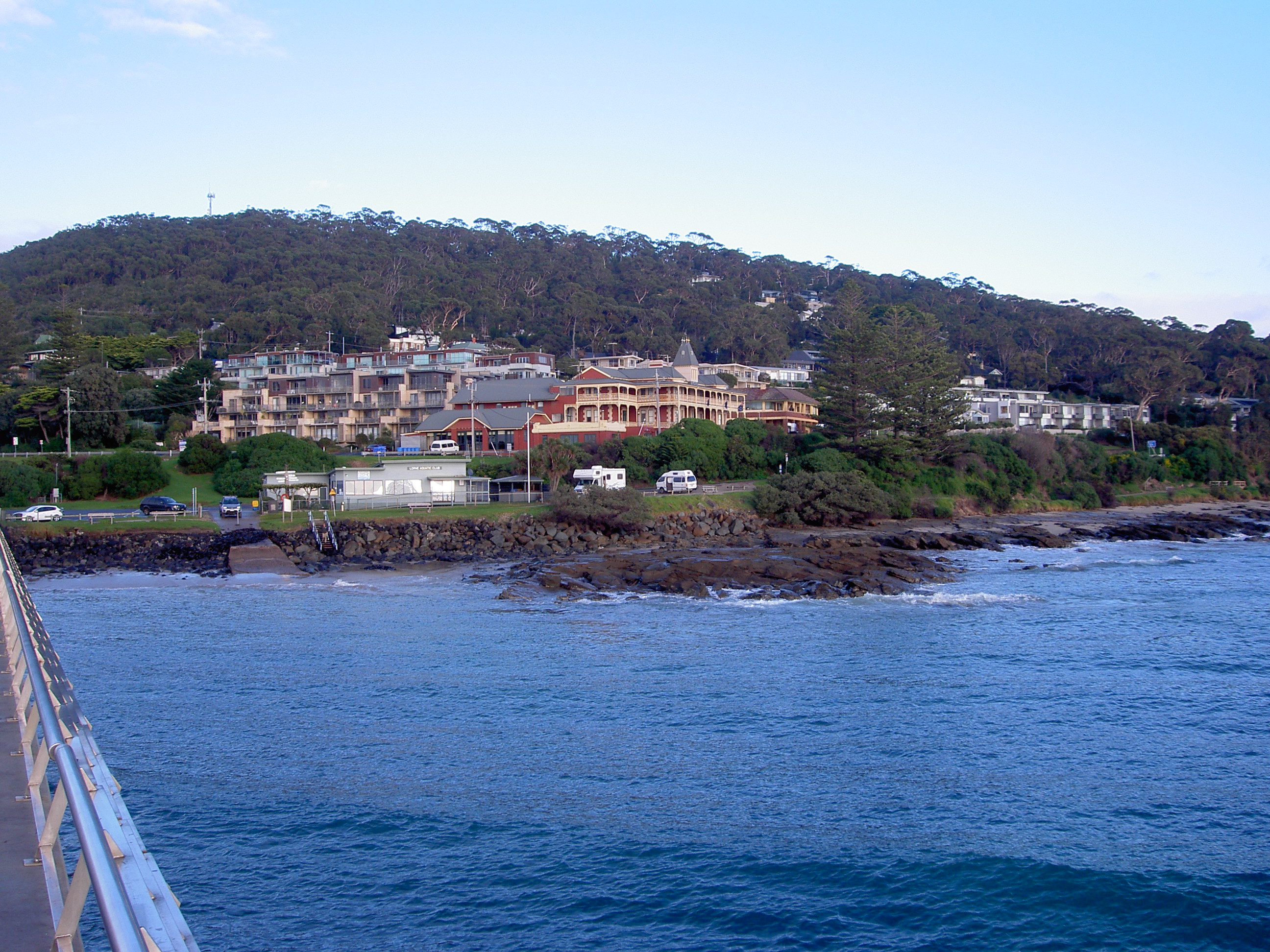
The walk to town is about 20 minutes, and of course by the time we got there we needed a good coffee. From a previous visit to Lorne we remembered a very nice shop near the road bridge over the Erskine River, which sold good organic fruit and vegies, excellent artisanal smallgoods such as salami and ham, and also made good coffee. So we bent our steps in that direction, but found that it was now an Italian restaurant, and was not actually open so early in the morning. But not far away, we did find a very small café that fortunately did make excellent coffee. Fortified, we crossed the Erskine River to find where it entered the bay.
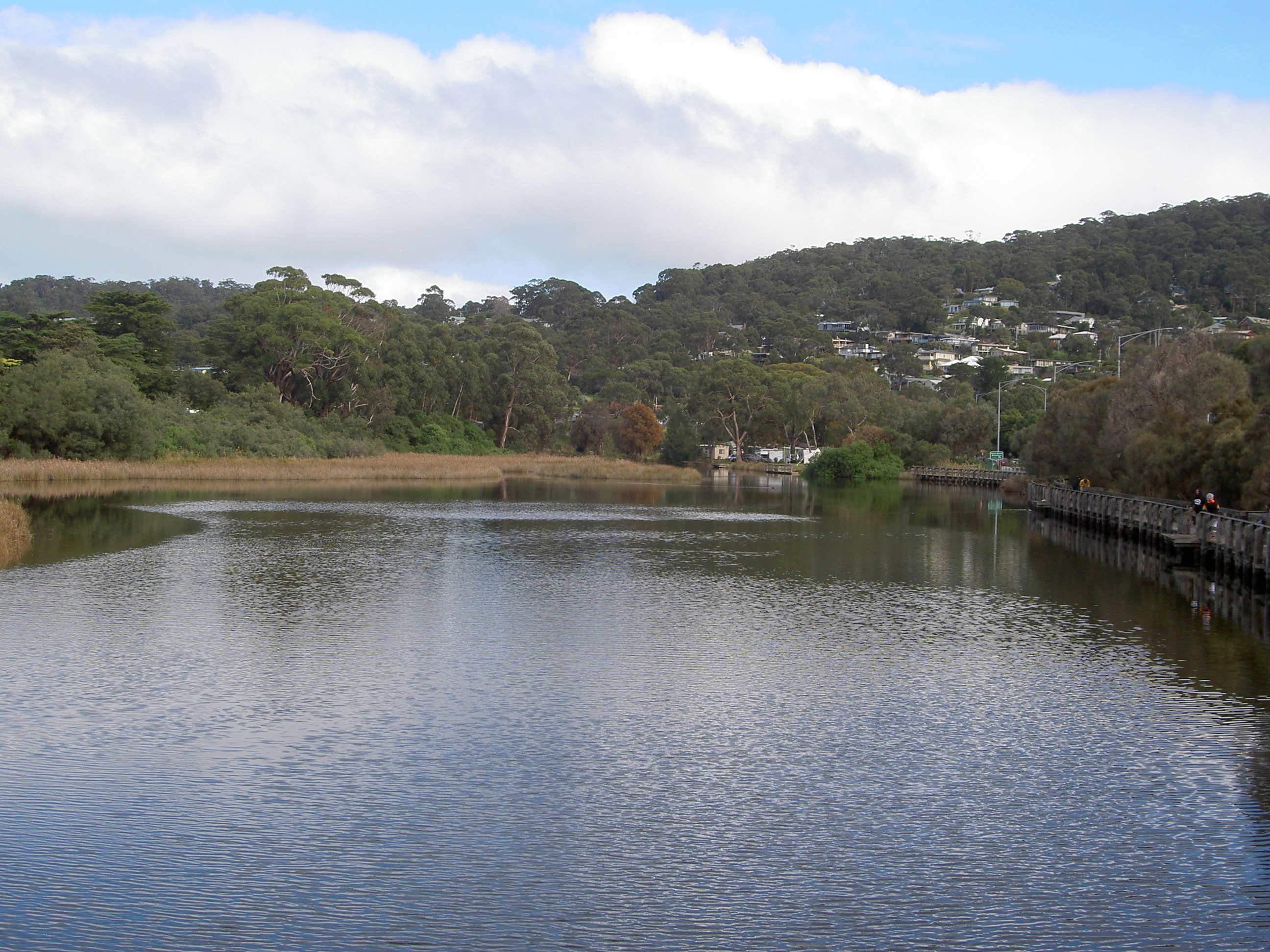
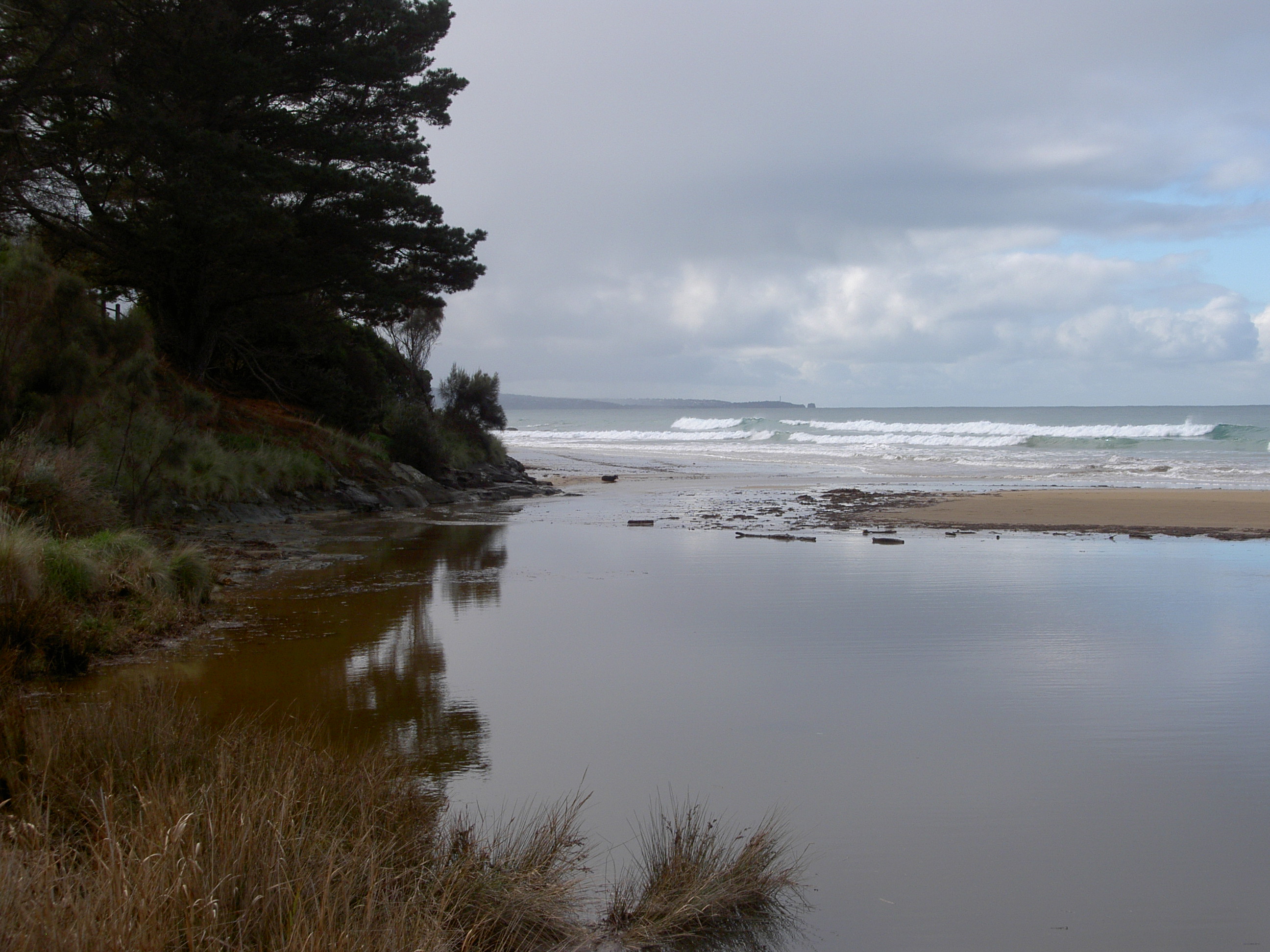
At the bridge, both upstream and downstream the river appears to be quite large. But it is mostly a very long thin lake, as the river barely has the strength to cross the sand and stagger into the ocean! As it happened, the tide was coming in, and we were amused to see a dog having a great deal of fun chasing the occasional ripple that did actually make its way over the sandbar and get a metre or two up the river before it petered out, leaving the very bewildered dog wondering where his plaything had gone.
Between the path beside the river and the road, hidden in some straggly bushes and protected by metal railings, is a small grave. The tombstone reads:-
“In Memory of William Firth Lindsay, aged 8 years,
and Joseph Southwell Lindsay, aged 4 years,
drowned in River Erskine 28 Jan, 1850”.
There is an explanatory plaque which reads:-
“Two sons of a splitter whose hut stood on the hillside above – drowned in a quicksand while at play and buried here next day”
Of course in those days the population was next to nothing, and there would have been no-one around to hear their desperate screams as they panicked and struggled to escape from the quicksand while the tide came in and drowned them. Their father, William Lindsay, was the first European settler in the area, arriving here in 1849, only a year before this tragic accident and 21 years before the place even got a name! Subdivision did not start until 1869; the place was named Lorne in 1871; and a post office was opened in 1874. Overland access was a very rough track from the north, via Winchelsea, a distance of nearly 40k, and taking several days. Accordingly, most of the supplies were brought in by coastal vessels, which also took away the timber on which the growing population depended. But there was no safe harbour, so the vessels were simply beached on the falling tide, unloaded their goods, and re-floated on the next high tide. However, some, like the ketch Henry misjudged the rise and fall, and got stuck. In Henry’s case, the mistake proved fatal, as a violent storm blew in the following day and reduced the boat to matchsticks. Fortunately nobody was injured. The coastal shipping ended when the road, now known as The Great Ocean Road, arrived at Lorne in 1922. Whilst some tourism had been going on since the late 1800s, the coming of the road gave a huge boost to what has become a major tourist industry for the whole of Victoria’s west coast.
Today the resident population of Lorne is just over 1000, rising to something of the order of 13,000 over the summer, especially at New Year’s Eve when the Falls Festival takes place. And on the first weekend of January each year, more than 20,000 people come to watch the annual Pier to Pub Swim, listed in the Guinness Book of Records as “The largest organised ocean swim in the world”. The actual number of swimmers is now capped at 4,000, which to me seems an awful lot! The same weekend hosts the annual 8km Mountain to Surf Run, and the Lorne Surf Boat Race. So there is plenty on for the holiday makers in the summer. To accommodate the great influx of holiday makers, of course there have been massive developments of apartments and the like, one of which we are currently staying in. But it does mean that for about 75% of the year, about 75% of the total accommodation is unoccupied.
But what about winter? Well, we found that there are plenty of cafés and bakeries all doing a good trade. Even the ice cream shop was doing pretty well as we walked past despite the fact that the temperature was only about 100C. There is a surf shop or two, a hardware shop that also sells fishing gear, a pharmacy, an op-shop and a filling station. Apart from the small supermarket, there is nowhere to buy meat, fruit and vegies or small goods. There used to be a very good second-hand bookshop, where, on a previous visit I purchased a first edition set of bound volumes of Charles Dickens’s Master Humphrey’s Clock. Unfortunately that shop is no longer there. The shop itself is, but it is now a vacant shell. However, nearby there is a shop that sells wine, but into which I have not ventured given my current abstemious approach to alcohol. But in the window of said shop was a notice advertising “Bach to the Bush”—a programme of works for solo cello by J S Bach. Now as most of my friends well know, I am not a member of the Universal Bach Fan Club, but as it was to be held that very afternoon, at the Qdos Art Gallery, “tickets on the web or at the door $25.00 concession”, we decided to pop along! The cellist was a young man, Anthony Albrecht, who completed his undergraduate music studies at Newcastle (NSW) University, followed by postgraduate studies at Juilliard School in New York, and now based in London. He had put his whole tour together specifically to bring his cello and his music to smaller towns across the whole of Australia, as well as the major centres. Having already been to Mt Gambier, Port Fairy and several other places well west of Melbourne, he was following the Lorne gig by heading to Canberra, then to Healesville, Olinda, Warranwood, Melbourne, Girgarre, Beechworth, and many other places I had not even heard of, before ending up with a recital in Cairns in August. A very punishing schedule! Qdos Art Gallery is a lovely place for a recital. It is newish, intimate, and an interesting building some 3 k from the centre of Lorne, very much out in the bush. And as for the recital? It was played brilliantly—but it was still Bach.
Qdos Art Gallery also has a nice licensed café, but signs warning one to take care of one’s lunch as meals stolen by kookaburras would not be replaced, indicated just how dangerous the bush can be.
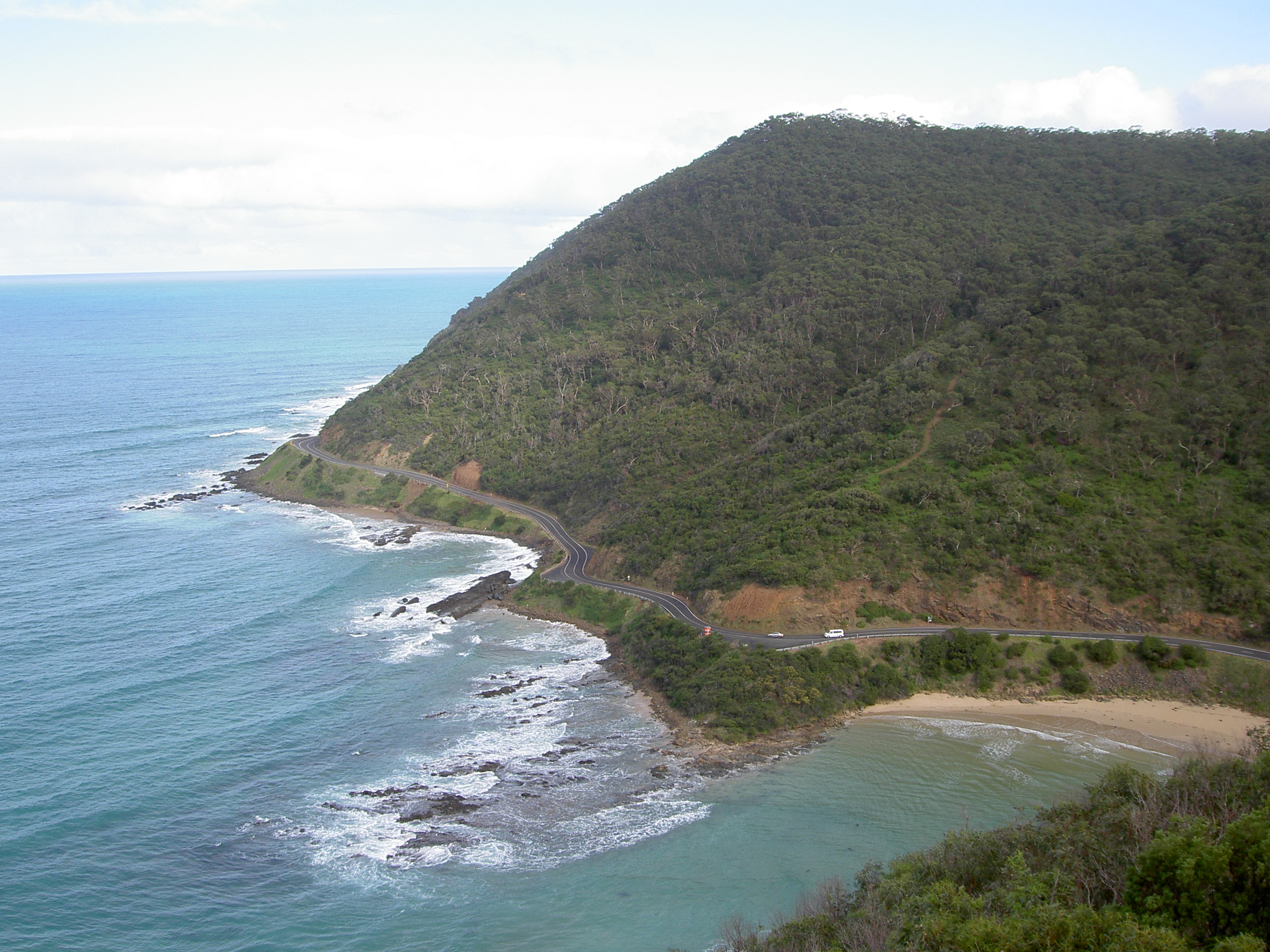
Before we arrived at the gallery, we went, for no reason other than we took a wrong turn, to Teddy’s Lookout. From here one can look down at the Great Ocean Road from a great height, and get some lovely views of the ocean and of the hinterland. I had hoped that maybe it looked down over Lorne itself, but unfortunately it was just a bit too far away for that—-but worth the detour nevertheless.
The next edition of the blog will be about the trip along the Great Ocean Road to Apollo Bay and beyond.
 Slingsby's Miscellany
Dear Brian, Marie and I are enjoying “slingsby”as always and caught up with A’lbrecht at the “Cosmediclinic” in Healesville on Sunday and were most impressed by him.It was a good but strange venue and his gut strings made a great sound.The clinic is presenting another concert by Hoang Pham,who won the ABC instrumental award last year, and he will play Chopin piano solos in the first half and will be joined by others to play the Brahms Piano Trio in C Major in the 2nd half on Sunday 6th August at 4pm. We will probably go and you may be interested so give us a call on your return-we are also having 2nd thoughts about England/France next year as Zoe may be able to stay on in the UK with sponsorship and I am feeling somewhat less depressed although unlike you I have some side effects from the SRI’s that I don’t like. Regards to Ann its impressive the walking she has been able to undertake. Cheers, Colin.