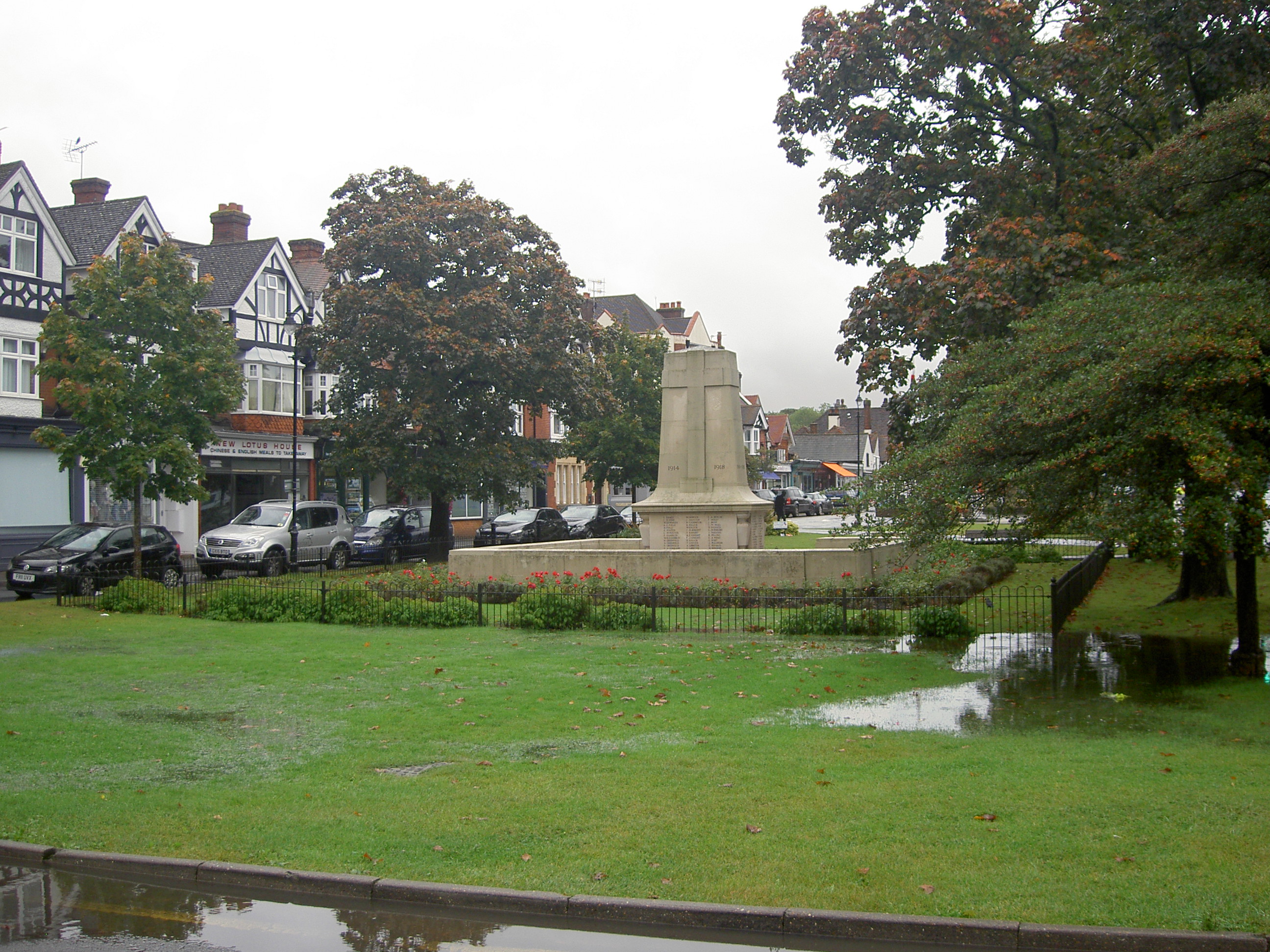
And so we said farewell to Whitstable and headed off on the A2, M2, M20 and several other roads, toward the village of Cranleigh in the county of Surrey, where we would stay the night with our niece and nephew. Cranleigh claims to be the largest village in England, with its population of about 11,000. At the other extreme, Fordwich, which we visited a few days ago, is the smallest town, and also has the smallest town hall in the country. Fordwich has a population of about 380. Quite what the difference in the definitions of ‘village’ and ‘town’ is, that enables such a huge place like Cranleigh to claim to be a village, and such a tiny place like Fordwich to claim the be a town, I am not sure. But I guess that everywhere can lay claim to being a ‘something’ to differentiate it from other places. Having said all that, Cranleigh is not a particularly picturesque village; it was severely bombed during the last war, and many of its buildings date from the late 1940’s. This re-building enabled a bit more planning than had gone into much older and smaller villages, and consequently it has a very pleasant wide main street lined with some very nice shops, plenty of trees, and open spaces.
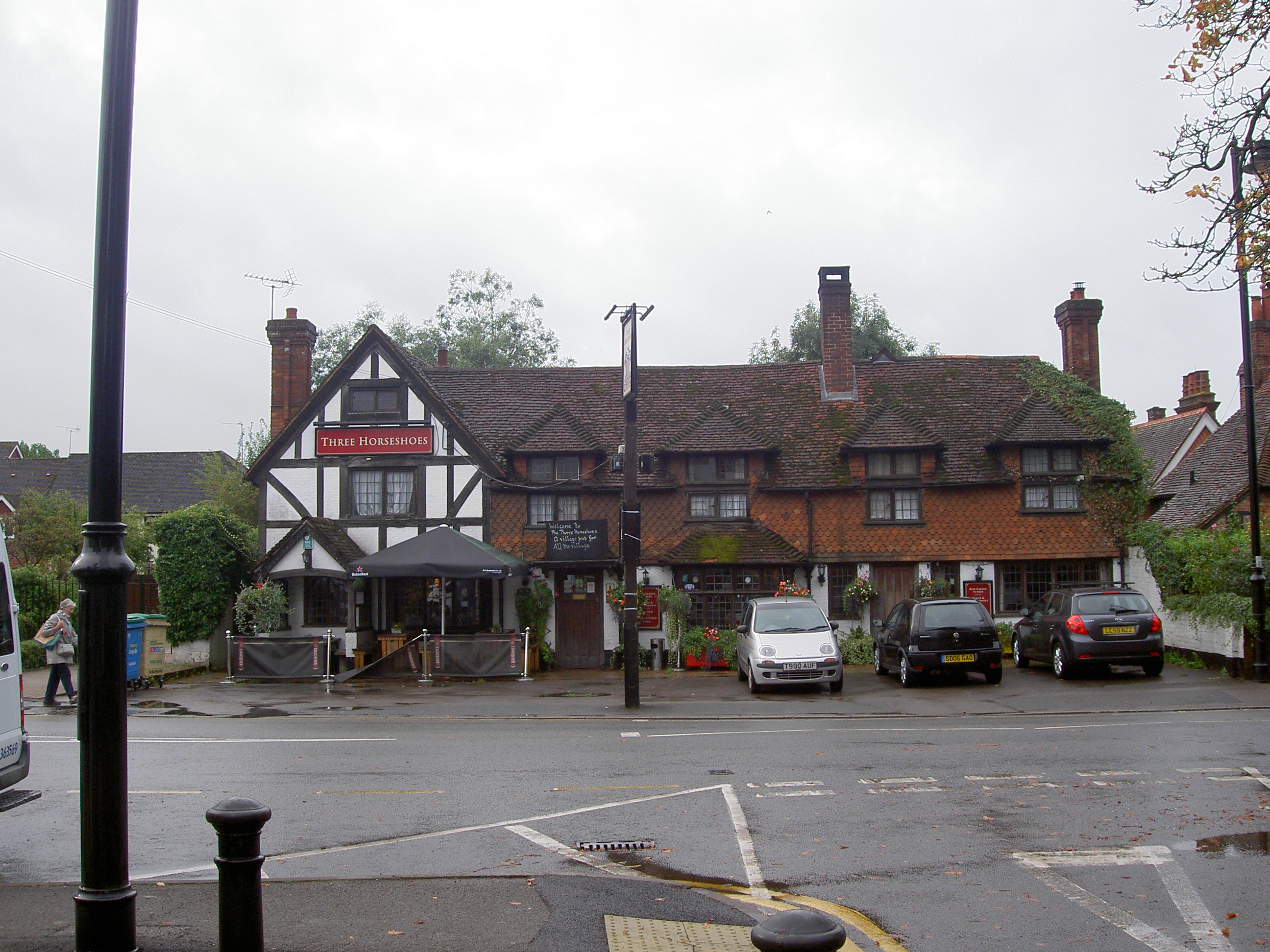
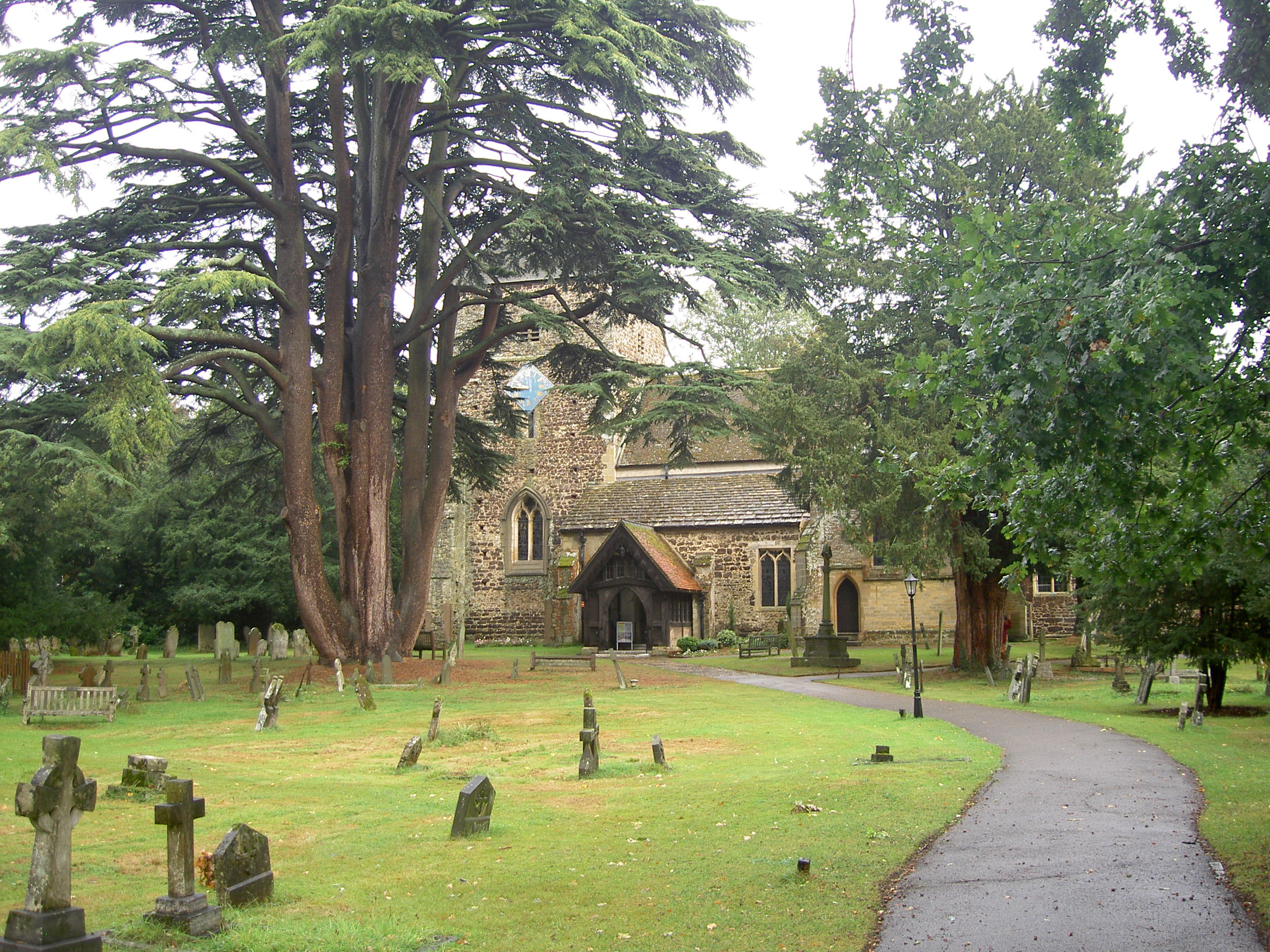
There are remnants of the old village; including, but not limited to, one of the three village pubs, an old building next door accommodating a health service, and a nice old church and Rectory. Maybe it was the proximity of the pub to the church that saved it from the destruction that much of the village suffered.
After spending the night here, we turned our car in the direction of the Salisbury Plains and Stonehenge. We had visited this old pile of stones before, but as Phil and Helen had not, it was very worthwhile making the detour, and they were very impressed. Since we were last there, a whole new visitor centre and car park has been developed about one kilometre from the actual henge, and whilst H and P walked all the way to the henge, I walked part of the way through pleasant countryside, noting ancient burial mounds (barrows), and other pre-historic earthworks including the cursus which predates the henge by several centuries.
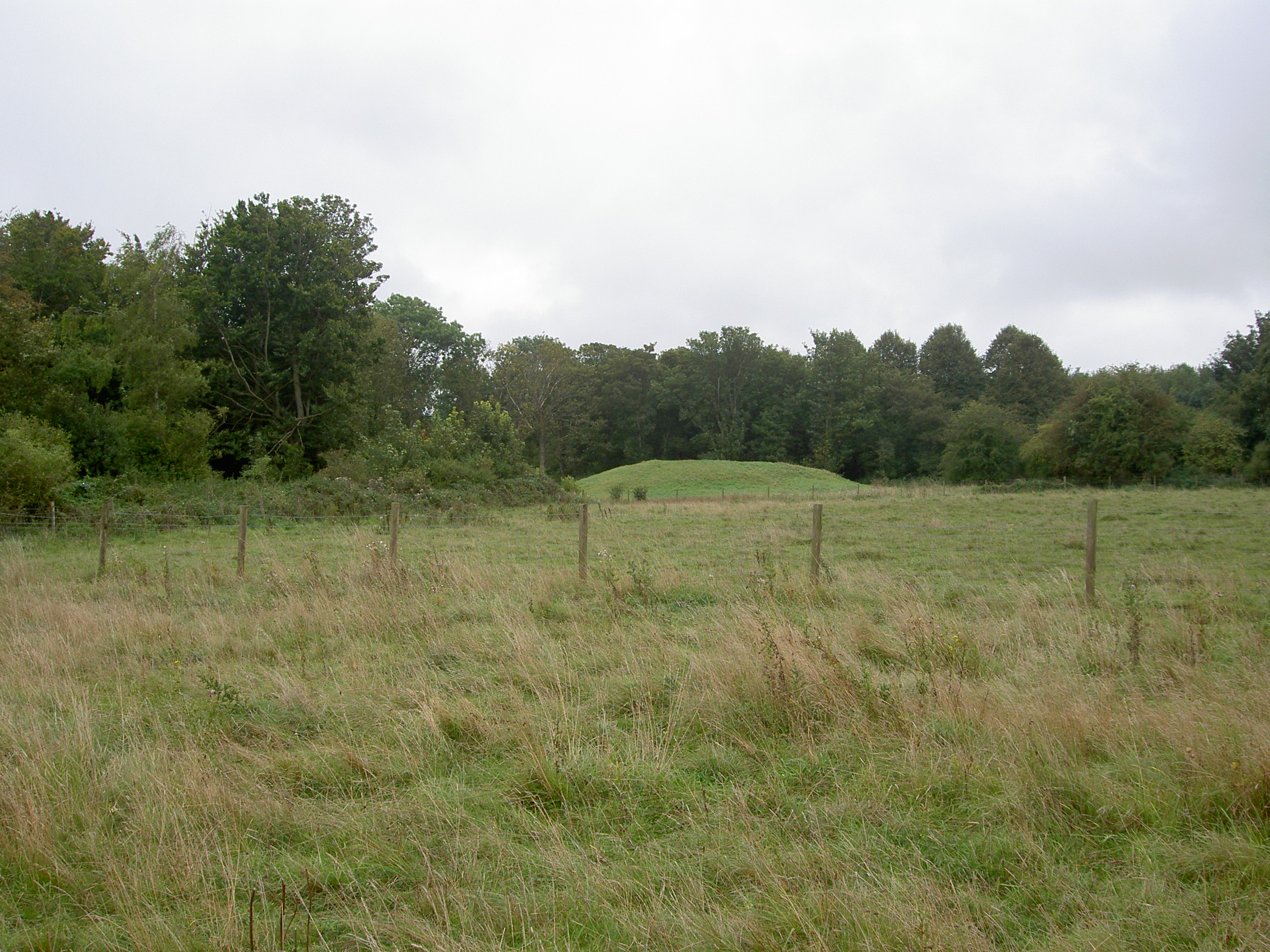
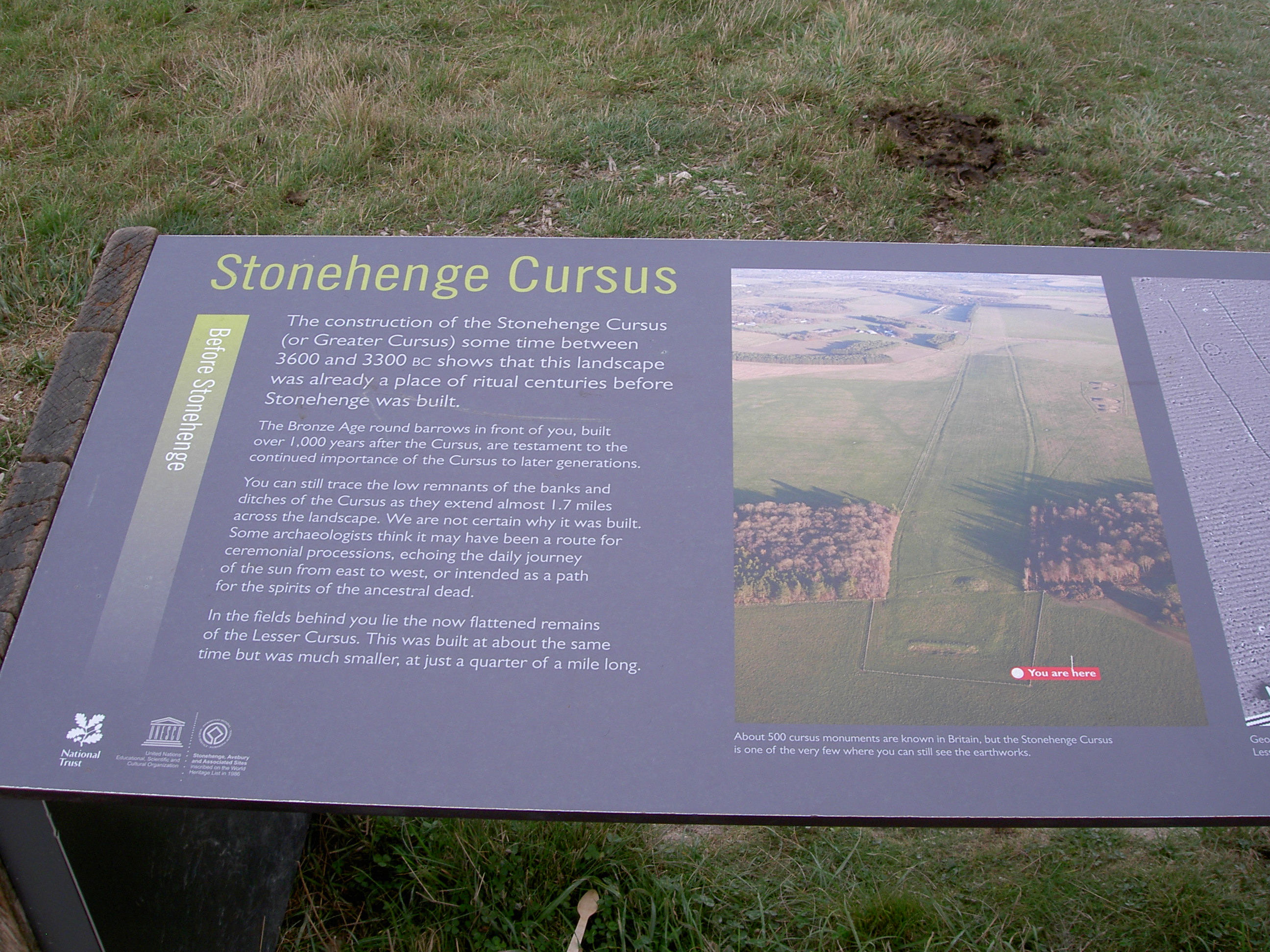
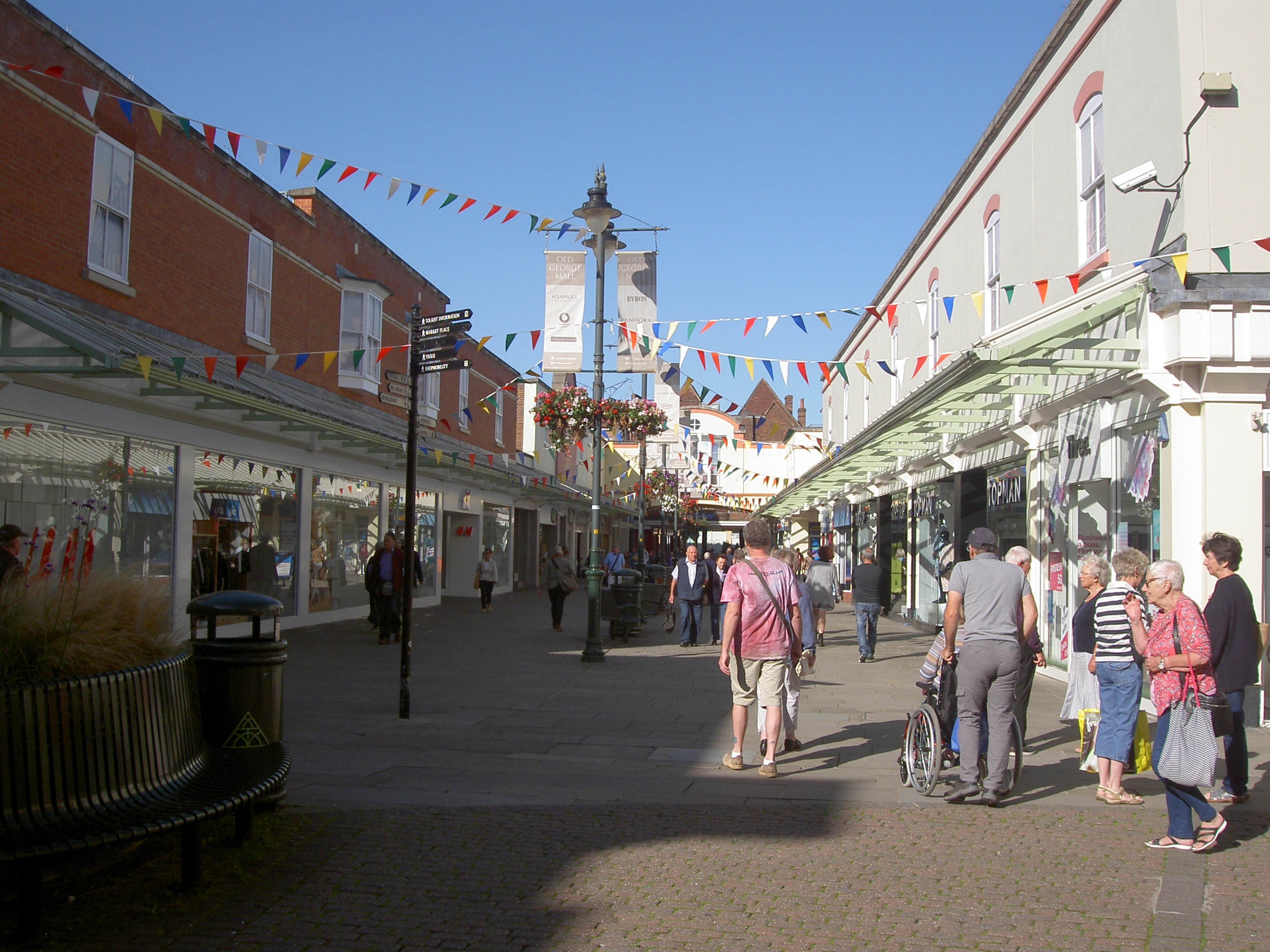
We left Stonehenge, and the ancient dead in their barrows, and went on to Salisbury. I would have liked to visit the old settlement of Sarum, but unfortunately time did not permit that luxury. We found our accommodation with no problems, and set off for a walk to find somewhere for dinner. I can highly recommend The Pheasant as a place to eat should you find yourself in Salisbury. It is a pretty ancient pub, but the staff are all young and very pleasant. The food was really excellent, and it made a nice finish to a busy day. The pub EFTPOS terminal had broken and we had to find an ATM to get some cash, and that gave us a further opportunity to explore the area, including the pedestrianised centre of the town. The local Council has plans to extend the pedestrian precinct quite considerably, as it is very congested, and the air quality very poor.
Next morning we packed up and drove to the magnificent cathedral, which is well worth a visit. Construction began in 1220, with the spire, the tallest in England, being added in 1549. The clock, dating from about 1386 and restored to working order in 1956, is said to be the oldest working clock in England, but that claim has also been made for other clocks. But what I am sure about is that the cathedral houses the best preserved copy of the Magna Carta. There are only four copies surviving of approximately 40 that were written, and the Salisbury copy is superb. It’s all in Latin, so I couldn’t read it, but there are of course English translations on display. Many of the rights and responsibilities enshrined in the Magna Carta are now well established in many ‘western’ democratic constitutions, including of course Australia.
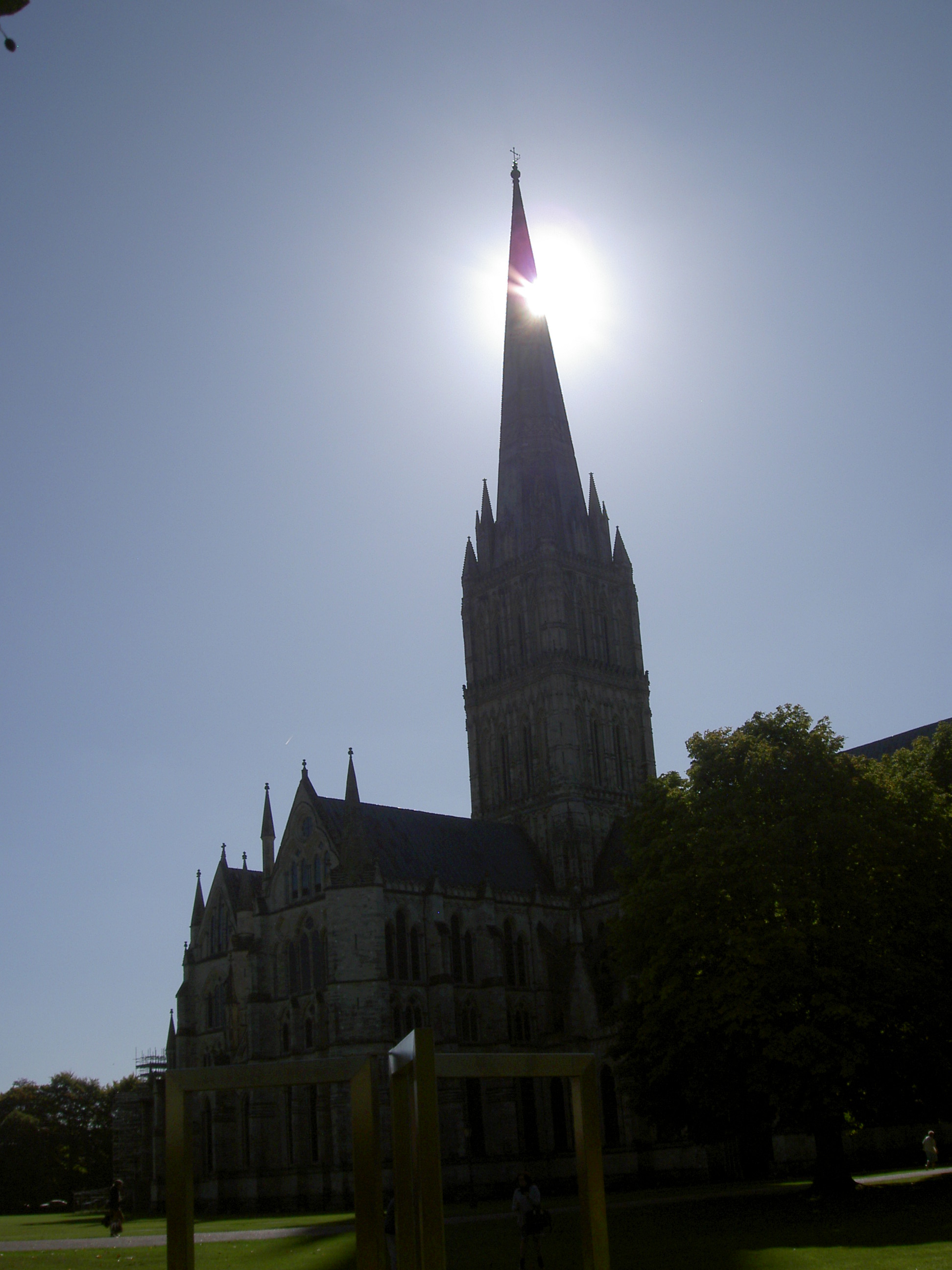
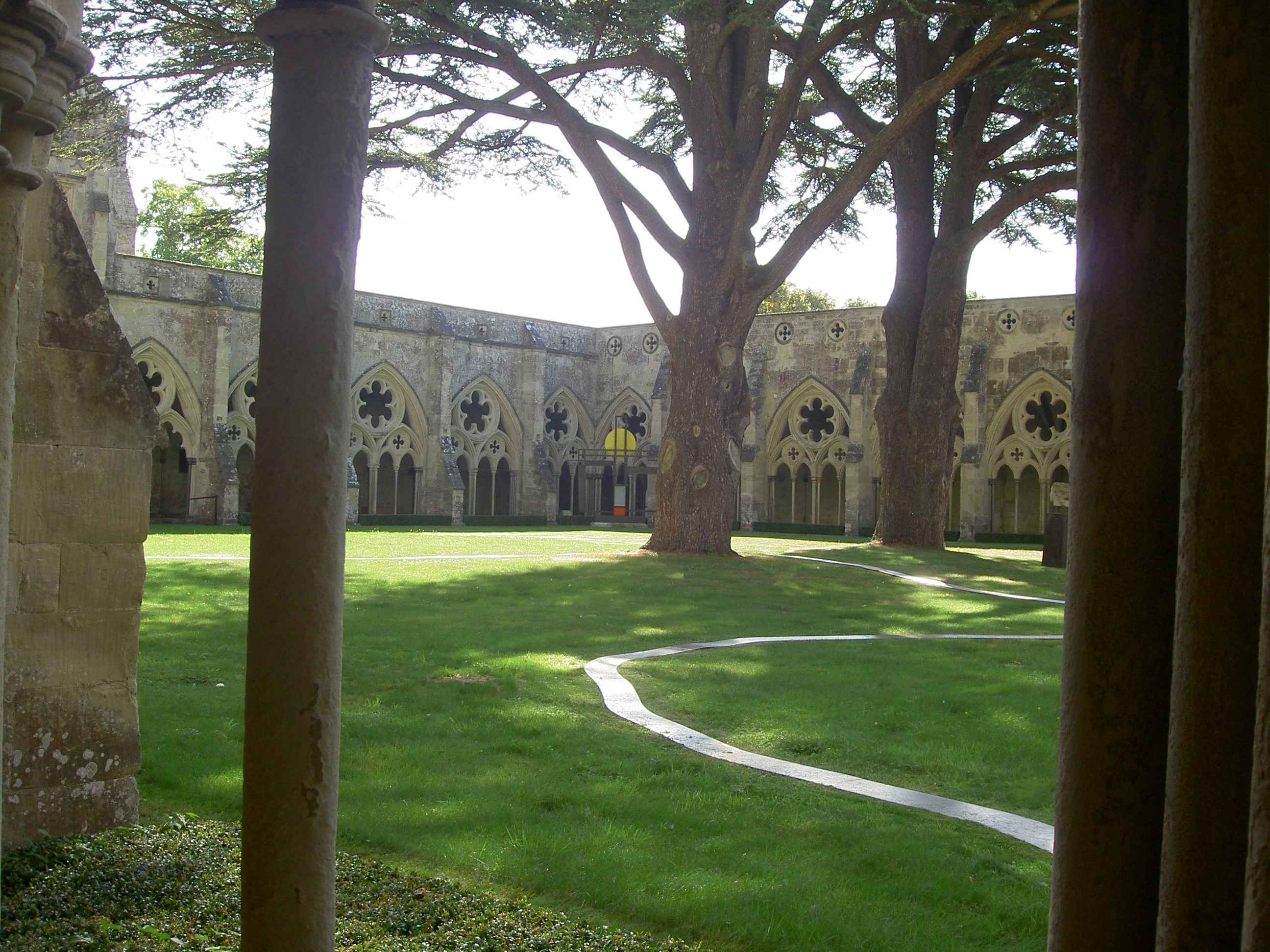
The cathedral itself is, of course, a magnificent building, and really demanded more time than we were able to devote to it before we left and headed further west to Mylor Bridge, Cornwall. We took the route in accordance with the sat-nav, and it was pretty easy, except that when one follows major routes, the only places for eating are the dreadfully impersonal and boring “services”. So we disobeyed the sat-nav voice, much to her chagrin, and found a lovely little pub at a village called Seavington St Michael. I’m not sure we could find it again, but the lady behind the bar was charming, the food was excellent and the beer just what I needed. Then we continued uneventfully to Mylor Bridge
Our accommodation here was a stone cottage derived from the stables of a working farm. There were several such converted dwellings surrounding the main farmhouse wherein the owners lived. It was charming, quiet and comfortable, with a well-appointed kitchen, (including a balloon whisk) and a good BBQ in its own little courtyard. Our hosts were delightful, and made us very welcome.
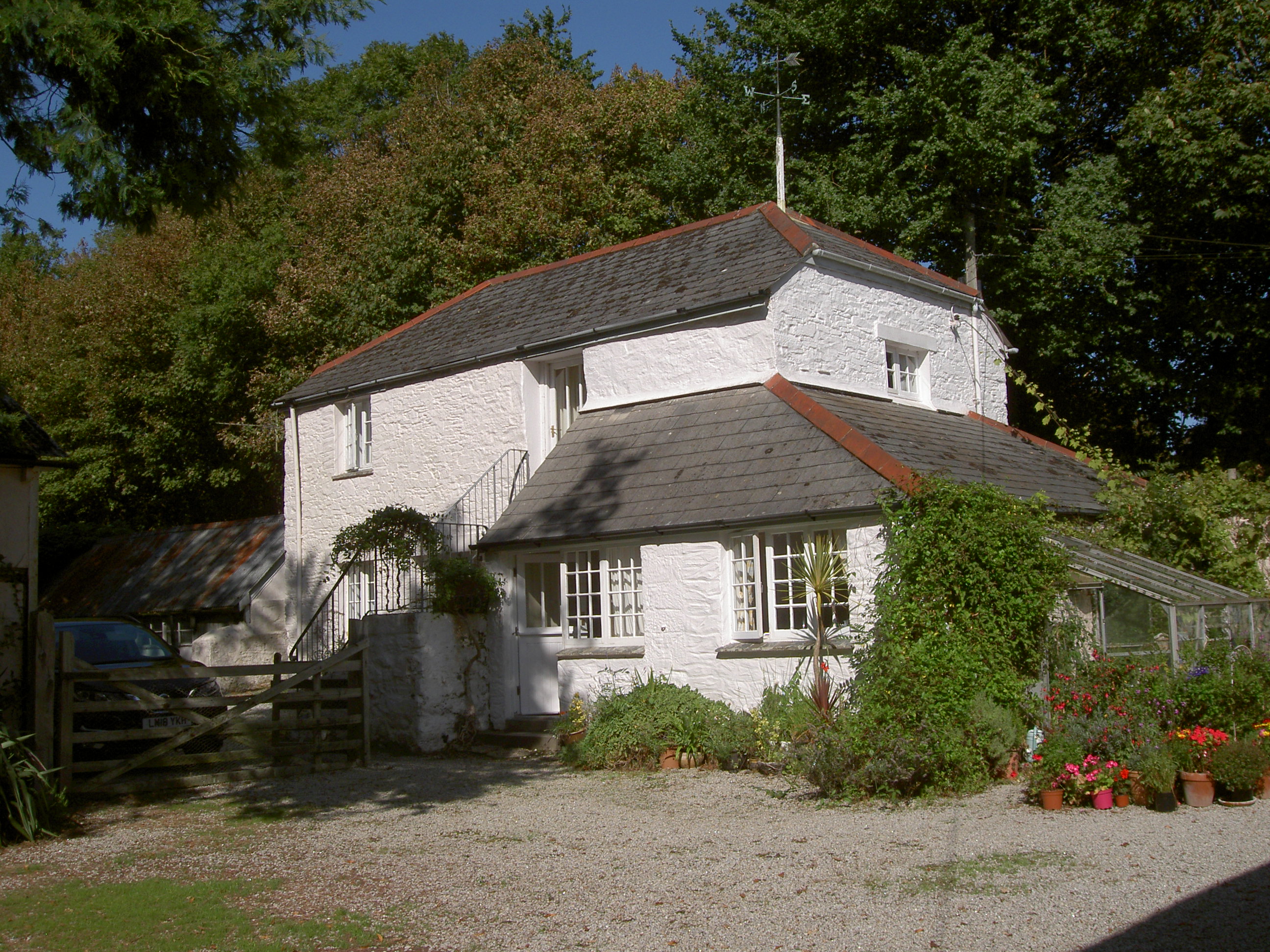
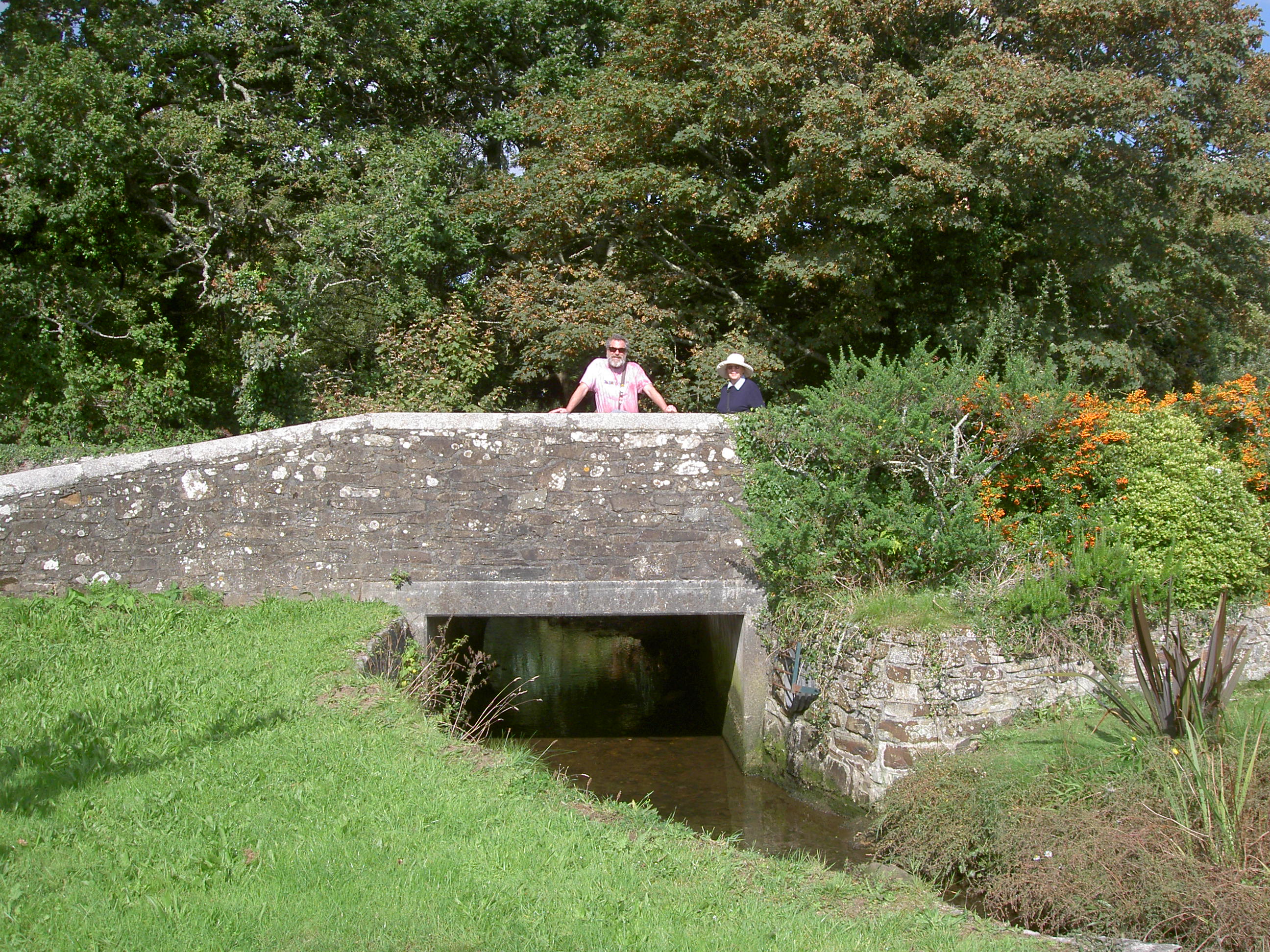
The following morning, 25% of our party took the car to visit relatives of a friend nearby. Without the car, the rest of us walked around, exploring what Mylor Bridge had to offer.
Mylor Bridge village itself, about a 15 minute walk away from our farmhouse, is quite tiny. There is a good pub, The lemon Arms, a village store that sold everything you could ever need, a village butcher and a village fishmonger. There is also a post office, and a couple of hairdressing salons. It is on the upper reaches of a tidal creek, so the village itself has no beach or sailing facilities; but a kilometre or so downstream the creek widens out, and it provided a safe harbour for smaller yachts, and a bit of a boat repair industry.
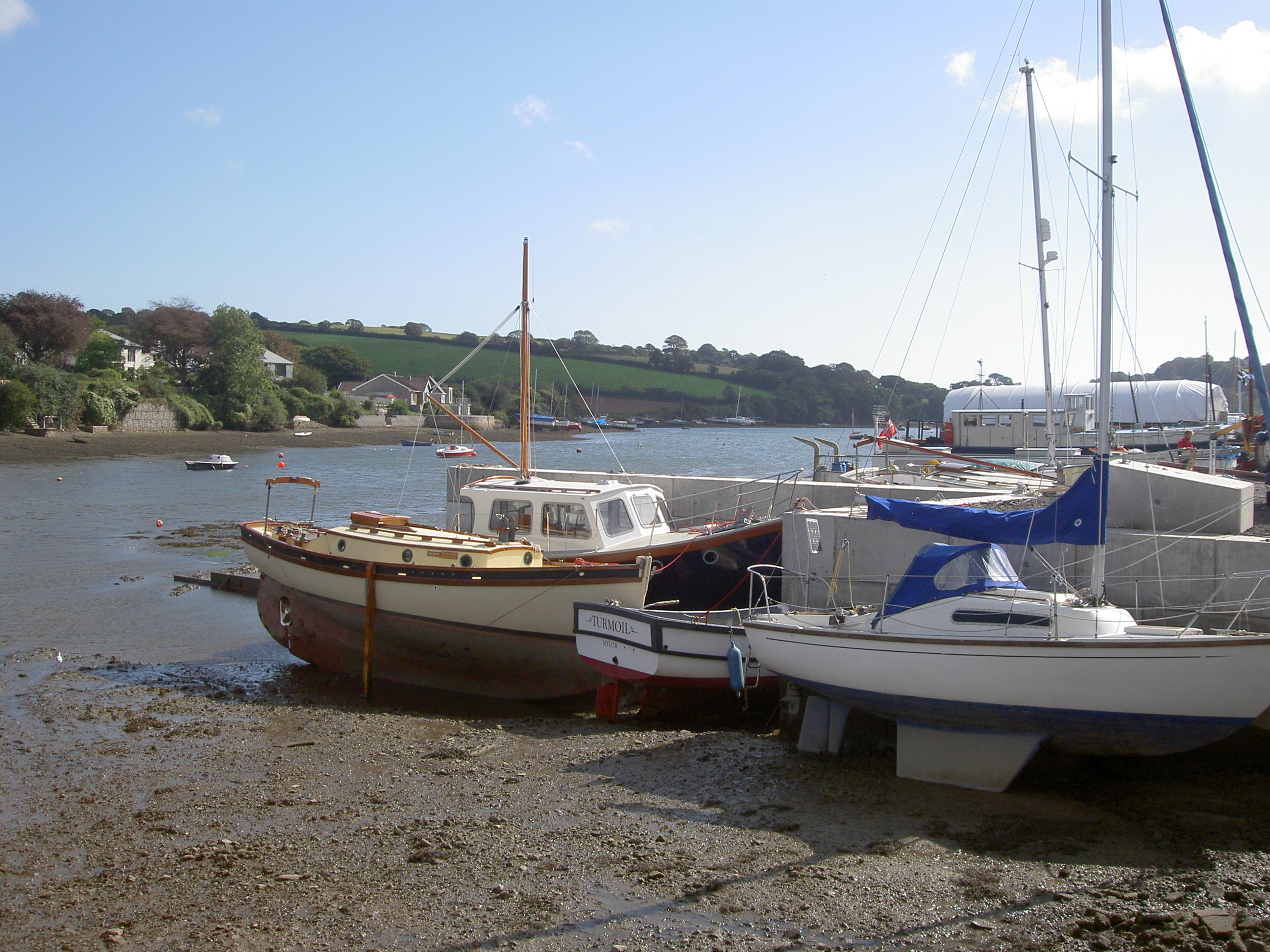
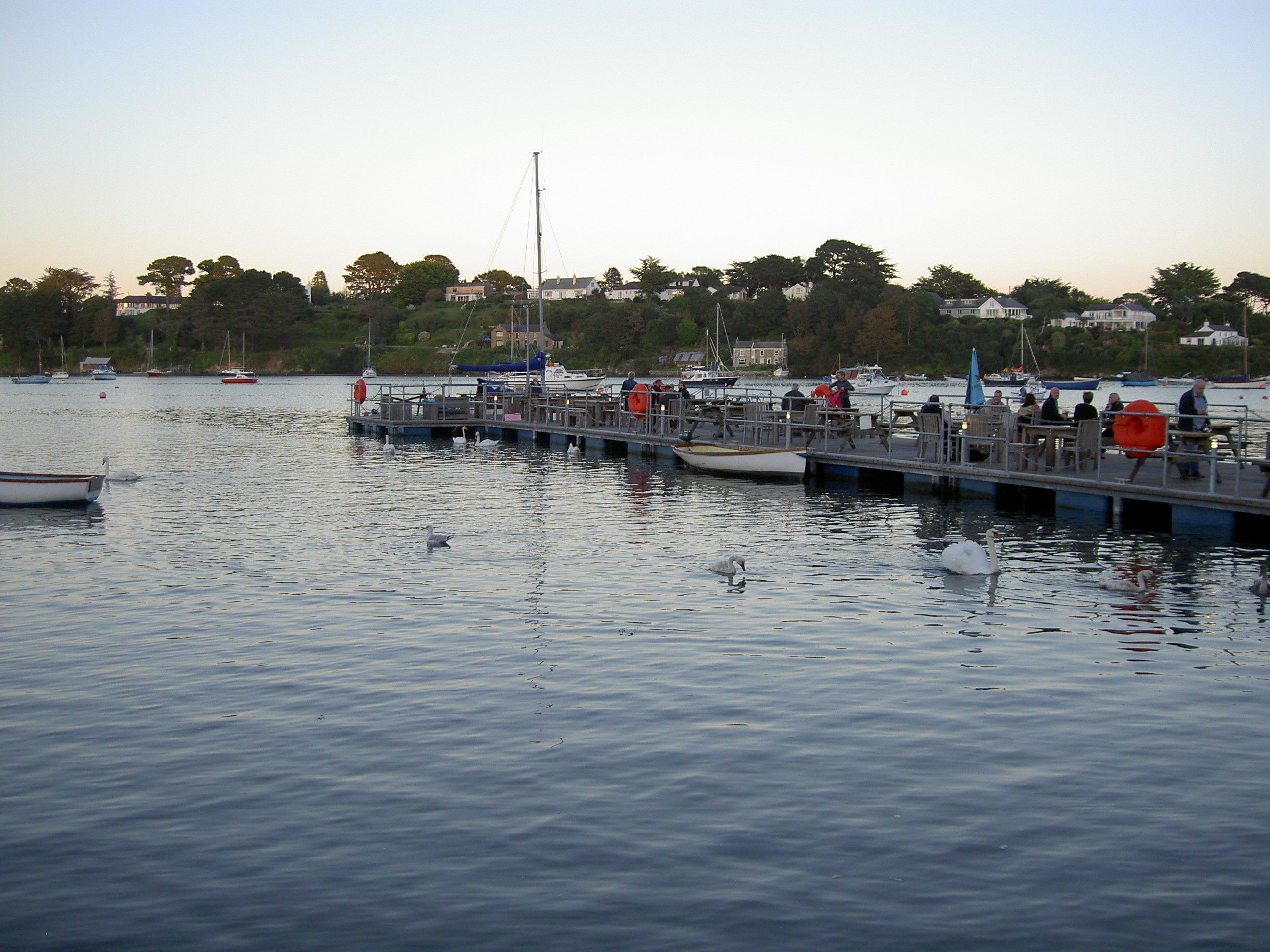
Not far from Mylor Bridge, is another pub, The Pandora Inn, which is much more ‘touristy’. It has frontage onto much deeper water, and the greater part of the drinking and eating area is on a floating pontoon. Quite delightful; and many of the patrons actually arrived in small water crafts, which was not only picturesque, but also very sensible as car parking was a nightmare! We dined that evening on the pontoon, and it was lovely, warm evening.
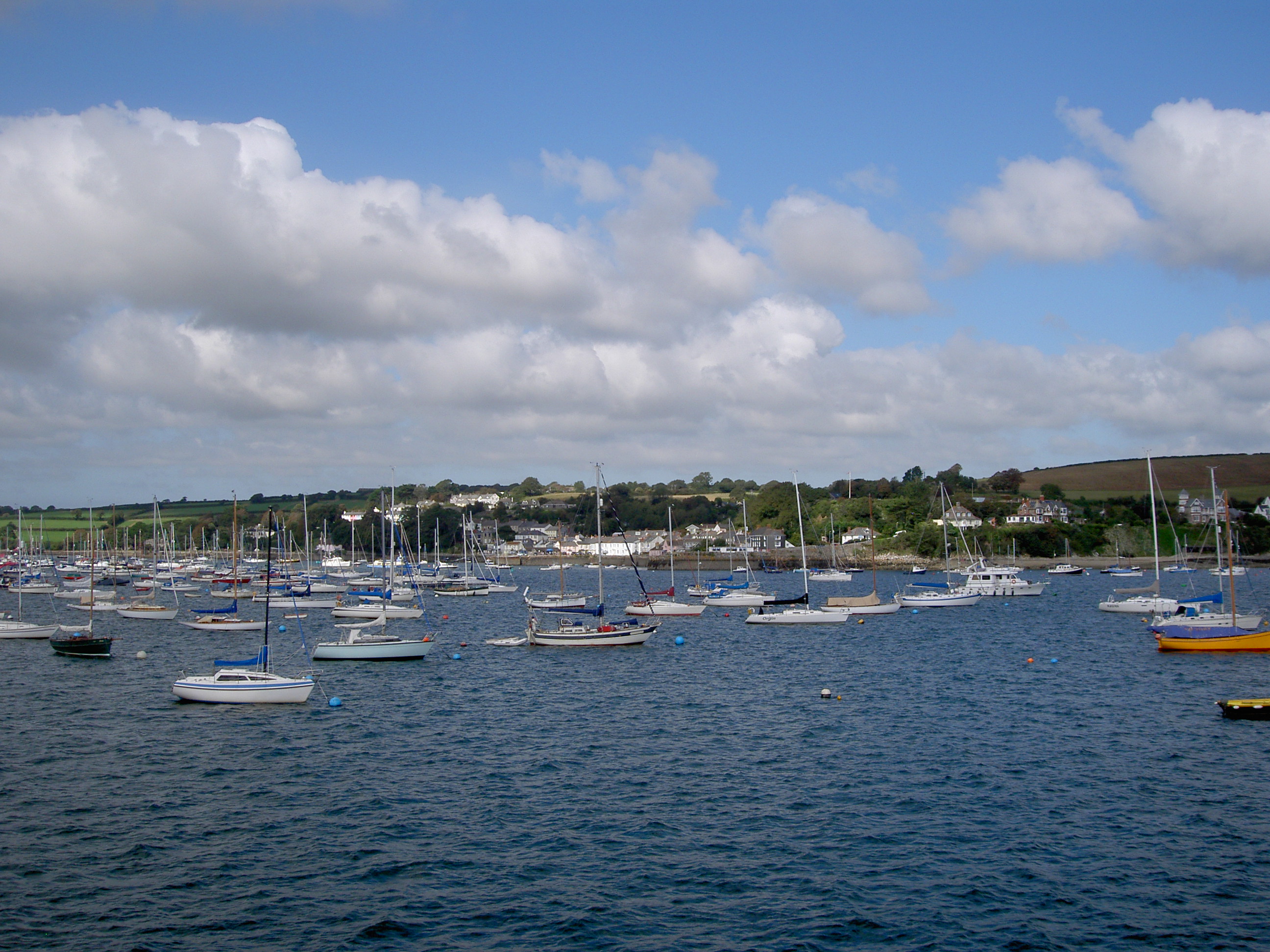
The next day, half of our party took the car and drove to the north coast of Cornwall to Tintagel and its environs. That left us with the opportunity to catch a bus to nearby Falmouth. We thought of going to Truro, but decided on Falmouth when we learned there are no busses to Truro. Our first surprise as we approached the bus stop was to be asked if this was indeed the stop for the Falmouth bus. I had intended asking that same question of the young woman who had asked us. We then discovered that the young woman was visiting from Perth (WA). So, on the bus to Falmouth, three of the five passengers were from Australia!
Falmouth as a town does not have a lot to recommend it. However, if you are interested in sailing, it is pretty much the place to go. It has a very sheltered deep water harbour and there were countless boats, large and small, bobbing on the water. Not being ‘boaties’ ourselves, there was not a lot to interest us.
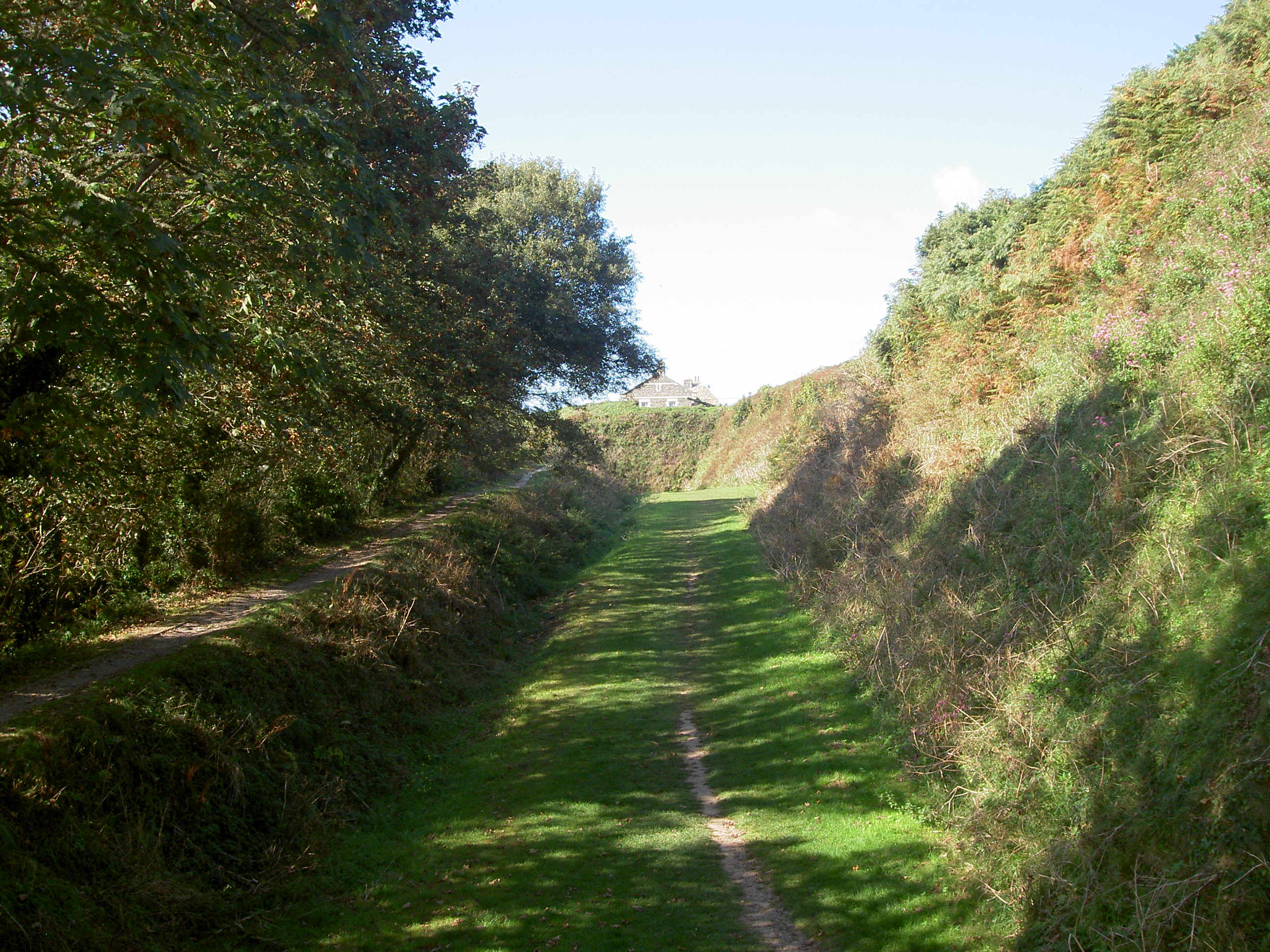
There is a rather nice old castle, Pendennis Castle, built in about 1540. Set on a headland projecting into the sea, it is one of Henry V111’s finest coastal fortresses,. It looked great in the aerial photographs on display in the town, so I thought I would take the half-hour walk to see it. I also thought the headland would provide some rather nice views of the coast. The castle is managed by the English Heritage, and of course there was a fairly pricey admission charge. I had so very little time to spare—the last bus back to Mylor Bridge being due in about one hour, and I still having a half hour walk back to town, I asked if I could just have a peep at the keep. But no. I immediately discovered that the uniformed officers of the English Heritage were every bit as efficient at keeping people out as were the officers of Henry V111’s army! I was allowed to walk around the castle beyond its surrounding moat, and I did not manage to get even the smallest glimpse of the castle itself which is hidden behind the high grassy wall on the right of the photo below.
Falmouth does have several claims to fame associated with military and nautical activities. One of these is that in 1805, following the Battle of Trafalgar, the news of the victory and of the death of Admiral Nelson reached England through Falmouth. Lt. John Richards Lapenotière disembarked from the schooner Pickle at Falmouth, and immediately set off to London—a journey ordinarily taking several days. By riding non-stop, and changing his horses 21 times, it took him just 37 hours, arriving at 1.00am on November 6.
Another claim to fame is that on October 2, 1836, HMS Beagle anchored at Falmouth at the end of her journey of discovery around the world, and Charles Darwin disembarked and took the mail coach to his family home at Shrewsbury.
There are of course book-loads of other events, but these two are sufficient for this blog!
After our three very enjoyable days at Mylor Bridge, we turned the car toward the east, and set off to Southampton, from where we would fly to Guernsey.
 Slingsby's Miscellany