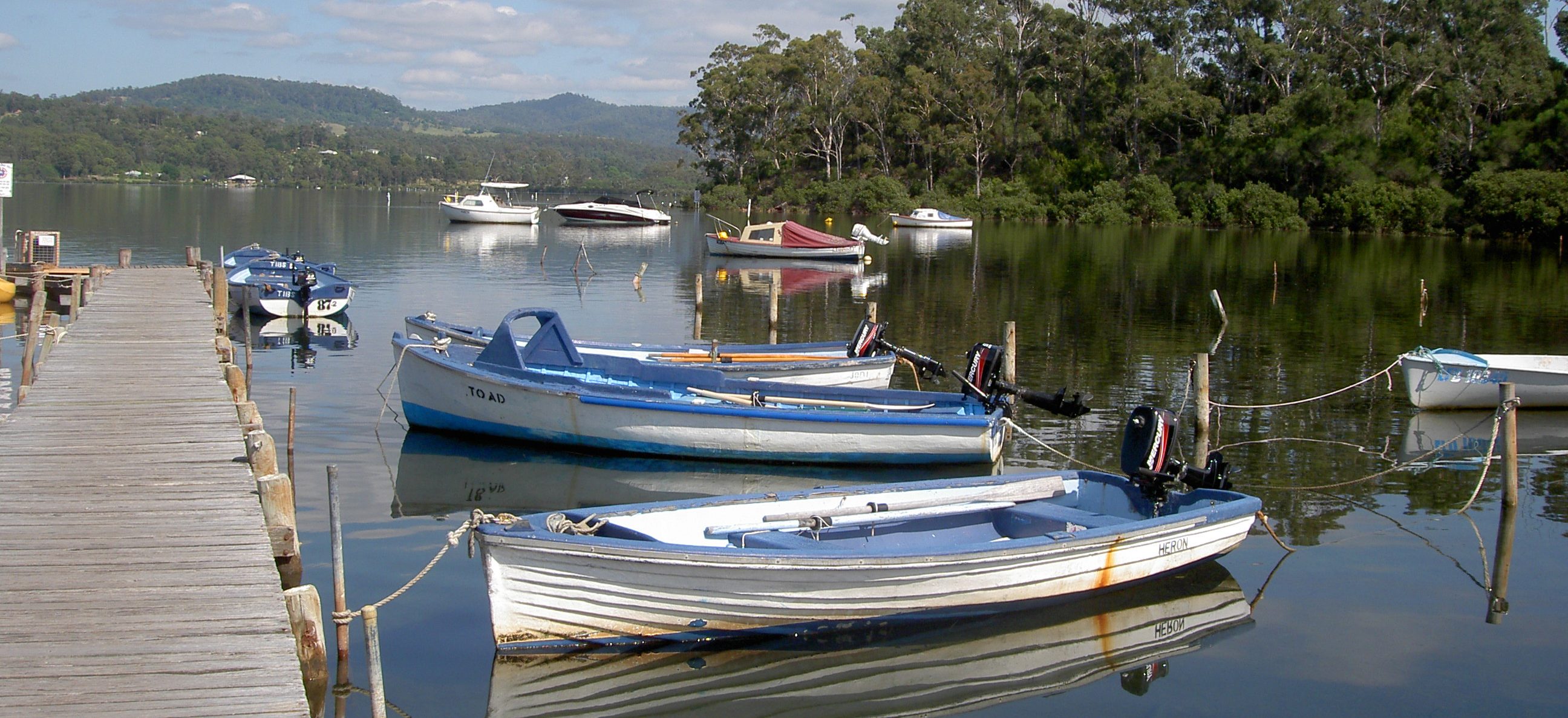
The drive from Mylor Bridge to Southampton, a distance of the order of 400km took 8 hours! From home to Lakes Entrance, which is the same distance, it usually takes us half of that time! The road in both directions was nose-to-nose traffic for the entire 8 hours, but very rarely did we actually come to a complete stop, and just as rarely did we reach the designated speed limit, and we never managed to exceed it. Unbelievable! And then, when we finally got to Southampton airport and through all the palaver of checking in, passports etc, the plane was an hour late. But eventually we reached Guernsey, and it all seemed worthwhile. As we descended toward the airport, everything looked very neat and tidy, as it always does from a few hundred feet up. But in Guernsey, that neatness and tidiness was equally apparent at ground level. I do not think I have ever seen a place so well kept, and here was a whole island neat and tidy, with nothing out of place. A short wait for a taxi, and we were on our way to the Auberge du Val where we were to stay for the next three days.
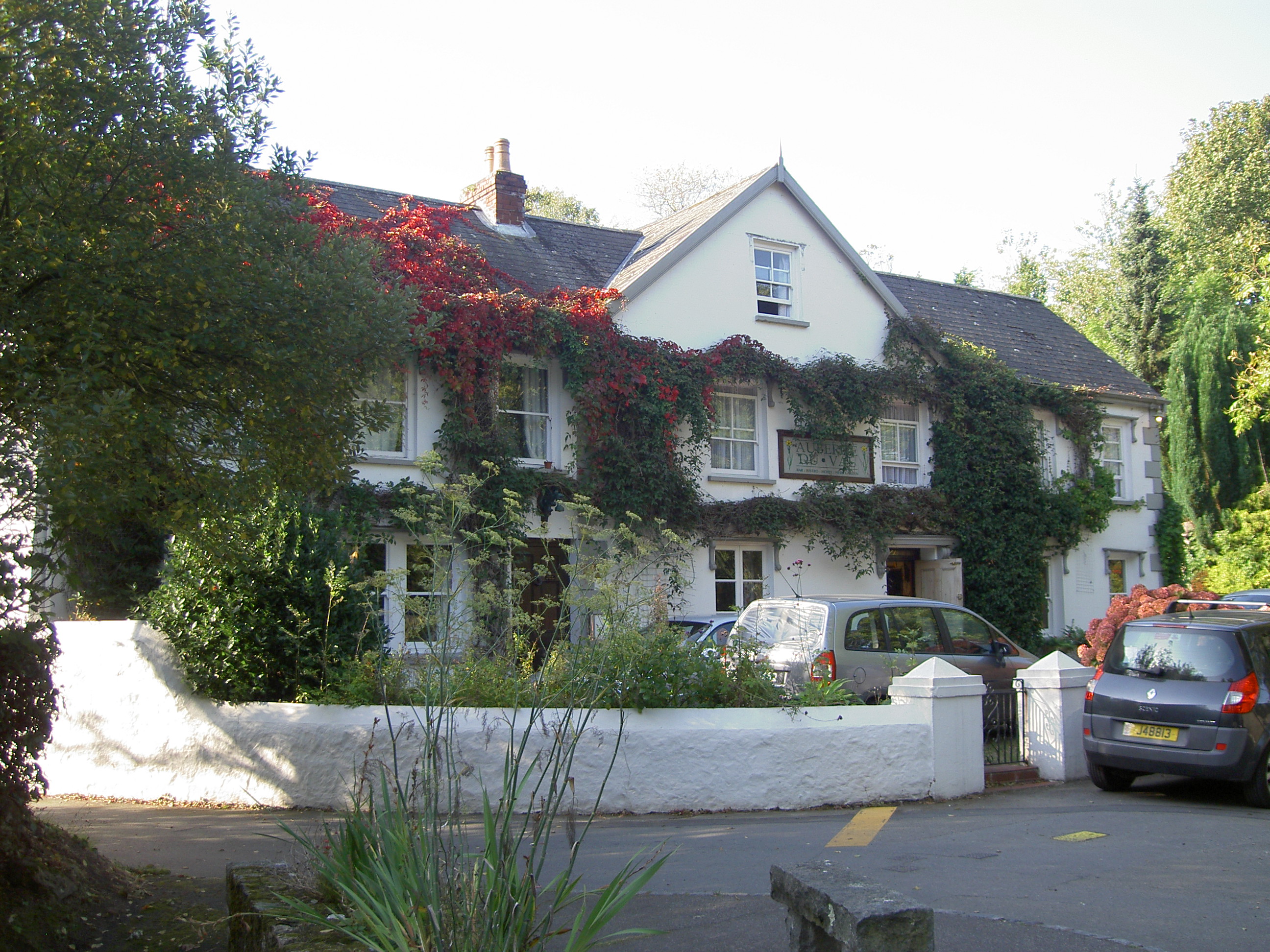
Originally a farm house, it is full of character; and our host and hostess were charming and made us very welcome. There is a nice courtyard out the back where we sat with our pre-dinner drinks whilst we waited for a table–we had forborne making a booking for dinner as when we booked the room we were not sure when we would arrive. A charming elderly gentleman sharing the courtyard with us turned out to be a long-time resident of Guernsey, and he entertained us with stories of growing potatoes and tomatoes—which might not sound very thrilling, but which was in fact very interesting! Eventually we were called to our table, and enjoyed a rather excellent late dinner.
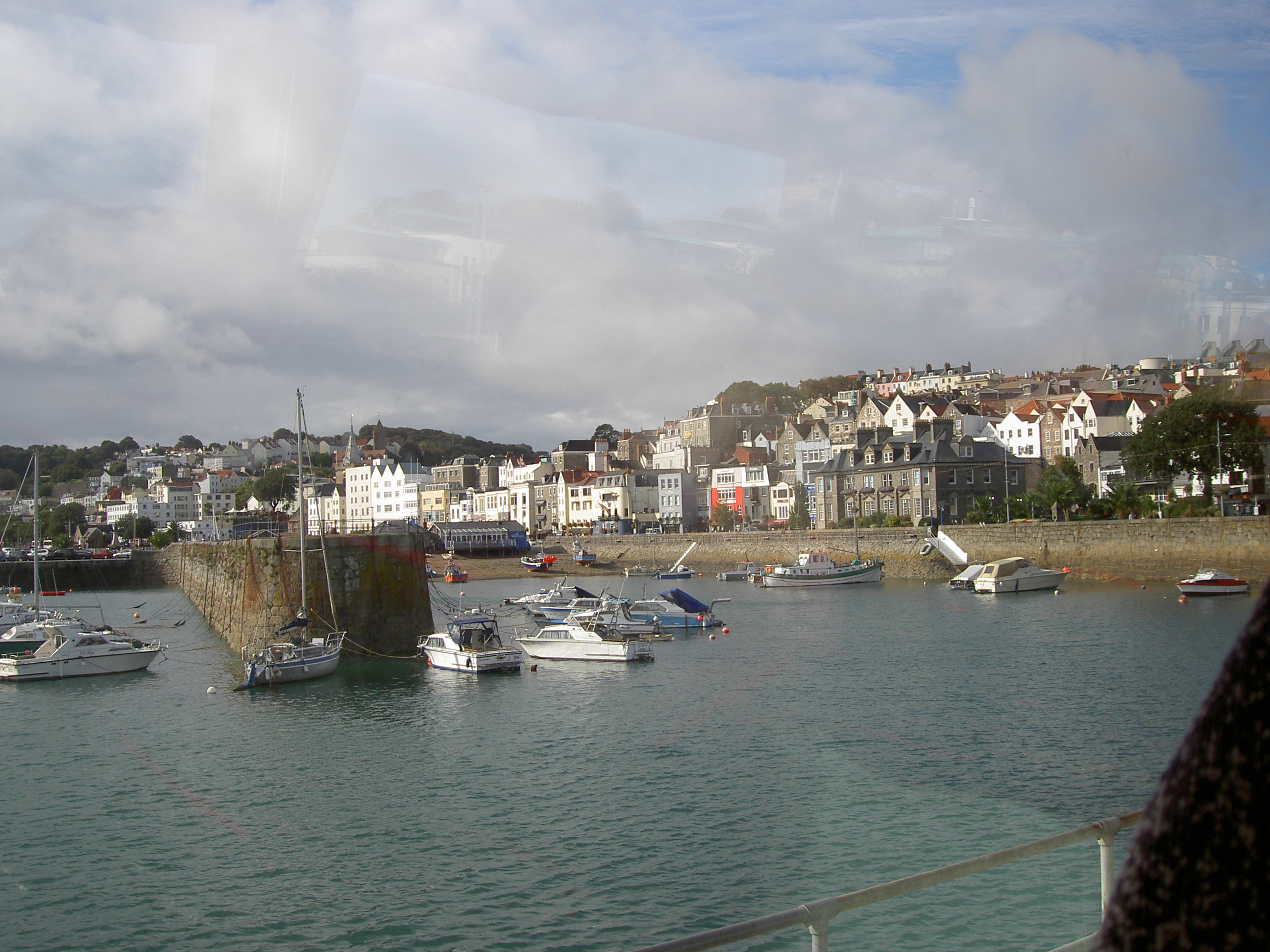
The Auberge du Val is about 20 minutes by bus from the main town of the island, St Peter Port, so that is how we travelled and where we went the next morning after a very good full Monty breakfast. There is one bus, the number 71, on this route, which is a full circle. And unlike the Triangle busses on the Canterbury/Whitstable/Herne Bay route which go both clock- and anti-clockwise, the number 71 only goes clockwise, so the return journey takes twice as long as it goes round the rest of the circle. St Peter Port is a very hilly and a very compact town, with a very nice harbour. Clearly it is a place which attracts those who like messing about in boats!
But the particular point of interest we wanted to visit is the house in which Victor Hugo lived during his period of exile from France (1856 to 1870).
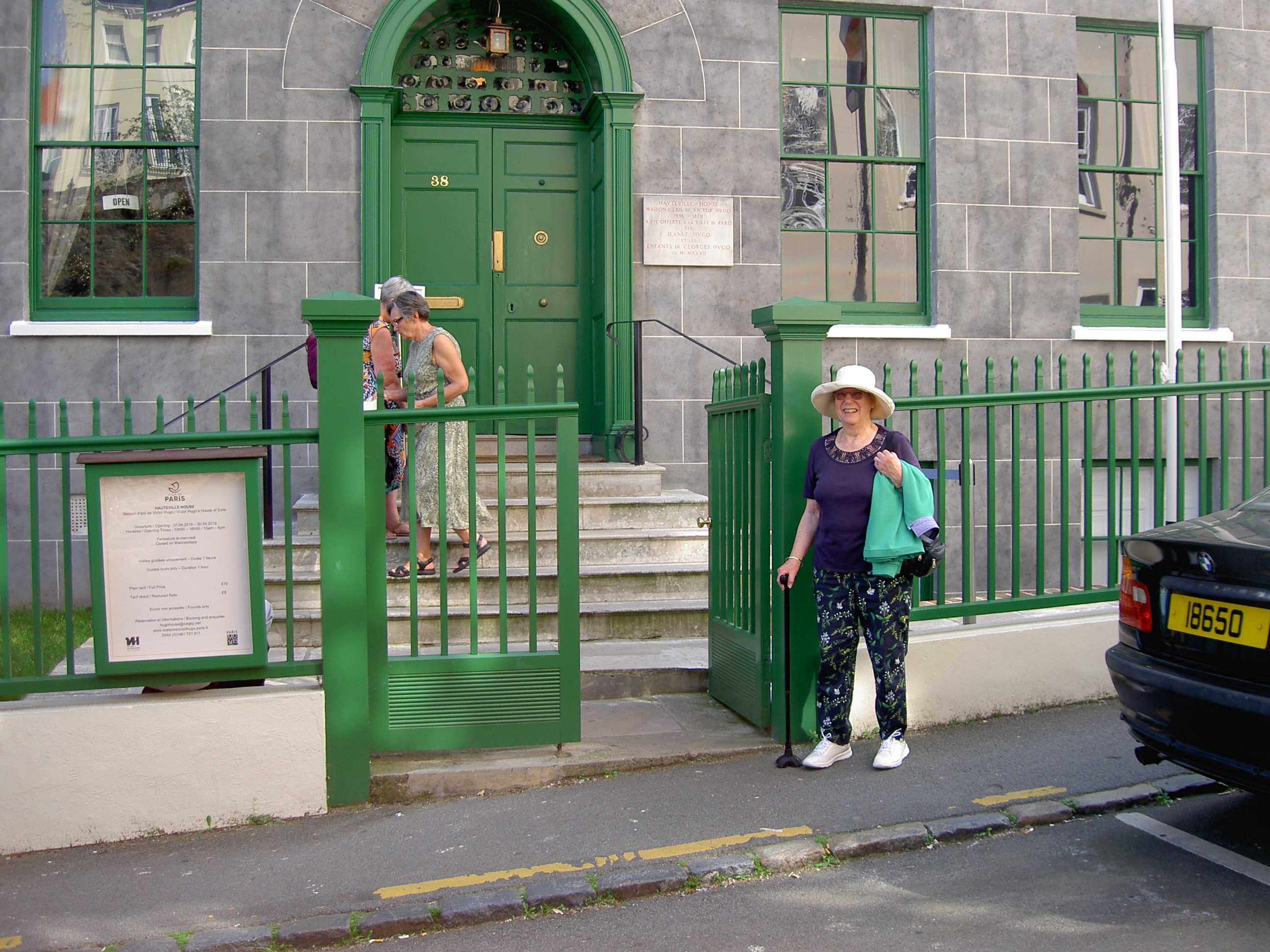
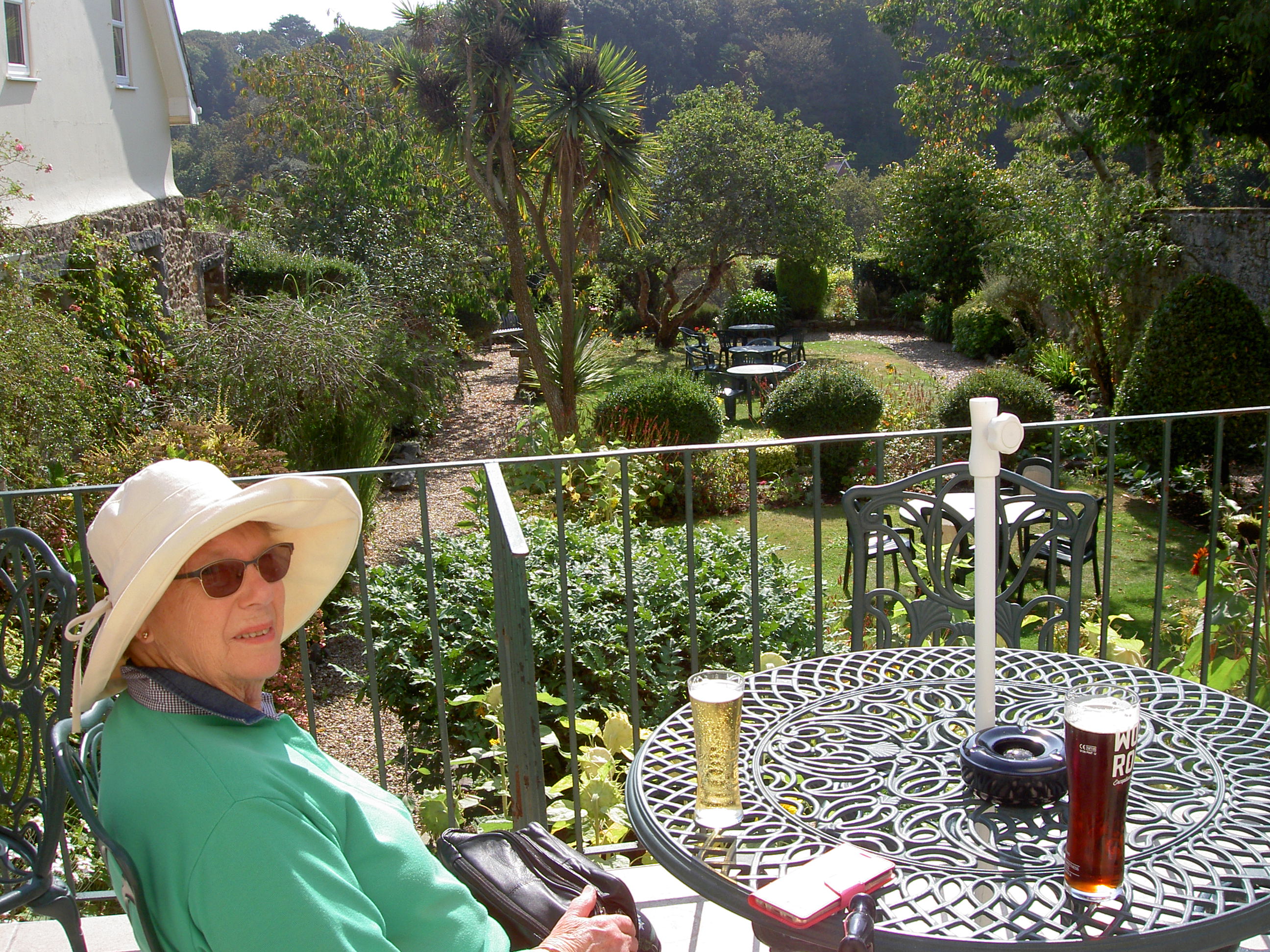
To reach the house we had to climb a very steep street, and on arrival found that it is necessary to make a booking as they only admit visitors undertaking a conducted tour. However, a plea that we were from Australia, and had only a couple of days available to us fell on sympathetic ears, and we were offered a place on a tour about one hour and a half later —just enough time to climb about 50 more metres up the hill to the Pandora Hotel which had a rather lovely beer garden in which we could enjoy a couple of pints of local Guernsey beer.
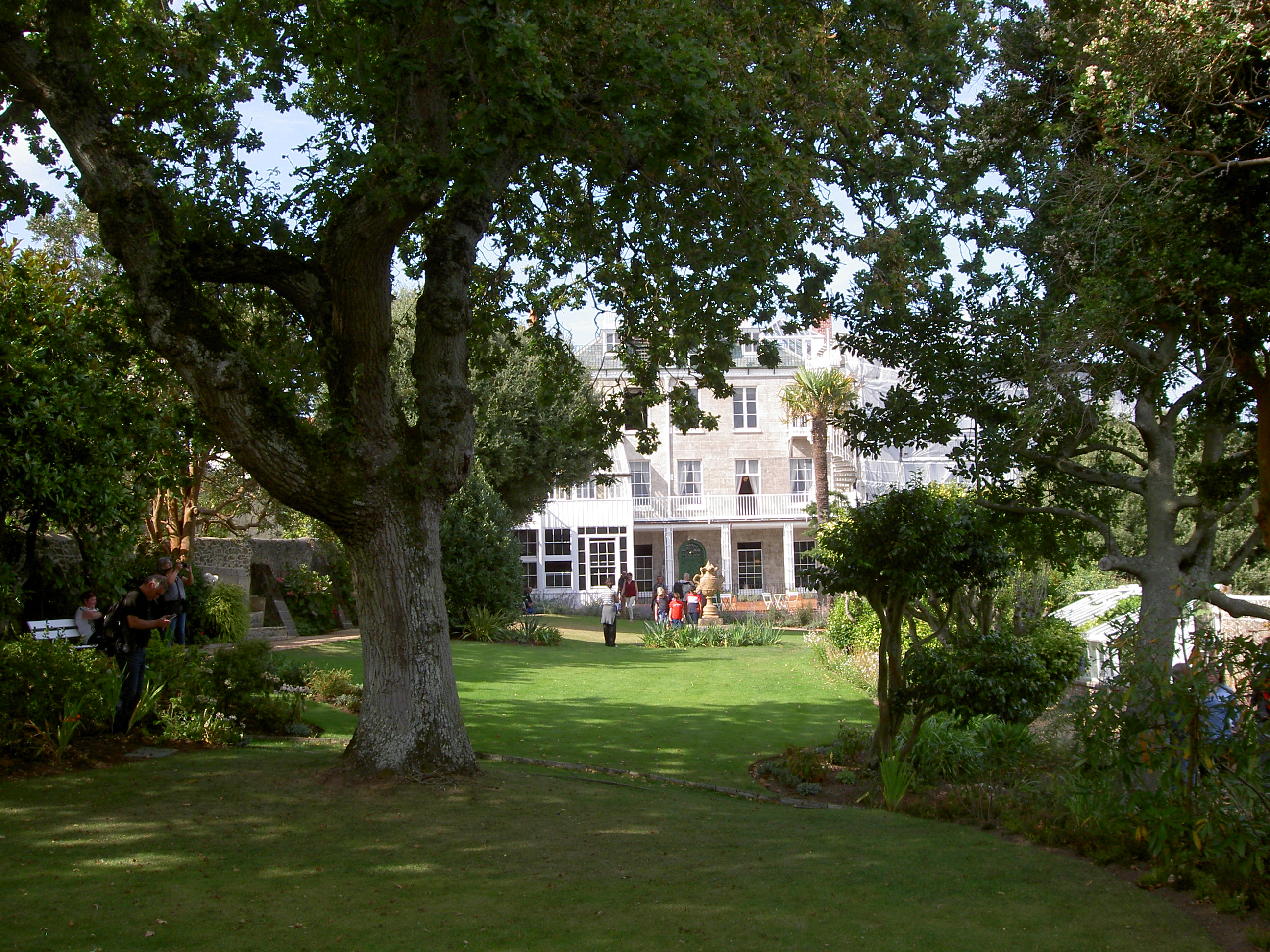
When Charles Dickens visited Victor Hugo in his Paris apartment some years before his exile, he described Hugo as ‘looking like a genius, which of course he is’. He also described the apartment as looking ‘like a museum or a set from one of his plays’. There is no doubt that Hugo had a very peculiar approach to furnishing his accommodations! About one half of the rooms are very dark, with tapestries hanging on the walls and covering the ceilings, and at least one wall of each room made from very dark wood scavenged from ancient carved chests. The other half of the rooms were very light and airy, except for one which was hung with red drapes, and made to look like the set of a play. I found some of it too oppressive for my taste—but the young French woman who conducted us around gave a very informative commentary, highlighting Hugo’s idiosyncratic approach to his surroundings and to his writing. The house is owned, and run, by The Museum of Paris, having been bequeathed to the Museum by his descendants. The house also has a very nice walled garden, which is being re-planted with some of the plants known to have been there in the past. Well worth a visit if you find yourself on Guernsey.
The following day we took a half-day bus tour of the island, which was excellent. Our driver/guide was a passionate resident of Guernsey, with an in-depth knowledge of the history of the Islands, and a great sense of humour. One of the things I noticed, and could not understand, was that as soon as we arrived on the island our English sim-card didn’t work. I have to confess that I always thought of the Channel Islands as being a part of the UK; I knew they were not part of France, despite their proximity to that country. Our tour guide then made it all clear. It appears that when William, the Duke of Normandy, invaded and conquered England in 1066, the Channel Islands, being in the possession of said Duke, remained in his possession when he was proclaimed King of England. Time moved on and in 1204 King John of England lost control of Normandy, but managed to hang on to the Channel Islands by making a deal with the leaders of the Islands, granting them freedom from the laws of the English parliament if they promised to remain loyal to the Crown of England. So, from that time, the Islanders have sworn allegiance to the monarch of England, according that person (whether King or Queen) the title Duke of Normandy, whilst retaining the right to determine their own laws and to be entirely independent of England. So the Channel Islands are neither English, nor French, nor are they part of the European Economic Community. And that explained why my English Sim card didn’t work!
The coast of Guernsey is littered with various fortifications, some dating back over 900 years, others built through the ages right up to the 2nd World war. The largest, and oldest, seen here from Victor Hugo’s garden, is Castle Cornet, which was built early in the 13th Century to guard the natural harbour of St Peter Port shortly after King John made the deal with the Islanders.
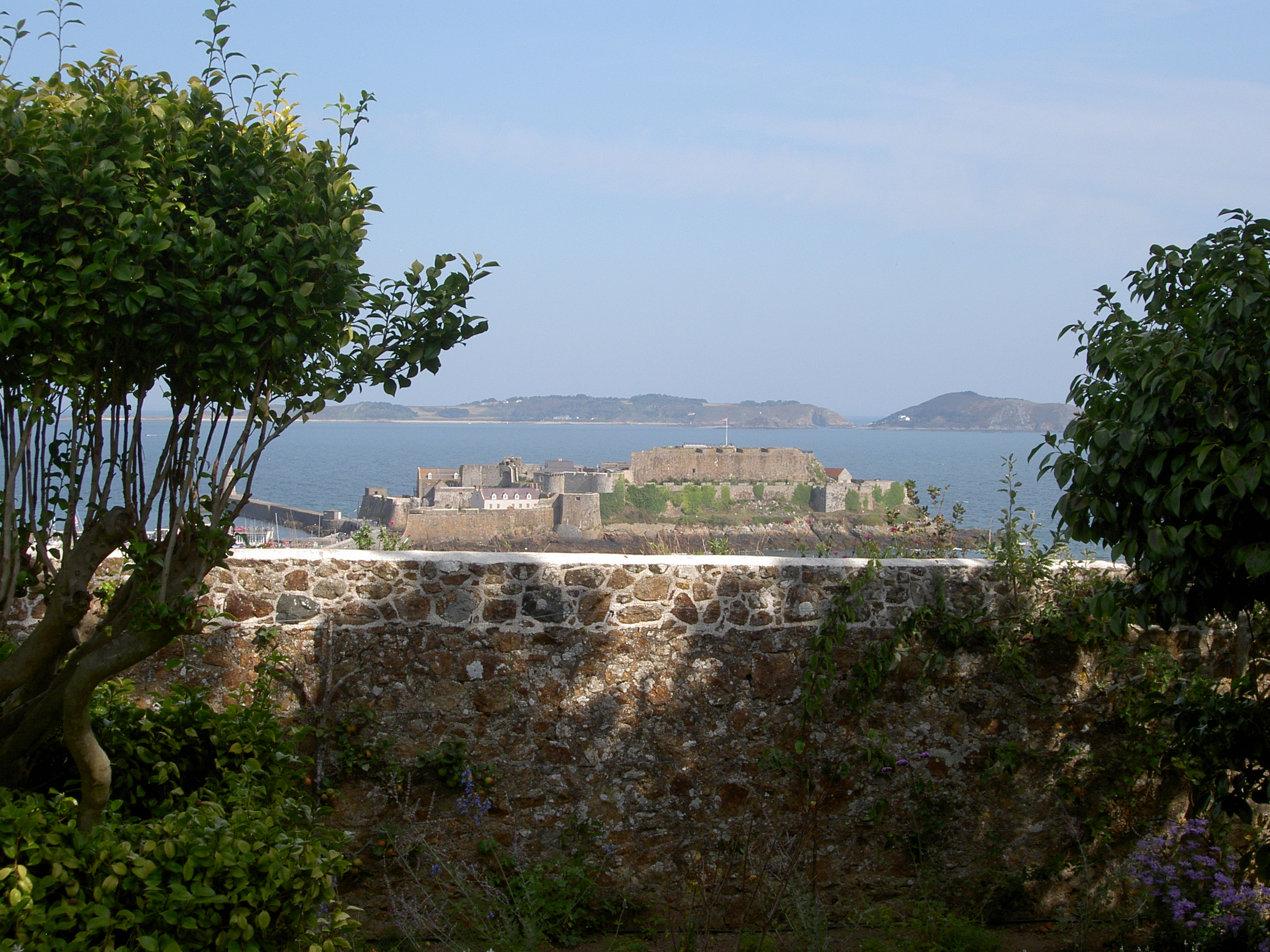
Since that time, it has been developed and enlarged as military needs changed, and was besieged by the French during the 100 Years War, (1337 to 1453) during which it changed hands four times. Then, during the English Civil War, (1641-1651) it was the last Royalist stronghold to surrender to Parliament. A huge accidental explosion in 1672 destroyed much of the mediaeval castle and its donjon, but English soldiers continued to occupy it until 1940 when it was invaded by the German forces of the 2nd World War. When that war ended in 1945, the castle was given to the States of Guernsey, and now houses five museums, four historic gardens, and is used as a venue for cultural events.
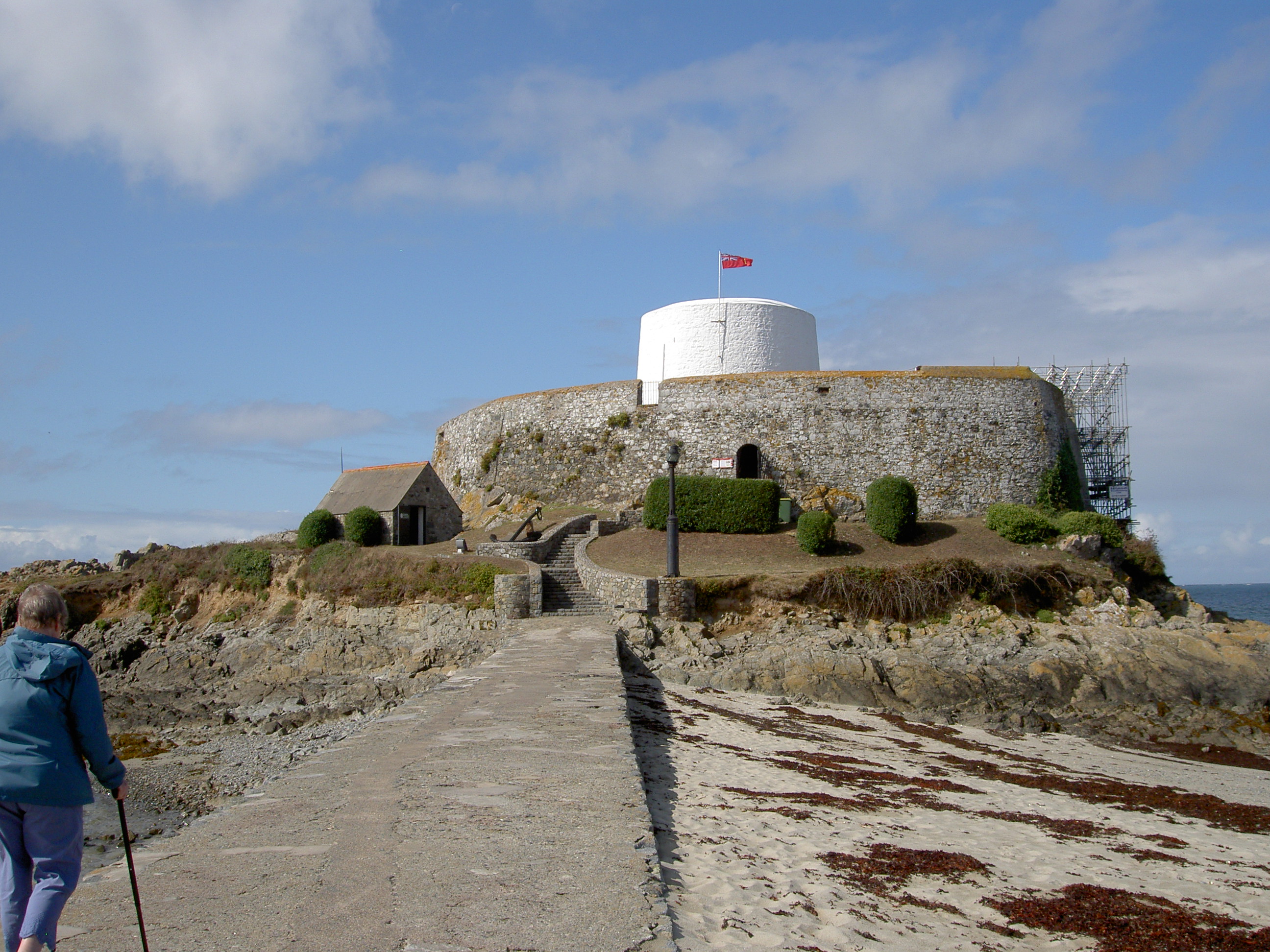
There are smaller fortifications scattered around the coast, including a Martello Tower built to fend off Napoleon. Similar Martello towers are scattered along the south coast of England, built for the same purpose. The one in this photograph houses a Shipwreck Museum.
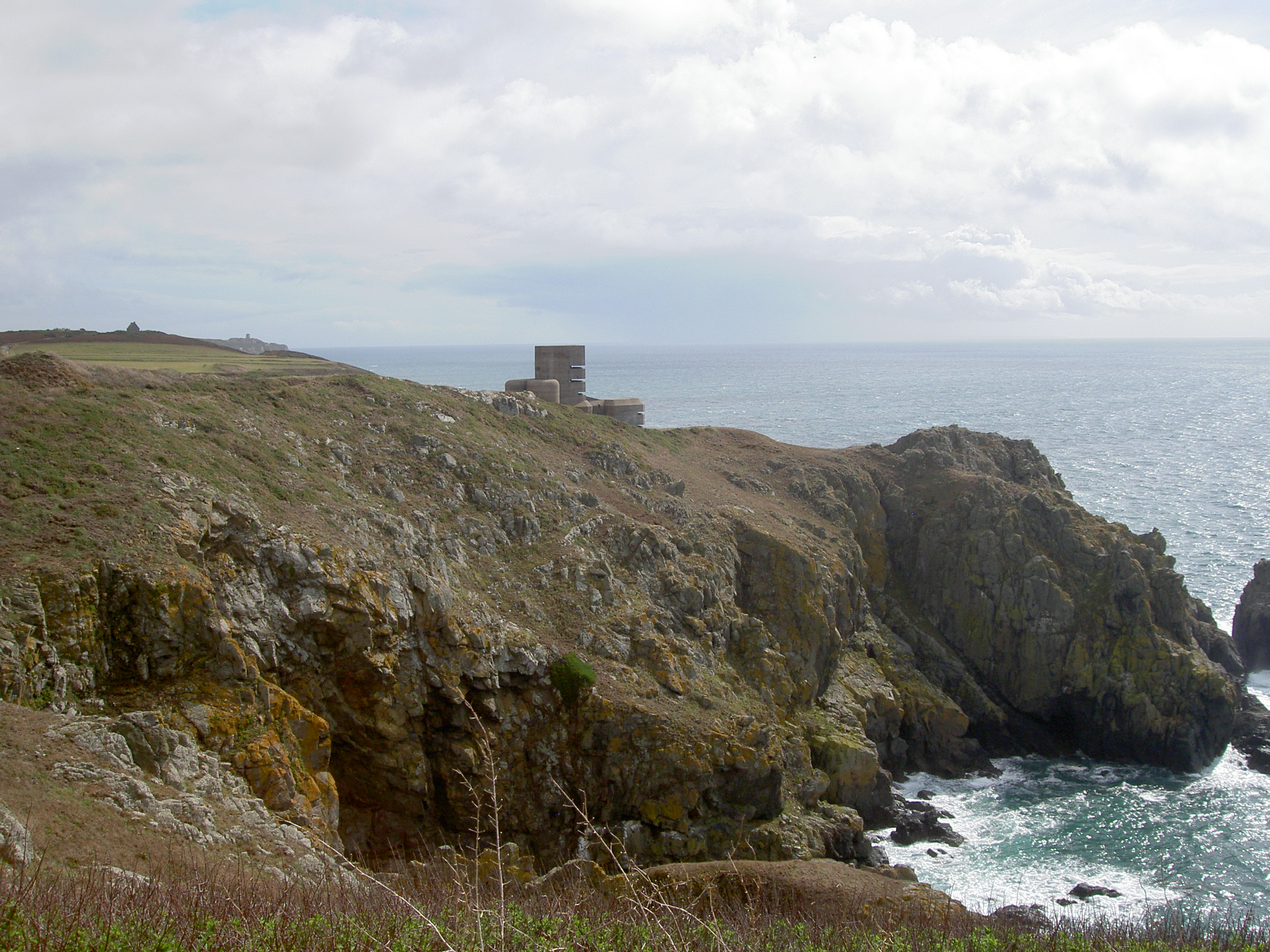
And of course there are the remains of many fortifications built during the period of German occupation, such as this one. Most are quite small, and many have been buried or otherwise demolished; but some have recently been re-excavated and are now on public view.
There are a couple of modern-day aspects to Guernsey that are of interest. One relates to housing. Only about 15% or so of houses on the island are available on the truly open market, and these are the very expensive dwellings of the wealthy, mostly ‘tax-haven’, people. The vast majority of houses are only available for purchase by those who live permanently on Guernsey, and in this way, house prices for the ‘ordinary’ people remain pretty stable; and no-one worries if the very rich rip each other off with the inflated prices of their houses!
The Island is a ‘low-tax’ economy, which is why a very significant part of the business of the Island is related to the money market. But it also means that there is no publicly-funded health service, and people either take out health insurance, or pay their own way. Of course, the English National Health Service does not apply as it is not part of England. For the same reason, youngsters living on the Island wishing to go to University have to do so as full-fee paying international students.
It is a very neat, tidy and attractive island, with rolling countryside, great beaches and a mild climate; and in addition to Guernsey, if you have time, there are several smaller islands nearby, some inhabited, others not, that are readily accessible by ferries. We did not have time to visit these, but if you go for a week or so, rather than just three days as we did, I am sure they would be worth visiting.
The next edition of Slingsby’s Miscellany will be devoted to a wrap up of our last few days in the UK.
 Slingsby's Miscellany
Guernsey seems a nice spot to visit! The weather in Melbourne is as bizarre as usual with warm and cold periods alternating but at least we have had some rain unlike other parts of the country but we face a long dry summer-looking forward to some golf before Christmas.
Colin.