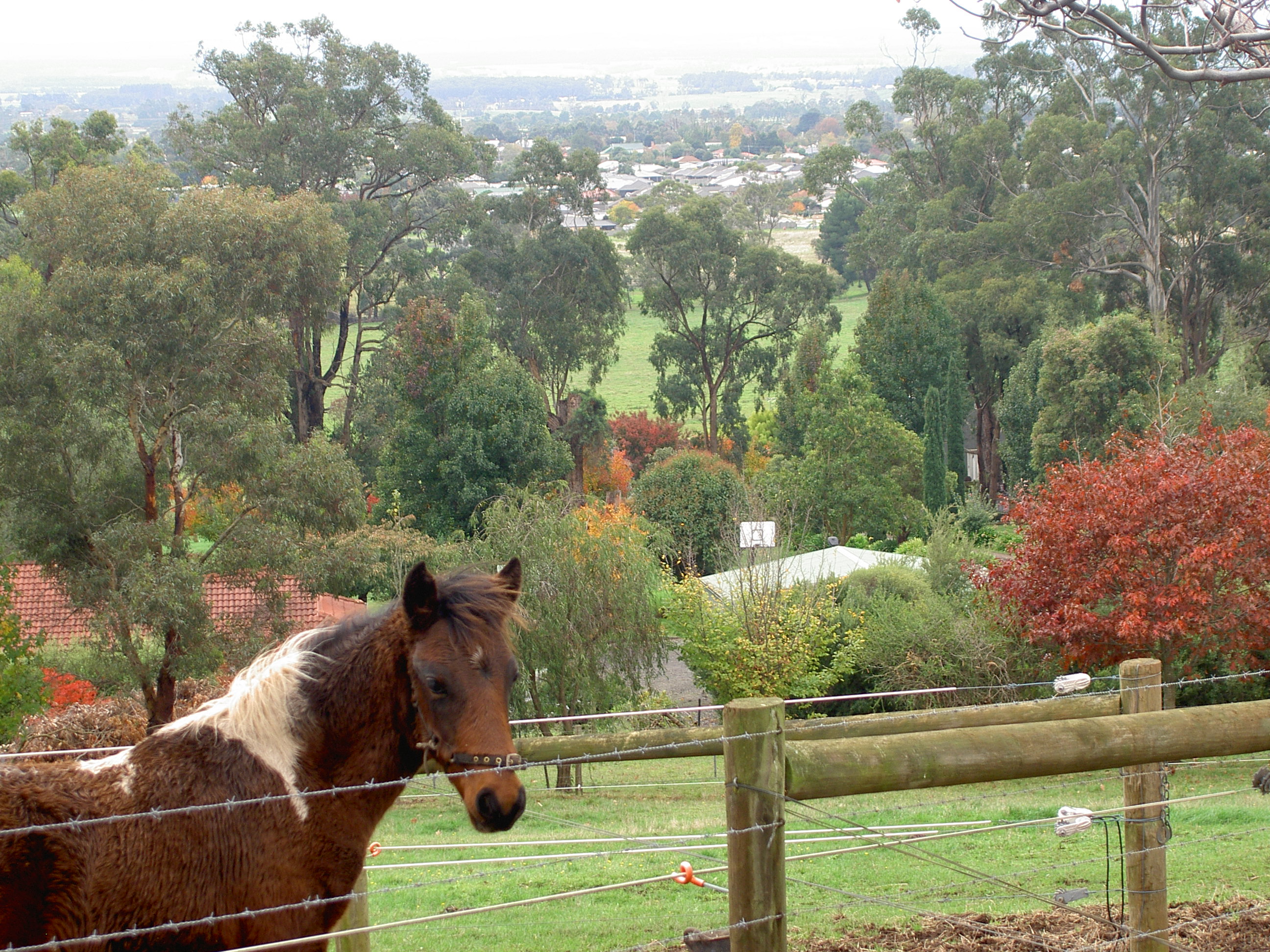
Thanks to Covid 19, I have temporarily put the Vagabond project on hold, and instead, we are opportunistically visiting a few smaller centres in Victoria just for a few days of get-away time irrespective of whether The Vagabond ever visited! The first of these little jaunts is to Yarragon in Baw Baw Shire, just 75 minutes from home. It is a village that we have frequently passed through on our way to Lakes Entrance and other places, but at which we have never stopped for more than a cup of coffee and a wee break. True, I had a cousin living here whom we visited, but even then, we never ‘explored’ the region. So here we are, mid-April, on a very misty morning, staying at Rosewood Park on the northern slopes of the Strzelecki Ranges looking over the village of Yarragon toward Mt Baw Baw across the valley. Eventually the mist might clear, and we will actually be able to see Mt Baw Baw, but for the moment, we just imagine it to be there, because we have been told it is!.
Rosewood Park is a ten-acre patch of quite steep grassy paddocks wherein live six horses of various sizes and colours, including a 6-month old Brumby foal and his mother. I know very little about horses, but an authority, namely Bitzer, (Hard Times by Charles Dickens) tells us that horses are:- ‘Quadruped. Graminivorous. Forty teeth, namely twenty-four grinders, four eye-teeth, and twelve incisive. Sheds coat in the spring; in marshy countries, sheds hoofs, too. Hoofs hard, but requiring to be shod with iron. Age known by marks in mouth.’ Thus, Bitzer. My own knowledge, also somewhat limited, stretches to the fact that an average size horse excretes about 20 kilos of pooh each day; and to sustain that output, appears to have an insatiable appetite for hay. In addition to the horses, we have seen a family of blue wrens, crimson and eastern rosellas, rainbow lorikeets, corellas, galahs, magpies, and of course, rabbits. The rose gardens are extensive, but are in a fairly dormant stage at this time of year.
The self-contained apartment itself was originally intended to be a “granny flat” for the builder’s mother, but is now let out by the current owner to couples such as us. It has a very generous dining/kitchen area, measuring some 6 metres by 9, and an integrated cozy lounge area with large north-facing windows. The bedroom is large, with a walk-in wardrobe; and a generously sized bathroom. The furnishings are very good and comfortable, and the kitchen well equipped, even including a balloon whisk. Breakfasts are provided in the shape of a basket of fresh eggs, a bag of mushrooms, a container of excellent bacon, a few tomatoes, and a loaf of excellent sourdough bread from the local baker. These are all replenished as soon as they are consumed. Tea, coffee, milk etc is also provided. At the other end of the building is a large covered BBQ area with suitable out-door furniture. All in all, it is an excellent retreat for a few quiet days away from the bustle of Melbourne.
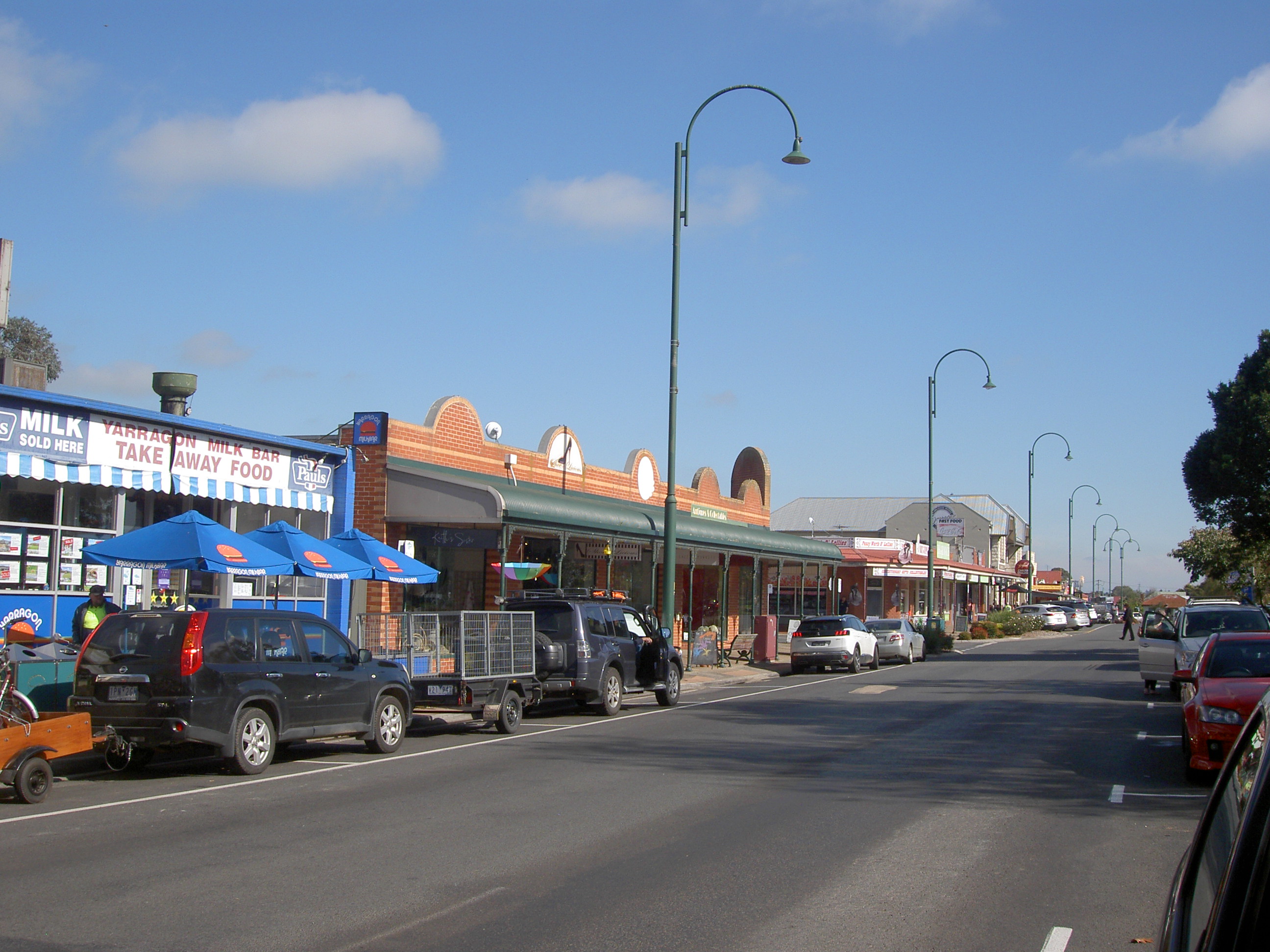
It is a five-minute drive, down-hill all the way, to the village, which has a population of some 1,200. Many of the dwellings appear to be quite new, and there are certainly signs that the population is growing. As we entered the village on our first exploration, we encountered a ‘crocodile’ of some 40 five- and six-year-old children from the local primary school, on an expedition to count the number of shops in the one main street. Judging from the number of children, it is probably safe to assume that the adult population has a high level of fecundity, and that the population is destined to grow for some time to come.
Yarragon was originally a centre of timber harvesting and agriculture, mainly dairying; today it relies on agriculture and tourism. However, the Covid pandemic has taken its toll here, and several of the more ‘touristy’ shops are now closed, or are open only at weekends. Coffee shops and cafés appear to be doing well, or at least, are surviving. The main, in fact the only, shopping street, is on the south side of the Princes Highway, running parallel to it.
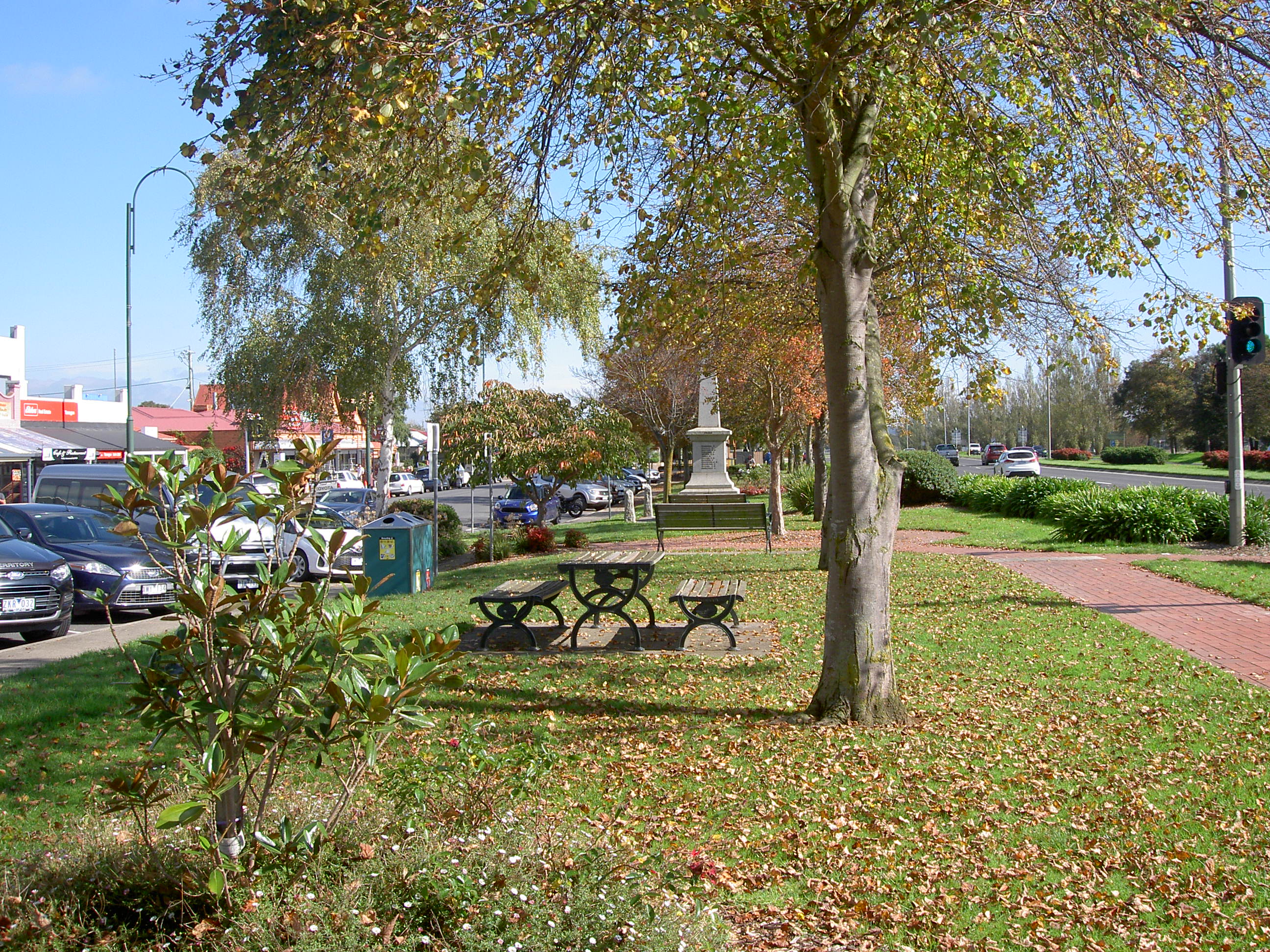
It is separated from the highway by a wide strip of grass running the whole length of the village and accommodating a public toilet, a picnic shelter, a War memorial, a rotunda, and a preserved K Class locomotive (in need of a little restoration!).
There is car parking on both sides of the road, and all the shops are on the south side. The railway line from Melbourne to Bairnsdale runs parallel to, and on the north side of, the highway. The station, now unmanned and used as an art gallery, was built in 1878, and the town, then known as Little Moe, sprang up around the station. The name was changed to Waterloo and a Post Office opened around October 1878. However, too much mail was incorrectly taken to Waterloo near Beaufort in the west of Victoria, so the village was renamed Yarragon in 1883. By 1893 there were 5 hotels, a hall, a school, a butter factory, and lots of shops along both sides of the Main Street which was at the time the main highway. However, changes came, the butter factory closed, and many shops became unsustainable and closed. Then the highway was re-aligned, and the grassy strip established, resulting in the current layout of the village. The fortunes of the village were re-started by the establishment of “Dairy Delicacies”, now known as “Gippsland Food and Wine” at the western end of the village street. There were plenty of empty shops available for cafes, arts and crafts, and the like to be established, and passing traffic to tap into. Slowly the town re-invented itself as a Tourist Town, albeit relying on the passing trade of those heading further afield, and was doing very well prior to Covid.
Today there is only one pub, which was established in 1926, in perhaps the only building of significance in the town. They serve very good food; and were obliging enough to turn off the huge TV screen which rather dominated the room in which we were dining!
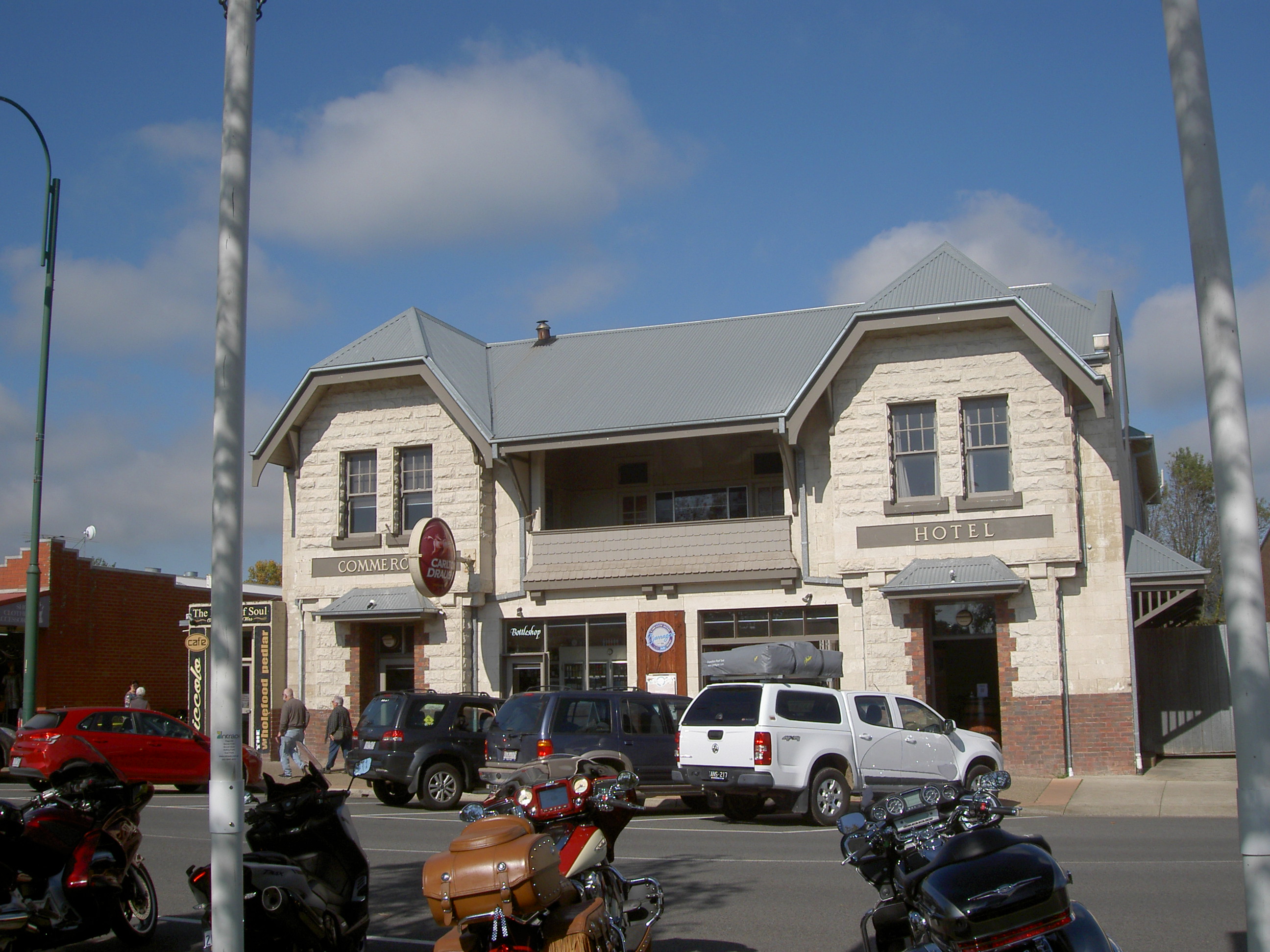
What became of the original 5 pubs does not appear to be documented, but I guess they were demolished. To be honest, there is not much in the way of buildings in the main street that can be said to have any architectural merit!
But much is made of the old K-class engine, No. K183.
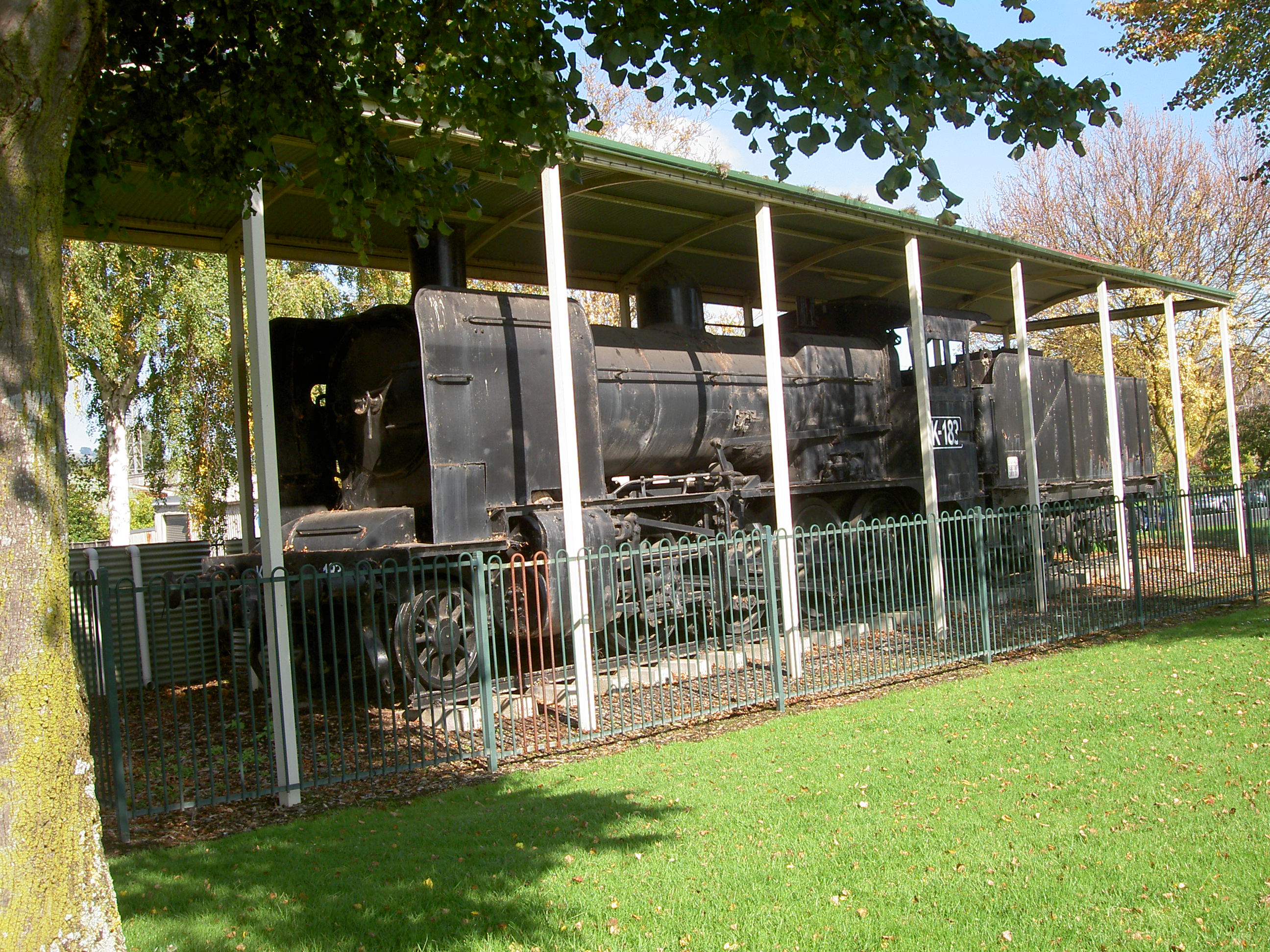
She was built in 1943, being one of 53 such engines built at Newport between 1922 and 1946. Like all the K-class engines, she was very reliable and had completed nearly 600,000km during her 25 years of active service, from which she retired in 1969. However, upon that ‘retirement’, she was transferred to ‘light duties’ in the Bendigo railway workshops, where she remained until 1976. In 1977 she was bought by the Narracan Shire and placed on display near the Yarragon railway station. Then, in 1982, Steamrail Victoria exchanged the unfit K162 (built in 1941) for the restorable K183, and she was towed to Melbourne where she was restored at a cost of $30,000, and returned to active service in 1992 hauling special excursion trains. Unfortunately, she was involved in a serious level-crossing accident in 2002, in which three people died and she herself was severely damaged and taken out of service for good. The engine on display at Yarragon is, in fact, the old K162, re-badged K183 in part to honour the original link between Yarragon and K183, and also because post-cards and other memorabilia had been produced by Yarragon traders with the original engine bearing the K183 plates. Only 4 K-class engines are still in active service (on tourist routes), and 7 are preserved in static displays. If you are interested in railway history, there is plenty in this region to excite, some of which will be included in the next blog.
Well, that sums up our first full day at Yarragon. The next blog will fill you in with some of the exploring we have done in the region.
 Slingsby's Miscellany
So glad you are enjoying this lovely area.
Eagerly awaiting your thoughts on restaurants to eat at night.
Thank you Slingsby. What a lovely place. And I’d forgotten what I’d learnt about horses through Hard Times!
A delight to read.
nita