Travel Blog September 4 to September 9, 2012


We left Baume-les-Dames just after breakfast, and since it is such a small town, we did not experience our usual trauma of taking the wrong road. The route to Besançon is very straight-forward, and the traffic quite light. Getting along on the by-pass was quite easy, except for some deviations due to road works. In fact the road works were massive, as they are constructing a whole tram system. When we were in Bordeaux many years ago that town was installing trams, and when we got to Dijon, we discovered that they too were constructing a massive tram network. So, the rest of the world is slowly catching up with Melbourne!

From Besançon we went across country in a NE direction to Gray, on the Soane. This is a lovely old town that we had never heard of before, and we stopped for a coffee and to buy a WiFi dongle. The girl in the shop was very helpful, but the bureaucracy seemed even more involved than in the UK or Australia. I had to show my passport, and further, I was given a form to fill in with the requirement to post in a photocopy of the ID page of the passport! Still, I’ve got it, and it works, so that is the main thing. Whether I can cope with topping up the credit is another thing! After Gray, it was very simple to get to Savigny-le-Sec, just out of Dijon, where our friends live. Being in their house again, it felt like we had never been away, it all seemed so familiar. Junk everywhere, piles of sheet music and books on every horizontal surface! But it was great to see them, and we had arrived just in time for a very nice lunch on the patio—-cheese, saucisson, bread and excellent Burgundian wine. With all the chatter to catch up on, it was a very late night, but the next morning, after breakfast, we went for a short drive to Villecompte, a very pretty village which has a small river of crystal clear water that comes from somewhere underground. That evening, being our wedding anniversary, we all went to a nearby restaurant for a very nice dinner. We missed the company of our family, but at least it was nice to celebrate with friends, one of whom had actually attended our wedding 48 years ago!.
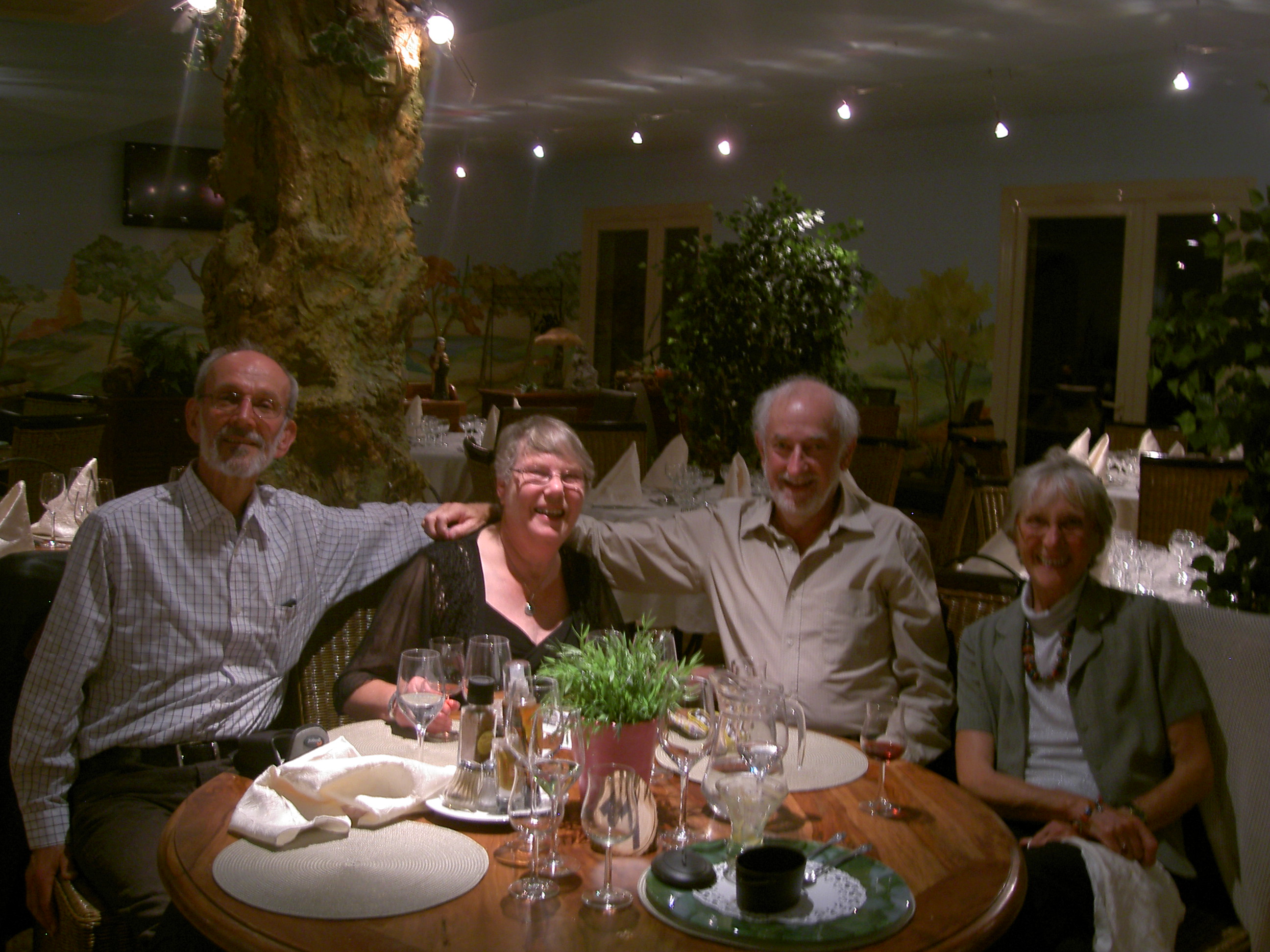
Anniversary Dinner

We were very fortunate to have caught up with these friends, as they were only in Dijon for a week themselves due to Gaby having a medical appointment. Otherwise they would have been miles away on the Atlantic coast. So, even though our visit was very brief, we were lucky to have had it at all. So on the morning of the  6th, we said our farewells, vowing to keep in touch, and we headed on our way. Because of the major tram-works, René was kind enough to be our pilot, and we followed him across town and to the major auto-route we needed. And so we went slightly south-west, via Autun, where we stopped for coffee, through Luzy, on to Bourbon-Lancy and thus to Moulins, and then directly south, picking up the toll-road that by-passed the very industrial town of Clermont-Ferrand. We would have liked to have stopped at a few of the more interesting places we by-passed, but we wanted to get as far south as we could, so that we would be left with only a couple of hours or so drive on the final leg to Argeles. We did stop at an “aire de repose’ about an hour before we reached Sévérac, from which we had a good view of the Viaduct de Garabit, which crosses the valley of the river Truyere (a tributary of the Lot). This railway bridge was designed and built in 1884 by Gustave Eiffel (of tower fame), and was a major engineering project for its time.
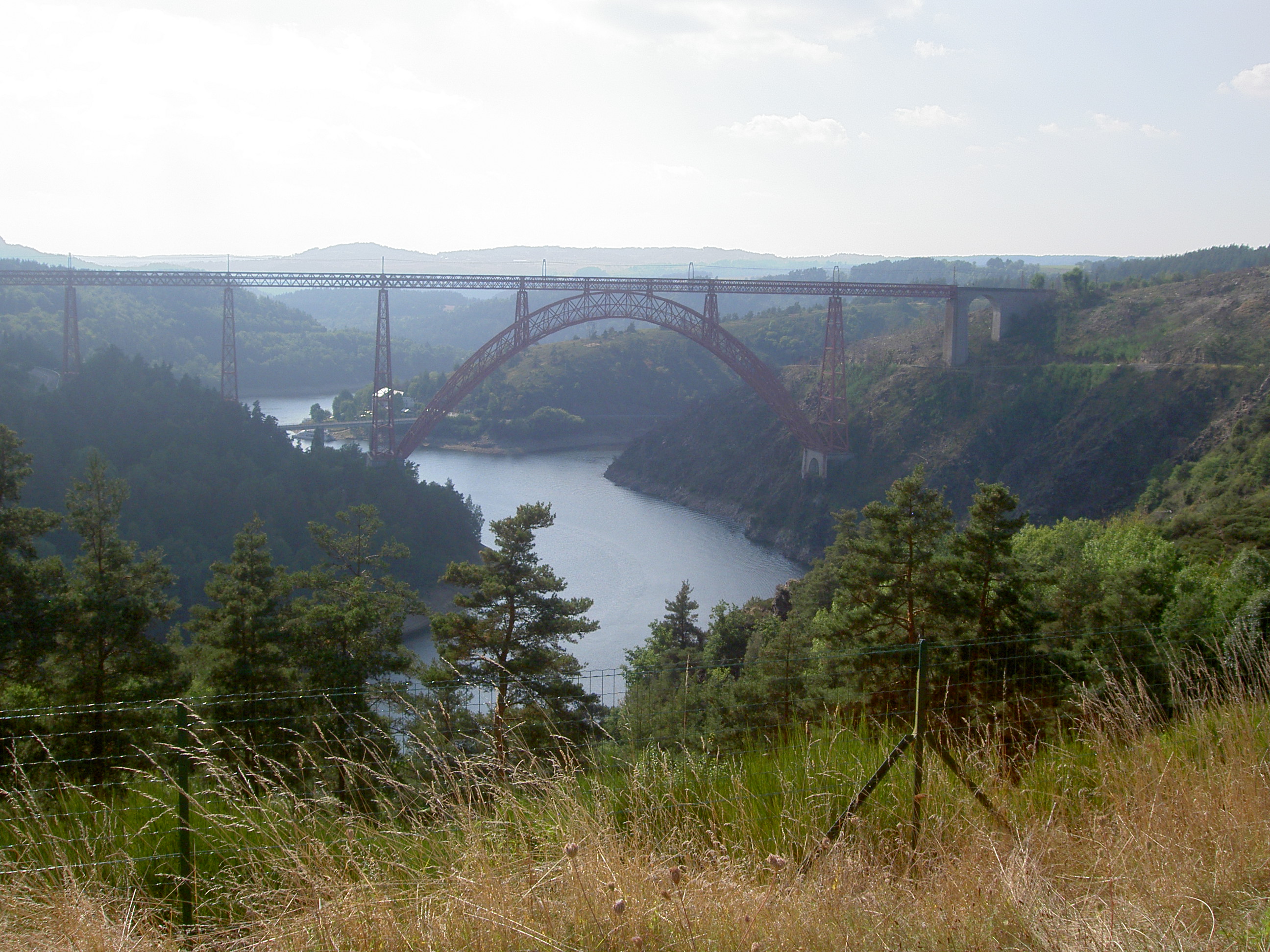
Viaduct de Garabit

Its span is about 500m, and at its highest point it is about 120 m above the river level. And then on our way to Séverac-le-Chateau, where I am sitting now, on the terrace outside our bedroom door, with an ice-cold beer, looking at the huge 12th century castle which dominates the town and give it its name.
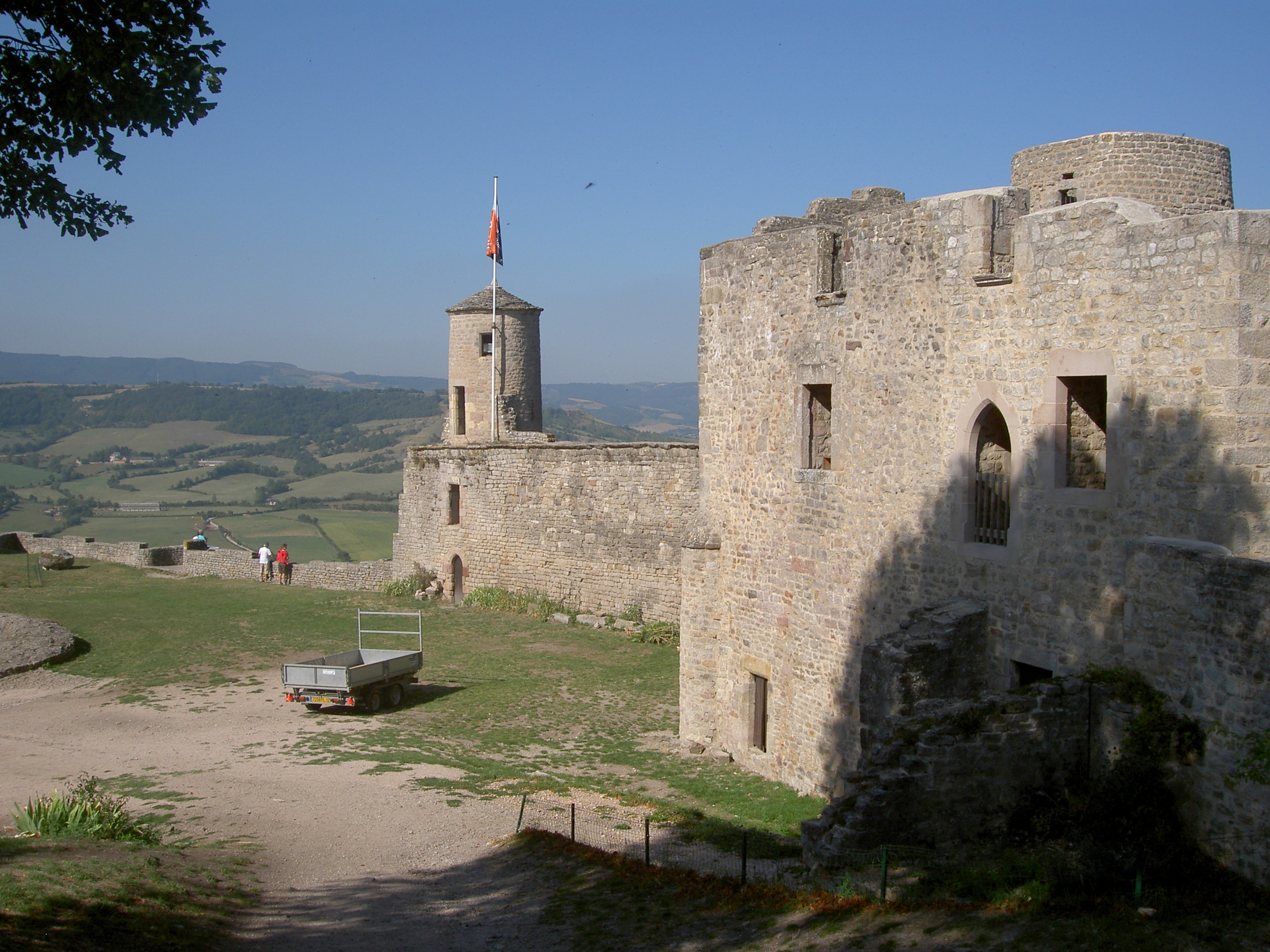
Castle at Severac le Chateau

The sun is shining, and it is very pleasant indeed! We are spending two nights here, and this is by far the least shabby of the ancient French hotels we have stayed in! The food in the restaurant is excellent; last night we both had fresh trout, beautifully cooked and presented. Today, our only full day in this part of the world, we had a lovely drive though one of the many gorges of the Tarn River. It was really awe-inspiring. I do not know how deep it is, but it did take 6 kilometres of very twisty hairpin bends to get from the top of the cliffs to the river level. Just the sort of roads the Tour de France cyclists would love!. In addition to the sheer depth of the gorge, there are ruined castles, ancient walled fields, and amazing limestone outcrops left by the river as it dissolved its way down through the rocks over millions of years.
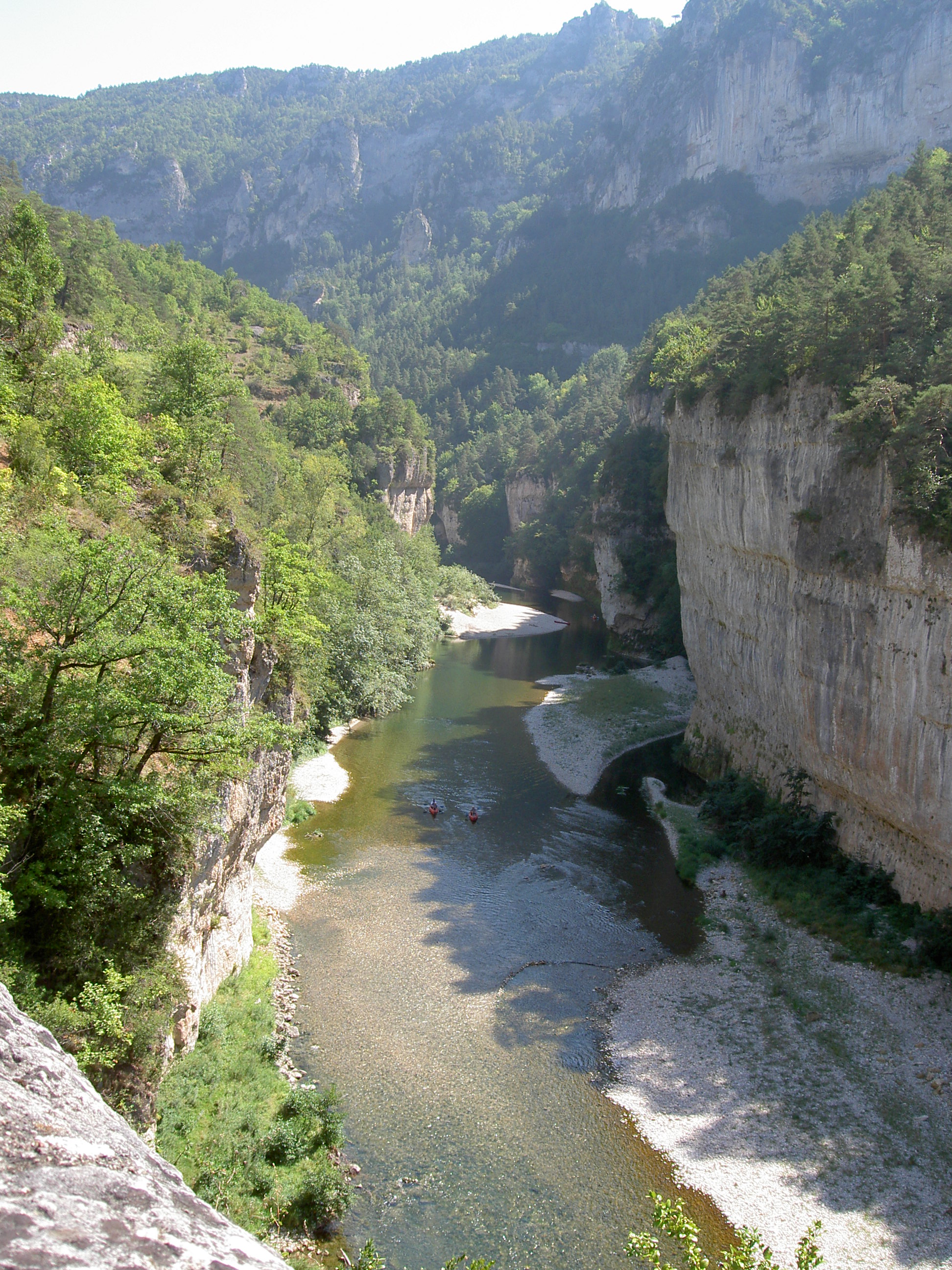
Tarn river gorge

The water itself, whilst not very deep at this time of year, was crystal clear, and a canoeist’s heaven. There were loads of tourists, but the road, whilst very twisty, was mostly wide enough for cars to pass each other comfortably—except for a few tunnels, which were themselves very spectacular. We were both very glad that we decided to make this a two-night stop!

As we had not actually spent any time in the mediaeval centre of this small town, we did take an hour or so to have a look round as we were on our way to Argelés. It was amazing, nestling below the ramparts of the castle, it is a maze of small alleyways at all sorts of angles amongst the ancient stone buildings.
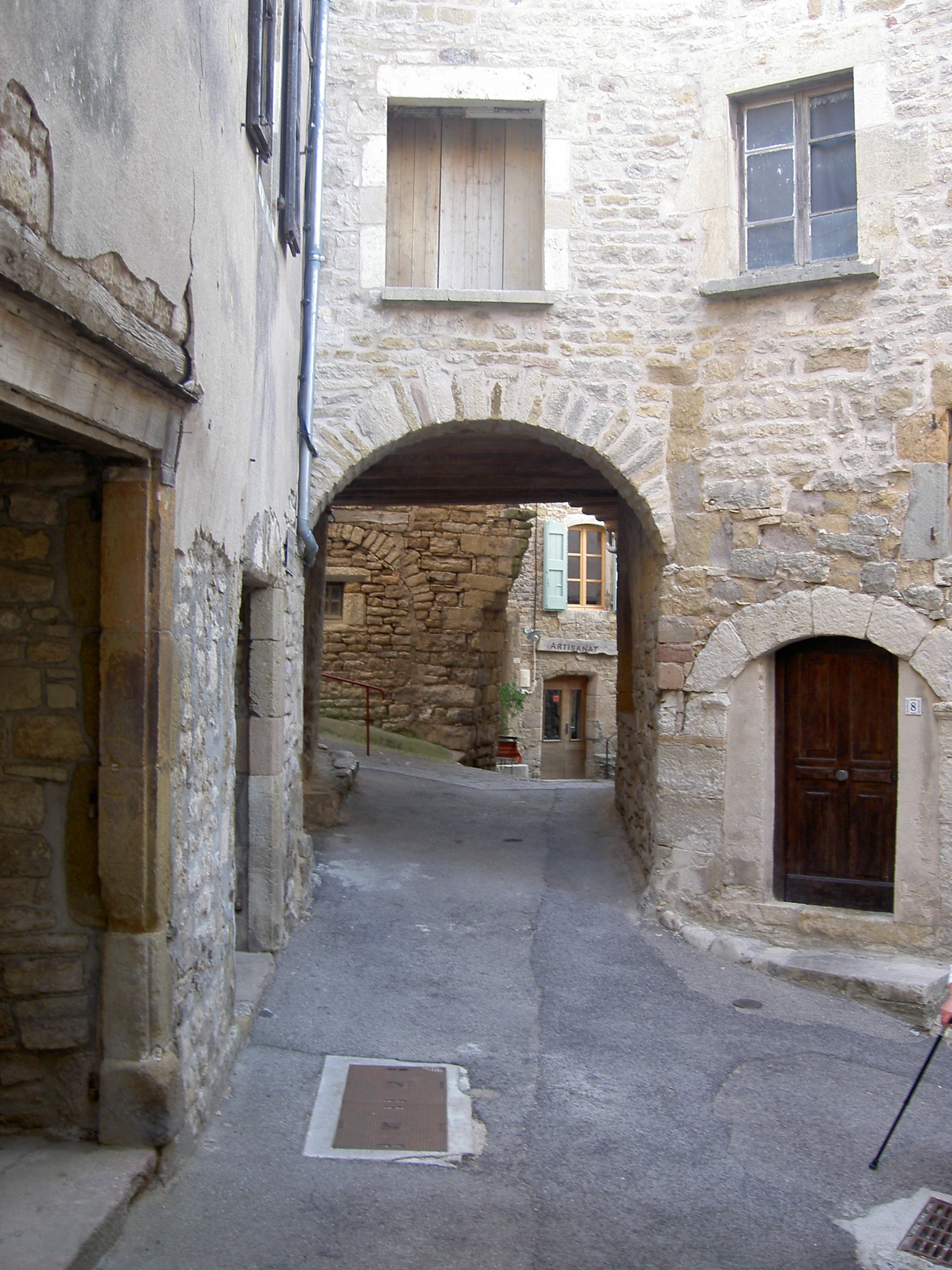
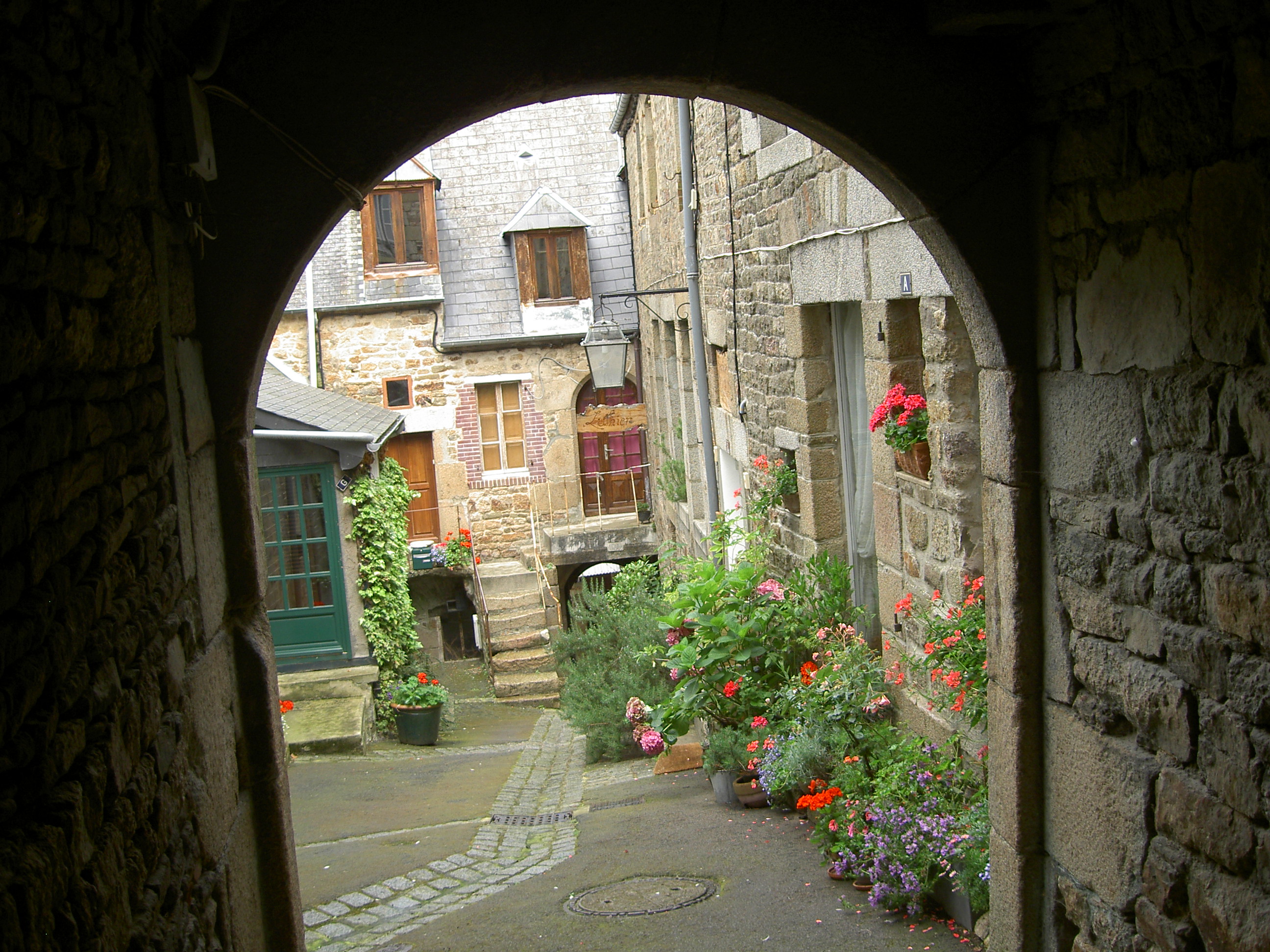
Medieval part of Severac

There is no doubt that Sévérac makes an ideal stop-off point for a few days. Then, after a coffee, we re-joined the main autoroute and continued our journey south. But only some 25k into the journey, we had to cross the incredible Viaduct de Millau. Whilst Eiffel’s Viaduct de Garabit was an engineering marvel of his day, this bridge demonstrates the advances in engineering techniques since the 19th century. Opened  in 2004, this bridge has a span of nearly 2.5km, and is 270m above the level of the river Tarn below!
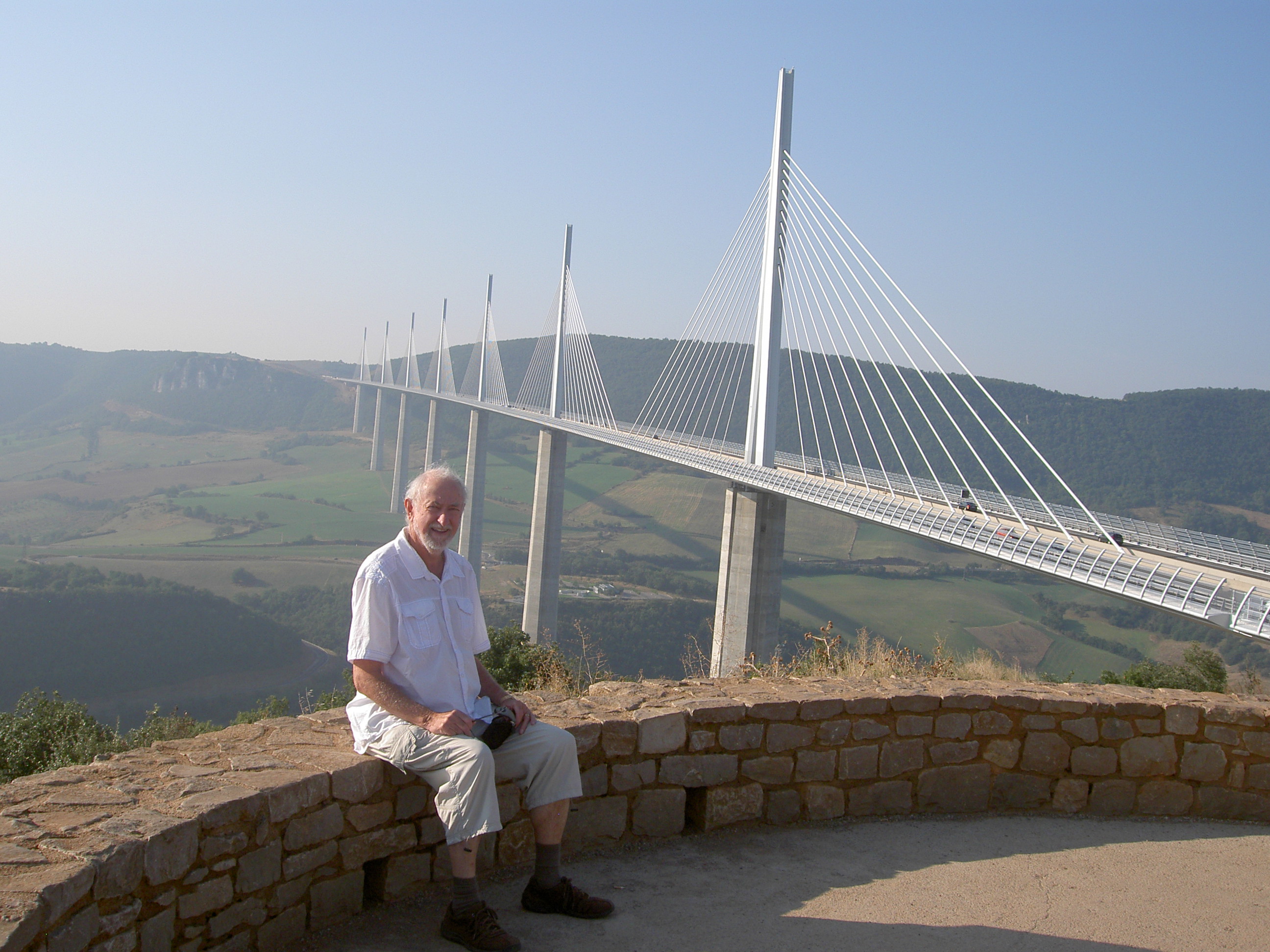
Viaduct de Millau

It cost 6.70 euros to cross on the péage, but was well worth it. The alternative would have been a very lengthy descent into the valley, and a long climb up the other side. I must say the French auto-routes and ‘péages’ (toll-roads) are fantastic for getting around on—if you do not mind driving at 130km per hour and still have other motorists overtake you! Within 2.5 hours, we were sitting in the home of Sylvie and Patrick at Le Boulou, having a nice glass of wine and eating beautifully cooked magret de canard!

Then, on to the final 25 minutes of the journey to Argelés—which took nearly an hour as we inevitably got lost!. I am not sure whether the place has changed much in the past 6 years, or whether it is our memories that have deteriorated. Maybe a bit of both, but there seemed to be many more roads to choose from than we recalled from our previous visit thereby increasing the likelihood of taking the wrong one. But eventually we got here, and have now settled in. One can tell when one has settled in—-the washing machine gets switched on and the laundry done!

We intend doing very little now we are here, so do not expect too many blogs over the next two weeks!
 

Travel Blog, September 2 to September 4, 2012

I think I may be a bit out with my dates, but never mind, the actual happenings are for real!

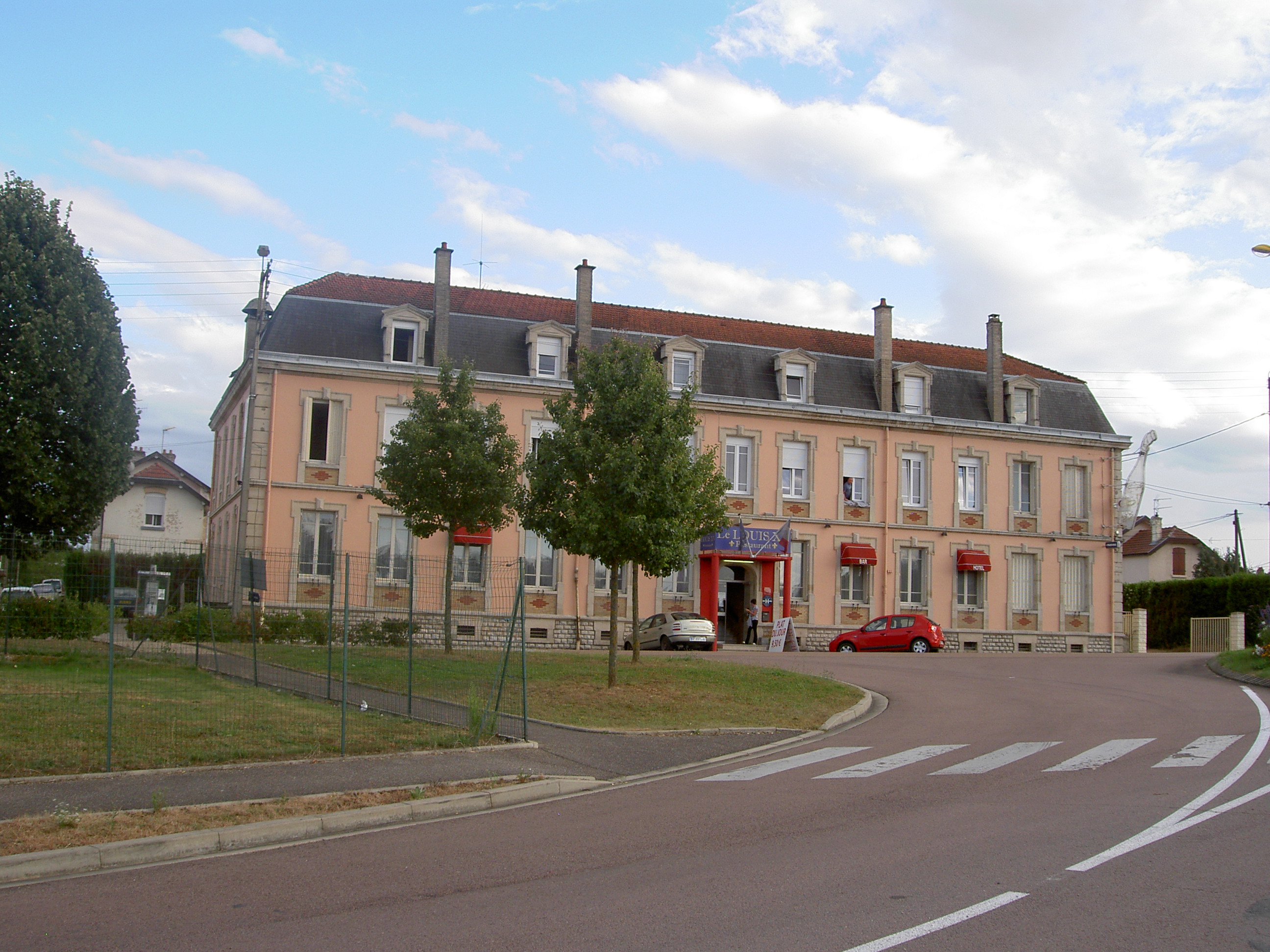
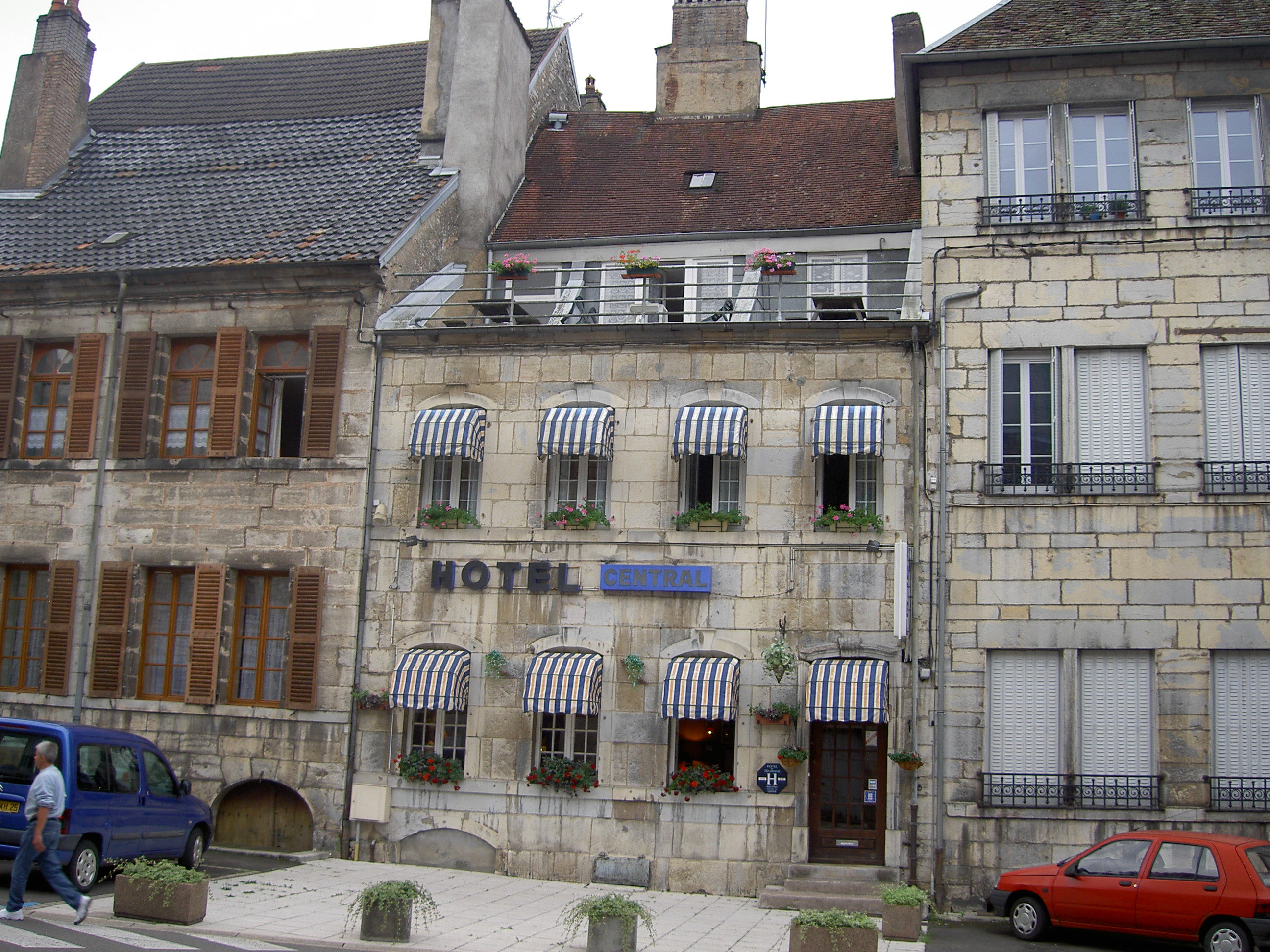
Our hotel in Baume-les-Dames is old, dating from the 16th century, and somewhat shabby, but is clean and comfortable. We have a ground-floor room which is great, because there is no lift, and the only way up is a very ancient ‘spiral’ (really helical) staircase. There is no off-street parking, so we brought everything in to the room, remembering our experience in Marseille on a previous trip.

Hotel Central, Baume-Les-Dames

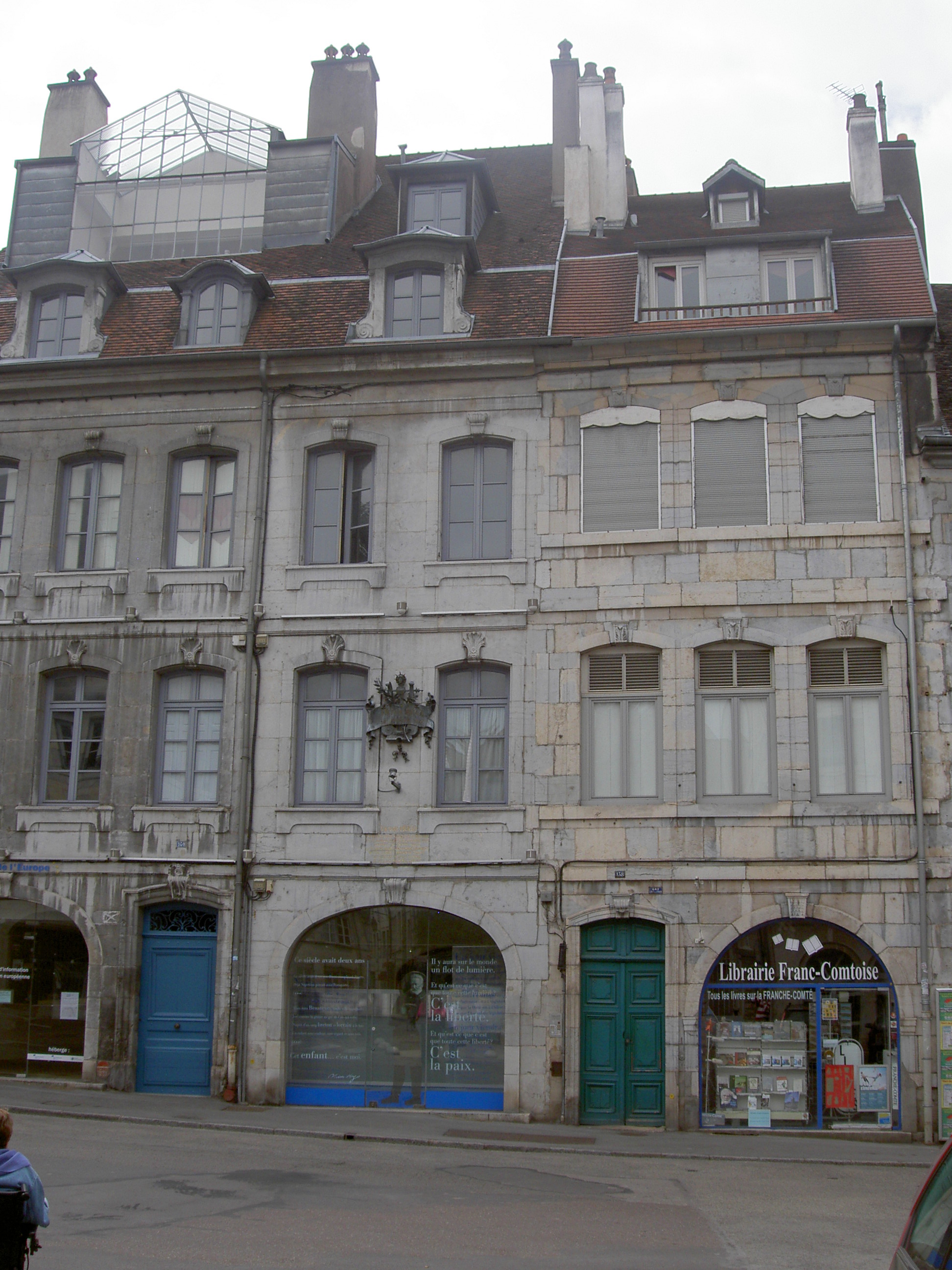
We decided that since our tram and train travel in Freiburg had been such a success, we would take the train to Besançon rather than drive. Being Sunday, the station was unmanned, and we bought our tickets from a multi-choice machine. But apparently we must have made the wrong choice, because the ticket inspector on the train pointed out, very nicely, that we were ineligible for the very cheap tickets we had bought. I wondered what would have happened had we been in Germany and the inspector of tickets had been a relative of the museum lady! But the train ride was very pleasant, fast and smooth, alongside the Doubs river for most of the way, through a stunning valley with limestone cliffs on either side. Besançon station is quite high up at one end of the town, and the ‘old town’, with its (dare I say!) Vauban Citadel, is very high at the other end.. But we walked along slowly, taking our time and having a good look round until we got to our destination. During this walk, it was lovely to receive a phone call from Helen, wishing me a Happy Father’s Day. For the most part, the town was like a ghost town. Being Sunday, nothing was open apart from the very odd café, one of which we used to fortify ourselves ready for the assault on the Citadel; and a rather interesting Museum of Time—both of clocks, and of passing time, including some good history of Besançon . The walk up was steeper than we had expected, and  on the way we pqssed the birthplace of Victor Hugo.

Victor Hugo’s Birthplace

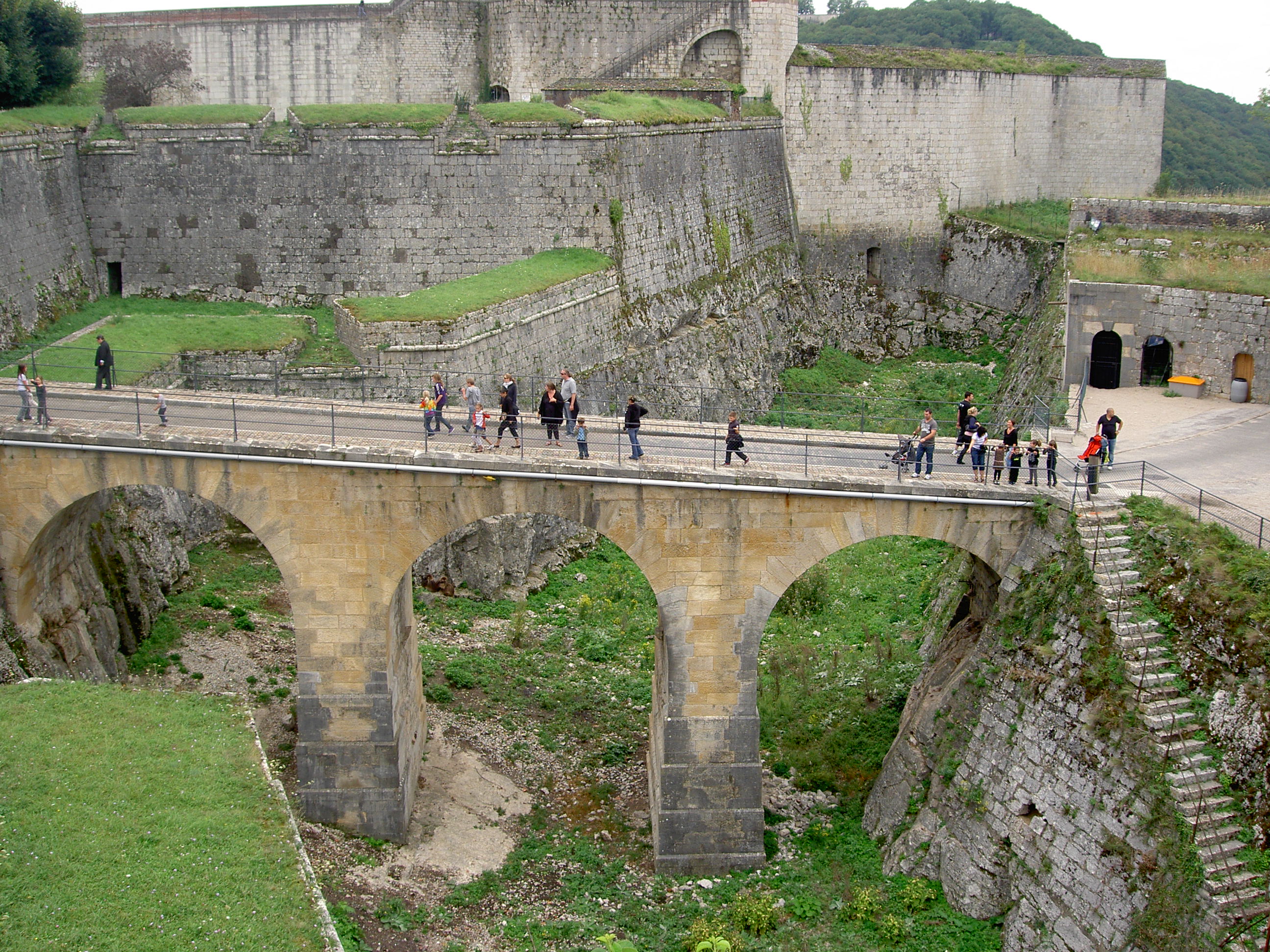
With Ann’s bodgy knees we knew it would be a long slow process coming down. The view from the top across the roof-tops of the old town was stunning, and one could imagine the troops in the fortified Citadel looking down in the mid-1760s defending the town against the potential invaders. The Citadel is typical Vauban—solid, vast, and business-like. Nothing pretty about it at all!. But unlike the other fortifications we have seen, the local authorities are using parts of this one as a museum, a zoo, and an aquarium! It is probably not a bad thing to use these spaces in this way, as it does bring in more fee-paying customers to help with the enormous up-keep of the Citadel.

Part of teh Vauban Citadel at Besancon

In order to catch the train back to Baume-les-Dames, it was necessary to retrace our footsteps down from the hill, which as we knew, was slower than going up! But we had time for a drink at one of the odd cafes, and made the train with about a minute to spare.

All in all, a very good day.

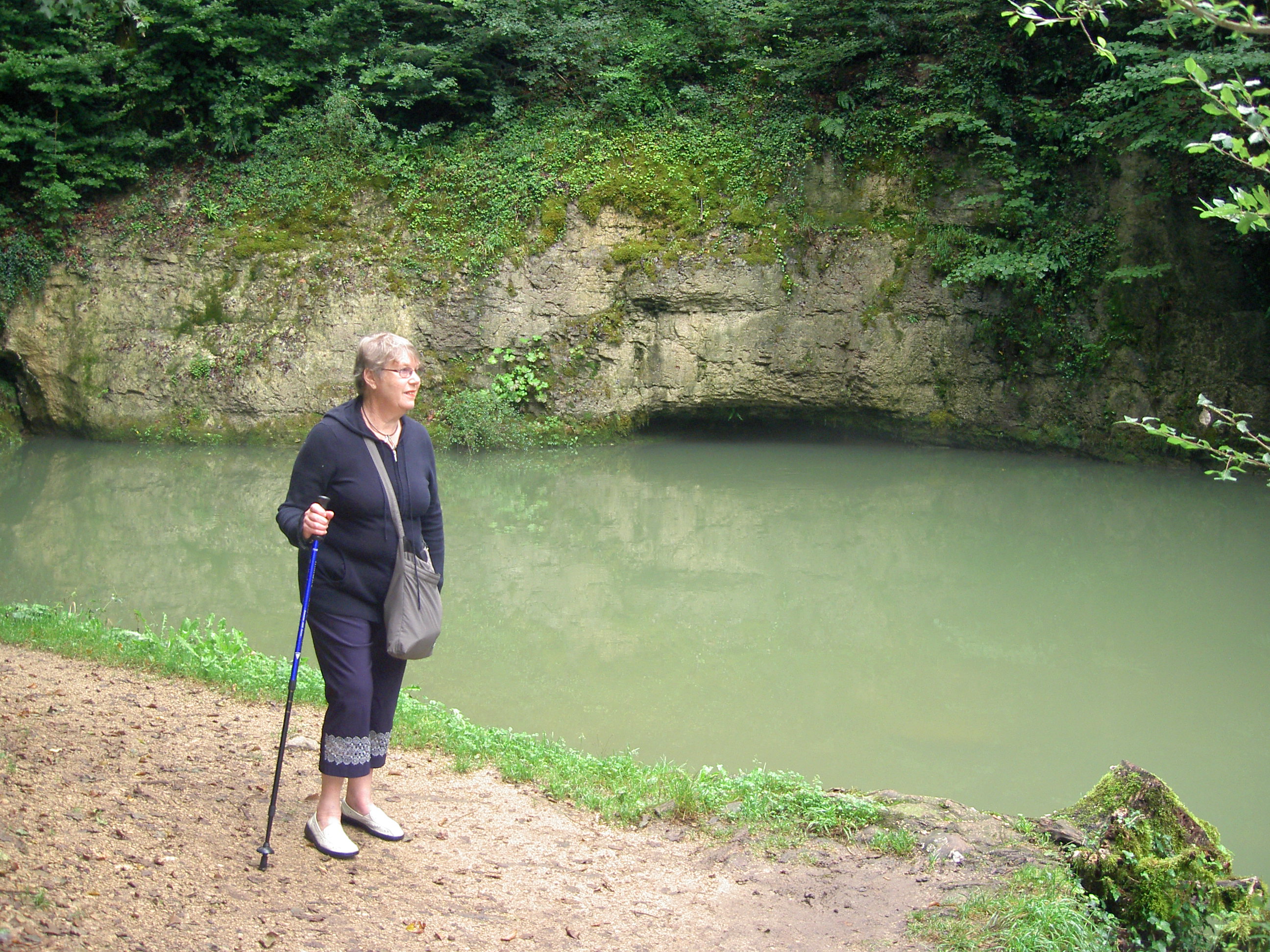
Monday, our second full day at Baume-les-Dames, and we opted for a day in the country, being a welcome change from the past few days of cities. We headed across the Doubs, and took a turning to the left, along the river Cousincon valley, toward the source of the river at Cusance. We were sceptical about finding the actual source of such a fast-flowing and large river, even when we got to a car-park indicating we were there. But, the river did not just seep from the limestone cliffs, it gushed out, on both sides of the road. One branch was signposted Source Vert, the other, Source Bleu.

Source Bleue, de Cousincance river. It may not look much, but it was gushing from the small arch at the back!

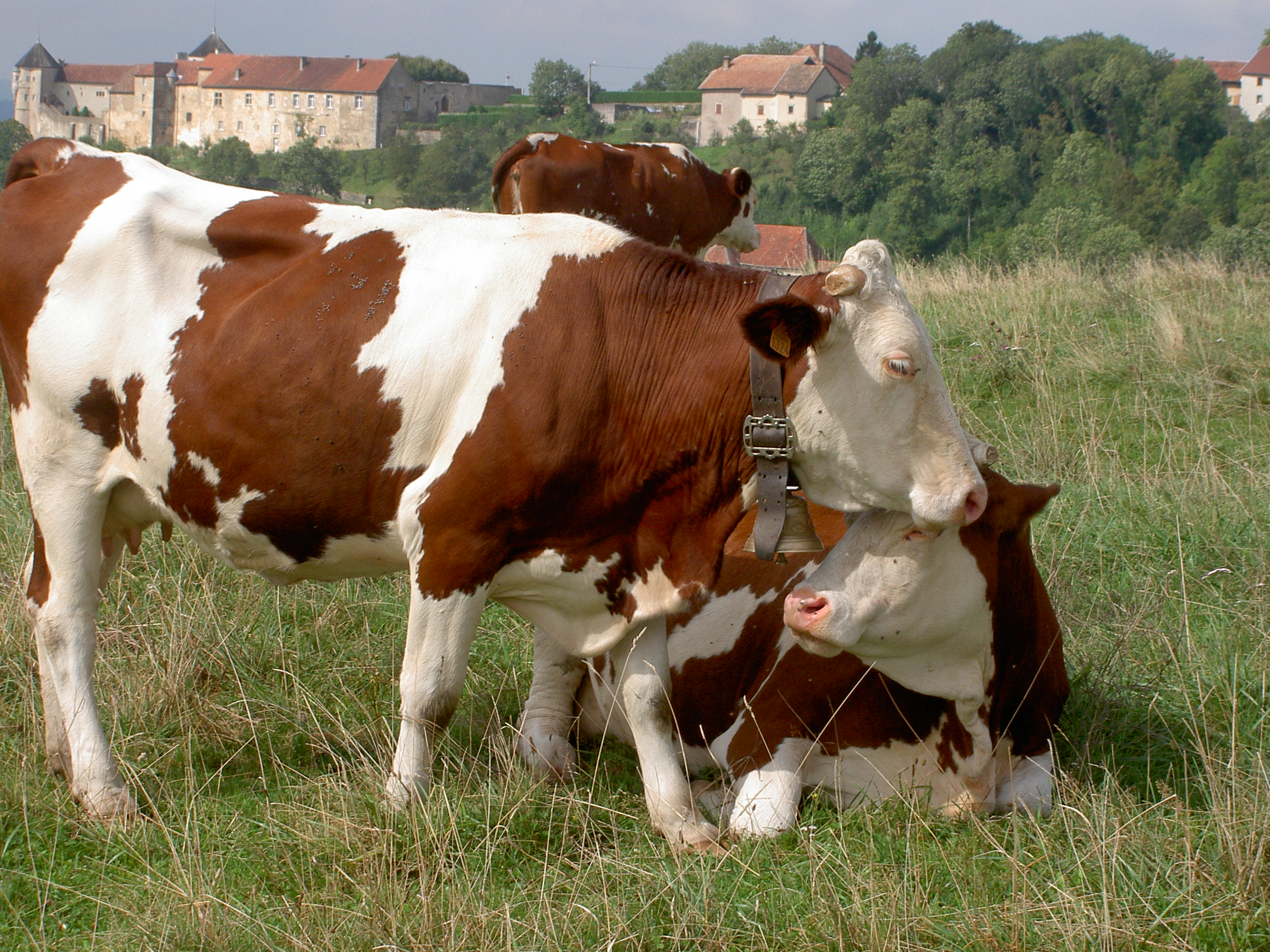
One can only imagine what the subterranean river system and caverns must be like in these hills, to squirt out such volumes of water. A bit later we came across another out-pouring, and it was possible to venture a couple of meters into the cliff face, but I was not game to go any further!  We drove up and down some pretty hairy steep roads, through stunning limestone chasms, and through very picturesque, wider green valleys with pretty brown patched cows, complete with cowbells around their necks.


Contented cows! Their milk is used for Compte Cheese

At one point, we were only about 25k from Switzerland. What we did not realise was that most shops are closed on Mondays, and we were lucky to find a baguette for our picnic lunch, and totally unlucky in our search for a cup of tea. We also found that the chateau that we were heading for, marked on the map as being open to the public, did not open on Mondays! But we enjoyed the view from the top of the hill on which it was perched. We then meandered on to the ancient town of  Ornans, where the artist Gustave Corbet was born, and where there is a fabulous art gallery containing an impressive collection of his paintings. Whilst Ann went into the gallery, I took the opportunity to have a long brisk walk along the Loue river, bearing in mind that most of our walking has necessarily been at a snail’s pace. Then, back cross-country to Baume-les-Dames, and out to a local restaurant for an excellent dinner. A great day out in the country!

The next day we headed for Dijon, which you can read about in the next blog.

Travel Blog August 29 to September 3 2012

We spent our last night in Strasbourg, Ann to view a spectacular fireworks and laser light show on the river, and me to sit on the balcony with a glass of local wine whilst I finished the Strasbourg blog—which I hope you have read by now.

Today (Wednesday) we said our farewells to Nicole and headed south toward Colmar, some 100k from Strasbourg. The weather was again very ‘summery’, and it was all very pleasant. We passed several vineyards, and noticed that the vines were double-trellised in the Scot-Henry fashion popular in Australian vineyards—and quite unlike the more traditional single trellising in, for example, Burgundy. The other thing we remarked on was that since leaving Normandy in the very west of France, and driving to Strasbourg in the very east of France, the major crop by far has been corn (maize). This is now grown for animal feed, for corn oil, and for ‘biogas’ (probably ethanol) for fuel. Apparently it is much more beneficial for the farmers, in terms of profits, but is distorting the whole food production chain, leading to shortages of some foodstuffs which now have to be imported.

The route took us largely on the route we had taken to Obernai, along the edge of the Vosges mountains. We could see many intact, and even more ruined, fortifications and castles, stemming from centuries of conflict between France and Germany, and were tempted to make detours to visit some. But in light of our propensity to get lost, we decided to stay to the pre-planned route.

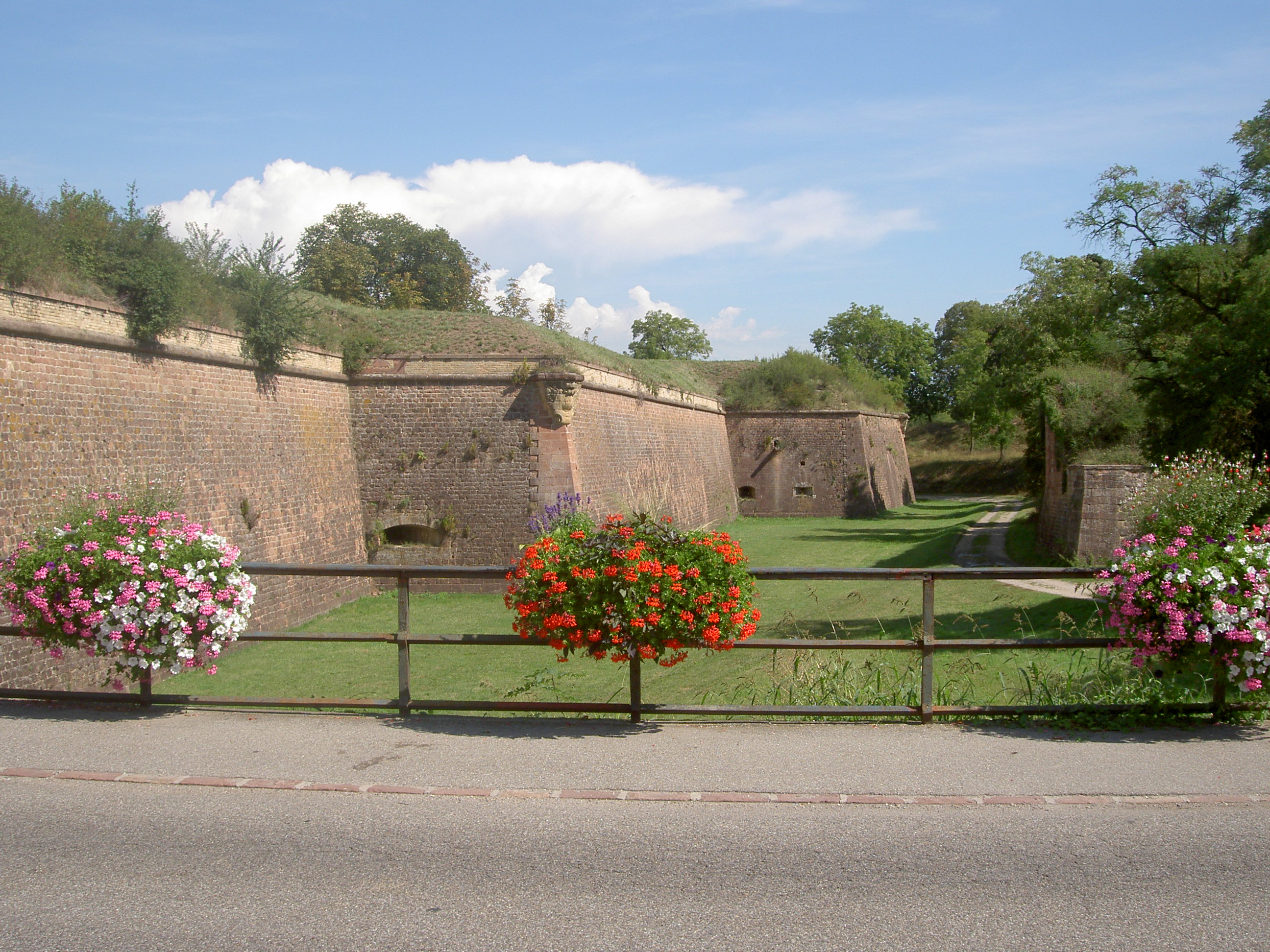
After by-passing Colmar, we went to Neuf  Brisach—a magnificently preserved fortified town built by Vauban, from scratch, starting in 1699. From the air it is a perfect octagon, surrounded by three lines of fortified embankments and ditches.

Image

Unfortunately my photographs do not do it justice, and I have no scanner to be able to include the aerial-view postcard we bought. So you will have to take my word for it!. Anyway, it is described as being Vauban’s most complete work, and it served for centuries afterwards as a model for military architecture. So who was this chap Vauban? Vauban was born in 1633, and entered the service of King Louis X1V in 1653. He optimised the defensive system, drew plans for fortified sites and assured the protection of cities in times of siege. At the age of 34, he oversaw all of the kingdom’s defences, drew its territorial limits and developed a network of fortifications. He was also interested in peace and progress through human endeavour, and supported technological development. There are currently 12 major Vauban sites around France included in the World Heritage List of sites of cultural and historic significance, and many others, equally important, but for various reasons are not on the list.

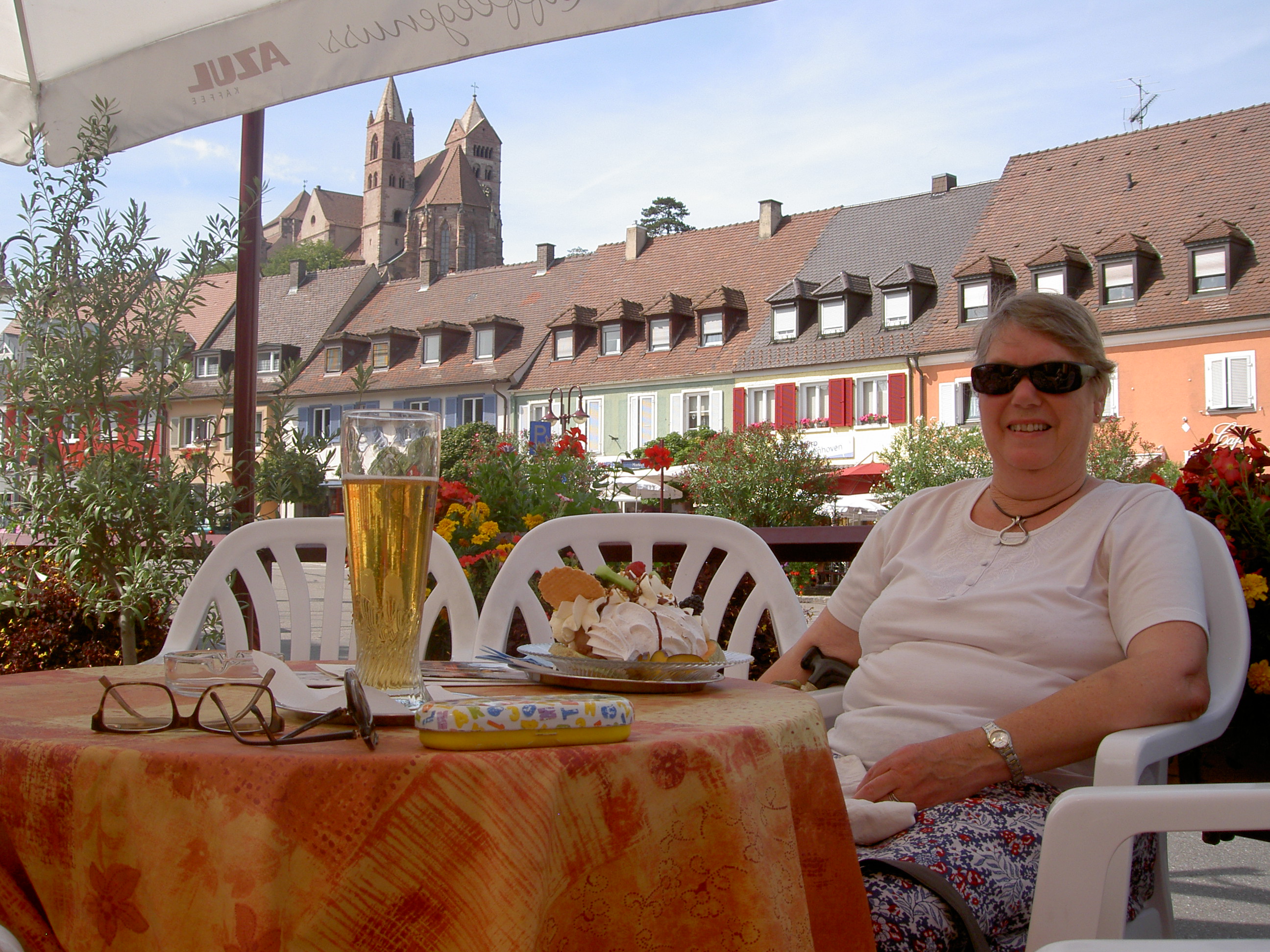
After a final French beer at Neuf Brisach, (necessary to maintain body fluid levels) we crossed the Rhine into Germany, and had our first beer on German soil. Or rather, I had a beer; Ann had a disgustingly large “ice meringue”, which she had difficulty in finishing because it was so large..

Image

Then our navigational troubles started big-time. We had managed to get lost before in France, (I think I may have mentioned this before), but this time we had absolutely no idea where we were, and the unusual German signs with strange looking place names, made life very difficult! We drove a long way one way, then turned round and came back, and finally, after an hour or so, ended up just beside the Freiburg University Hospital. We decided it was a good place to phone our friend from, and she kindly offered to drive to the hospital so that we could follow her home!. There is no way we would have found it by ourselves. But arrived, we were made very welcome—another beer to restore our calm, and a good catch-up chat before an excellent dinner of very traditional Baden ham.

Our plans for the rest of our two full-day visit to Freiburg did not include the use of a car, but trams into the city centre, and a train trip into the nearby Black Forest to the resort town of Titisee.

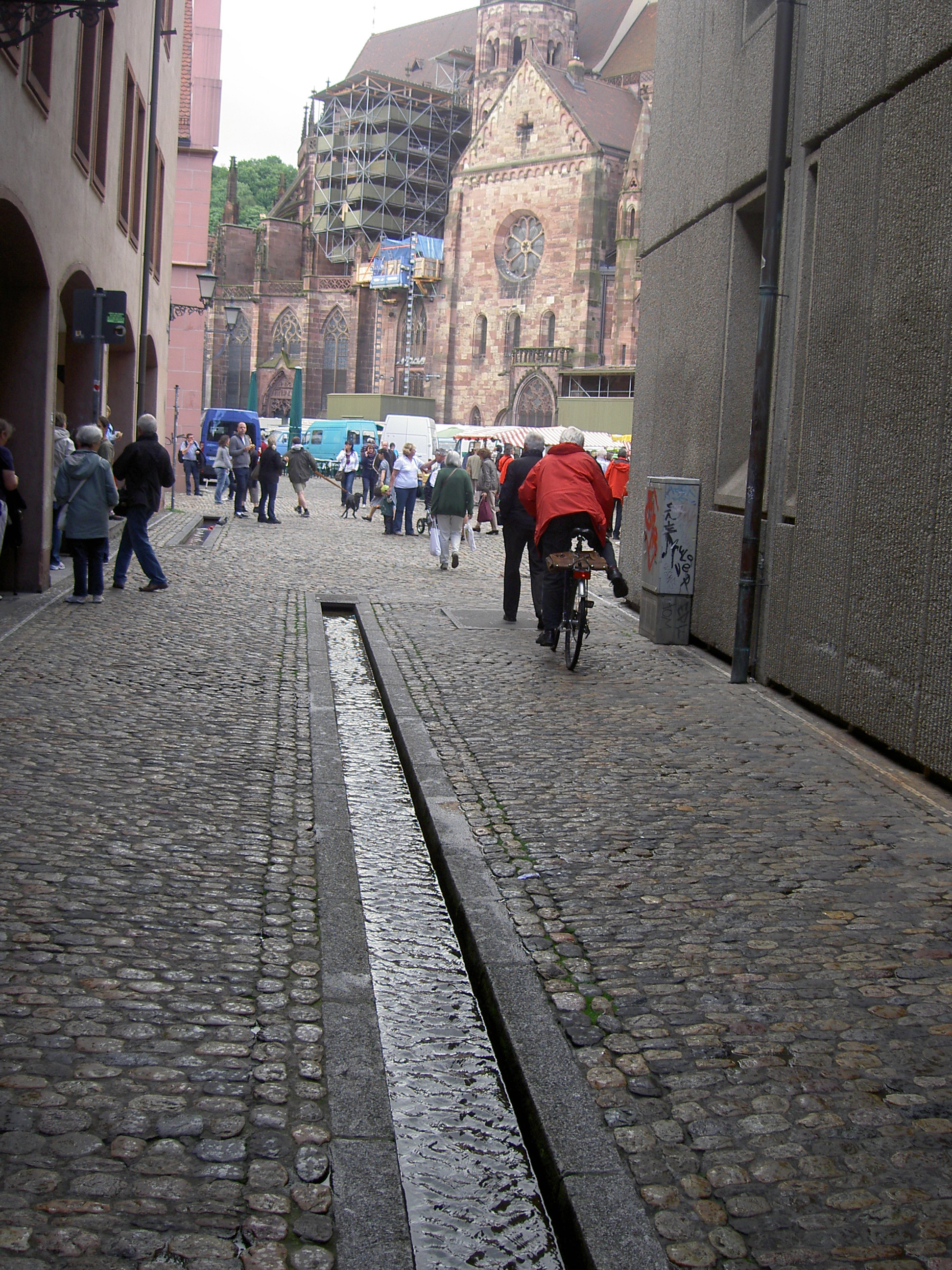
After an early morning walk to the nearby bakery for fresh bread, and consuming much of it along with some ham and cheese for breakfast, we set off for the tram trip into the city. The German trams here are very similar to those we saw in Strasbourg, but squarer, and perhaps more masculine-looking. But they were comfortable, clean, and well patronised. The centre of Freiburg is a pedestrian precinct of streets and laneways paved with fairly small (about egg-sized) pebbles from the Rhine River, and very attractive. Another, and unique, feature of the central streets and alleys is that they all have a small stream, some 30cm wide and perhaps 10cm deep running along one side. The water is clear, and is diverted from the river Dreisam. It has a very efficient cooling effect in the hot summer—not that we needed it as it rained most of the time we were there.

Image

We wandered around the streets, not heading anywhere in particular, but taking in all the sights and different smells of foods as we passed innumerable restaurants and cafes. A visit to the Cathedral, with the second-highest spire in Germany, was very impressive, even though we could not see the stained glass at its best on such a dreary day. And then lunch— a typical German sort of hamburger with potatoes and sautéed vegetables, helped down with some local beer.

Then we took the train for the 35 minute ride way up into the Black Forest to Titisee. The climb was pretty steep, through a very narrow gorge, (The Devil’s Valley) and to our destination 859M above sea level. Titisee is a popular all-year resort, being a ski centre in winter, and health-giving fresh air in the summer. Sometimes the winters are cold enough for the lake to freeze sufficiently to permit ice skating.  It would be a very pretty town in the sun—and was not too bad even in the rain! Every building was either a hotel, a restaurant/bar, or a souvenir shop, many of which had very large collections of cuckoo clocks (for which the region is famous) for sale along with other traditional bits and pieces. Most had very attractive hanging basket and widow boxes of red geraniums. Here we met another friend and Dickensian, Helmut, for another beer and slice of Black Forest gateau, in a café overlooking the large glacial lake that gives the town its name. Then it was back down the mountain, and home for dinner, finished off with a glass of traditional Honig-Schnäpsle. (honey schnapps)

(I appear to have miss-filed some photos, so will post this now, and try to find them for a future blog)

Friday was much a repeat of Thursday, but with a more extensive walk around the town centre, visits to museums and art galleries, and no trip up the mountains. One museum visit was interesting in that the rather officious woman on duty did not take her eyes off us for a moment. She briskly ordered us to deposit our bags in a locker, and as we were closely studying a plan of old Freiburg looking for the Vauban fortifications, she ordered us not to stand too close, and not to touch it. We then went down to a basement level, and must have taken too long to cover the blind-spot between two security cameras, as she came to one of the landings and stood and watched to make sure we were not up to any mischief! It was quite unnerving, and I believe she would have made an excellent gestapo officer! Apart from that little experience, Freiburg is a lovely town, even in the rain—very clean, very quiet, bustling with activity and well worth a couple of days—-even if the language is incomprehensible!.

Saturday morning we left for Dijon, and I would like to be able to say that we found our way out without a mistake. We did manage to get away from our friends place OK, and to the filling station to get fuel, and then to the autobahn with no trouble. But then due entirely to the woefully inadequate and ambiguous signage, we found ourselves heading north instead of south, and had to go about 20k until we could get off and change direction. Then, a bit later, we missed the exit we wanted and had to go further south than was necessary before we could cross the Rhine back into France. But eventually we did, and we travelled cross country staying on green roads rather than freeways, to the old town of Belfort. Without sounding like a broken record, I have to say that this is another wonderfully preserved town protected by even more massive Vauban defences that we had seen hitherto. On past visits to France we have always tended to visit older ruined castles, the beautifully romantic chateaux, abbeys, and so on, but this Vauban stuff, far from being romantic and picturesque, is massive, masculine, and absolutely fantastic! Quite why we have never taken an interest before, I’m not sure. But this trip it has really sucked us in!

After Belfort, we continued along the Doubes Valley toward Besançon, and have now put up in a very French hotel in the small, ancient town of Baume-les-Dames for the next three days. The next blog will tell you all about that part of France.

Travel Blog August 27 to August 28, 2012

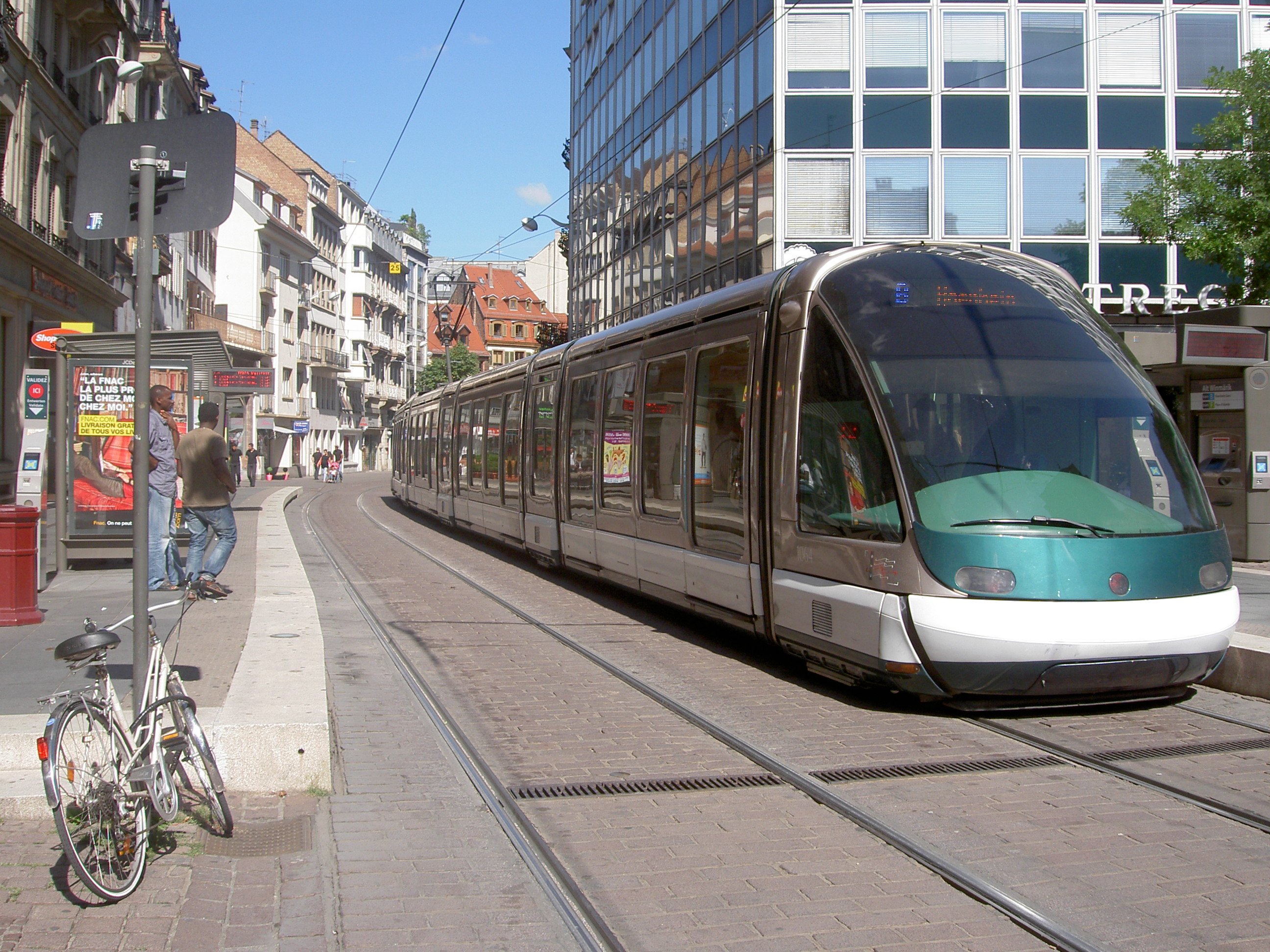
August 27, and it is my birthday. It was great to get phone calls from Helen, Peej and Amy-Ann, and it did seem strange not celebrating with them. For a birthday treat, it was decided that we would not actually drive anywhere—for the first time since arriving in France,—so we took a tram into the centre of Strasbourg. The trams here are about the same length as three Melbourne trams tied together, but much shorter units so they can snake their way around the corners. They are very clean, have well upholstered seats, and seems to be well patronised.

Strasbourg Tram

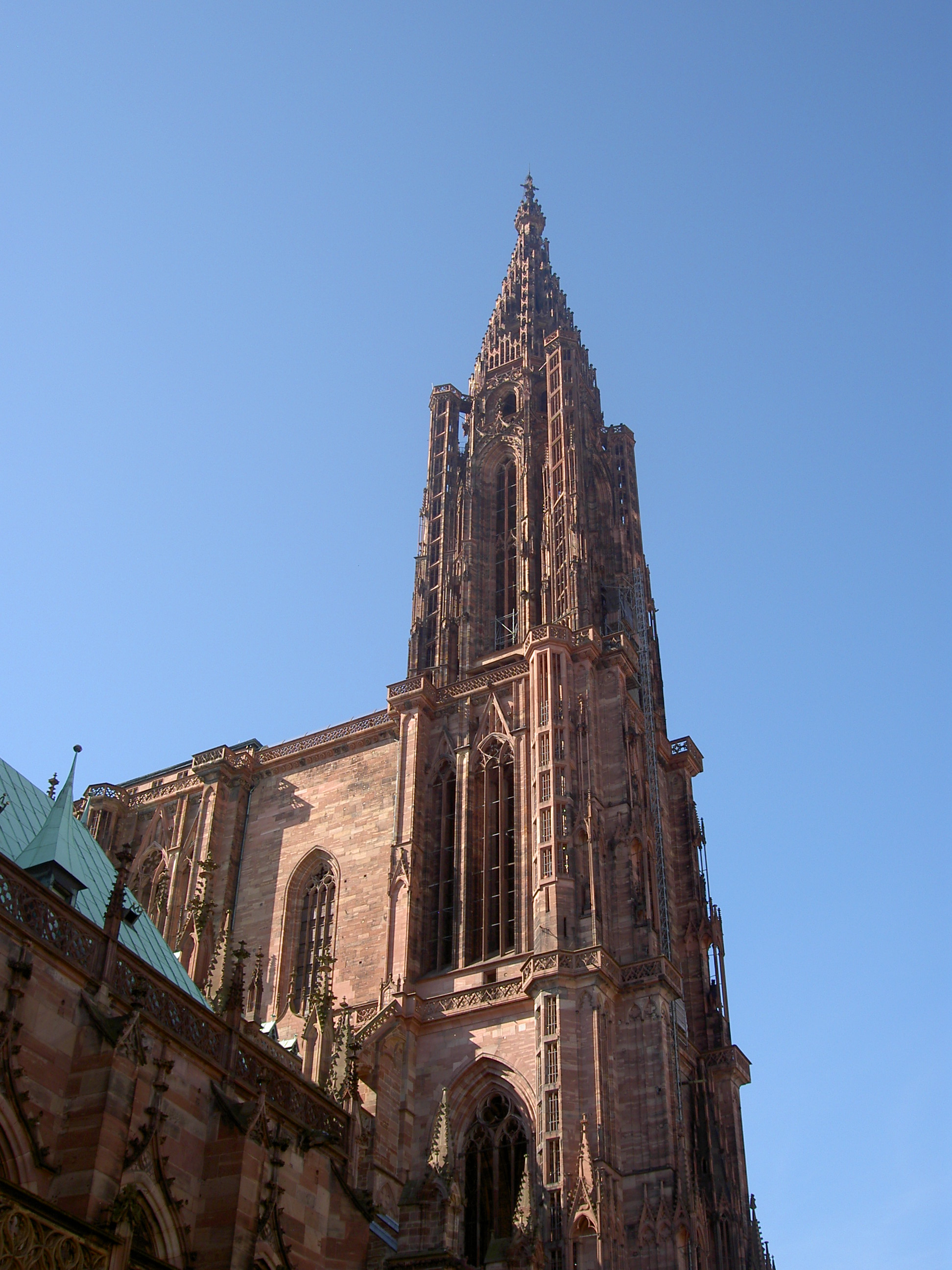
We strolled around the Cathedral, which we had seen last night illuminated by a very impressive sound and light show. It is perhaps not quite so vast as Chartres, but much more ornate on the outside. The front wall, with the towers and spire, is perhaps the most impressive, as it is very tall, and looks fragile due to the many layers of thin columns, rather like organ pipes, that decorate the entire edifice. In the light show, illuminated from every possible angle, (including from behind the ‘organ pipes”) it was possible to see the intricacies of the structure. But in the daylight, whilst the ornate structure was just as impressive, it looked rather drab and dirty!

Strasbourg Cathedral

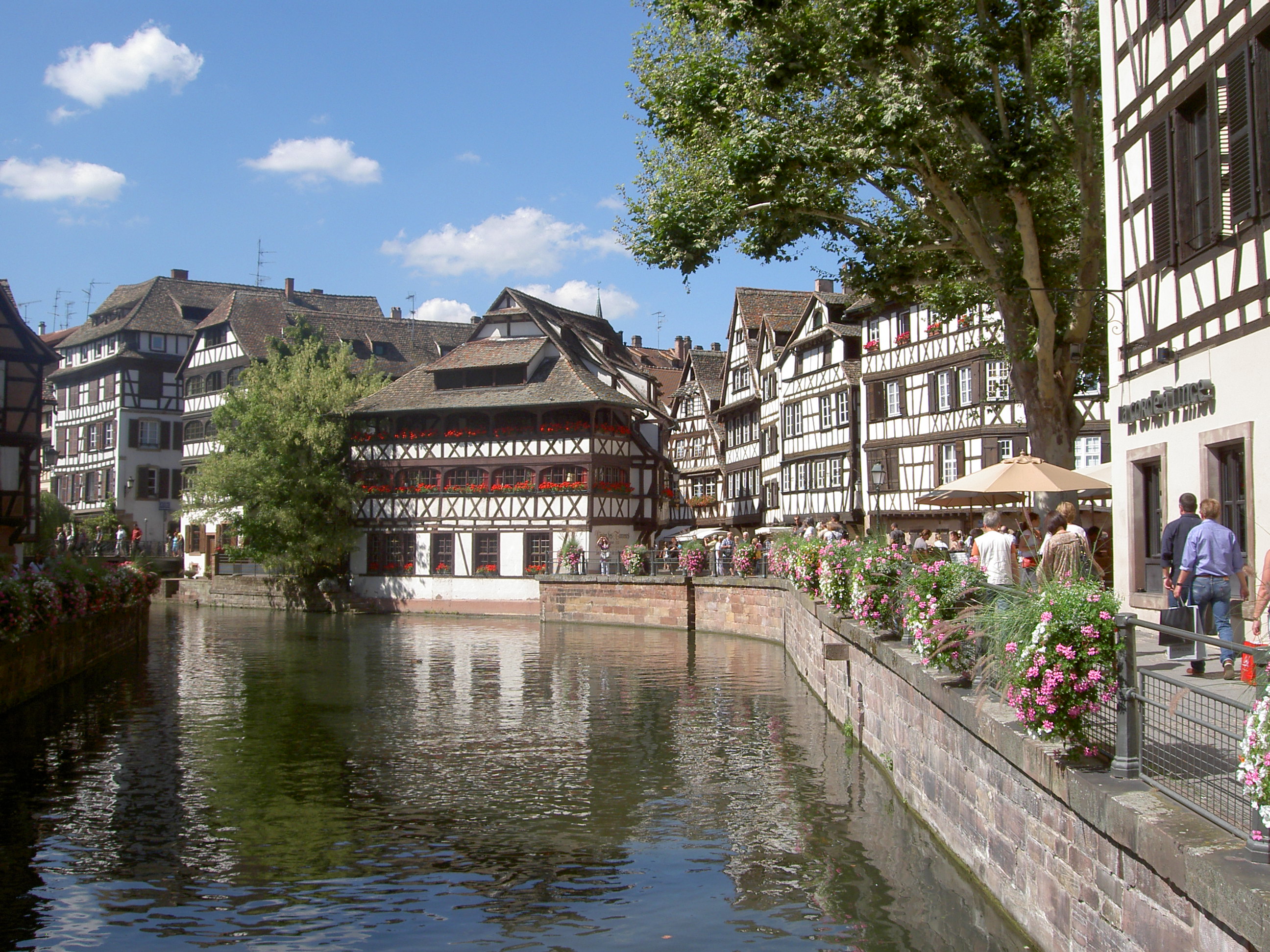
We then strolled to the quay, where we boarded a river boat for a very leisurely trip around some of the many canals and anabranches of the Rhine which flow through the older parts of Strasbourg. There was an excellent commentary on the boat, which described the very complicated history of Strasbourg, having alternated between being French and German over the centuries, not to mention the Gallic-Roman period, and times of (I think) Danish occupation. Many of the older buildings have been very well preserved/restored, and are now thriving cafes catering for the booming tourist industry.

Old Strasbourg

The boat ride also took us past the new European Parliament buildings and their related administrative offices, and the Court of International Justice for the Rights of Man. Whilst very impressive now—all huge, glass, steel and concrete—I can’t imagine them surviving the many centuries that the old building have already withstood!

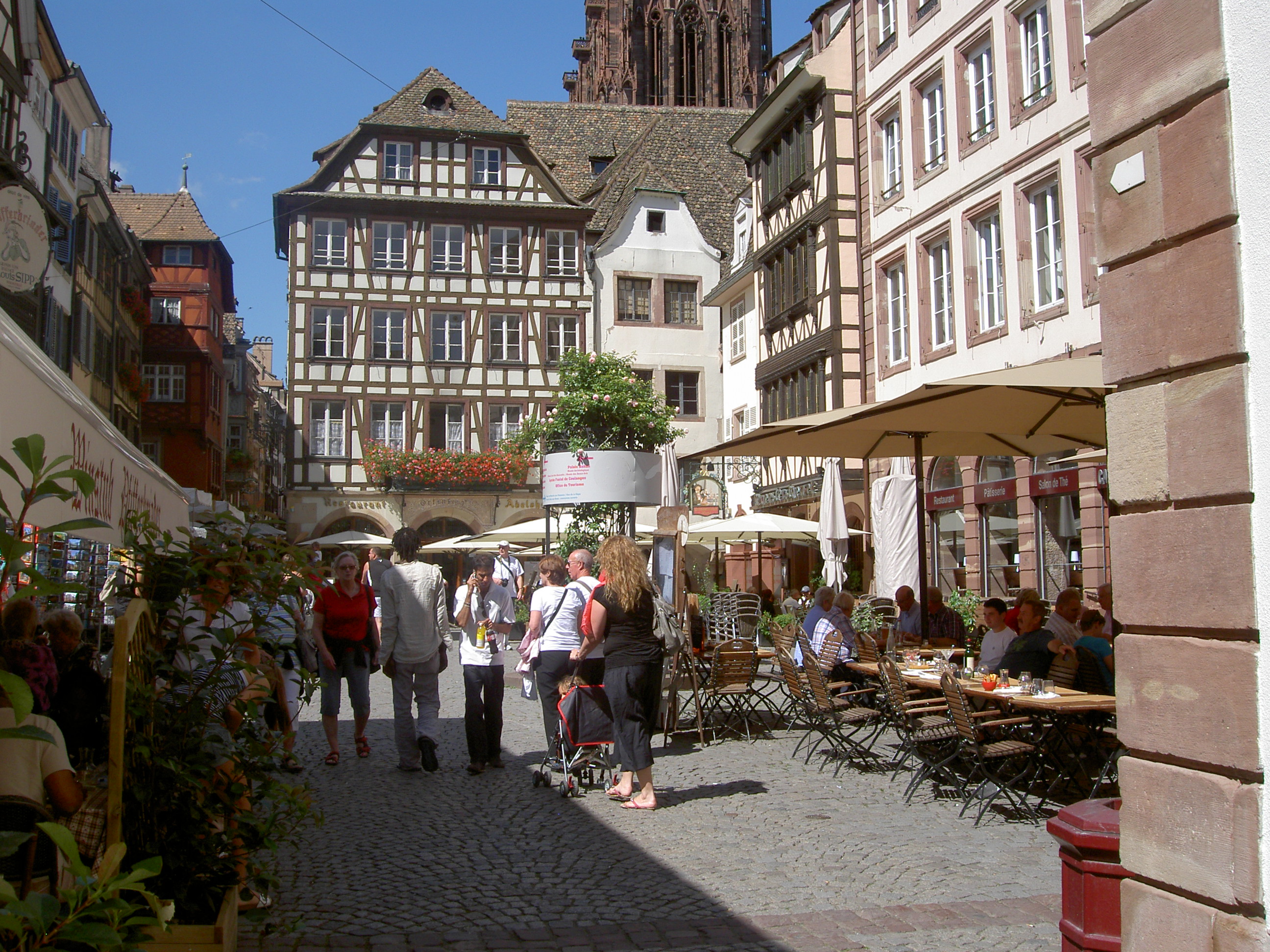
It would not be a birthday without a drink or two, so we did what other tourists were doing, and sat under the umbrellas of a café in Place du Marché des Cochons du Lait (originally a market square specialising in the trade of suckling pigs), where we treated ourselves to local Tarte Flambée and, for me, a couple of local beers. Ann and Nicole contented themselves with a shandy each.

Marche des Cochons du Lait

It was very pleasant to sit there for an hour or so, until the inevitable smoker turned up, and it was better to leave. It was very noticeable, and unfortunate, that of all the cafes in the square, with collectively loads of people, we copped the only smoker! Still, it was probably time to move on anyway. So we wended our way slowly through the old Tanneries and market places to the ‘covered bridges’, probably designed by Vauban, (you may recall I have mentioned him before as a fortifier of old towns), and, of course on to another café for another birthday beer. It is of course very important to maintain body fluids during these warm, lazy, European summer days! A stop at a patisserie to purchase a local (birthday) cake for tea, and we caught the tram back to Schiltigheim.

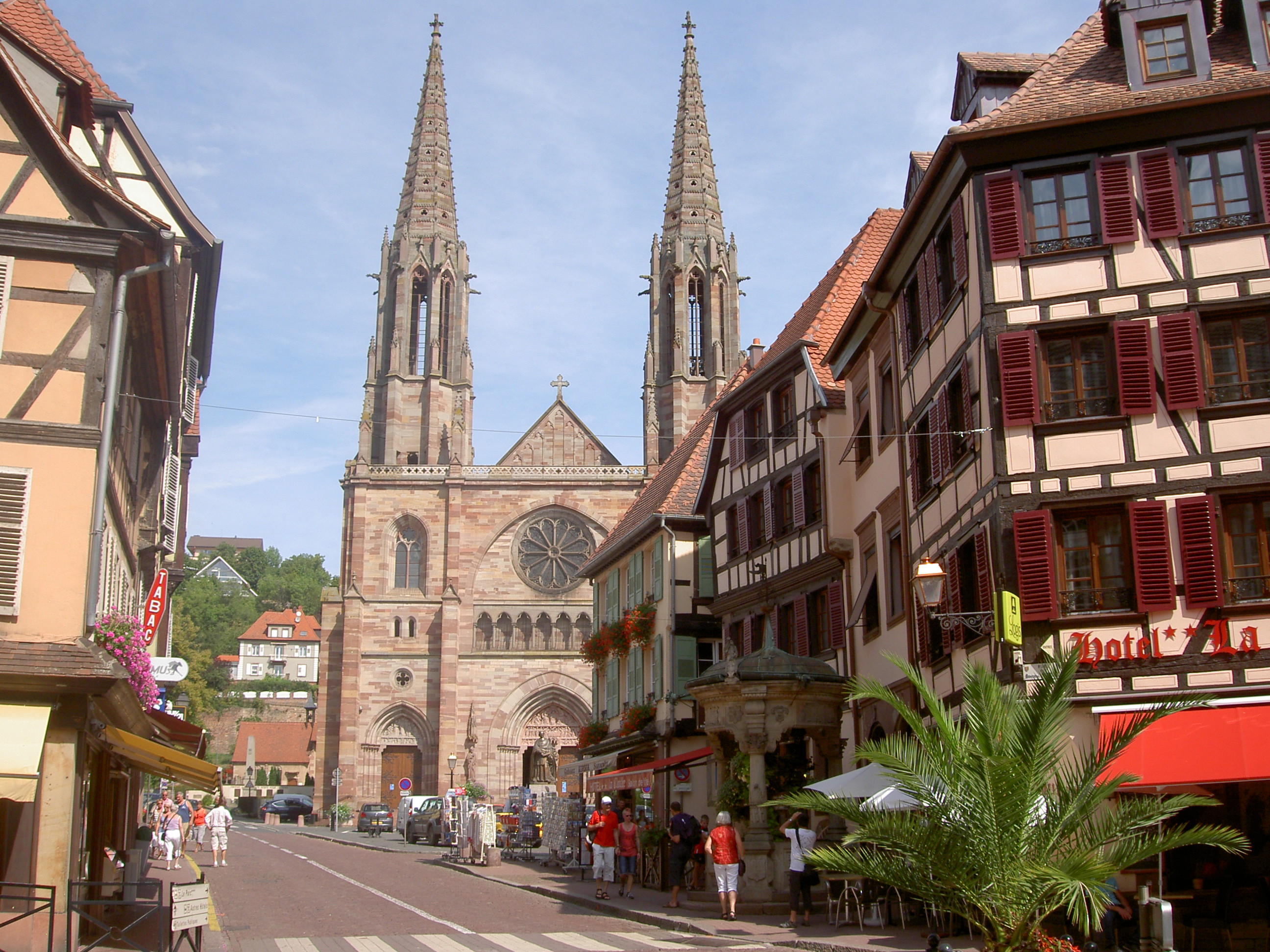
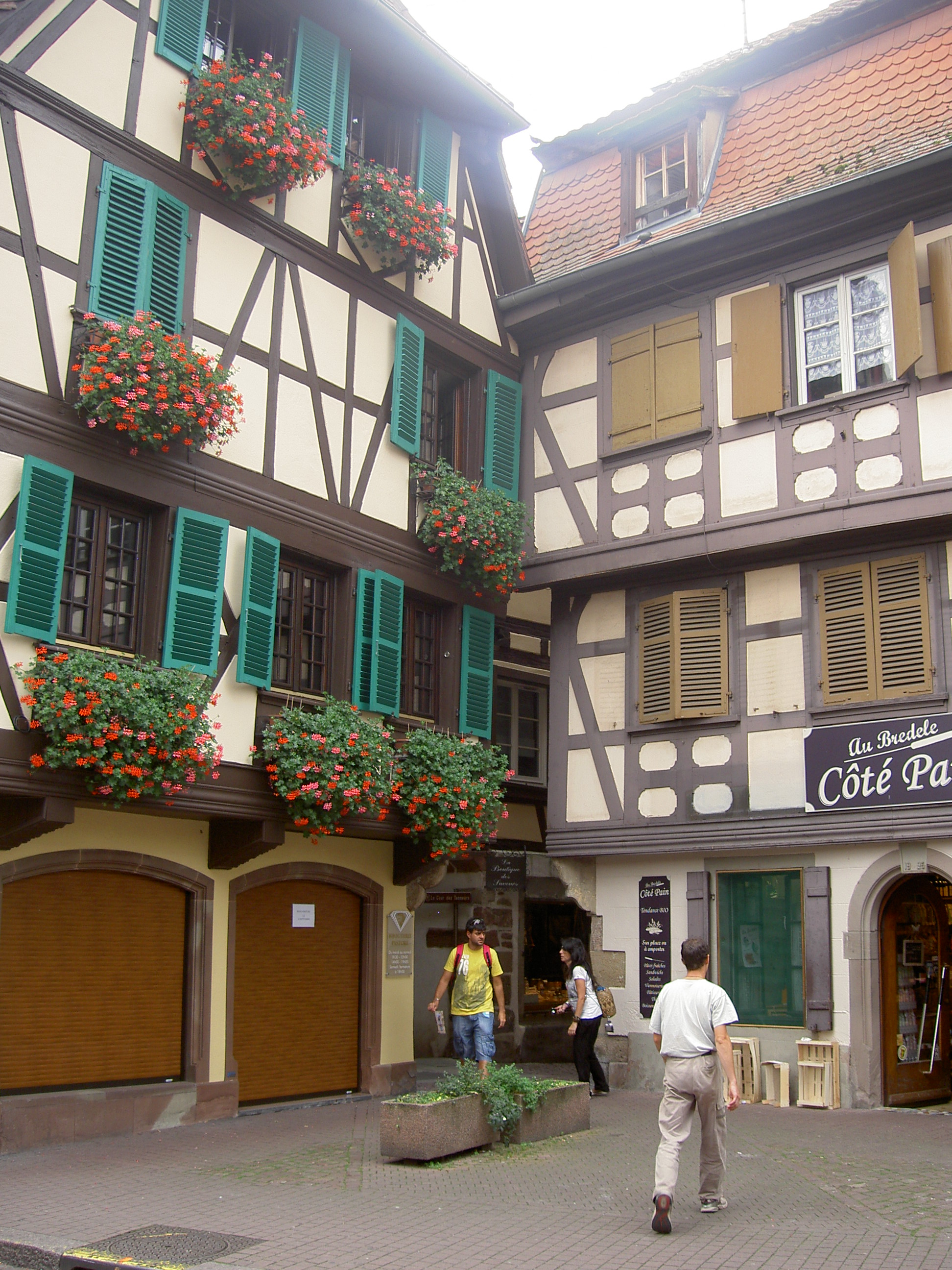
Tuesday 28, and we went for a drive in the country, to Obernai, some 50 k away on the very edge of the Voges mountains. Ann drove, and as Nicole navigated, it was the first time we got to a destination without getting lost! Obernai is an ancient town, with the typical Alsacien architecture as shown in the photo  here and of Strasbourg..

Obernai


Obernai

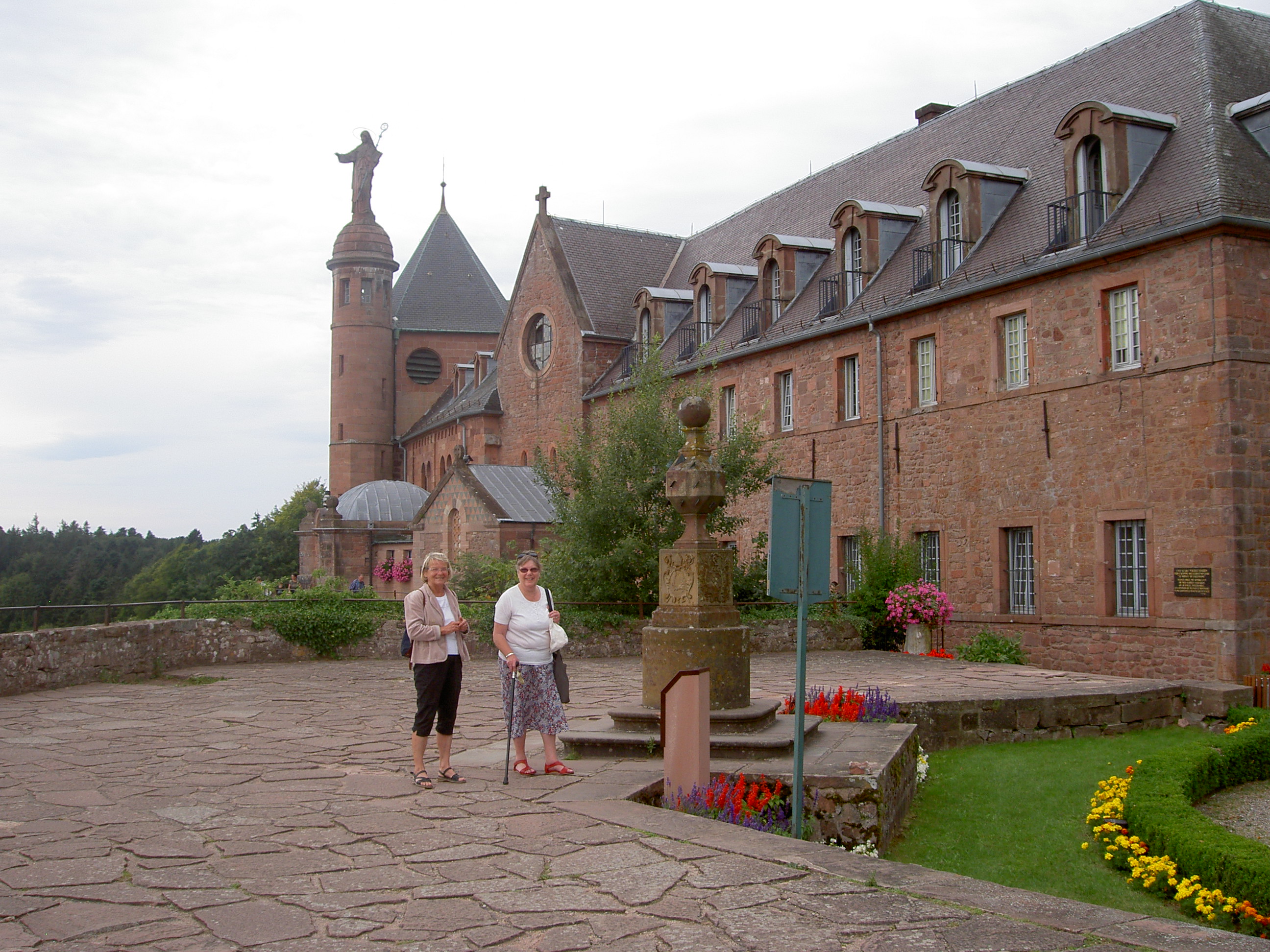
Believe it or not, there are two small streets leading away from behind the guy in the yellow shirt! Clearly it now depends on tourism, and just about every well-preserved building was a café or tourist-type shop. But it was very attractive. After a coffee and a good stroll round, we took our leave of Obernai and drove to the top of Mont St. Odile, to the convent there. St Odile was a 10th century saint, who was born blind, but who was cured by the waters of a spring near the top of the mount, and she established the convent there. Today its claim to fame is that there are prayers said 24 hours a day, seven days a week by relays of sisters who overlap at the change of shift so that the continuous string of prayer is never broken. It relies almost entirely on tourism to maintain its fabric and expenses, and there was no shortage of tourists there today.

The Convent of Ste Odile

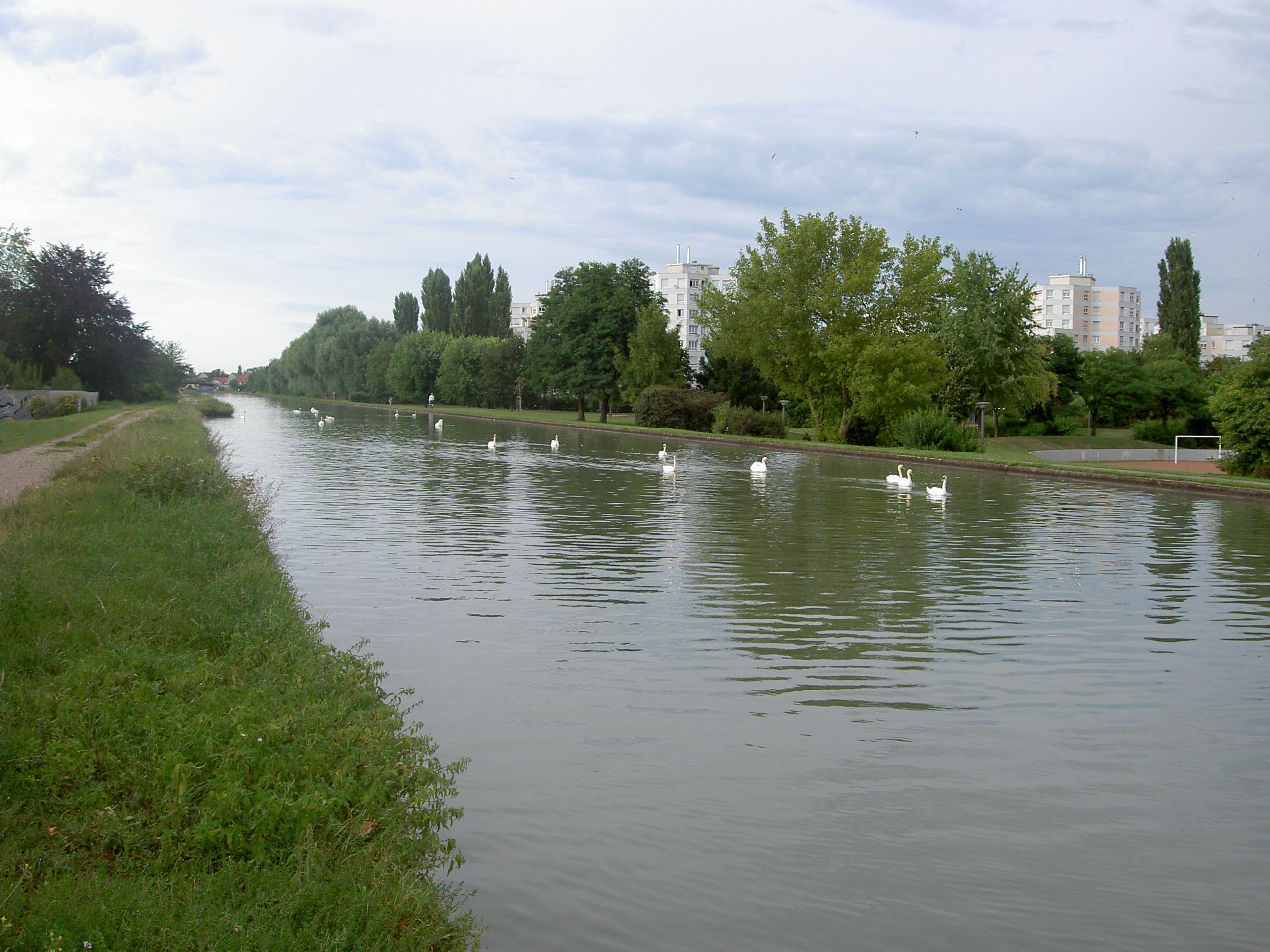
After returning home, I decided I needed a bit of a ‘power-walk’, as all my walking over the past few days had been at snail’s pace. So I walked into Bishhiem, about a k or so from Nicole’s place. Where Nicole lives, the apartments are quite luxurious, and there are many very nice single dwellings. Indeed, one I passed had red carpet on the black marble staircase that swept up to a huge front door under a portico of Doric columns, probably built no more than 10 years ago—-more money than taste, I would say. By contrast, nearer to Bishhiem, the shoe-box blocks of flats, of some 7 stories each, were clearly occupied by those at the lower end of the socio-economic spectrum. The few shops and commercial streets I saw were rather drab, and stood in stark contrast to the bustling, bright, thriving areas of central Strasbourg. After leaving there, I walked along the banks of the Rhine-Rhone canal, which, not surprisingly from its name, connects the Rhine river with the Rhone!.

Rhine-Rhone Canal near Strasbourg

At the part I walked along, it was some three metres above the surrounding suburbs, and must have provided quite a few engineering and surveying challenges in its construction.

Tonight is our last night at Strasbourg, and Ann and Nicole have gone out to see, amongst other things, a fireworks display. I thought I could use my time better by completing the blog. Tomorrow we head about 100K south, and a few Ks east, crossing the Rhine, entering Germany and visiting a couple of Dickensians in the Black Forest at Freiburg.

Travel Blog August 24 to August 26, 2012

In my last blog I made a couple of mistakes—which is unusual for me! The first is that I referred to a photo of the Museum of Occupation that I subsequently decided not to put in, but forgot to delete the reference to it, so sorry about that.

The second was that I referred to completing seven weeks already, when it is in fact only six weeks gone—not that anyone would have noticed that error, but I thought I ought to correct it!

Thursday 23 was our last full day at Mesnil le Sauvage, so we just poodled along to the beaches near Mont St Michael as we knew we had lots of driving coming up over the next few days. This part of the coast has enormous tides, and at low tide there is no water for miles. Notices caution against straying too far from the actual dry sand without a professional guide, as there are quicksands to get stuck in, and the tide comes in very quickly with the very high risk of being cut off in dangerous water. So we took notice of the notices and just paddled near the edge. The main tourist beach at a place called Edenville was crowded with holiday makers, and there were a lot of English people there enjoying the sandy beach. Why they chose Edenville over Margate I can’t imagine!!

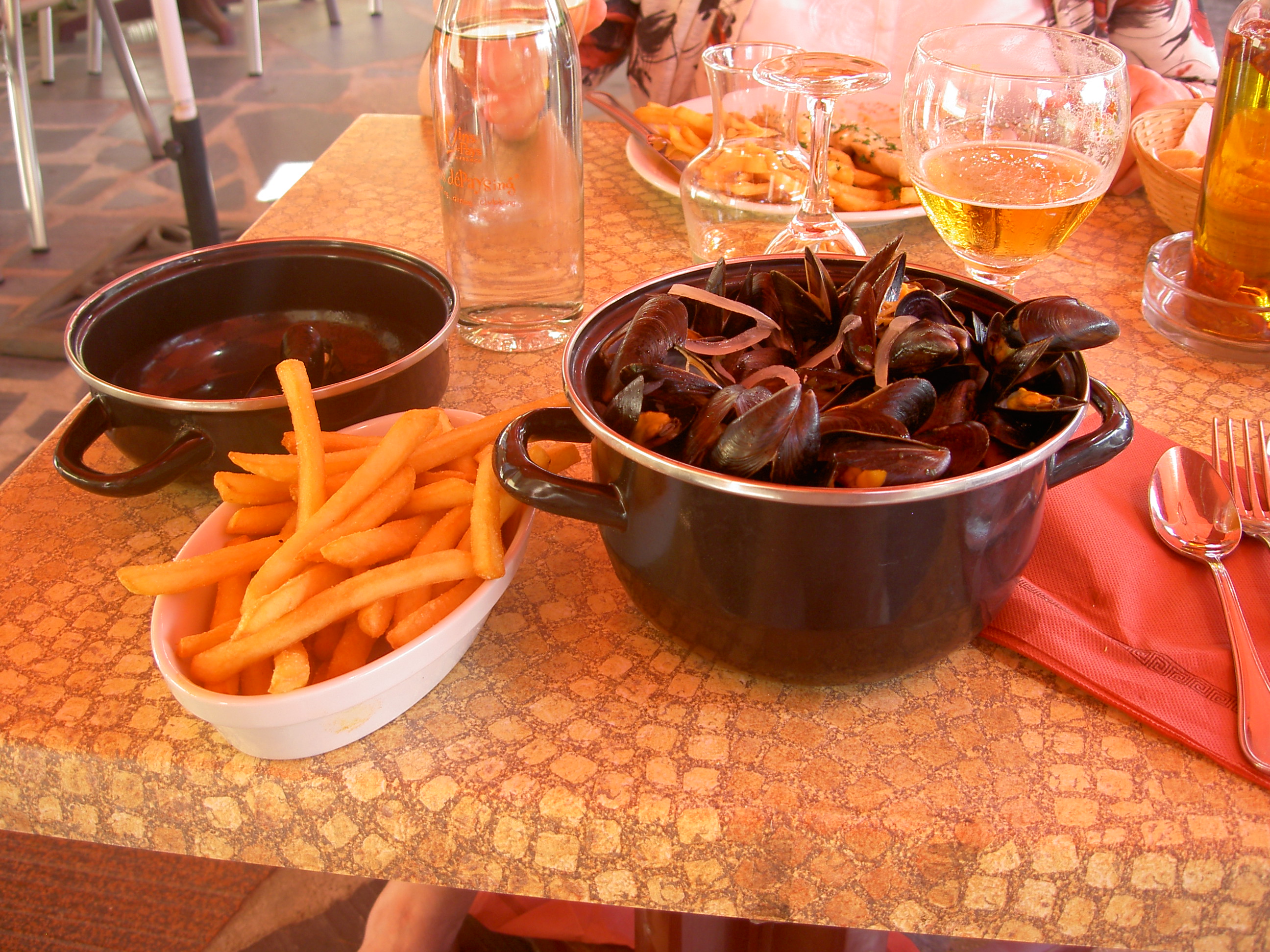
This part of France is also famous for its oysters and mussels. Today I settled for a serve of moules et frites, (mussels in white wine and garlic in one bowl, and chips in another) which was delicious!

Moules et frites

Ann had a local turkey dish, which she enjoyed very much. Tomorrow we head east for Strasbourg, stopping a night at Chartres, and a second night somewhere further east on the way.

We said our goodbyes and set off for Chartres by way of Vire, Flers, and Argentan, where we stopped for a wee break and a coffee. Then on to  L’Aigle, and Verneuli-sur-Avre, where we decided not to continue on the big green road via Dreux, but cut diagonally across country direct to Chartres on a smaller red road. We stopped for another drink at the very small, ancient town of Brezolles, and as we walked along the narrow street, and ancient lady was leaning out of a window. The customary “Bonjour Madame” was met by a toothless smile, and we went on to the boulangerie for some bread, and the café for drink. On the way back to the car the ancient lady was still leaning out of the window—so far out in fact that I wondered whether perhaps she had been shackled at the ankles to stop her falling right out.

Then, on down the red road to Chartres. So far all was going well. We had booked a room for the night in the Hotel Kyriad, which we knew was on the east side of Chartres. The red road we were on met the green ring road Ok, but we then took the wrong exit, and had to drive about 20k before we could get back to where we needed to be. The next mistake was nearly a disaster, in that I ended up on the slip road onto the main toll-road heading for Paris, but fortunately managed to squeeze through some bollards to get onto the exit ramp, and all was saved. All we had to do then was to find the hotel—which, as it happened, was fairly easy.

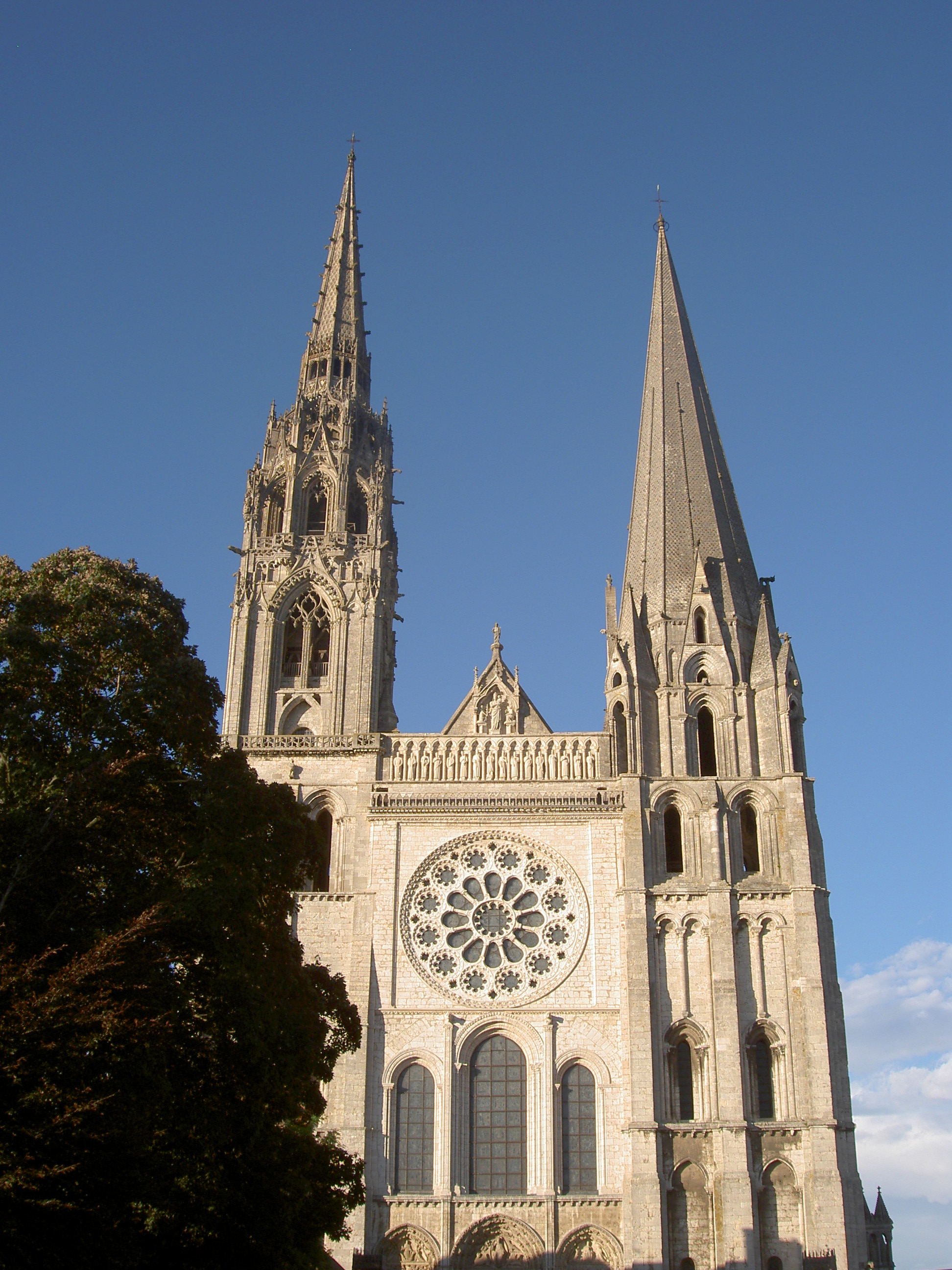
We checked in, and then easily found our way to the main attraction—Chartres Cathedral. This is absolutely massive, and no photograph can do justice to it. Unfortunately, it was early evening and rather overcast, so at first it looked a little gloomy, but by the time we had eaten dinner ( veal for Ann, cassoulet of confit canard pour moi), the sun was out and the Cathedral was magnificent. We went back inside to see the stained glass windows with the sun shining, and they really were spectacular.

Chartres Cathedral

Having said all that, we both think that Bayeux Cathedral is just as stunning! Bayeux does not have stained glass windows, so is flooded with light and the detail of all the stonework and carvings is much more spectacular, and the whole place seems more open and spacious.

Having ‘done’ the Cathedral, we tried to find our way out of town—-not nearly so easy as getting in! After half an hour, and many kilometres out of our way, we finally made it back to the hotel for the night.

Saturday morning and we were on our way further east—having decided to book a room in the Hotel Champagne at St.Dizier. The route looked pretty simple and straightforward—the green road from right by the hotel to Ablis, and then on to Etampes. But at the last minute we decided on the yellow road even closer to the hotel, and cut across country to Etampes. All went well, and actually we did not go wrong! From Etampes,  we drove through the forests surrounding Fontainebleau and noticed that as we travelled east, so the leaves became more autumnal, and the forests were really beautiful. From Fontainebleau, through Moret-sur-Loing, by-passing Sens and on to Troyes. Here we went wrong! We missed the ring-road, and ended in a rather miserable-looking suburb, and in finding our way out in quite a different part of town, we found the slip-road from there onto the ring road had been completely blocked by a very recent accident and motorists were reversing back down the slip-road. We had no choice other than to do the same, which then put us on a road going the wrong way—-nothing unusual in that I hear you say! So we continued in that direction for about 20 k before we could get off, and work our way across country to the road we needed—the one to Chalons-en-Champagne. We then tuned off that toward Vitry-le-Francois, and finally to St-Dizier—where we found the hotel with no trouble at all, much to our surprise.

The hotel could best be described as shabby-genteel, and was very French.

Hotel Champagne, St Dizier

This was in contrast to the Hotel Kyriad outside Chartres, which was brand new, and could have been anywhere in the world. Dinner at the hotel was absolutely faultless. I would have to say the veal in mushroom and cream sauce was the best meal so far—and on a par with the crown roast of hare I had in Tasmania many years ago. The rest of St-Dizier had little to offer, so we left early on Sunday morning and headed further east for Strasbourg. We made a couple of stops on the way, at Phalsbourg, and at Saverne, both of which were very interesting. The architecture here is more German than typical French, and the towns have quite a different feel to them, even though the French language is heard everywhere of course.

On to Strasbourg, and surprisingly we found Nicole’s place with not a single wrong turn! Maybe our luck is beginning to change, or maybe we are getting better at reading road signs. Whatever it is, finding our way through Strasbourg and into the ‘suburb’ of Schiltigheim was a piece of cake!.

Tomorrow is my birthday, so I will do a special blog about that!


Travel Blog August 21 to 23, 2012


Today was a long day, occasioned by my mistake in booking the car for the wrong date, as explained in my last blog. We had to return the very small car to Cherbourg, and swap it for a larger one, which was, as beggars can’t be choosers and we had to take the only one available—a Mercedes!. Comfortable enough, but a bit more expensive than originally budgeted. But never mind—it will probably be the only time we drive a Merc!

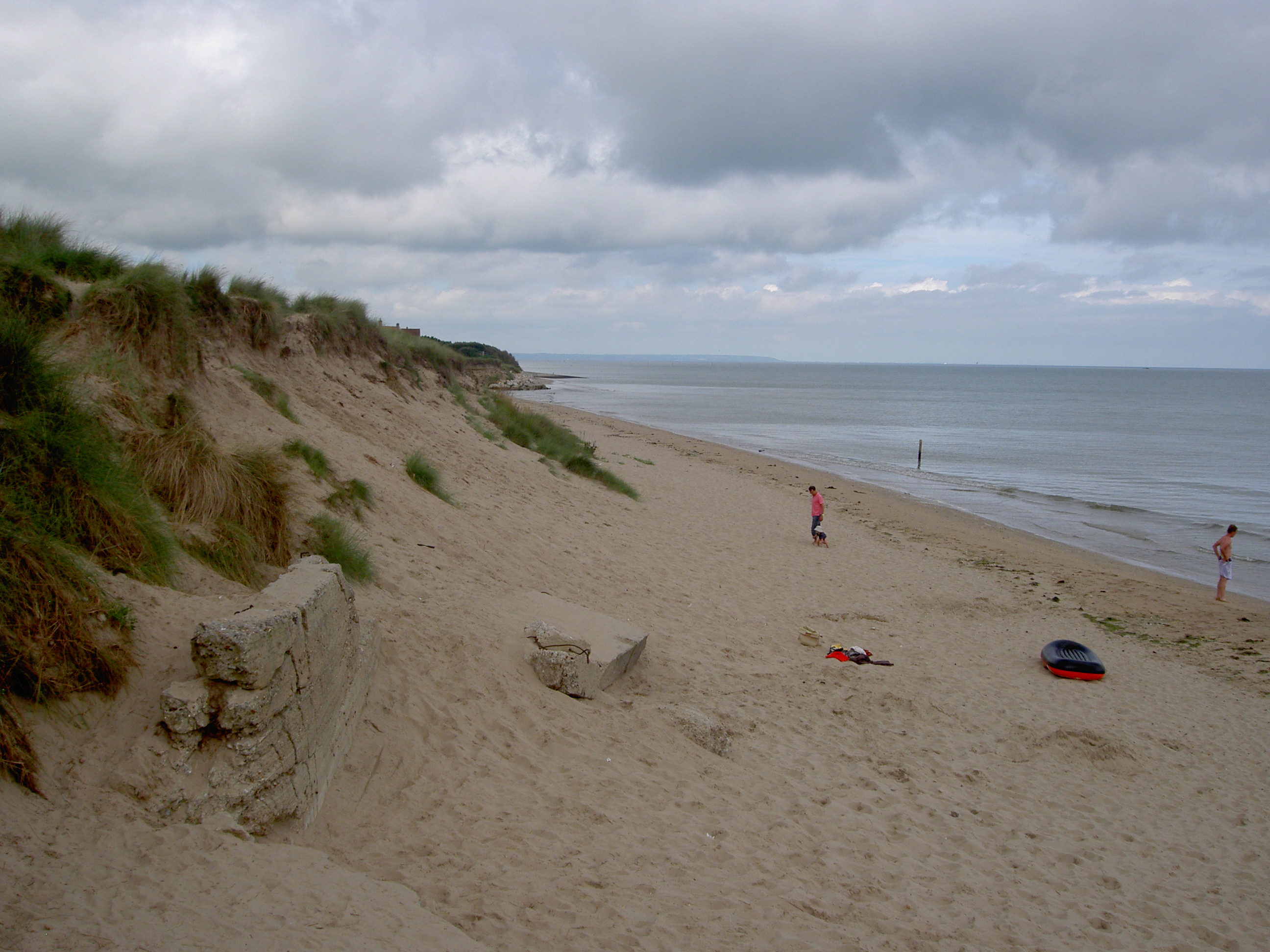
On the way back to Cherbourg, we decided to call in at Utah Beach, where, between June and November 1944, some 836,000 US forces landed, with tanks, ammunition and all sorts of provisions, as part of the Allied Invasion.

They landed on this beach:-


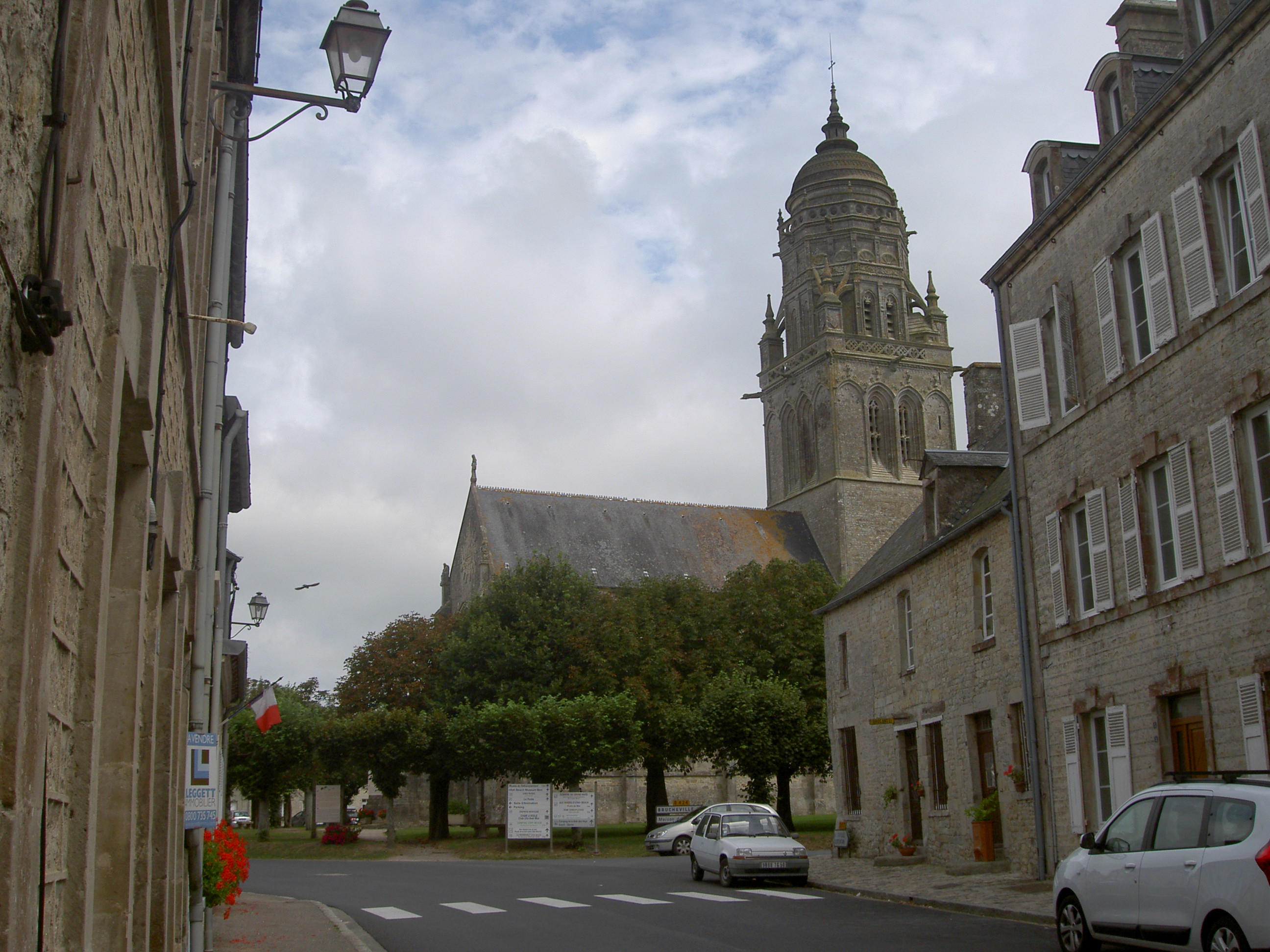
And took this road through the tiny village of St. Marie du Mont:-


St Marie-du-Pont

There were a lot of tourists there today, obviously making a ‘pilgrimage’ for their own reasons. Apart from the Museum of the Occupation in the photo above, there is also a small Museum of the Liberation in the village, and a very extensive museum and monument actually at Utah Beach. It was all very moving, and the Church had a number of display boards in the grounds describing various facets of the occupation and liberation.

We then moved on up the coast to Quinéville, where we picnicked before moving inland to Cherbourg. We were nearly there when I made a wrong turn, and got myself into a one-way street system, which took nearly half an hour to find our way out of—very frustrating to say the least. We had hoped to spend a bit of time in Cherbourg having a look around—but not driving around one-way streets! Anyway, we swapped the car, and found our way out with no trouble, and headed for the west coast of the peninsula for a look at the Atlantic coast—which was very pretty and spectacular. Toward evening we made our way to Granville, hoping it would be a nice sea-side town with beaches. It is in fact a very busy fishing port, which would be interesting were it not so very difficult to find your way around in, and were we not quite so exhausted—so we simply went back to the gite!

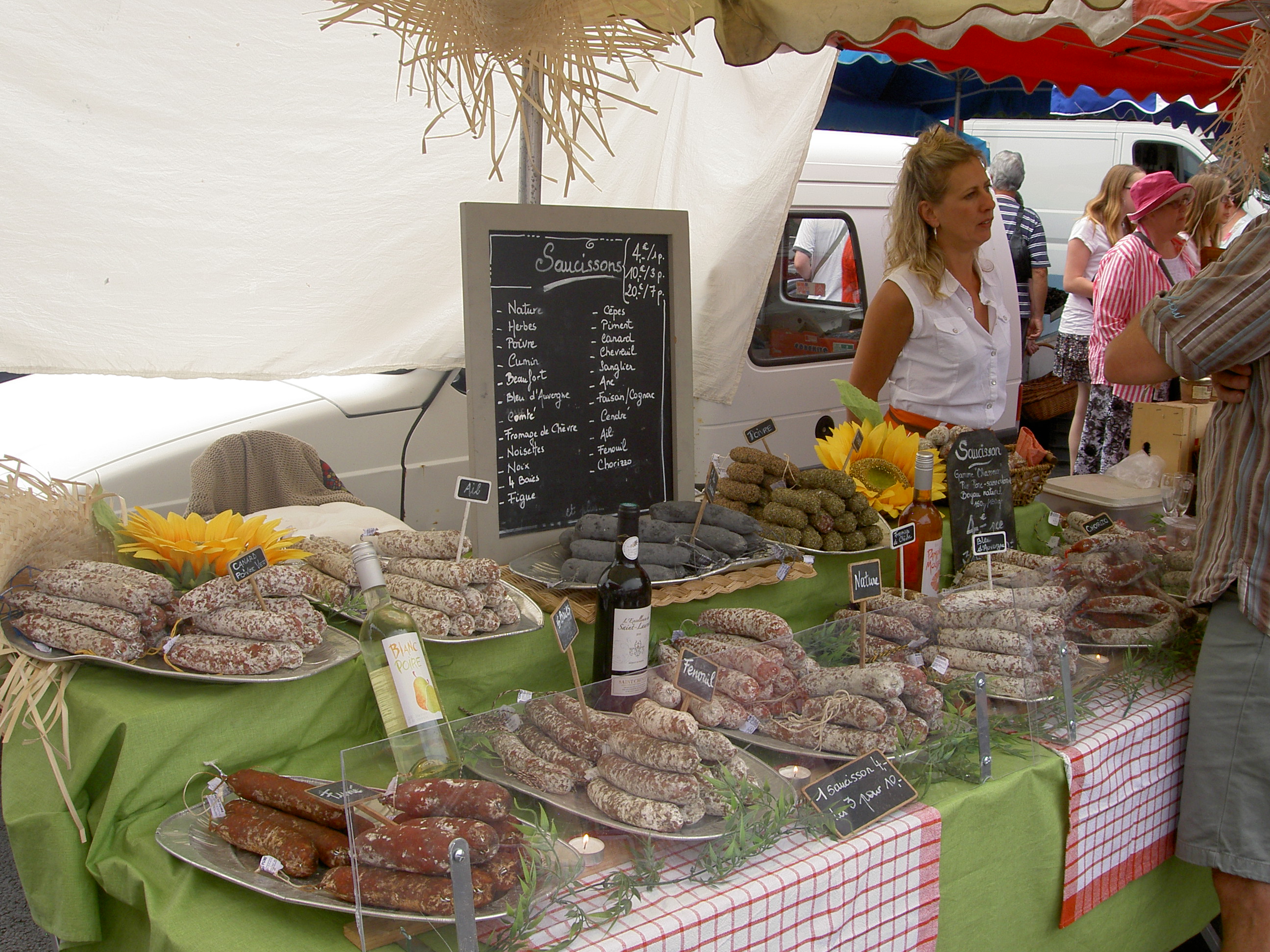
Tuesday is market day in Villedieu-les-Poêles, and what a market it was!

In Villedieu market

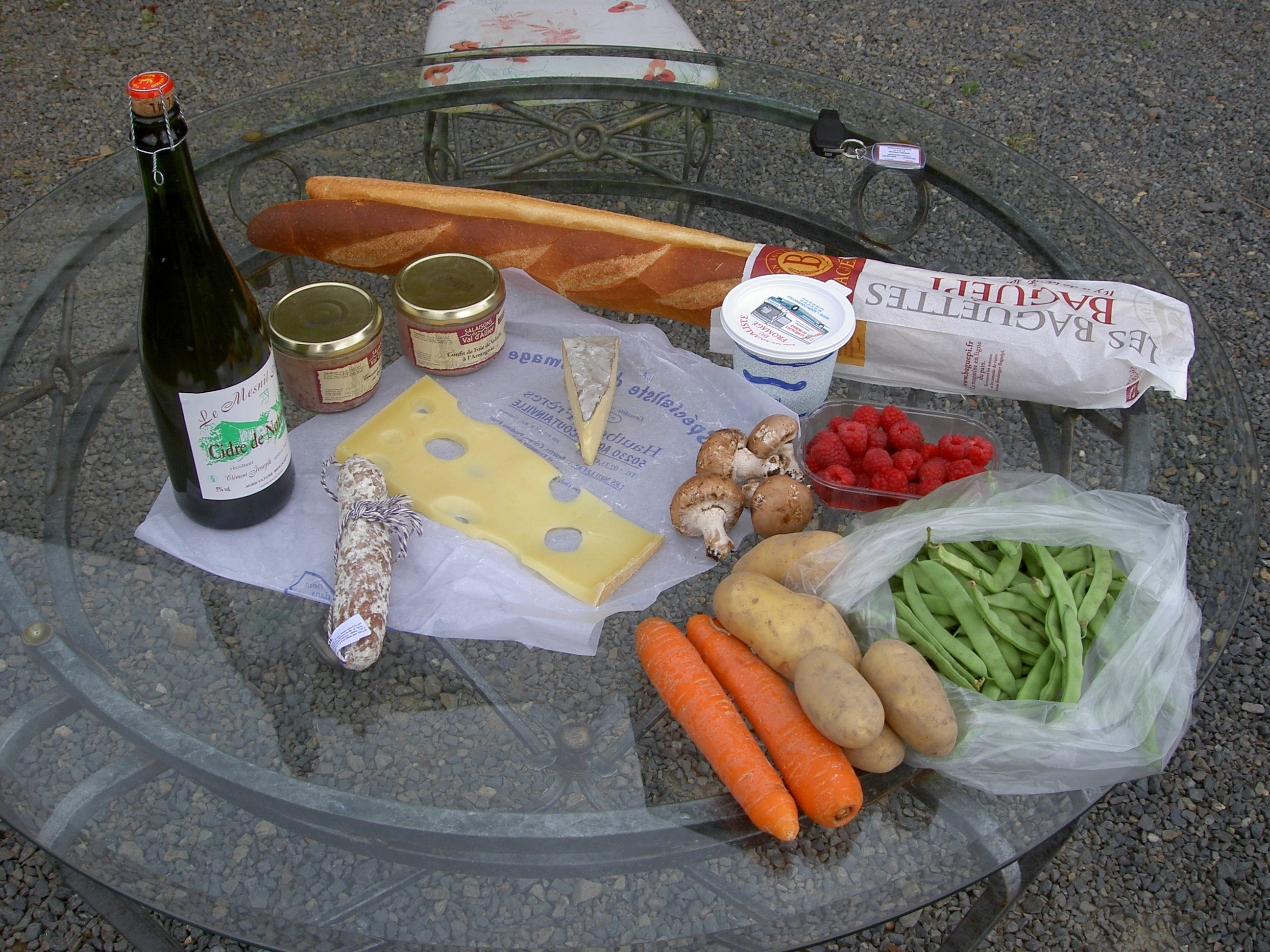
Our gite owner gave us some advice on where to park, and for that we  were very thankful as the town was literally heaving with people—both locals and tourists. The market covered many streets, and I doubt that we actually saw more than half of it, despite being there for a couple of hours. We bought fruit, vegies, charcuterie, cheeses, saucisson, terrines and bread—all of which are  French life’s little necessities! It was a memorable experience.

Our purchases

To recover before driving ‘home’, we stopped for a drink in a small bar, where I had a couple of glasses of the most wonderful local ‘pression’ (ie draft) beer. Fortunately Ann volunteered to do the driving!

Later in the evening we took a leisurely drive around some of the local country-side, visiting Montbray, a very small village which appeared to be completely deserted, like a ghost town. Then on to St.Sever-Calvados, which was a bit more lively in that we managed to buy a bottle of wine (something we had forgotten to buy at the market, believe it or not!), and saw at least three people. From there, by way of a monastery/hermitage (still in use), on to the hill-top town of Vire. This was once a fortified walled town, but now very little of the wall exists, just the old ‘Clock Gate’ and the ruins of a castle tower. A quick look around, and then back to the gite to cook dinner.

Having mentioned Calvados reminds me that this part of France is famous for its apples and apple products such as cider, recipes of all sorts containing apples, and of course the famous apple brandy known as Calvados. We have tried some cider—not bad— and a couple of local apple tarts, but have not yet had any Calvados. The interesting thing is that we have seen hardly any apple trees—so where all the juice comes from I don’t know! Most of the agriculture seems to be pasture with cows grazing, or corn fields. Certainly not many apple trees.

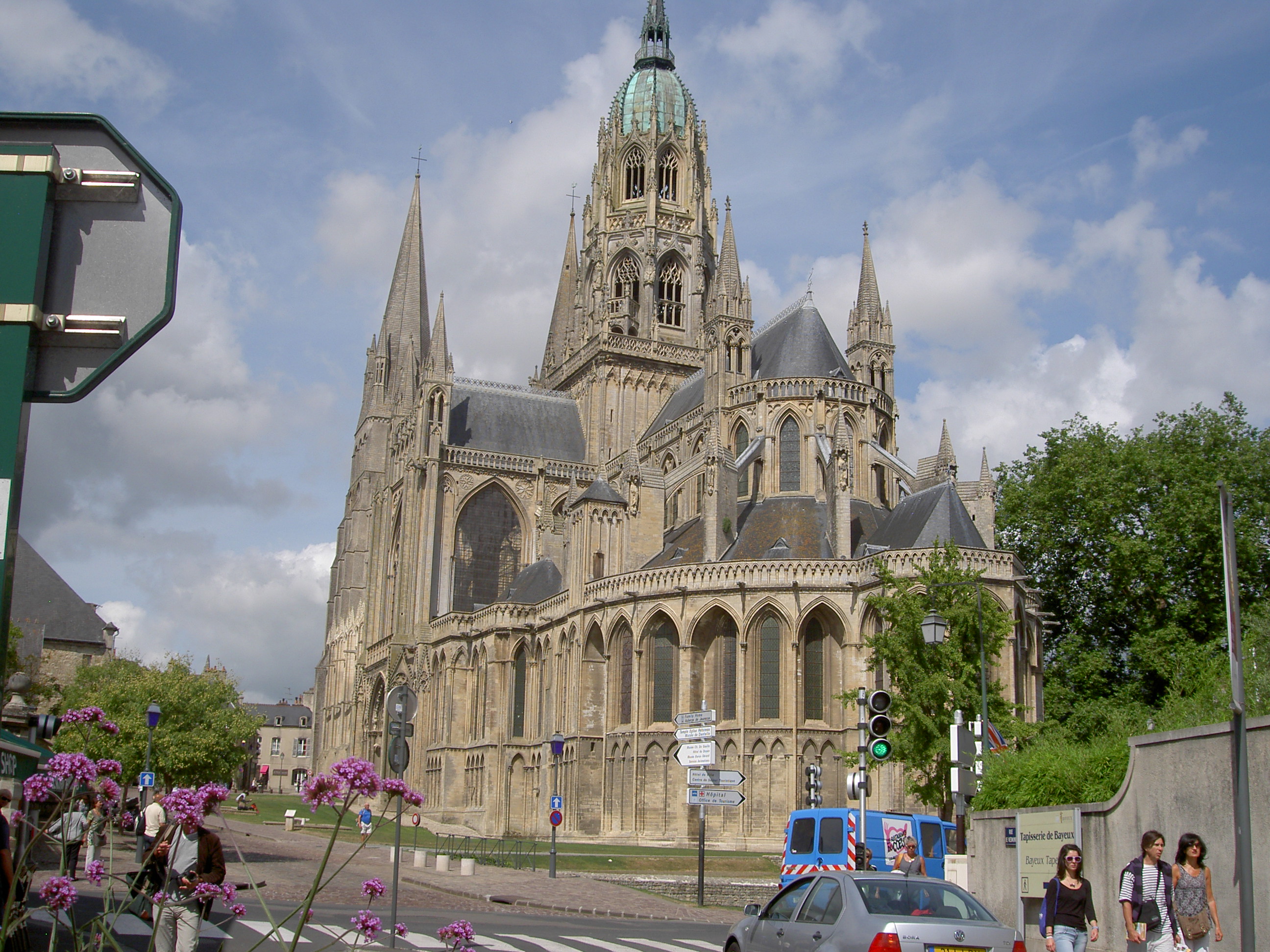
Wednesday we went to Bayeux to see the famous tapestry, which is in fact not a tapestry at all, but an embroidery. Still, at about a metre in height, and some70 metres in length telling the whole story (from the Norman’s perspective of course) of the treachery of Harold, and his defeat at the Battle of Hastings by William the Conqueror, it is very impressive. It is over 1000 years old, is now housed in a custom-built facility, and viewers are given an audioguide to listen to as they walk very slowly past it. Despite the queue, it was an interesting experience and well worth the trip. Also, Bayeux has a magnificent Cathedral, which is worth going to see in its own right. There are also many mediaeval buildings which have survived wars and revolutions. It is a lovely city, and well worth the visit. Even parking was good!

Bayeux Cathedral

Not far from Bayeux is the tiny town of Port-en-Bessin-Huppain, which has a lovely harbour and an ancient tower, built by Vauban in the reign of one of the Louis. And not far from there is Omaha beach, another of the very significant beaches in the June 1944 landings—so we made a detour there. But of course, on the way out of town we took a wrong turn, and made a very long detour to find our way back onto the right road.

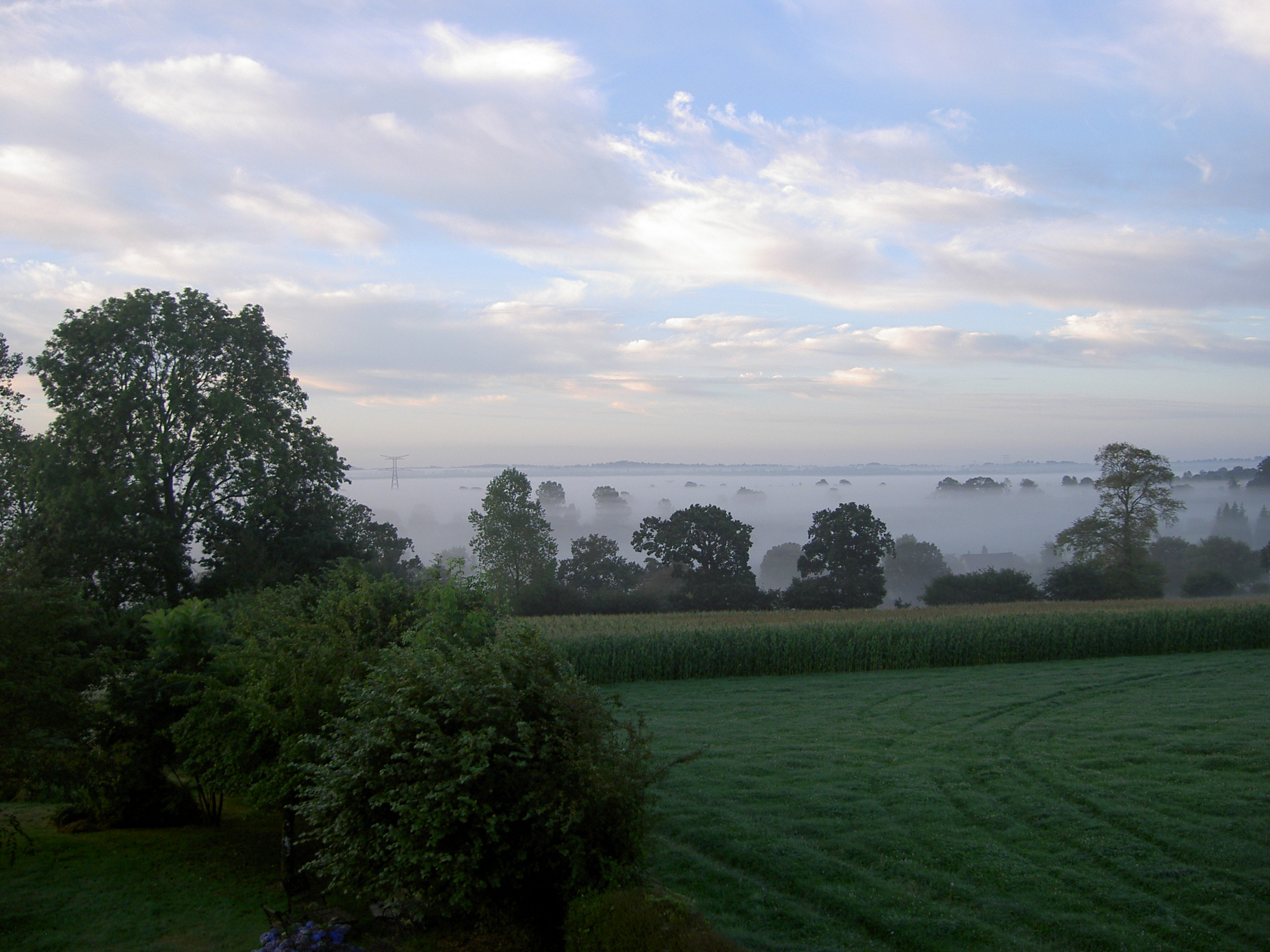
We have nearly completed our first week in France, and 7 weeks since we left Australia; and now, some six weeks past the summer solstice, it is very noticeably less light early in the mornings than when we first arrived in the UK. We are also well into the season of mists and mellow fruitfulness, and this morning, the view from our bedroom window was amazing! The entire valley below us was filled with mist, with only the tops of trees visible like so many islands, and a pylon sticking up like the mast of some long-lost sailing ship. But above the mist, the sun is shining.

View from bedroom window today (August 23)

More in a few days!

Travel Blog August 17 to August 19, 2012

I think I may have been a bit harsh on Portsmouth when I said in an earlier Blog that it had not a lot to recommend it. That opinion was formed early in the stay, and was based on what we saw as we entered the town and drove through some pretty ordinary residential and light industrial areas on our way to the wrong campus. That campus comprised a ‘student village’ of large shoeboxes, about 5 floors in height, built of glass and concrete. The first couple of days did little to change my mind, based on the pretty ordinary walk between Rees Hall where we were staying, and the Guildhall area where the lectures were held. However, you will know that I have already paid glowing compliments to the docklands development, the maritime museum and the old fishing port, and I now admit I was a bit wrong on the rest of the town. Trying to find a post office this morning, I wandered,(not exactly like a flanneur, as I was not strictly aimless), through many side streets and by-ways. Whilst some were still pretty ordinary, I did discover some truly delightful nooks and crannies. In one street, I stopped to ask a resident if she knew the age of the buildings, and she advised that her house had been built in 1780. Just along the street was a pub of similar vintage, but between them were some very ordinary modern buildings! So, it appears that the acquisition of some local knowledge would go a long way in finding the ‘real’ Portsmouth.

We left Portsmouth later that day, crossing the Channel by the Brittany Ferry “Normandie Express”—a fast catamaran, which took only about three hours to reach Cherbourg. A short taxi ride, shared with a well-known author of spy novels that we had never heard of, and we were in the Hotel Beausejour. We had a very nice room on the second floor—up a very winding narrow staircase with no lift, but we managed OK. As it happened, it was practice for our gite at Mesnil le Sauvage, which has two very steep stair cases to reach our bedroom. When we thought about it, the only place we have stayed without stairs has been the B and B in St Andrews. Everywhere else we have had stairs, and even Rees Hall which had a lift, had a set of very steep stairs to the front door. Enough of stairs, more now of Cherbourg. What we saw of it we liked, and spent a nice time in the open-air market, stocking upon provisions for the first couple of days of this part of the holiday. The provisions included, but were not limited to, goat cheese, bread, ham, unsalted butter, wine and beer. We shall get to see more of Cherbourg on Monday when we return the very tiny car we have now, for a more sensible one. Here I admit it was entirely my fault (there’s an admission I never thought I would make!!). When I booked the French car, I had put July 18 as the start date, not August 18. We did not realise this until today, with the result that the booking had been cancelled due to non-appearance. Europcar did not have any available, and neither did Avis, but a smaller French company came to the rescue with a Toyota IQ,  about the size of a Smart Car. We managed to squeeze all our luggage and food shopping in, and had a rather squashy drive to Mesnil. We shall drive back to Cherbourg on Monday and swap it for a more sensible car for the rest of the trip, but we shall have to return it to Cherbourg at the end, rather than dropping it off in Bordeaux as planned. But that makes little difference, as we can go back to England via Cherbourg and Portsmouth, and then continue as planned. So, as they say, the best laid plans of mice and men etc. So, at least it gives us a further opportunity to have a look around Cherbourg.

Mesnil le Sauvage is more a domain than a village, in that it is a scattered collection of farms. The nearest village, Percy, is about 10 minutes by car—a bit too far to walk—and there is supposed to be a small supermarché and a couple of good boulangeries there. Our Gite is part of a restored 400 year-old building, in lovely grounds, surrounded by corn fields, a few sheep, a few cows and spectacular views. We ‘veged’ in the garden for the remains of the afternoon, drinking the beer and wine aforementioned, before devouring some of the cheese and ham for dinner.

The weather was very warm—verging on hot—which was a bit draining after the more pleasant days thus far. The forecast for Sunday was for even hotter, so we decided to get up early and drive into Percy to get more provisions for the week. However, when we woke, not quite so early as planned, we were greeted by a thick fog obscuring the views. Anyway, we went into Percy and found a couple of excellent charcuteries, an excellent boulangerie/patisserie, and an excellent, if very small epicerie—all lovely to shop in with really nice staff. So we bought more cheese (Compte), some cold pork, two slices of salmon pancake stack (like your lemon cake, Peej, but with salmon, salad, tomato etc between the pancakes), some more beer and wine, and two small pear tarts. Percy is not a large town, but like most French villages, it has an enormous church, which quite dwarfed our little car.


Then we drove on to Ville Dieu les Poille, an ancient town specialising in metal craft over many centuries. This is now reflected in the tourist shops selling copper, pewter and brass souvenirs. It came on to rain very heavily, but not cold, so we strolled around the town, peering down mysterious alleyways, and looking in the charcuteries etc.

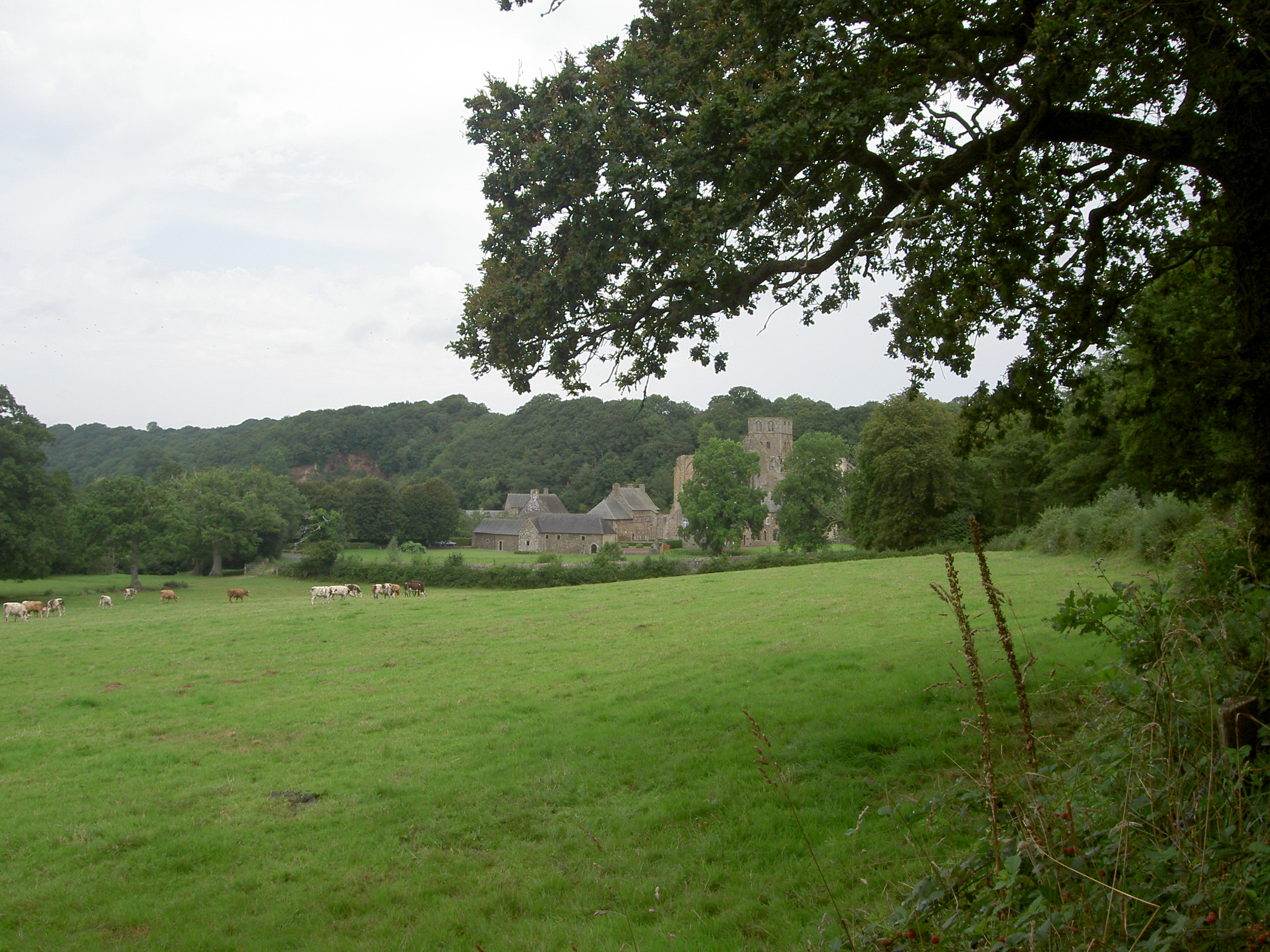
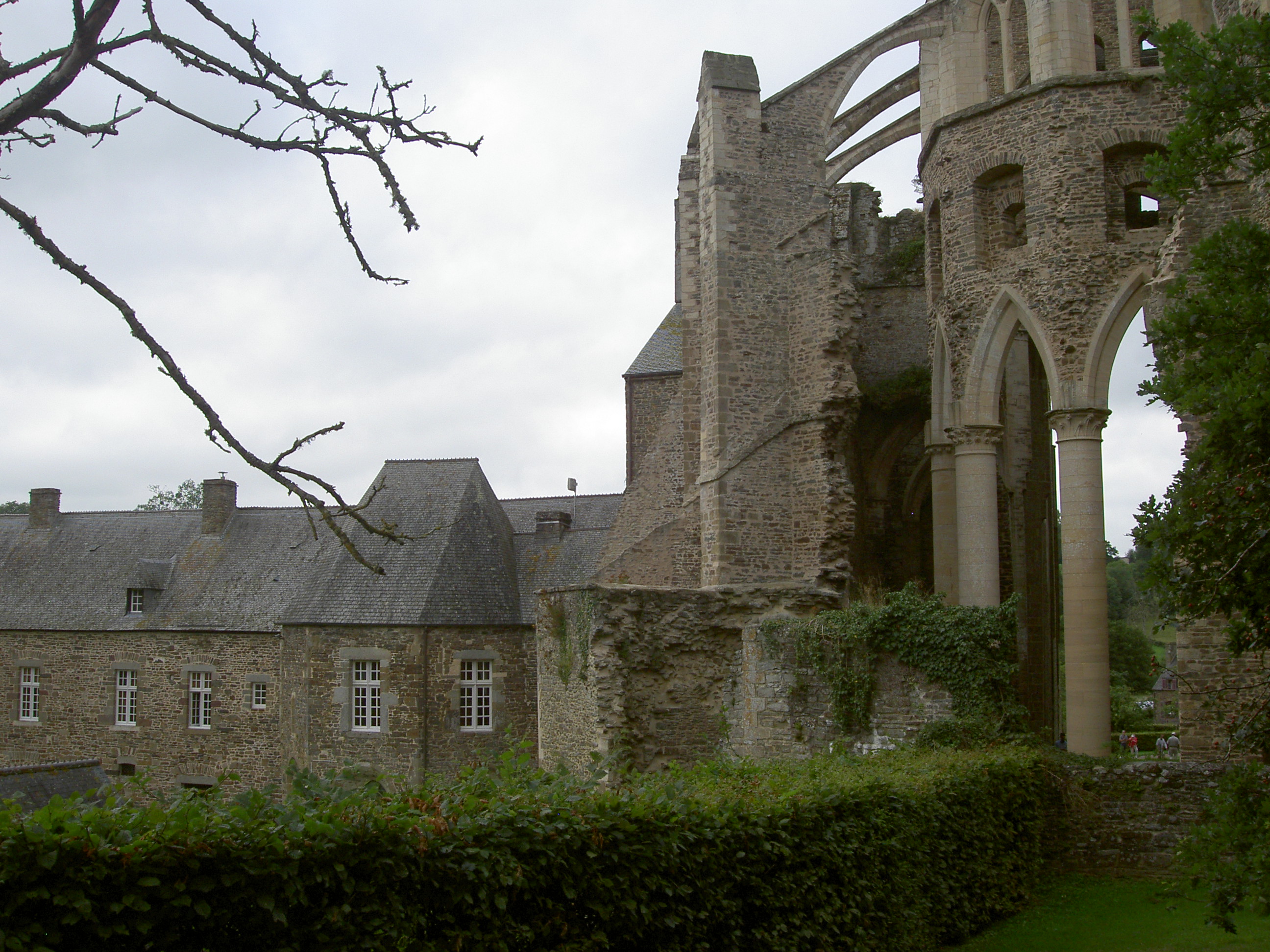
On the way back to the gite, we made a detour to the ruins of an 1145 Monastery, which was quite spectacular. Unfortunately photos never do justice to such places, and it is difficult to capture the magnitude of them.


Now, in England all such ruined monasteries are due to Henry the 8th and the Reformation. But in France, there are any number of reasons. Quite what did for this particular monastery I am not sure—but if I find out, I will let you know in another blog.


Travel Blog August 15 to August 16 2012

Travel Blog August 15 to August 16,   2012

The conference is over, and Rees Hall is all but deserted. Today (Wednesday 15) we took the hovercraft across the Solent to Ryde on the Isle of Wight. We just missed the number 4 bus for Osborne House, so had a coffee in Ryde, which was the best coffee by far that we have had since leaving Dover—-well worth missing the bus for!

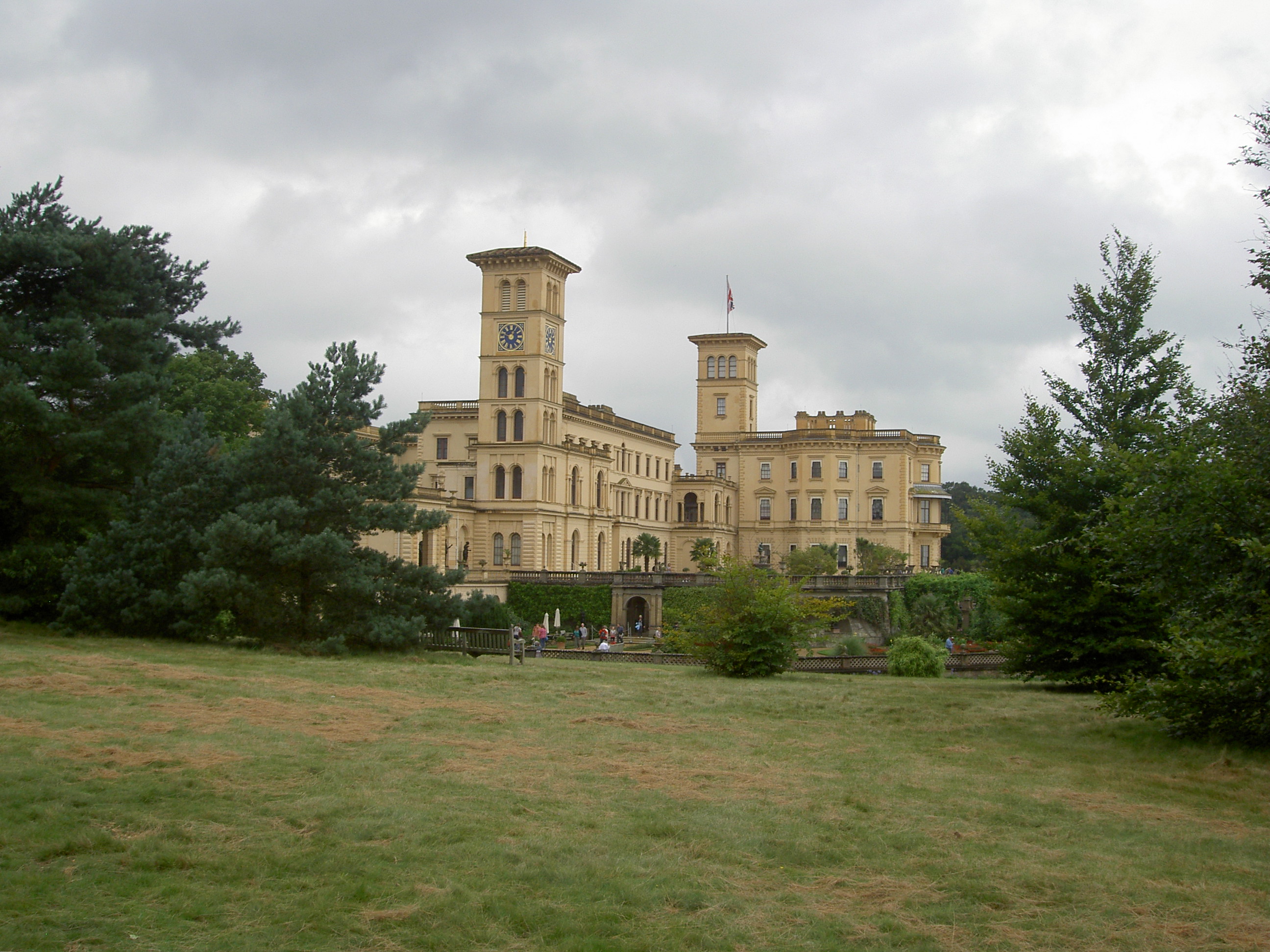
Osborne House is a very Italianate house, largely designed by Prince Albert, and based on villas he had seen on his “grand tour”.

Apparently it was by far the most favourite of all the places that Queen Victoria used, with sweeping grounds spreading down to the sea, where she would dip in the water in the privacy of her “bathing machine”. I thought that tables, sideboards and the like looked cluttered with too many knick-knacks, and assumed that the Trust had put as many items as possible on display. However, an attendant told us that on the contrary, Queen Victoria had much more clutter around her all the time, and the Trust had removed the vast majority!

A walk along the Ryde pier, a pint of local ale, and second-rate fish and chips on the esplanade finished the day before we caught the hovercraft ferry back to Portsmouth.

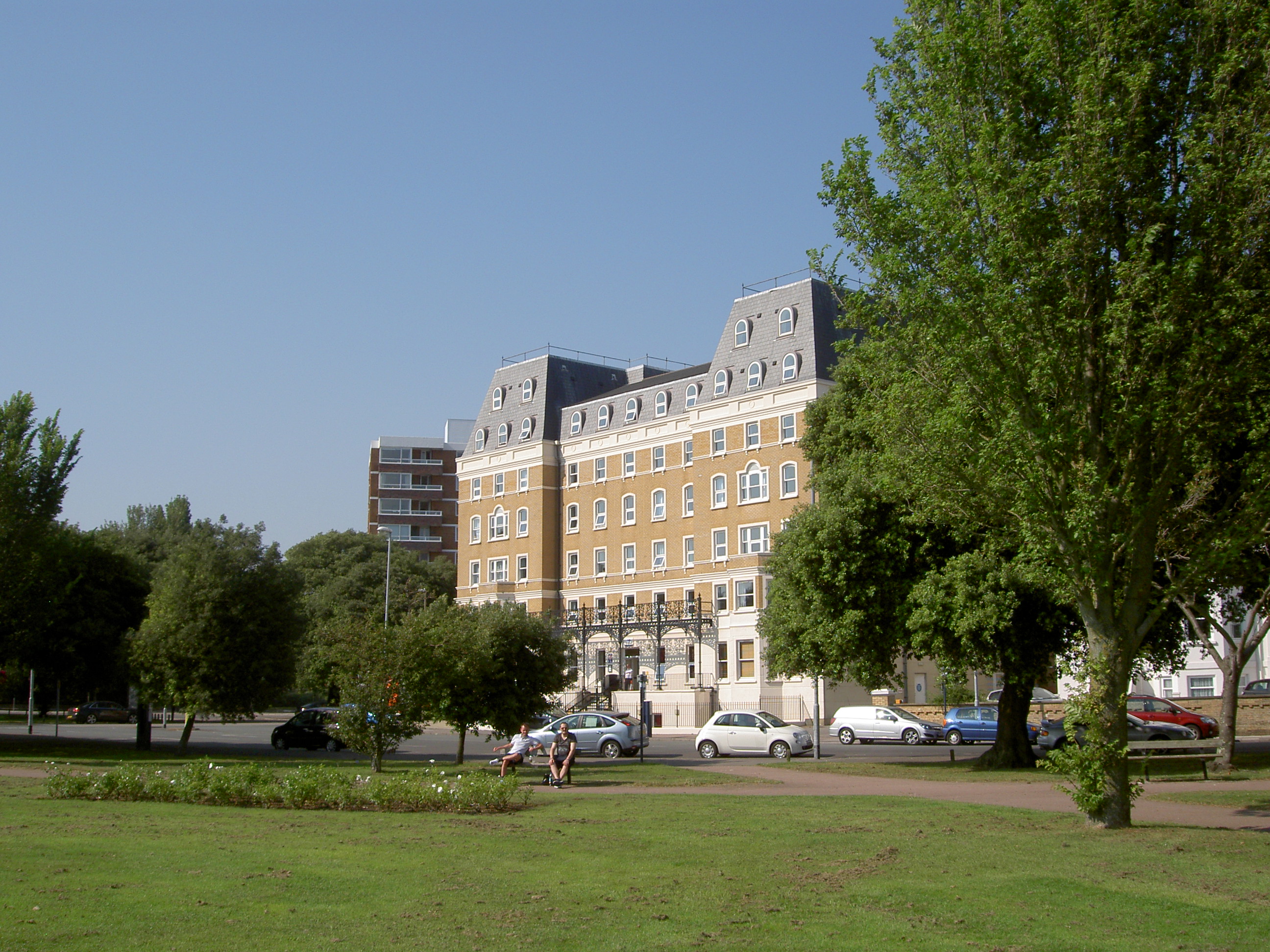
I have just discovered that the Rees Hall was once a first class hotel, and used by Queen Victoria on her way to Osborne House. However, when it was purchased by the University of Portsmouth, they demolished it, and rebuilt it reproducing the original design of the facia, and increasing the number of rooms from the original 100 to 227 for student accommodation.

Rees Hall

Rees Hall

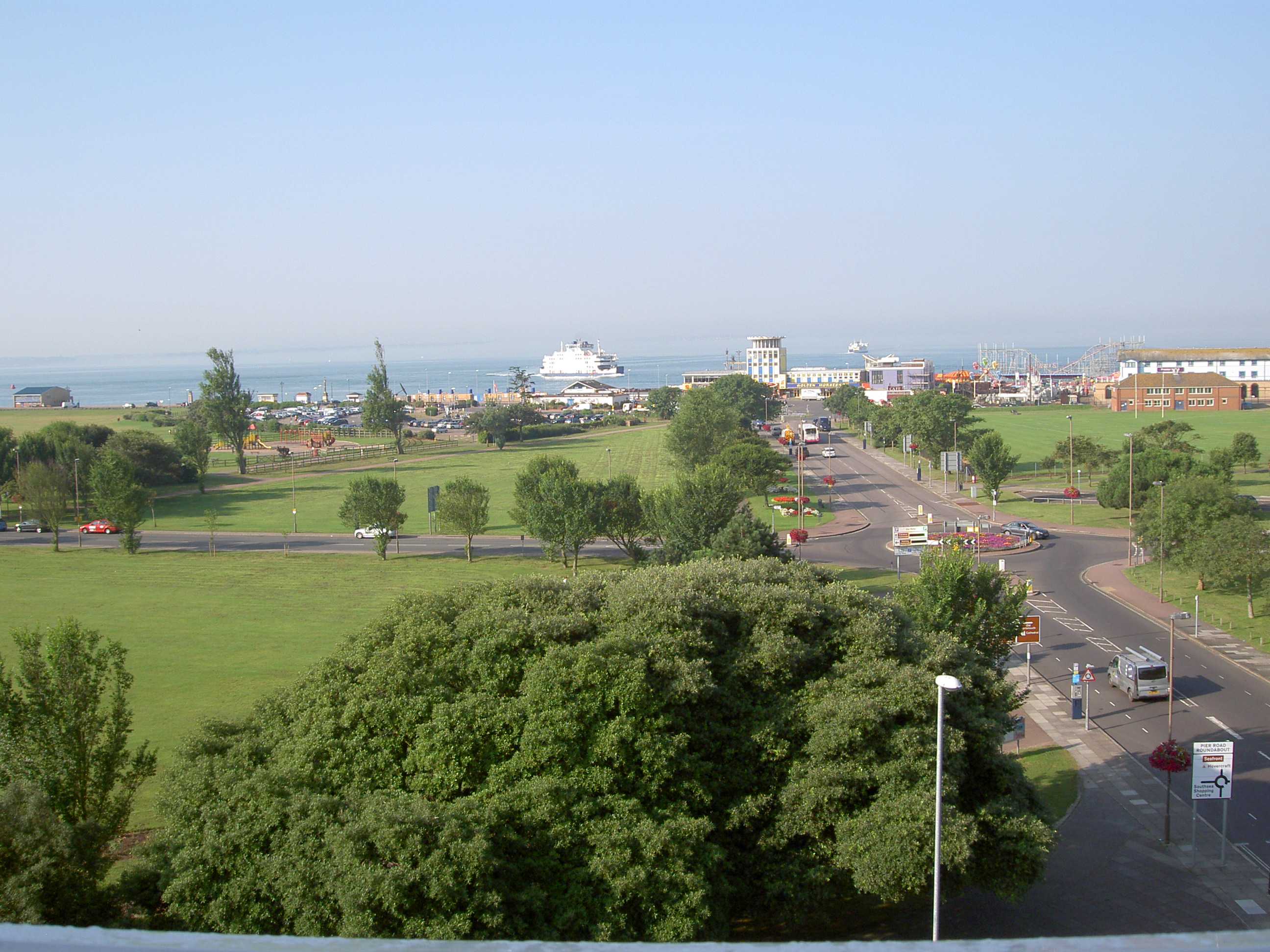
View from bedroom window

There are a few very low intelligent people in the Rees Hall now, who appear to be incapable of living without a flickering television and the most banal of programmes. They are extremely rude and arrogant, and seem to always get their own way, through their thuggishness. Unfortunately the management is on their side, giving no thought to the rights of those who simply want some peace and quiet. They have come in since the Dickensians left, and have lowered the tone of the place considerably. I could not recommend that anyone stay here, other than in the company of intelligent people!

Today I went on a long walk along the esplanade of Southsea. It is very clean, with the sea on one side, and extensive parks on the other. There are park benches at about 10 meter intervals for a kilometre or more—in fact, many more seats than bottoms willing to sit on them today. Many seats are in sheltered positions, but even more are on the sea side, offering people the opportunity to enjoy the howling breeze sweeping in past the Isle of Wight, across the Solent to the mainland. The walk went past ‘Southsea Castle”, built as part of the Napoleonic defences, and which is open to the public, but not, apparently, today.

Ann’s bridesmaid Sue came to visit, and we had a very pleasant walk, through the Catherdral, to the old harbour area, where there was an excellent selection of fresh fish for sale. It was interesting to note that the only customers were of SE Asian origin, even though they are a very, very small minority of the population here. We walked on to the Gunwarf development where we had an excellent lunch at Jamie Oliver’s “Portsmouth Italian” restaurant—without doubt one of the best lunches we have had in this part of the world.

Whilst not depending on tourism to the extent of places such as Margate, the ‘fun fare, candy floss and kiss-me-quick hats’ part of the economy is suffering. It appears that those with money, who would not use the fun-fares anyway, are enjoying visiting castles, museums, restaurants etc, and are living quite nicely, and that part of the economy is going well. For example, the Gunwarf development was a hive of activity, with every café and restaurant doing very nicely. We had to wait for a table, which for a Thursday lunch-time we would not have expected. However, those who would perhaps of gone to the fun-fares and ‘penny’ (now pound!) slot machines, no longer have any money to spare at all, and so that part of the economy is suffering a bit.

Tomorrow we leave England and head across the Channel to France. From here on we shall have our own self-catering accommodation, and will not have to put up with people who insist on their ‘right’ to watch television and thereby interfering with the rights of those who do not! OK, so I am a grumpy old fart!

.

Travel Blog 8. August 9 to August 15, 2012

We arrived in Portsmouth after an uneventful trip, but ended up at the wrong campus! Still, we were put right by a groundsman there, who gave us good direction to Rees Hall. Our room in on the 6th floor, which is pretty well into the roof, but we have fantastic views across the Solent to the Isle of Wight. That is if the fog does not come down. Last night we could barely see the street lights from our window the fog was so thick. But today has been a perfect English summer day—in fact much too good to be stuck indoors listening to lectures on various aspects of Charles Dickens’s “Barnaby Rudge”! Fortunately, the afternoon programme was a bus ride around Portsmouth, visiting various Dickens-related places, including the house where he was born, and the graves of Ellen Ternan and Maria Beadnel—two very significant women in his life.

To unwind before dinner, we went for a stroll across the common to the beach, which was very pleasant. It was interesting to see many family groups with small disposable BBQs in the park. These BBQs are aluminium dishes, about 20cm X 30cm, preloaded with heatbeads and a grill, and used directly on the grass. The result is that the park is dotted with small rectangular scorched patches. Presumably the local council approves of this, as there are a number of BBQ disposal bins scattered around the periphery of the park.

It was also interesting to see that they still run a hovercraft ferry service across the Solent—long after the cross channel services from Ramsgate and Dover gave them up as unviable. When there is no fog, we can see the ferries coming and going to and from France, as well as the hovercraft.

In the evening we went to see a performance of Barnaby Rudge, dramatized by a local playwright, and performed by an amateur company in the King’s Theatre. It was very well done, considering the very complicated nature of the book. The theatre itself was very old-fashioned and impressive, with three very steep balconies towering above the stalls.

The rest of the formal part of the conference was good. There were some excellent presentations, but very little time for discussion or questions—except for the penultimate presentation on the final day. This presentation had the title “The impact of invention on Dickens”, and I think everyone thought that as the presenter was a physicist who had worked on various engineering projects such as radar stations, the talk was to be about invention during the 19th century. It turned out that the presenter is a bit of an iconoclast, and lambasted many very highly regarded Dickens scholars for ‘inventing’ various aspects of Dickens’s life and personality—particularly in relation to his marriage to, life with, and separation from, Catherine. As his views are very different to those of most scholars (in the same way as my views about Dickens’s relationship with Ellen Ternan differ from the great majority of scholars), he prompted a vigorous outburst of heated indignation from many in the audience which was very interesting to see. This was perhaps one of the highlights of the conference! Having had a paper on Ellen Ternan accepted for publication in the ‘Dickensian’, I expect I shall be greeted with a similar outburst in due course! There is no doubt that anyone who sticks their head above the parapet of conventional thinking in Dickensian scholarship, gets it severely shot off!

Enough of the conference itself. There was a wonderful trip to nearby Roman ruins, the Fishbourne Roman palace. This was the largest Roman palace known to have existed in the whole of the European Roman Empire. Built in the very early years of the Roman occupation of England, about 45-50 AD, it was eventually destroyed by fire, and the ruins discovered in 1963 when workmen were digging a trench for the installation of a new water main to service a housing estate that was to be built. Fortunately a millionaire amateur archaeologist living in the area bought the entire site (that part not already built on), and it has now been fully excavated and preserved in a huge hangar-like building. There are a large number of very well preserved mosaic floors, bits of hypocaust etc.  From the palace we went to the Saxon church at the tiny, very quaint village of Bosham for a picnic lunch before moving to the castle on at Porchester on the outskirts of Portsmouth. This has the highest Norman keep in the UK (second only to Rochester), and is a very good state of repair—(considering it is a ruin!), and was quite awe-inspiring to wander through. It has the largest space enclosed by a Roman wall anywhere in the British isles, with enough room for two full sized cricket fields, a small church and a burial ground. Originally right on the edge of deep, navigable water, it is now surrounded by little more than marshland and very shallow sea.

In general, the food, both at the conference and at our accommodation, was of a very high standard, but they were a little stingy with the nibbles at the opening reception, and with the wine at the official banquet. Despite that, and a few minor hiccups which seemed to annoy some of the delegates, overall I think the organisers did a very good job.

As a town, Portsmouth appears to have little to recommend it. It was severely damaged in the war, but the rebuilding appears to be somewhat characterless. Apart, that is, from around the harbour, where recent development has been much more successful that, say Docklands in  Melbourne.

That is enough for this blog, I think. I shall continue with our last few days at Portsmouth in the next instalment.

Travel Blog 7. August 7 to August 9, 2012

Here we are in Dover, with old friends who bear our family name, but to whom we are not related as far as we can tell. Coffee at the National Trust shop over- looking the harbour was very good, but the otherwise fantastic view was rather marred by the torrential rain which rendered the cross-channel ferries somewhat invisible. However, the rain stopped and after a brief shopping stop, we went to Canterbury—me to play golf with Pete, and Ann to spend a fortune on hair dressing and other things—-making it a rather expensive game of golf! The golf was the usual mixture of brilliant, mediocre and downright dreadful shots, but nevertheless still very enjoyable despite the rain coming once again, forcing us to abandon after 12 holes. But the Shepherd Neame  beer in the clubhouse as we waited for Ann to come and pick us up was worth the premature end to the game.

Tuesday found us once more in Sandwich for lunch in the George and Dragon, this time in the company of George and Julie, Bren and Ed. Following lunch we made our way to Deal, renowned in days gone by as a smuggling town. Today it is a sea-side holiday town, very much like Herne Bay with a pebbly beach. However, its pier actually reaches the water, unlike Herne Bay where the once famous pier was destroyed by a violent storm in (I think) the 70’s. There were a number of men fishing, both from the pier and the beach, but no-one appeared to have caught any. Like Herne Bay, the main shopping street is now a pedestrian precinct, and appeared to be in a reasonably thriving condition. Unfortunately the shell-fish stall  near the pier was closed, so I was unable to get a serve of the local cockles, but I did find a very good delicatessen which had an excellent selection of French cheeses and saucisson.

Wednesday, we made the pilgrimage to Rochester. Rochester is a Medway town that we always went through to get to London, but where we never stopped. Dickens was very fond of it, having spent some of the happiest days of his childhood at nearby Chatham. Later in life he was to buy, live, and eventually die in, Gads Hill Place. Many of the shops and businesses in Chatham, have, like Broadstairs, taken the names of Dickens’s characters for their business names. Thus there is Pip’s café, TinyTim’s icecream shop, Sweet Expectations, Copperfield antiques, Tope’s Restaurant, Peggoty’s Parlour and so forth. The main shopping street is now a pedestrian precinct, and a hive of tourist activity.  As tourism has replaced the docks and military garrisons that kept Rochester going in the past, one cannot blame them for using Dickens as a major draw-card. Dickens’s ‘Swiss Chalet’ in which he wrote whilst at Gads Hill, has been relocated into some gardens in the centre of town, and is now the subject of a fund-raising project for its restoration. Also relocated to the gardens is the old horse-powered pump installed at Gad’s Hill by Dickens to draw water from the well.

The Cathedral, said to be one of the most beautiful in England, was packed with visitors who had come especially to see a remarkable collage portrait of the Queen. The local Kent bit of BBC TV had invited people to send in family photos, and thousands of these had been used to create two huge, brilliant portraits of the Queen, one as she looked when she ascended to the throne, and one as she looks now in her diamond Jubilee. From a distance one could not see that it was a collage, but close up every person in each photograph was perfectly recognisable. They had been on display at the Margate Turner centre a few weeks ago, and are travelling around the country, so we were lucky to catch up with them in Rochester.

The ruined castle adjacent to the Cathedral is magnificent, and commands a spectacular view of the River Medway. And everywhere there were beds of brilliant red geraniums, which were Dickens’s favourite flower.

That evening we had a splendid meal in Deal, ending with drinking our ‘digestifs” under the umbrellas on the pavement outside the restaurant on a very balmy evening. A great end to our time in Kent. Thursday morning we packed and headed for Portsmouth.