And so we say goodbye to Margate, and travel a few miles along the northern coast of Kent, that is to say further up the Thames estuary, to Herne Bay, to spend a few days with sister Brenda and her husband Eddie.
Herne Bay, with its pebbly beach and Thames mudflats at low tide could not compete with the sandy beaches of Margate for the family holiday makers and day-trippers. But just now it is more genteelly prosperous than Margate. Its shops are doing better, with very few actually closed up. Mortimer Street is now a pedestrian precinct, and there appears to be more cafés than I remember from previous trips. There are a couple of very good bakeries and cake shops, and I found some fantastic Eccles cakes the likes of which I have never found in Australia!.
Along the seafront, from the Clock tower, past the band stand to the pier, the sunken gardens are bright with flowers and the green grass neatly mowed. In the band stand were several groups of the older generation drinking their morning coffee listening to an elderly gentleman singing ballads from the sixties to the accompaniment of his computerised ‘band’. The clock tower gave the correct time, unlike that at Margate which was only correct twice a day at 1.25, and there were many promenaders, in family groups, enjoying the sunshine. The ‘harbour’ looked good, but is a bit of a disaster, as it is silted up with very fine Thames mud, presenting a serious sinking hazard to anyone who tries to paddle in it. It should never have been built. On the other side of the road, the cafés and the few amusement arcades appear to be well maintained and patronised, quite unlike Margate.
In the evening, we went en famille to The Longreach, a pub large enough for all 14 family members to sit at one table, for dinner. It was good to catch up with them all, even though with such a large group it was impossible to have a meaningful conversation with everyone. But there will be other opportunities for that. Leaving The Longreach, we drove through the heart of Whitstable, in search of The Coach and Horses, which we found, but did not have time to stop at on this occasion—but we shall return. We were very impressed with Whitstable, which we had not really visited before. When I was at school at Faversham 50 years ago, we ‘looked down’ on those boys from Whitstable, as it was regarded as a bit of a ‘dump’. However, now it is probably the best of the towns in this area, having become a very popular place for Londoners to buy a week-ender. Apparently many ‘celebrities’ have bought into Whitstable, and property prices have risen in consequence. We certainly will return in the next day or so, and have a good look round in the day-light.
Next day we went to Canterbury to catch up with another nephew, Pete. He lives in one of the smallest houses in Canterbury, with one room on each of the two floors. To get there we had to negotiate the new one-way system around the West Gate end of Canterbury, which is a bit of a nightmare. Having imposed the new traffic management system, the Council are refusing to re-consider, despite receiving over 5000 letters of complaint from residents and visitors. Apart from the new traffic system, what little of Canterbury we had time to see was just as we remembered. The main street is a pedestrian precinct, and was pretty chock full of visitors, mostly from across the channel.
After a pleasant lunch, we moved on to Broadstairs, by way of Wingham (totally unchanged), as we were to attend an afternoon garden tea party arranged by the Broadstairs branch of the Dickens Fellowship. The event was supposed to be in the garden in front of Dickens House Museum overlooking the harbour, but as the weather was threatening to be unpleasant, it was relocated to an indoor venue. It was attended by about 25 members, and was a pleasant occasion, with their membership being somewhat less than Melbourne in number, but very much similar people!. Their regular monthly meetings appear to be less academic than ours, and it seems that they prefer to make, and to wear, period costume, rather than discuss the finer literary points of Dickens’s writing.
After the tea, we drove to the harbour area of Broadstairs, and could not resist Morrelli’s coffee bar, which seemed unchanged from 40 years ago. It still has a jukebox, and many of the patrons were still eating the most enormous ice cream sundaes—just like in the old days.
It is amazing how Broadstairs has claimed Charles Dickens as their own, considering he only went there for a few family summer holidays. But everywhere there are cafés, pubs, shops, streets and schools named after Charles Dickens or characters from his books. We were too late for this year’s Dickens Festival, but apparently it was a great success, as usual. Walking back to the car by a different route, we passed one of the many second-hand bookshops, and of course could not pass without having a look. It was worth it, as I found a volume from the same edition our old family set of Dickens books that was missing from our collection—so now only four more to find!
Returning to Herne Bay, we had to make a detour to have a drink at the Crown Hotel, Sarre, famously known as The Cherry Brandy House. Again, it was just as we remembered—but a couple of locals in the bar, and even the barman, could only be described as ‘miserable old sods’. Once again Dickens had been called in to help bar sales, as his name headed the list of famous people who had been there.
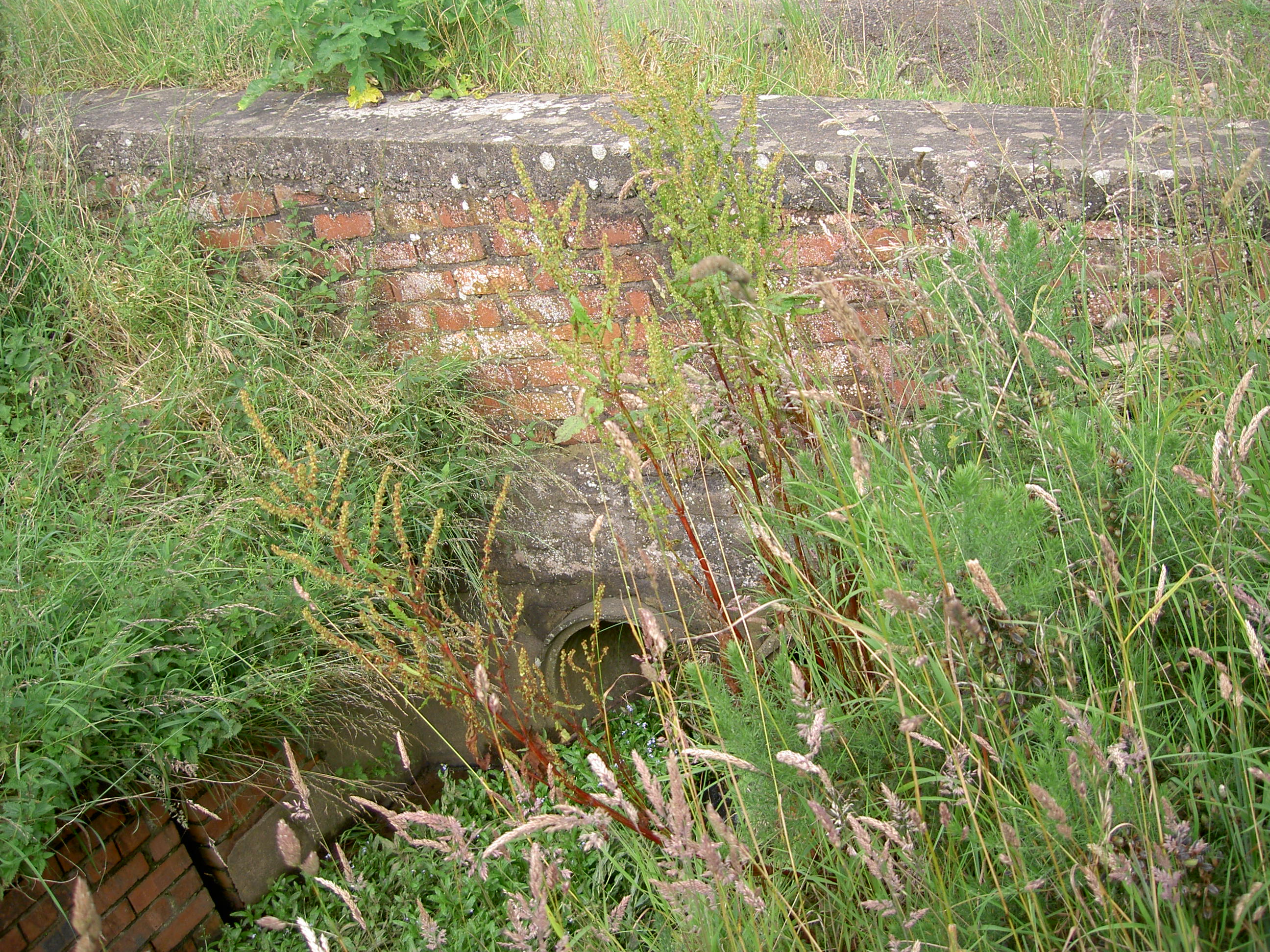
The following day (Thursday) we went across country to Hastings to catch up with a cousin. Lunch in a pub, which had more ‘collectable’ junk than usable space, was followed by a sentimental trip to Normans Bay, reputedly the beach where William the Conqueror had landed in 1066. The place was largely unchanged, but with more and bigger “statics” (as the Brits call their on-site caravans); and the old house which was nearly derelict, and in which my ancient aunts lived in squalor, was being very tastefully restored to its 1930s glory. Also, what I recalled as a rather scungy tidal creek flowing through a large bore pipe under the pebbly beach to the sea, was being reconstructed as part of an experiment to develop a tidal power generator.
On the way home we stopped in Hastings for tea, and found it to be a very lively place. Around the fishing ‘harbour’ (there is not really one at all, as all the boats are simply hauled up onto the beach), there are interesting buildings used for drying nets and drying fish. These are now being replicated as flats and holiday apartments. The cafés were busy, with many people having tea, or dining at street-side tables, and from 7.00pm, there was a ‘trader’s street party’ with swinging bands in one of the main thoroughfares. All in all, Hastings could be described as ‘thriving’.
On Friday, we made the pilgrimage to the old houses at Bushey Fields. Both our old house at number 64, and the new one we built in 1955 at number 66 had been extended by more recent owners. Our old farm is now partly a plant nursery and garden centre, and a ‘farm shop’. Otherwise, the lane is unchanged. Then on to Hick Forstall and Daffodil Farm. Although now very run down, I could clearly see that my recent word-sketch of Daffodil Farm is in fact very accurate. Following this little trip, we went back to Whitstable for the long awaited pint in The Coach and Horses. We met, and had a good chat with the co-licensee, and met a few of the locals, including a previous licensee, who were interested in our family relationship with the pub. We then went around the harbour area, which unlike Hastings, is very much a deep-water harbour, and the centre of the local oyster and shell-fish industry.
The following day we returned to The Coach and Horses, and met the other co-licensee. He had prepared a copy of a history of the pub, which was very interesting to us. After a lunch in the pub (not bad pub food) we went to Faversham, to find the old school. Needless to say, I recognised the roads immediately, but found my route blocked by the inevitable one-way system. Nevertheless, we found our way to a car park (pay and display—probably our greatest expense beyond petrol) and walked through an alley way to the old market square. There was a bustling market under and around the mediaeval guildhall, and I left Ann at a street-side café table whilst I went on a memory-lane walk to school. The old building is still there, but now used as offices, and a new glass and concrete monstrosity the other side of the church is the new co-educational school. The part of the brewery that was opposite the school is now a huge Tesco and a conglomeration of luxury apartments, but still very recognisable.
A walk to the Oare Creek, and it was time to return to Herne Bay to attend a nephew’s 21st birthday.
And there we leave Herne Bay, and head for our next stop, Dover.
 Slingsby's Miscellany