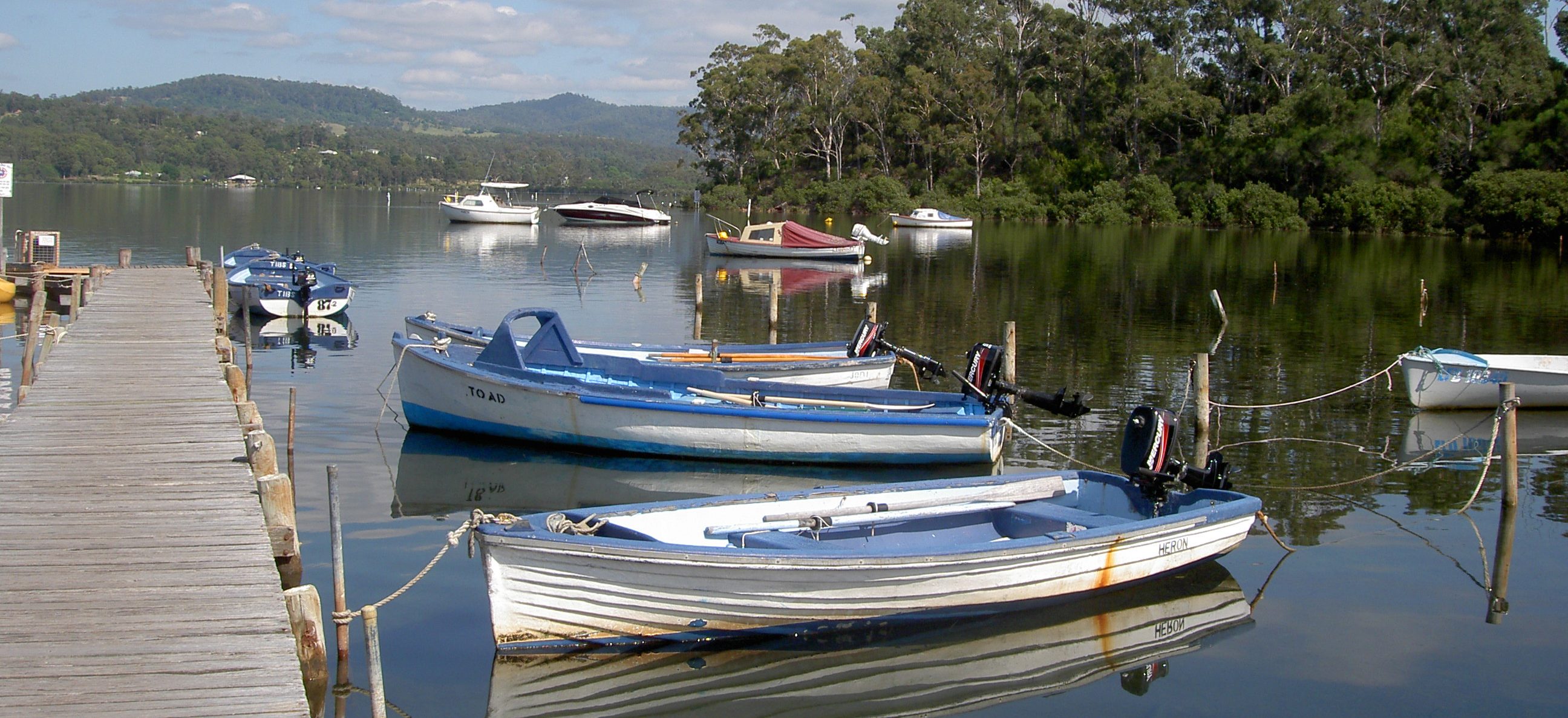
Cobram is a fair resting-place, in right of its nearness to the river, and the little paddle boat that comes and goes upon it: which make up a pleasant and refreshing scene, after the dusty roads. But, unless you would like to dwell on an enormous plain, with jagged rows of irregular gumtrees on it, that look in the distance like so many combs with broken teeth: and unless you would like to pass your life without the possibility of going up-hill, or going up anything but stairs: you would hardly approve of Cobram as a place of residence. (Borrowed from Charles Dickens’s description of Chalons-sur-Saône in Pictures from Italy).
We are once again away for a few days with our ‘camper group’ of friends, staying at the RACV resort at Cobram, a 30 minute walk from the centre of the town. The resort is splendid enough as you arrive at the reception office. There is an impressive irregular-shaped outdoor swimming pool with various water features to amuse the bathers, surrounded by mature palm trees and other vegetation. 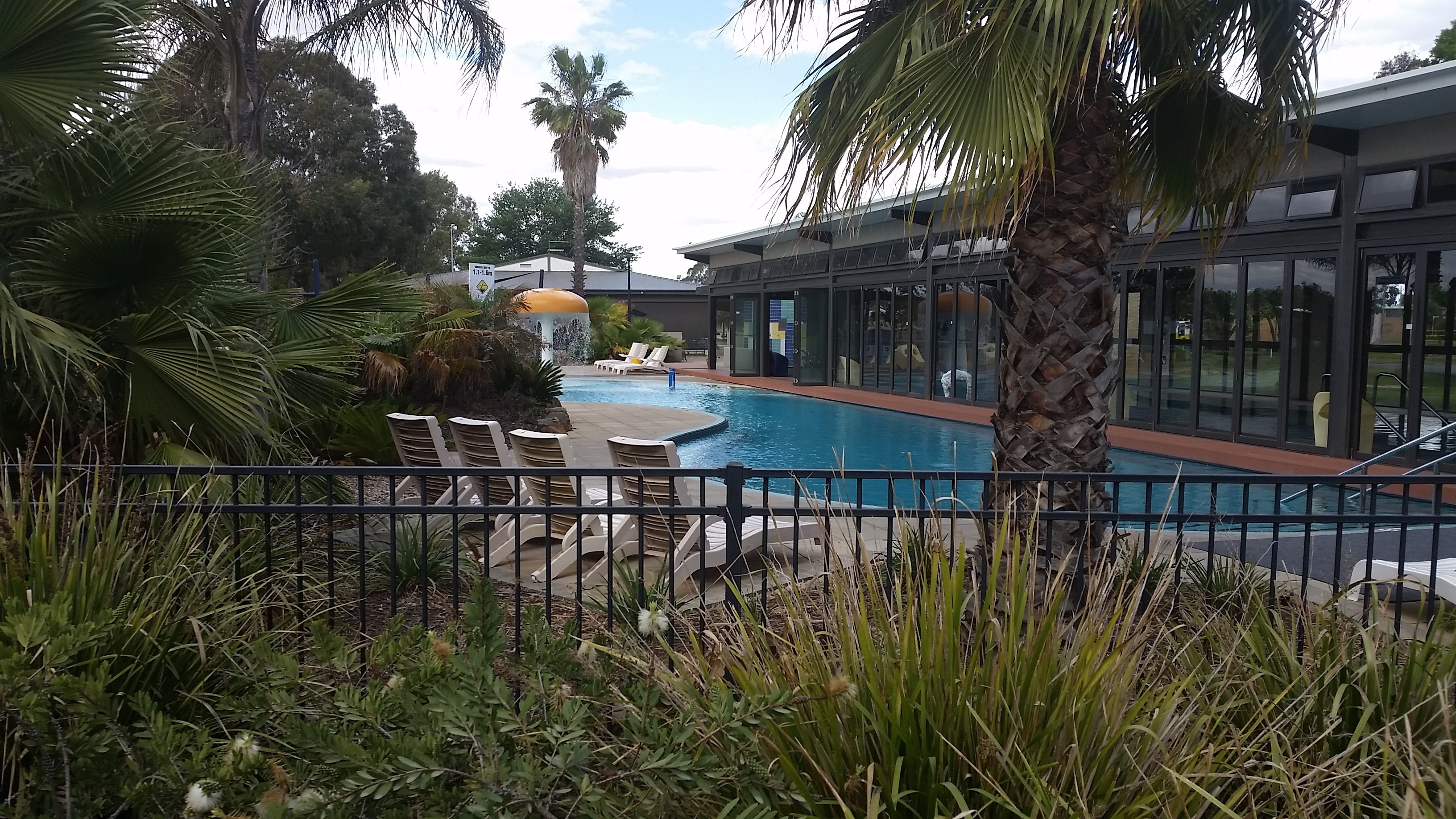 Adjacent to the out-door pool is a large indoor pool and spa, a well-equipped gym and a games room. There is a café which makes very drinkable coffee. As you progress a little into the resort, the cabins and individual camping sites nestle amongst mature trees and shrubs, and are very pleasant to behold. But as you move further in toward the boondocks where the cabin allocated to us is located, the vegetation disappears and the newer cabins and camp sites are plonked on very bare red sandstone gravel, with here and there a sickly sapling and a few isolated tufts of grass. It will be many years, if ever, before any of this area bears lush grass lawns and trees large enough to be capable of providing any shade.
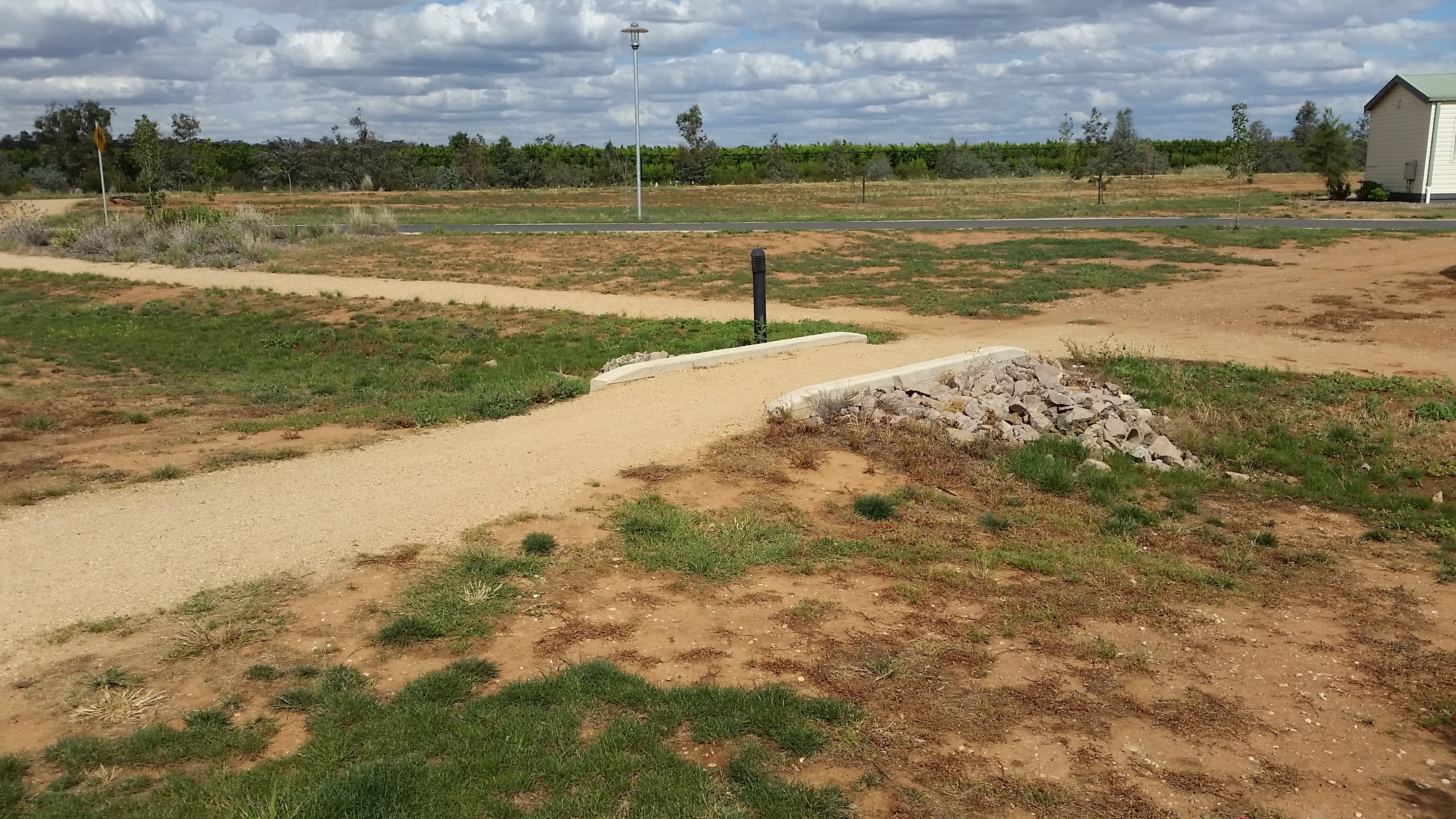
My feeling about this resort is that it is the ‘also ran’ in the RACV stable of resorts. Having said that, the cabin itself is quite new, spotlessly clean and very well appointed; there is even a proper wire balloon whisk in one of the kitchen drawers! All the staff we met were very pleasant and very helpful.
Cobram itself is a fairly typical small country town. It has a population of the order of 6000, and has all the amenities usually found in such places. These include four bakeries, three pubs, numerous cafes, two supermarkets, a couple of pharmacies, and so on.
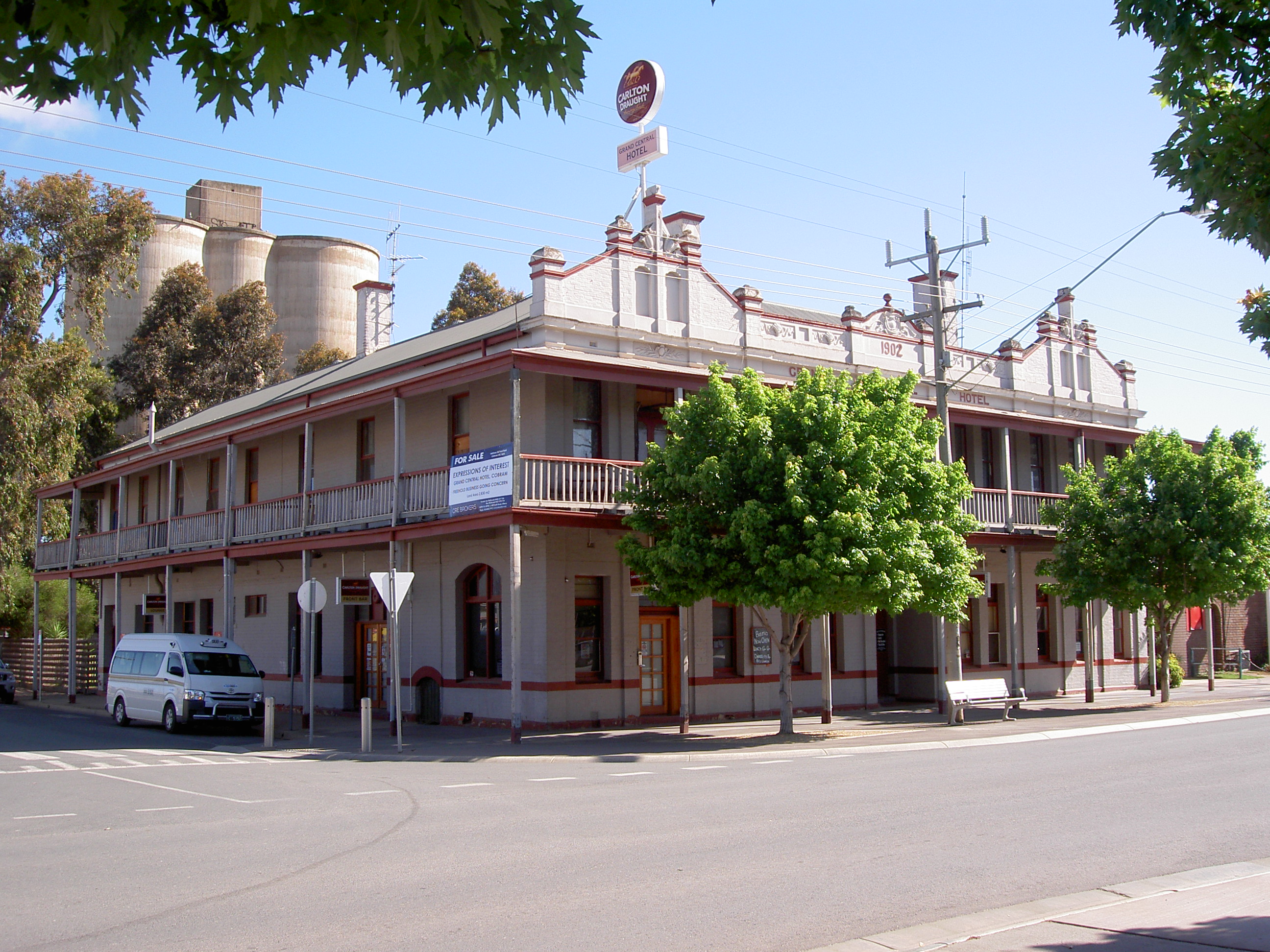
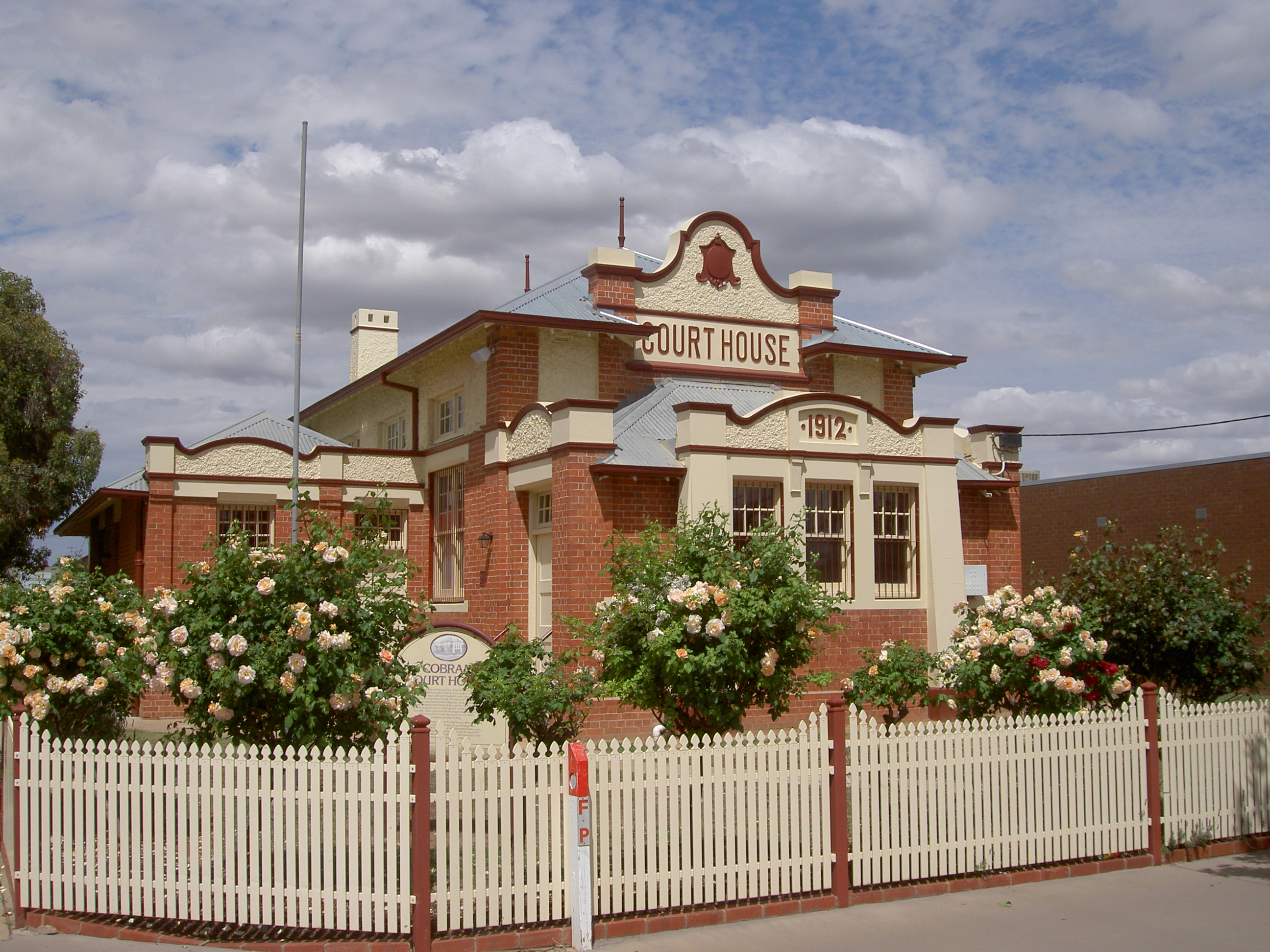
There is a large sports complex providing facilities for both indoor and outdoor sports, a modern public library and a couple of churches. The original town plan was drawn up in 1888, with the first pub, The Royal Victoria, being built in that year. Also in that year the first policeman was appointed, the first doctor moved to the area, and the Cobram Football Club played its first match. A second pub was built in 1892, the State School in 1893, the third pub in 1902, and the Anglican Church was built in 1906, which I guess indicates the priorities of the early settlers! The Court House, a splendid red-brick building, constructed in 1913, was severely damaged by a fire, deemed “suspicious”, in 2016. It was subsequently restored and re-opened for business in 2017.
Cobram built a 9-hole golf course in 1925, but three years later it combined with Barooga on the NSW side of the Murray River and built a new course there. I suspect this had more to do with the gaming laws in NSW than it had to do with anything else! That course is now recognised as one of the best courses along the Murray. It has a very nice club house, which, we understand serves very good food. We booked the ‘courtesy bus’ to take us there for dinner, but forgot to book a table in the restaurant—-which turned out to be fully booked. However, the ‘courtesy bus’ driver was sufficiently courteous to take us back to Cobram in time to secure a table in one of the old pubs there. So be warned—if you wish to eat at the Cobram-Barooga Golf Club, book a table as well as the bus!
There are a couple of huge, redundant silos in the middle of the town, with some vestiges of the original rail track that served the town.
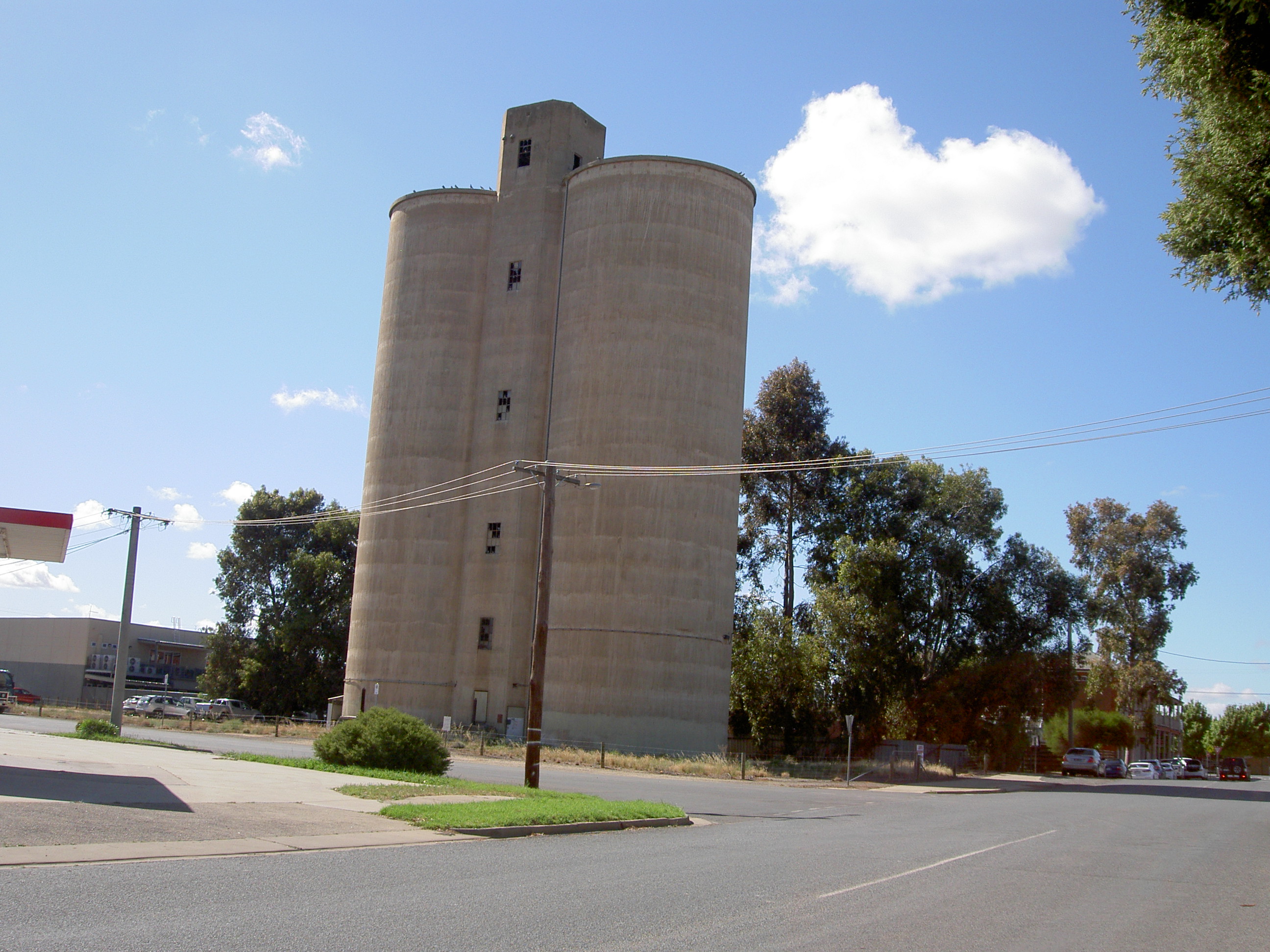
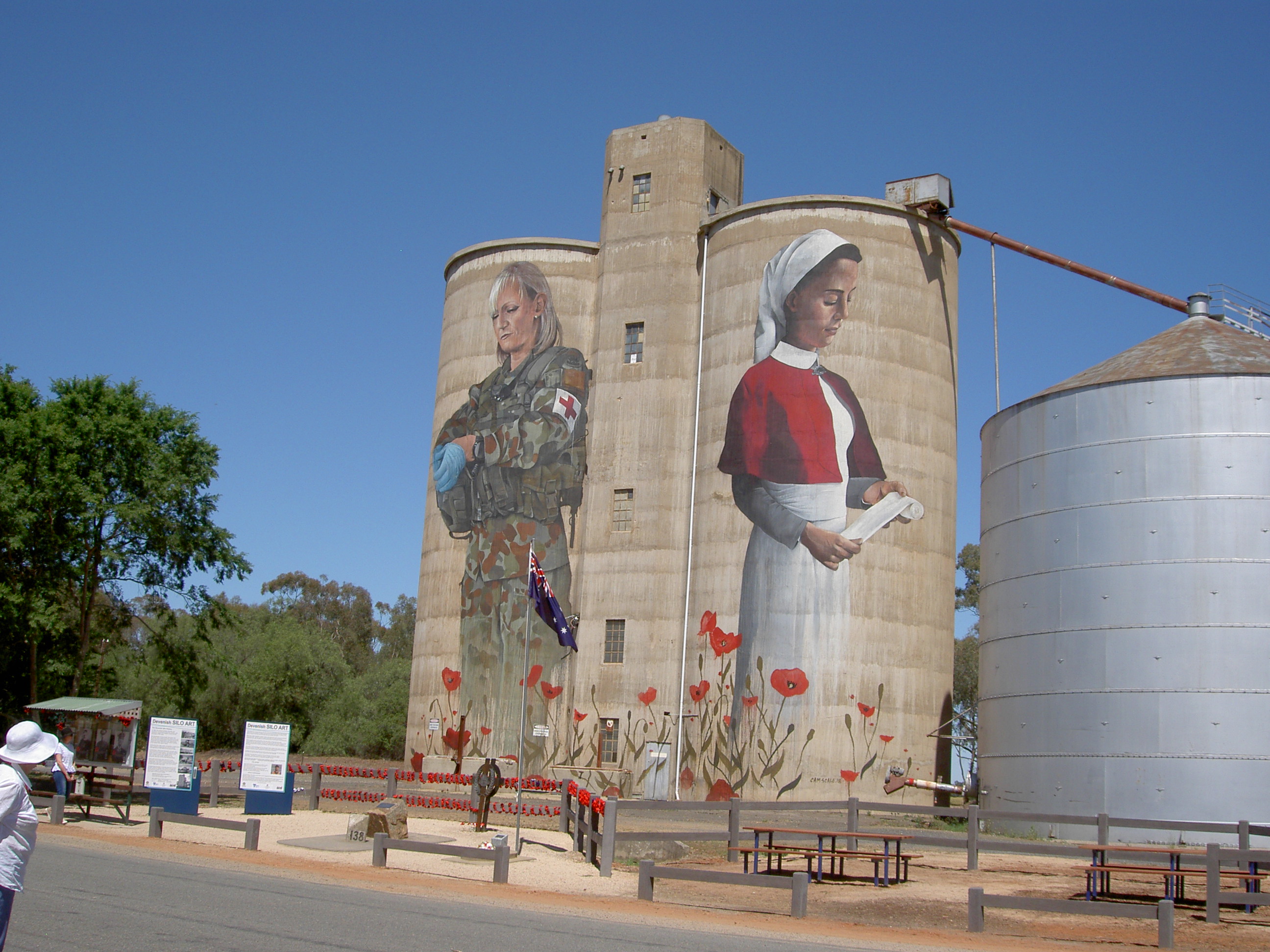
There no longer is a rail service, but one can catch the V-Line bus at the original train station. I suppose it is possible that one day the silos might join the other silos in the area and become part of the Silo Art Trail.
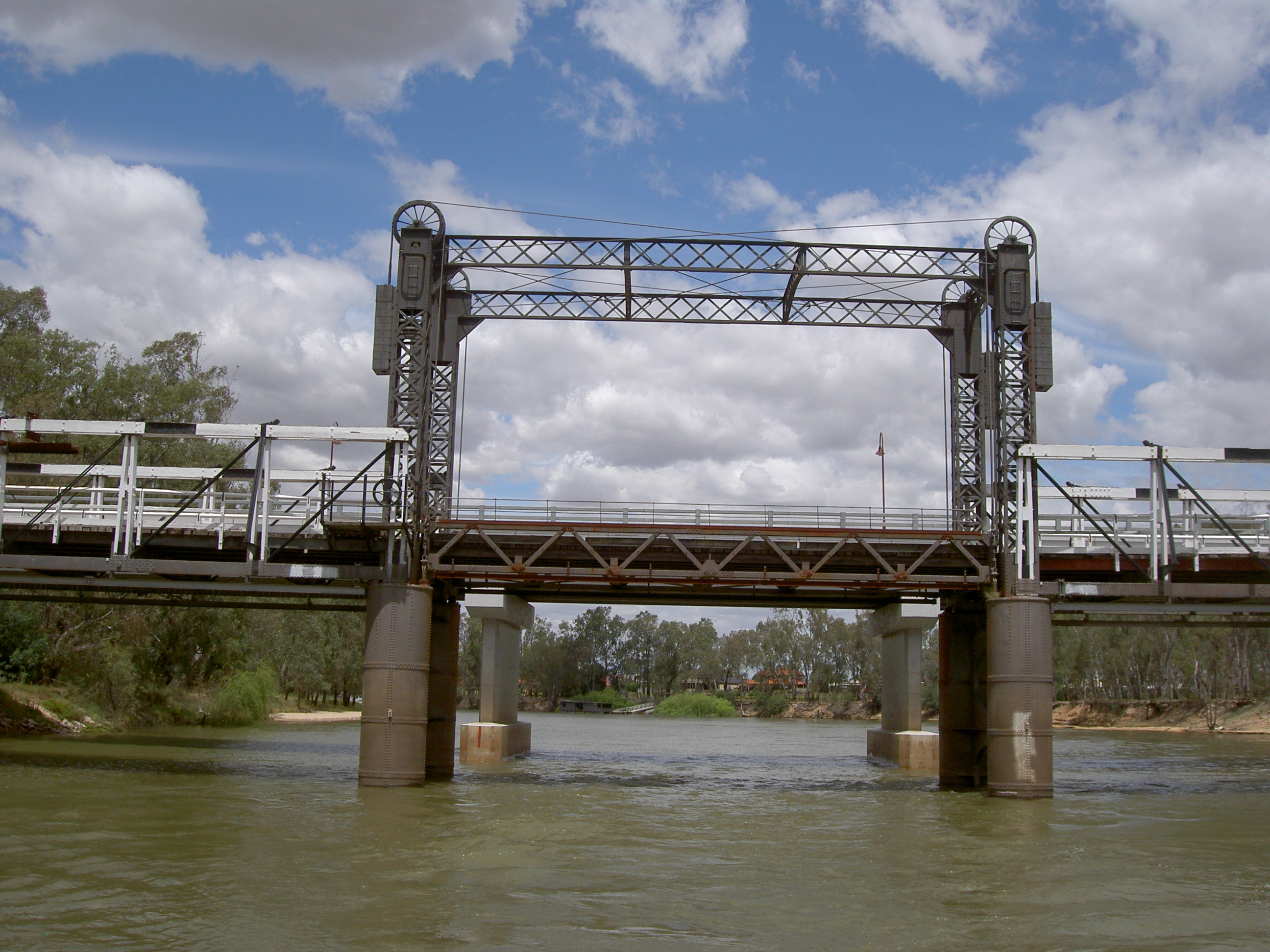
Crossing the river was difficult in the early days. In summer the river was shallow enough to drive the Cobb and Co coaches across. As the water level rose after rain, one could cross by means of the cable-operated punt. Then, in 1902, a De Burgh Truss bridge was built, with a central span that could be raised by hand, to permit larger paddle steamers to pass underneath. This continued in use until the new concrete bridge was completed in 2006.
Driving toward Barooga from Cobram, just before you reach the bridge, you can drive off to the left and park at Thompson’s Beach. This has the distinction of being ‘the largest inland beach in Australia”. It is a couple of hundred meters long, and about 30 meters wide at it widest, and is a very popular bathing spot.
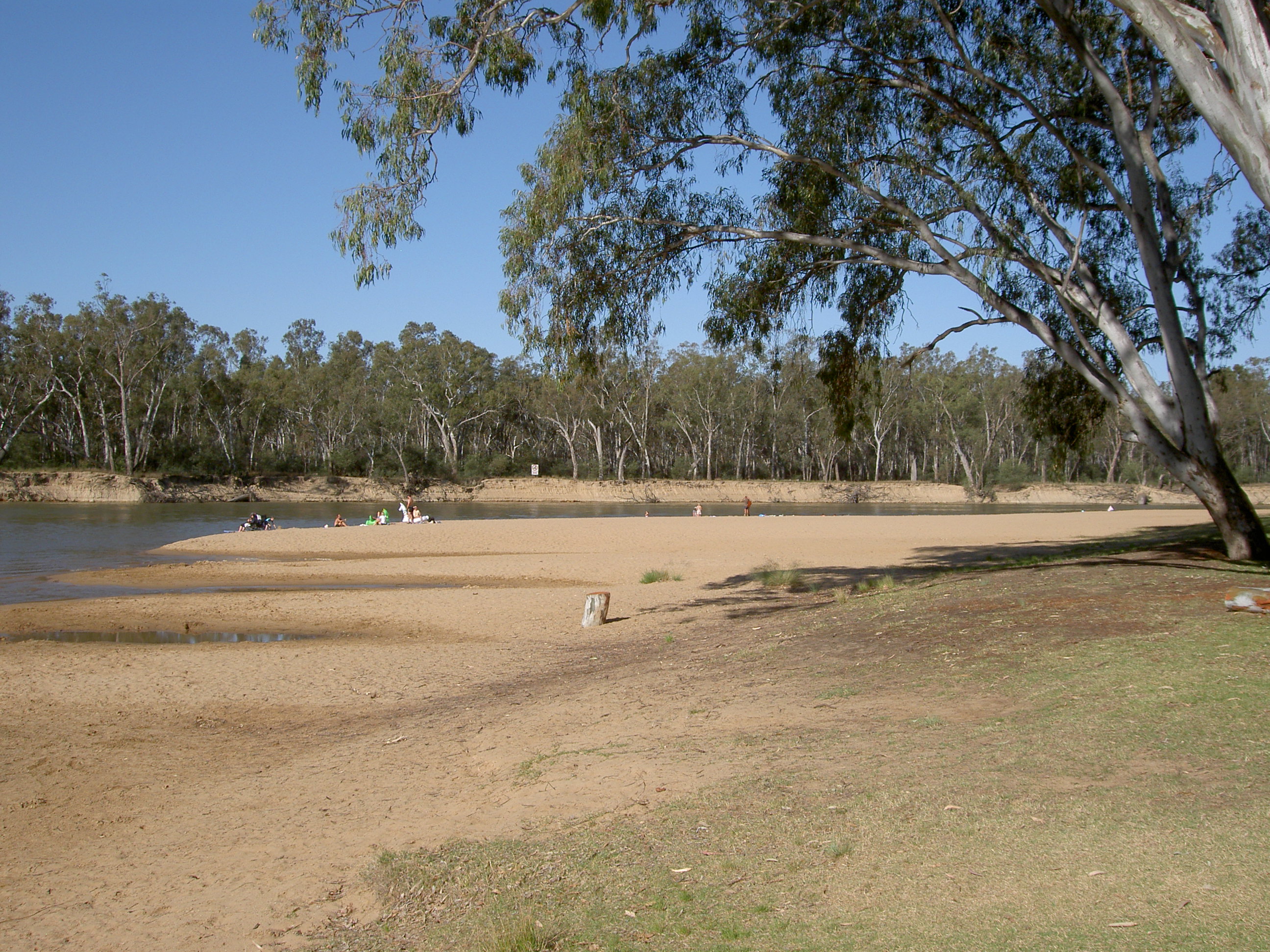
There is a beach-side café, serving light meals, coffee etc; and it is from this beach that you can board The Cobba paddle boat. It costs about $20 for an hour and a half trip up and down stream, during which time you will probably spot some koalas huddled in the trees of the Quinn’s Island nature sanctuary. Some passengers on the boat claimed to have spotted eight koalas, I saw only four. There is a bar on-board The Cobba; maybe some of the passengers had had a bit more wine than I did! Or maybe they saw them whilst I was in the bar. But I did see a turtle sunbathing on a log!
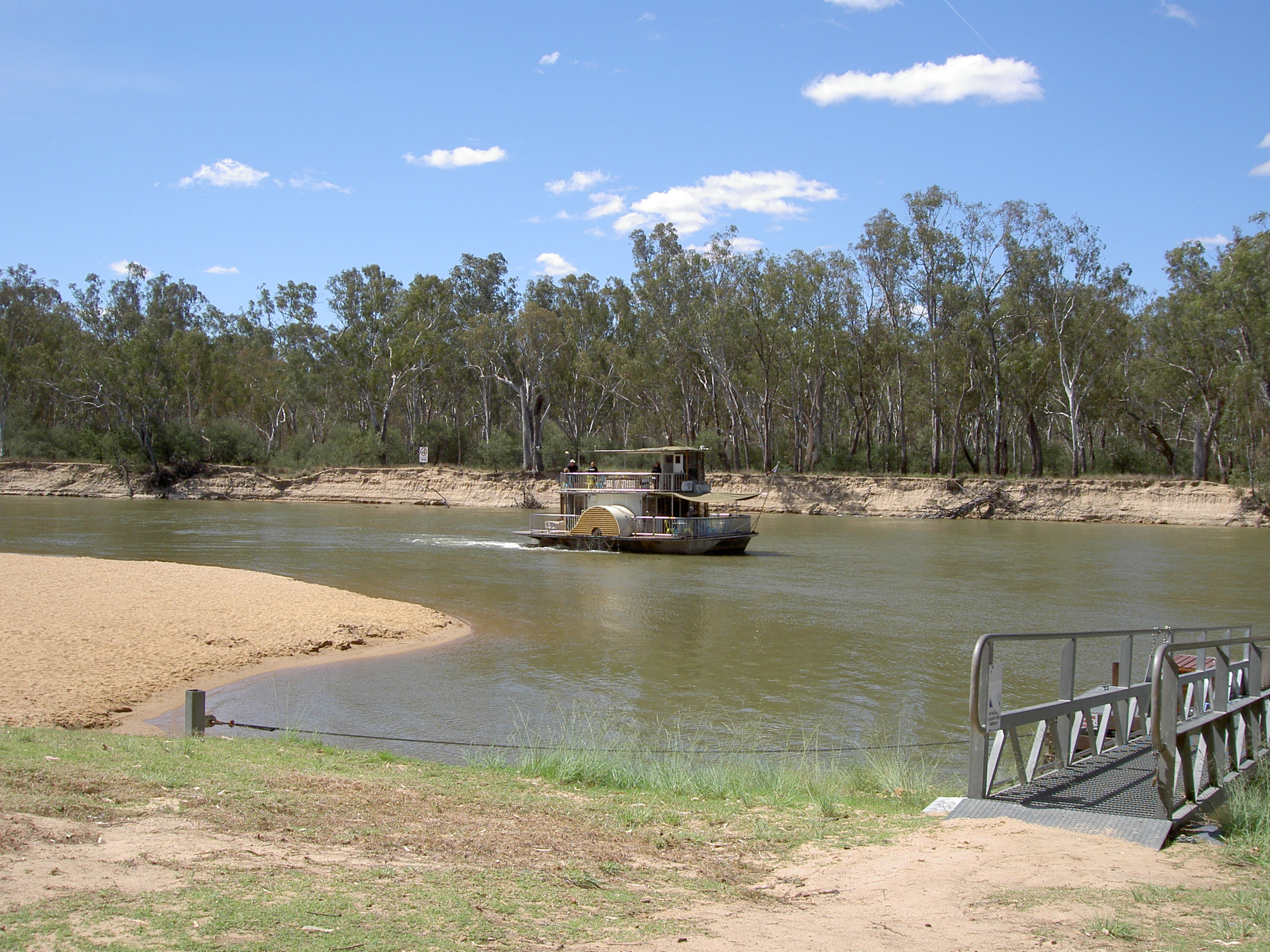
Quinn’s Island is formed by a break-away anabranch, Scott’s Creek, cutting a direct route across one of the large bends in the river. There is a bridge across the creek and a very well graded walking path around the perimeter of the island. For the more adventurous, there are some lovely free-camping sites along the NSW bank of the river.
In 1914, an electricity generator was built by the local council; its first connection was to provide electric street lighting in the middle of the town. The original power station was damaged by fire in 1924, and the SEC took over the generator and continued to provide the power locally. In 1935 the town was connected to the national grid, and in 1994 the old buildings were demolished, and the site turned into a very useful car park, not unsurprisingly named the Power House Car Park !
Cobram is a major centre of agricultural business. Murray Goulburn Cooperative was started here, and today milk processing, orange juice production, fruit growing and an abattoir are the main employers—though we saw very little of the industrial activities apart from a huge peach orchard adjacent to the RACV resort. All in all, our trip was a pleasant stay in a very clean and tidy town; Cobram has been the winner of the “Tidy Town” competition on more than one occasion. The shops seem prosperous; some recently retired new residents we spoke with, who had relocated from Geelong, were very happy with their decision to move there; and the fact that there are at least three jewellery shops in such a small town would indicate a reasonable amount of disposable wealth! There are quite large areas of new housing, and the gardens of both the new and the old were resplendent with all colours of roses, which seem to do particularly well in this part of the State.
We stayed at Cobram for just 4 nights, which was just sufficient to take in most of what is on offer. One could visit wineries, olive farms and cactus gardens to name just a few “touristy things”, or one could play golf on a course which is far better than my golf is. We chose to do none of those things, but just enjoyed ourselves doing nothing much at all!
 Slingsby's Miscellany
Hi Brian I love your Dickensian description of Cobram! Love to Anne and have a lovely camping trip. YIF nita
>