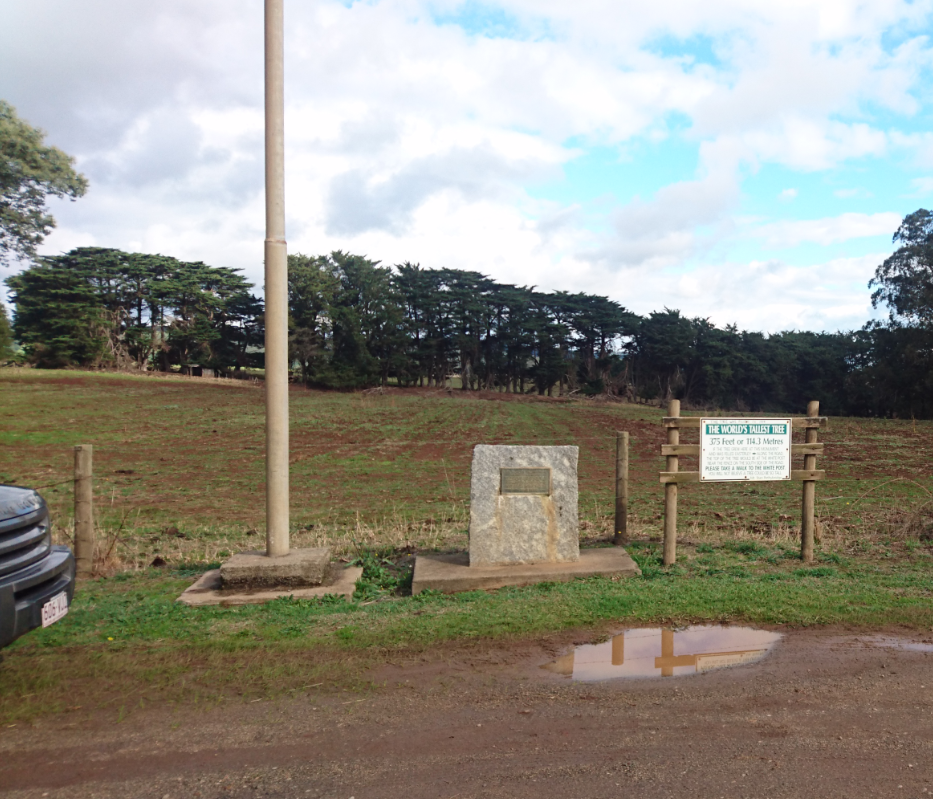
Our next ‘day out’ as part of our Yarragon Experience was to drive through the Strzelecki Hills, to the south of Yarragon. The ‘Old Leongatha Road’ that we started on (after our customary coffee in Yarragon) took us through pastures across the valley floor, before climbing quite steeply into the Strzelecki ranges. We then turned on to the Allambee-Childers Road, which seemed to follow the contour of the hills, becoming very winding, with occasional glimpses across the valley toward Mt Baw Baw. This part of the drive was through the Childers Plantations of eucalypts destined for the logging industry in due course. After leaving the plantations, we were driving through what was very probably potato crops until we reached Childers—a small domain comprising half a dozen scattered dwellings and farm buildings. Apart from the plantation areas, and the very occasional gully containing some vestiges of the original vegetation, it was hard to imagine what the area might have looked like to the original settlers. It was very interesting, and somewhat sad, to read that one tree felled in the 1880s, now known as the Cornthwaite Tree, measured 114 metres tall, and still holds the record of being the tallest flowering plant on the planet. Much is now made of The Ada Tree (near Powelltown) which is 75 metres tall and estimated to be 300 years old. If one uses simple arithmetic, assuming growth to have been linear over the years, the Cornthwaite Tree could well have been over 400 years old when it was felled in the 1880s; and already the size that the Ada Tree is now when Captain Cook discovered Australia in 1770. Quite likely, the Cornthwaite Tree was a sapling when Shakespeare was writing his plays! It had survived centuries of drought and fires, only to be hewn down by a logger’s axe, and the spot it stood upon turned into a field for growing potatoes, which plant had not even been introduced into England whilst the tree was yet a sapling in 1584! All that remains now is a small stone monument holding a commemorative plaque, and an information board at the roadside adjacent to a potato field.
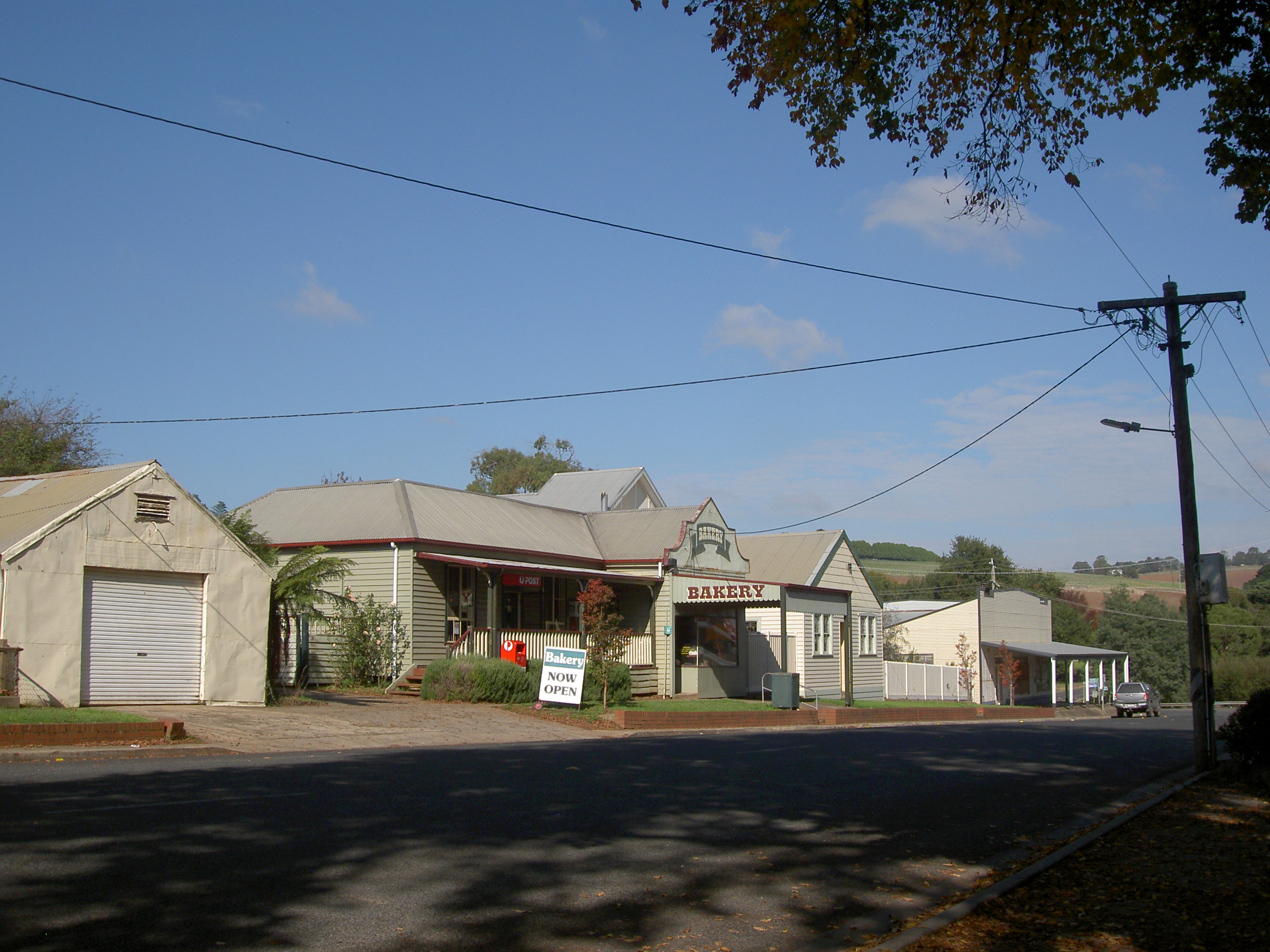
The area was first settled in the 1870s, on the old stock route from Lang Lang to the south of the hills, to Moe on the north side. However, most of the traffic was from Moe, resulting in the track from the Lang Lang direction to Thorpdale soon becoming overgrown and unpassable. Land selection began in 1873, and as more settlers arrived, a post office was opened in 1879, known then as Narracan West. It was renamed Thorpdale in 1884 and continued in operation until being closed in 1968. The present town of Thorpdale, some 2 kilometres north of the old town, was founded in 1888 following the establishment of a spur railway line from Moe. A new Thorpdale post office opened in the new town in 1888 near the railway station, but the line was eventually closed, like most others in this part of the state, in 1958. At its height, Thorpdale was the business centre for all the farming activity that surrounded it. However, as road transport became the norm, many families, even those of the farmers, chose to move to the nearby towns of Trafalgar, Yarragon or Moe, and the town began to shrink. The local population is now about 470. There is a pub, but that seems to be open only on certain days of the week and was closed when we were there. However, there is a post office/general store/bakery/café, that makes very good coffee and cakes! Where the original railway station stood is now the local bowls club, and close by that is a well-developed Pioneer Park, with information boards, and a plaque for each of the pioneering families which opened up the area.
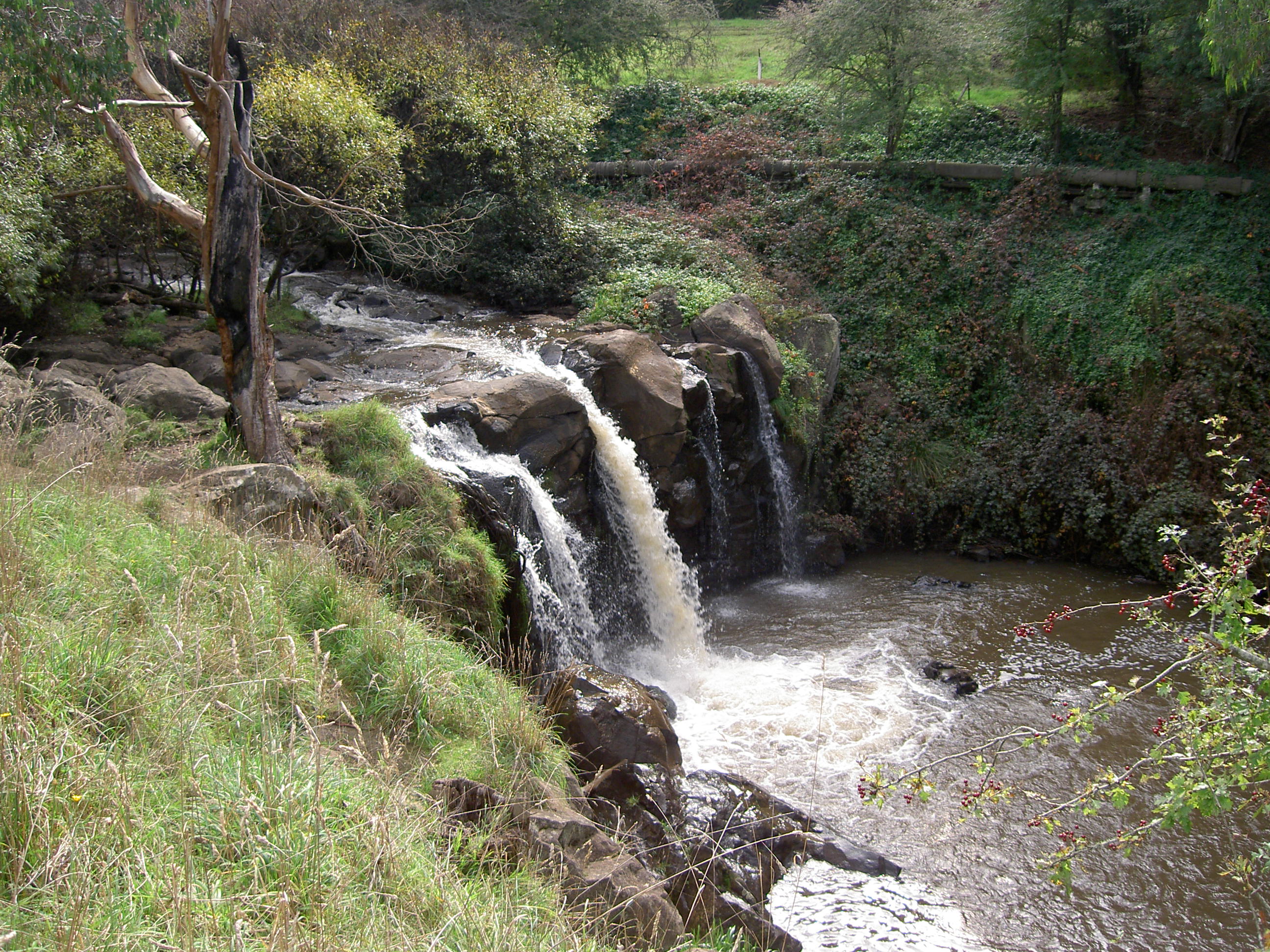
Nearby, are the pretty Narracan Falls, a long-time favourite picnic area for local people.
From the falls, we wended our way back to the Highway, stopping at the roadside Potato Shed for some provisions on our way back to Yarragon. And so ended our trip onto the slopes of the Strzelecki ranges.
Our next ‘outing’ took us to Healesville to have a birthday lunch with our family, two of whom turned another year older whilst we were away. The firsts part of the journey was essentially a return to Neerim South, but then veering to the north rather than to the south. This route took us to the small township of Powelltown , in the Yarra Ranges Shire. The area was first settled in 1901 when a Mr Blake founded a timber yard and sawmill to provide the timber to fill government contracts. The mill was later bought by the Victorian Powell Wood Processing Company, and the township which had grown up around it was renamed Powelltown. Unlike many other timber towns such as Noojee, no railway was built to service Powelltown, so a simple tramway was constructed to take the timber to the rail-heads at Yarra Junction and Warburton. The tramway remained in service until 1945, and today, many of the old timber trails have been opened up as hiking routes. The Powelltown Pub is well worth a visit; it has an extensive multi-level veranda out the back, and at least one of the locals will make you very welcome!
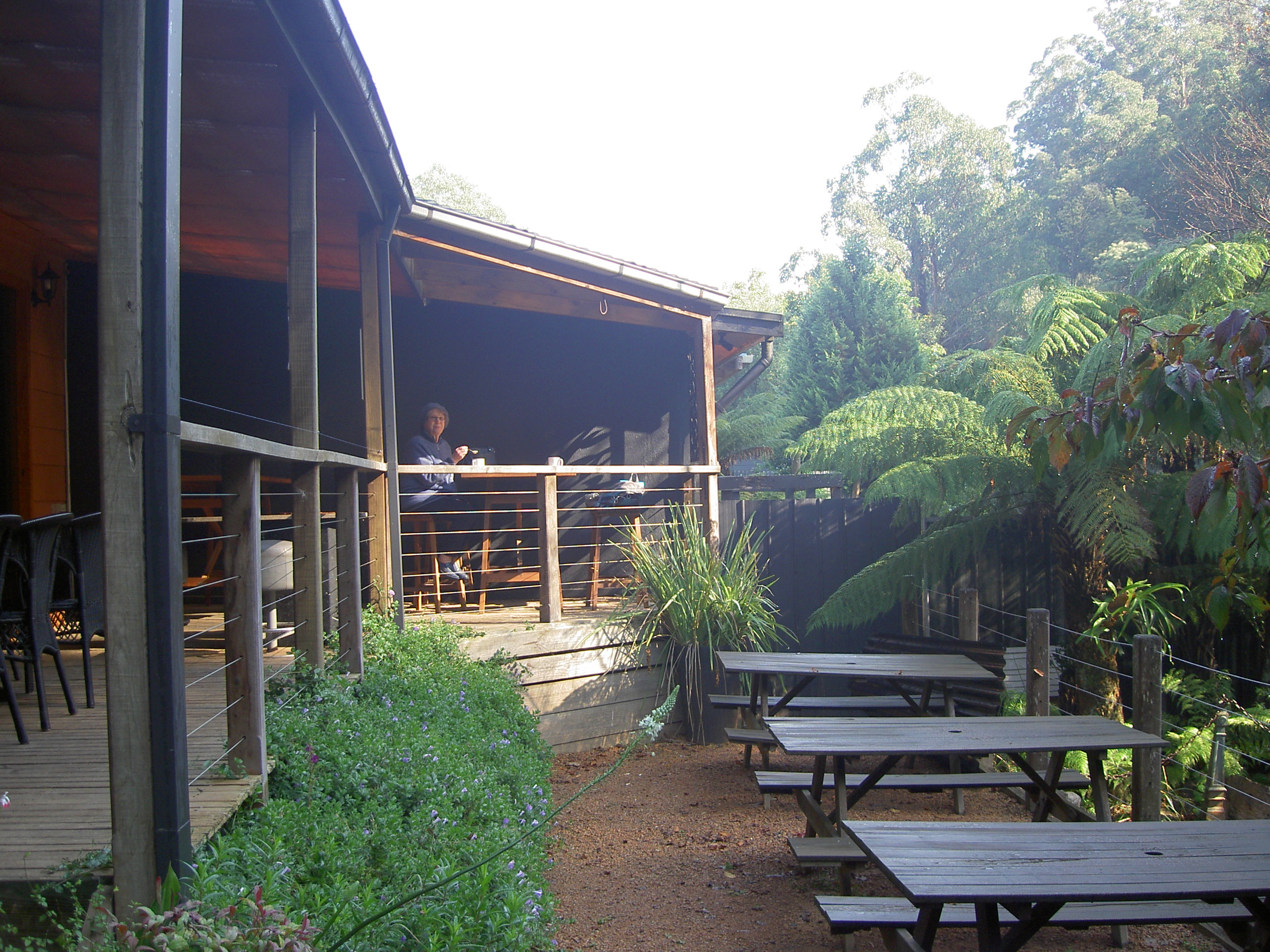
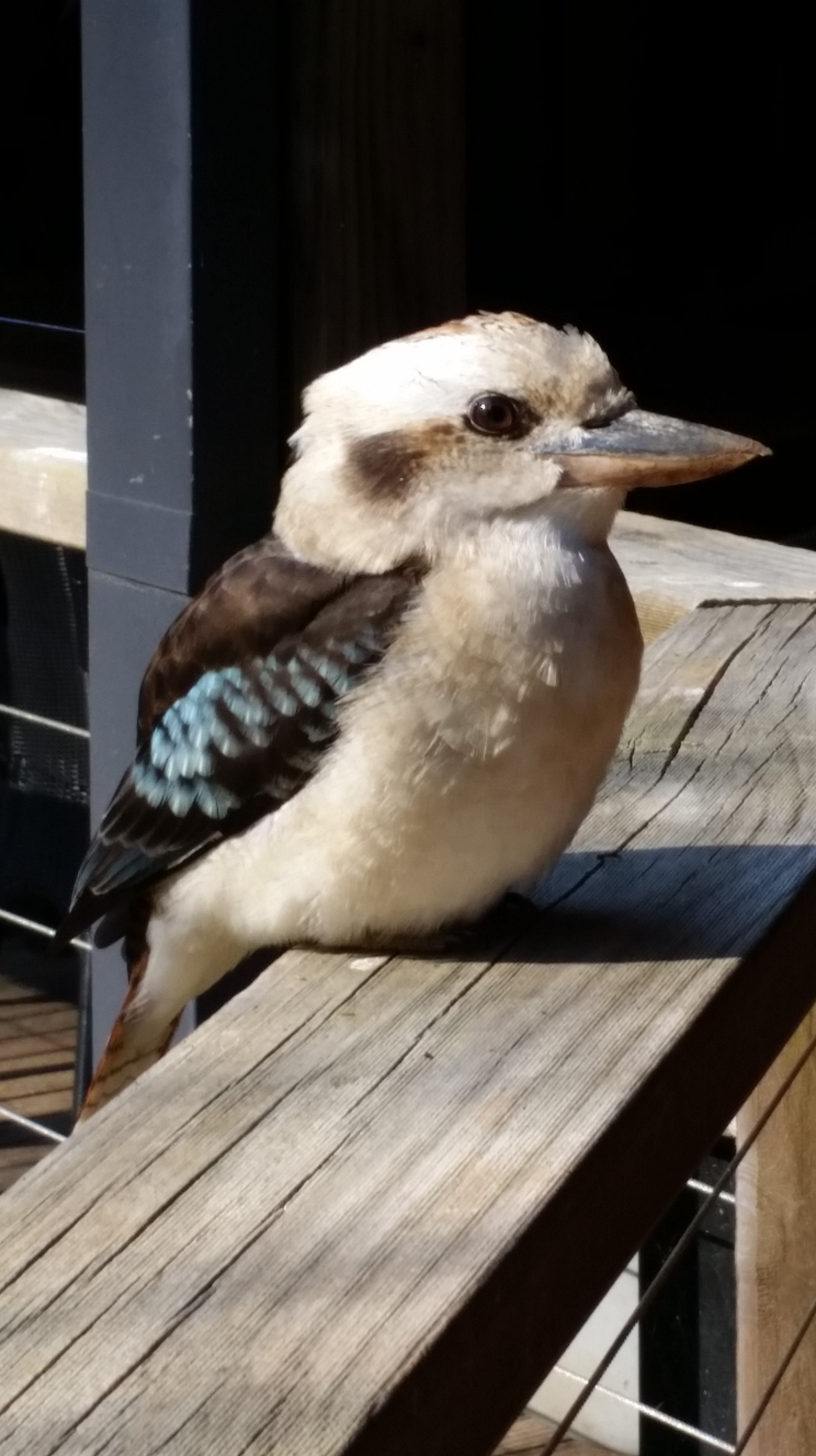
After a coffee at the Powelltown pub, (it was a bit too early for a beer!), we continued on our way, stopping briefly at Yarra Junction on the Warburton Highway. Having been only in very small, out of- the-way villages for nearly a week, it was amazing how noisy Yarra Junction seemed to be! Trucks, cars, and streams of motorcycles thundered through the town, and to be honest, we found it quite unpleasant. So we did not tarry there long, but continued, through Launching Place, to Healesville.
Arrived at Healesville, we had little trouble finding parking and then the restaurant at which we to catch up with the family. A very pleasant meal and a glass of the local micro-brewery beer, and it was time to wander around. I had heard that there was a whisky distillery at Healseville, and I thought it must be the place one sees as one enters the town from the city end. However, that turned out to be a gin distillery (equally acceptable!), so I had to look further. I then spotted a ‘Distillery Lane’, towards which I bent my steps in the hope that I would indeed find the right place. However, I discovered there was a distillery, but it was closed—–probably due to the Covid Pandemic. But a lady who kept her own bees, made her own honey, and sold it from a small outlet adjacent to distillery assured me that it would re-open when the time was right. She also indicated that yes, they did make a good whisky, but as it needed to mature for a few years, it was not yet available! But at least I was on the right track, even if a few years too early! I shall have to return in the fulness of time.
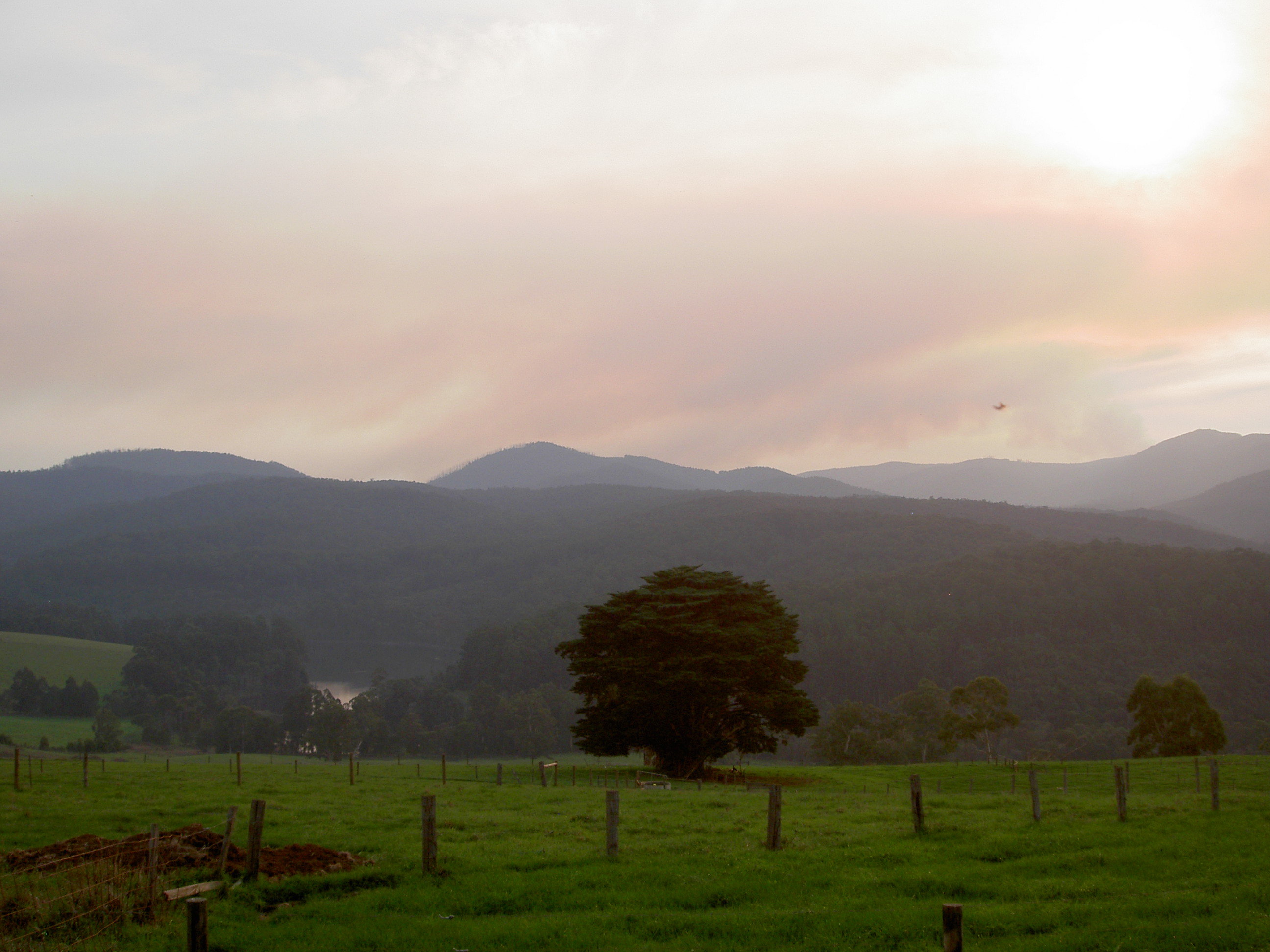
By now it was time to farewell the family to go their separate ways, and we set our car in the direction of Neerim South once more, retracing the route we had taken earlier to get to Healesville. The weather being still and mild, there was a level of ‘planned burning’ happening, and the air was a little smoky. But it did give a certain redness to the sky.
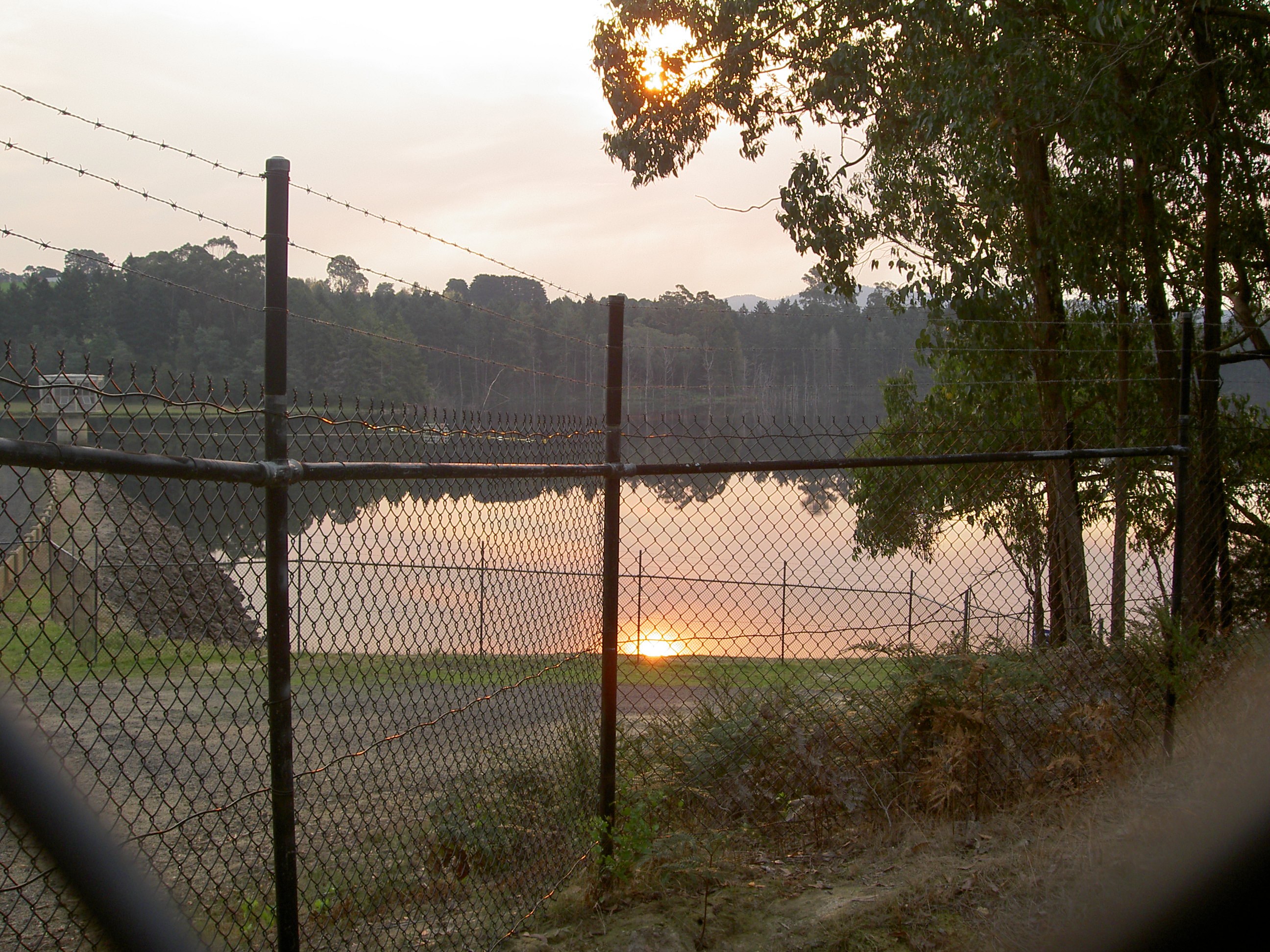
Just out of Neerim South we spotted a sign pointing the way to the Tarago River Reservoir, so we decided to have a look. I recalled fishing in this lake some 45 years ago, but had never returned—so today was the day. However, when we got down the valley to the reserve, we found that the lake itself was now protected by a chain-link cyclone fence, about 4 metres high, and one could just see the water from about 50 metres distance—and that was as close as one was allowed to get!
So, back into the car and away to Yarragon we went.
Sunday morning, and it was time to say goodbye to our host, and to Yarragon, and head toward Melbourne. But on the way, we stopped in Warragul for some lunch, and to attend a recital of Bach’s cello suites, performed by a friend of ours, Joan Evans. Now I am not the most active member of the Bach Fan Club, in fact, I am not a member at all. Five of the 6 suites were played beautifully, and I am sure that had Joan owned the necessary (rare) five-string cello, all 6 would have been played, and enjoyed by the whole audience. But we made do with just the first five, which even so was a marathon for Joan, as it takes nearly 2 hours to play them. So, even though I am not a Bach fan, it was very wonderful to have the opportunity to hear this remarkable music played live, before an appreciative audience. It was a really lovely way to end our short visit to the Latrobe Valley and the environs of Yarragon.
As international travel will be off the agenda for quite some time, we plan to take a few more of these short trips away. Next time we might be really adventurous and head to Broadmeadows, then on to Kilmore, and we might even make it as far north as Seymour!
 Slingsby's Miscellany
Nice reading your descriptions of places that I have often visited