The winding main street of Whitstable is not very wide at best, and very narrow indeed in some parts. The footpaths are similarly of varying widths, and with the throngs of mostly tourists, people ‘down from London’, a few local residents moving around, and too many cars for comfort, walking around was necessarily slow.
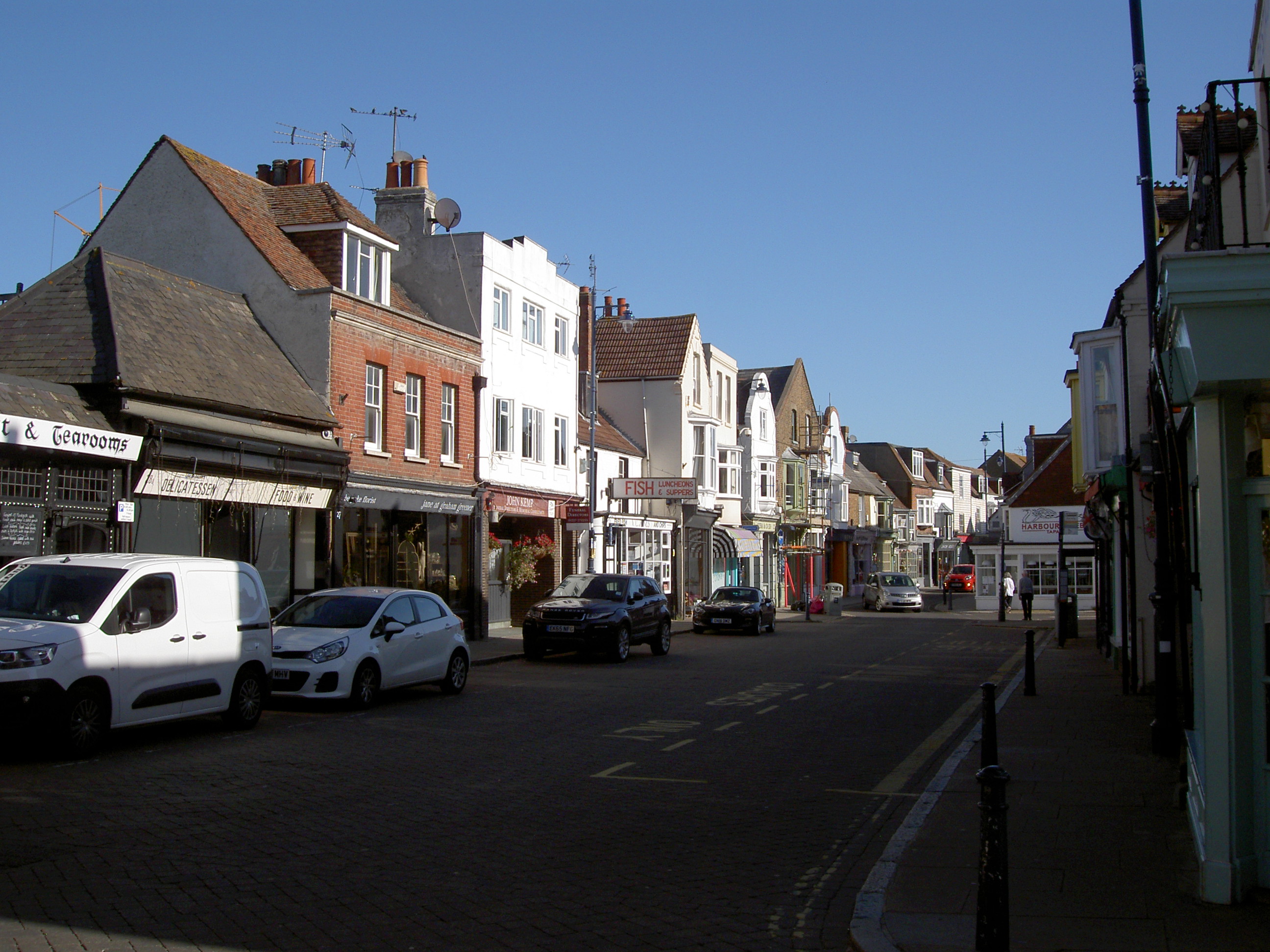
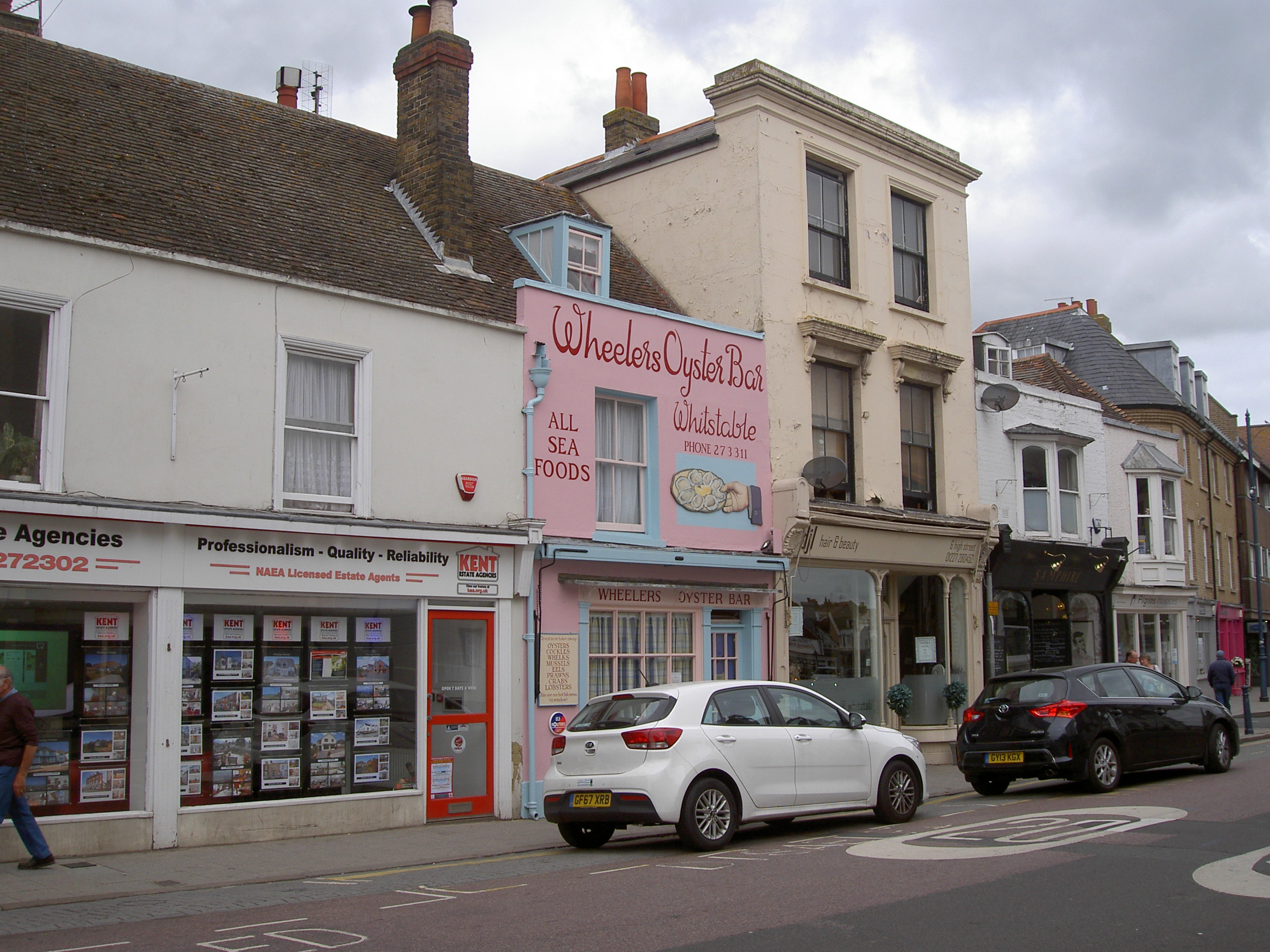
This photo was taken early morning while it was possible to get a picture without all the people. There are some nice shops, including some very good ‘Charity shops’, in one of which I bought a nice bed sheet so that I could dispense with the dreaded doona—an item of bedding I cannot get on with at all! I shall donate it back before we leave England.
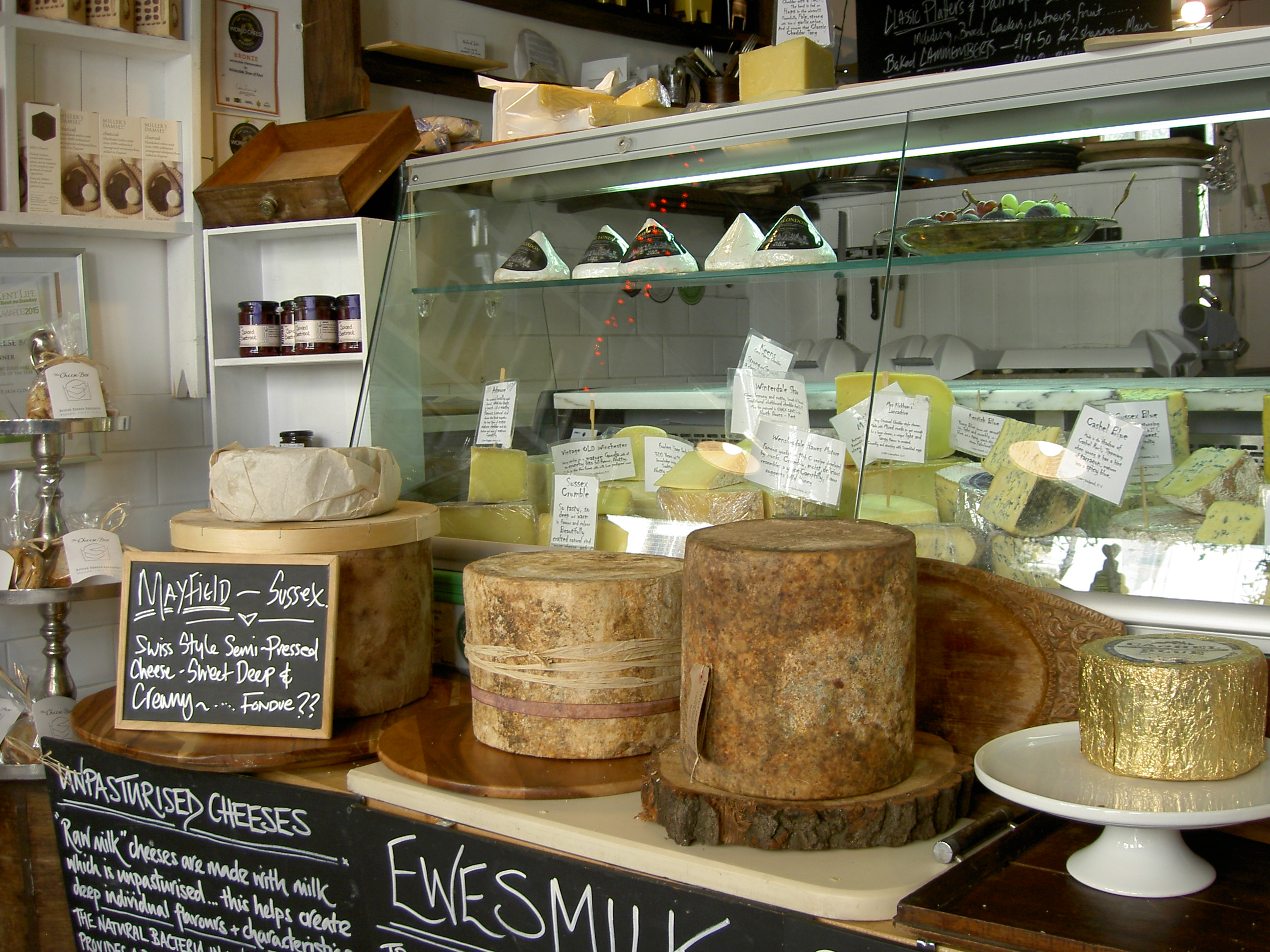
There is also The Cheese Box, which as its name implies, has a wonderful range of cheeses from all over Britain.
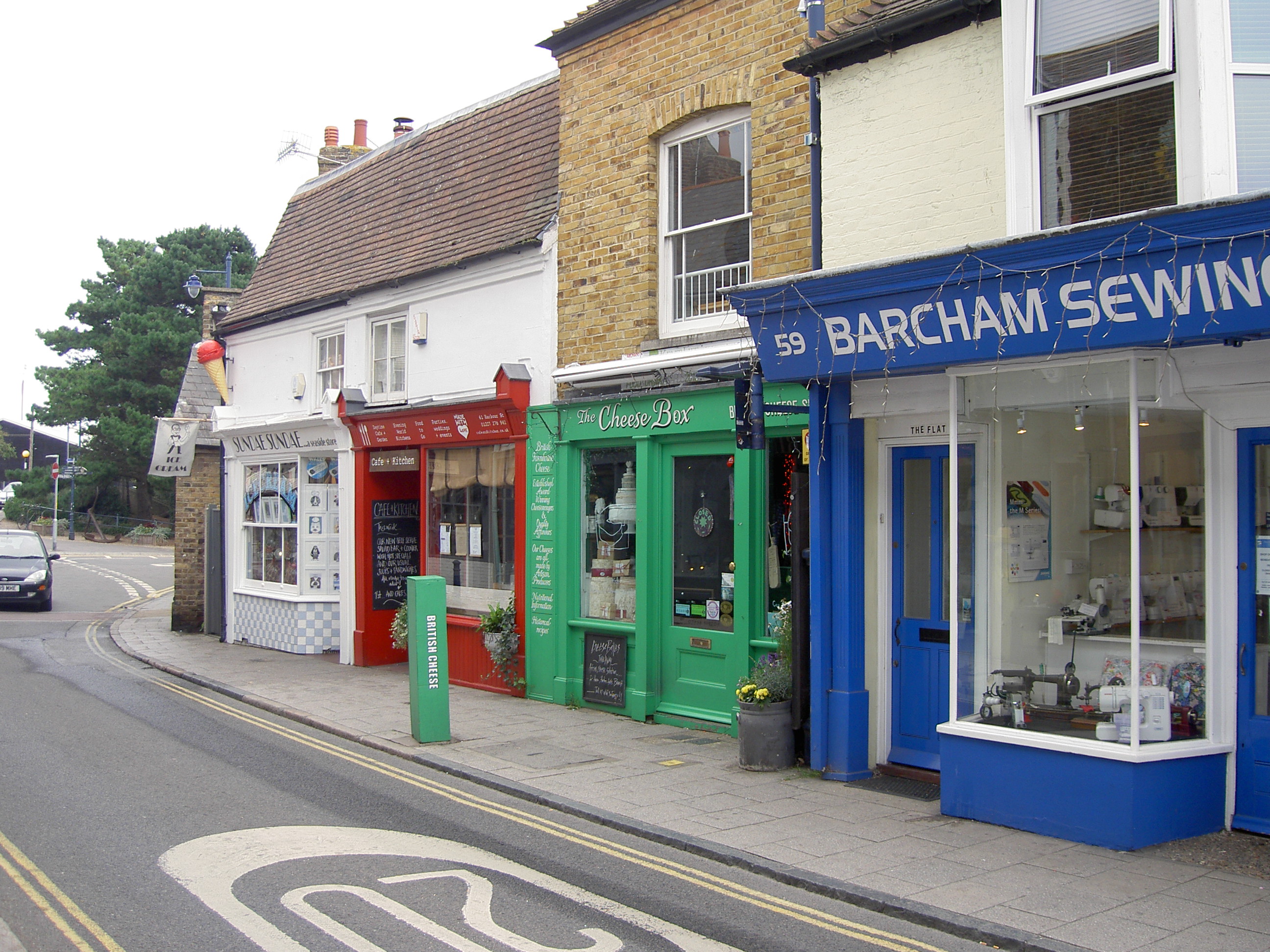
The baker’s shop makes the best Eccles cakes I have had, and, twice a week, has traditional English tea-cakes – a sort of soft round raisin bread-like flat bun. And interspersed between all the shops are pubs, large and small. I am not sure how many pubs there are in Whitstable, but we have enjoyed a pint or two in many of them, including the Coach and Horses, a pub in which we consider ourselves to have some sort of proprietorial right. My Great Grandfather was the licensee from about 1884 to 1898, and my Grandfather was actually born in the pub. One night we had old Frederick’s great grandson (me), a great great grandson, three great great granddaughters, and two great great great granddaughters all in the pub at the same time. We must have at least tripled the night’s takings, as we outnumbered the regulars by several orders of magnitude. I hope old Frederick would have been proud of his descendants!
I did pop into Wheeler’s Oyster Bar, but bought some cockles rather than oysters. I was saving the oyster treat to share with our granddaughter, but as Murphy’s law would have it, we didn’t manage to fit that in during the short time she was with us at Whitstable.
As I mentioned in the previous blog, oysters have been harvested here since at least Roman times, and probably a lot longer as there is evidence of habitation in the Paleolithic era, the Bronze Age and the Iron Age. The Romans exported the oysters back to Rome, and it appears that a couple of Roman trading galleys, possibly collecting a cargo of oysters, sunk off the coast of Whitstable about 1800 years ago. Earthenware pots from the galleys are still occasionally found to this day.
In the years following the end of the Roman period, it seems that oyster harvesting was a bit of a free-for-all until about the middle of the 16th century when the right to harvest oysters was given by a Royal Patent granted in 1574 to the Minter family, the then owners of the Whitstable Manor. In 1790 the Manor was sold to private landowners, and three years later the rights to harvest the oyster beds were bought by the newly established Company of Free Fishers and Dredgers of Whitstable. By the early 20th century, the Oyster Company of Free Fishers and Dredgers had become the Whitstable Oyster Fishery Company.
In the mid-19th century oyster harvesting had reached such a peak that about 80 million native oysters (Ostrea edulis) were shipped to London every year, where they became a food of the poor! Several of Dickens’s novels refer the poorer people enjoying oysters and beer. Harvesting of the native oyster then drastically declined in the first half of the 20th century and eventually ceased altogether due to pollution, disease, bad weather, and two wars. Farming the faster growing Pacific Oysters (Crassostrea gigas) on the foreshore was initiated about five years ago with great success, and now the native oysters account for only 20% of the harvest. However, not everyone is thrilled about the ever-expanding oyster beds. Local residents have for years been able to swim, canoe, windsurf and sail in Whitstable Bay; the oyster dredging was well off-shore and posed no threat to other users of the water. But now, the expansion of the racks in the inter-tidal zone on which the Pacific oysters are grown, has significantly impacted on the recreational activities in the bay. It appears that oyster farming at Whitstable is currently the subject of an investigation by the Marine Management Organisation after allegations about the racks causing safety issues and blocking navigation for watercraft and swimmers. So not all is well back on the farm!
The next blog will be more about our visits to places other than Whitstable.
 Slingsby's Miscellany
Hi Brian.
I am finding your posts very interesting and was impressed to read about the family pub.
Did you receive my previous email about the RACV renewal? I have included the relevant section below.
Yesterday (Sept 6) there was a letter for you from the RACV, which shows the word renewal in the ‘window’ with your address. If this is likely to be a problem I am happy to open it and pay the bill. There are also a letter or card for Ann from D. Harrop (re: K. Gilbert) and a letter for you from Strahan Eyecare. The rest of the mail looks as if it can wait until your return.
All seems to be fine at No. 7. We have had some quite balmy weather. I look forward to hearing more about your wonderful holiday.
Cheers,
Marjorie
>
Hi Marjorie, thanks for your kind comments on my blogs! And I apologise for not getting back to sbout the RACV!!!!
If you could open it please, and just email me the details—my membership number, amount, Bpay code etc, I can simply pay it on-line.. As they usually send renewal notices out in plenty of time, it may not be due until after we get back—-but best to be safe, I guess.
I think Ann may have emailed and said not to worry about it, but I had 2nd thoughts!
Hope all is well with you, cheers, Brian ( from sunny Cornwall)